


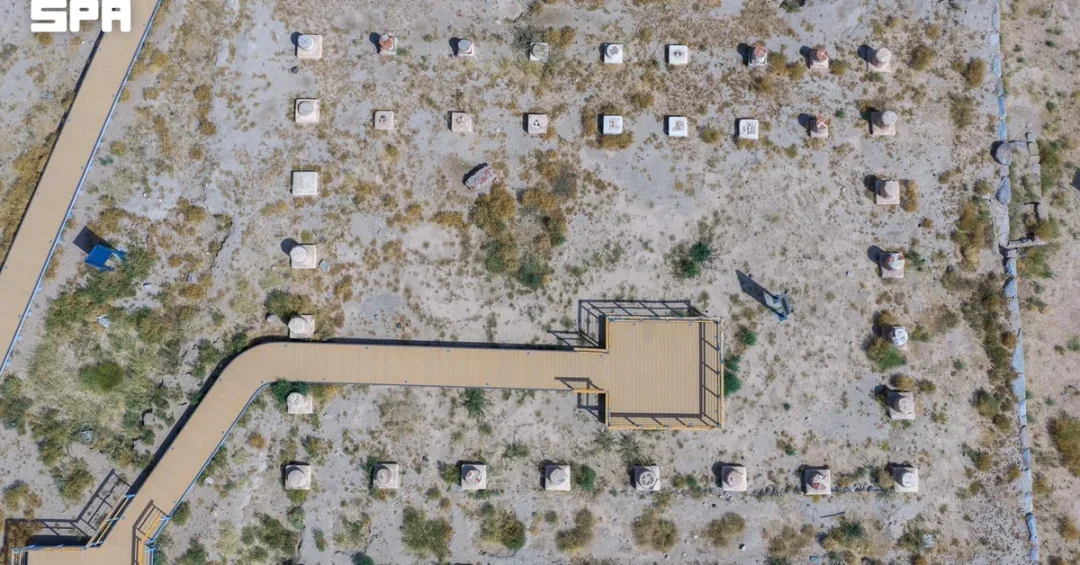
The ancient city of Jorash in Saudi Arabia’s Aseer Region offers visitors a remarkable journey through time, showcasing its historical significance as a hub for trade, pilgrimage, and cultural exchange. Located in Ahad Rufaidah Governorate, the archaeological site features well-preserved artifacts, informative displays, and guided tours that highlight the city’s rich heritage dating back to the first millennium BC.
Context and Background
Jorash stands as a testament to the advanced civilization that once thrived in southern Saudi Arabia. Positioned along the ancient Incense Route, the city served as a vital link between the northern and southern Arabian Peninsula, facilitating trade and cultural interactions. Excavations have revealed its sophisticated urban planning, craftsmanship, and economic prosperity.
Key Details
The site includes six information stations that guide visitors through Jorash’s history. These stations feature graphic panels, television films, models, and archaeological artifacts such as metalwork, glassware, pottery, and stone tools. Qualified cultural guides provide in-depth explanations, enhancing the visitor experience. The artifacts reflect the city’s skilled craftsmanship and its inhabitants’ ability to utilize local resources like rocks for construction and tools.
Implications and Impact
Jorash’s preservation and presentation underscore Saudi Arabia’s commitment to safeguarding its cultural heritage. The site not only attracts tourists but also serves as an educational resource, offering insights into the region’s historical trade networks and cultural exchanges. This aligns with broader efforts to promote Saudi Arabia as a global cultural destination.
Vision 2030 Alignment
The development and promotion of Jorash as a cultural landmark support Saudi Arabia’s Vision 2030 goals of diversifying the economy and boosting tourism. By preserving and showcasing its ancient heritage, the Kingdom reinforces its role as a custodian of history while fostering international appreciation for its cultural contributions.
20 Questions
Q1. Where is the ancient city of Jorash located?
A1. Jorash is located in Ahad Rufaidah Governorate, part of the Aseer Region in southern Saudi Arabia.
Q2. What was Jorash known for historically?
A2. Jorash was a hub for trade, pilgrimage, and cultural exchange along the ancient Incense Route.
Q3. How old is the Jorash archaeological site?
A3. The site dates back to the first millennium BC and thrived through early Islamic periods.
Q4. What types of artifacts have been found at Jorash?
A4. Excavations have uncovered metalwork, glassware, pottery, stone tools, coins, and jewelry.
Q5. How is the visitor experience at Jorash enhanced?
A5. Qualified cultural guides, graphic panels, films, models, and artifact displays provide a rich, educational experience.
Q6. What role did Jorash play in ancient trade?
A6. Jorash was a key point along the Incense Route, connecting northern and southern Arabian trade networks.
Q7. What materials did the people of Jorash use for building?
A7. They used locally abundant rocks for construction, tools, and household items.
Q8. How many information stations are at the Jorash site?
A8. There are six information stations guiding visitors through the site’s history and artifacts.
Q9. What does Jorash reveal about ancient craftsmanship?
A9. The artifacts show advanced skills in metalworking, glassmaking, and stone carving.
Q10. Why is Jorash significant to Saudi Arabia’s heritage?
A10. It highlights the region’s historical importance as a center of trade and culture.
Q11. How does Jorash contribute to Saudi tourism?
A11. It attracts visitors interested in archaeology and history, boosting cultural tourism.
Q12. What is the Incense Route?
A12. It was an ancient trade network transporting incense and other goods across the Arabian Peninsula.
Q13. How does Jorash align with Vision 2030?
A13. It supports goals to diversify the economy and promote Saudi Arabia’s cultural heritage.
Q14. What types of displays are featured at Jorash?
A14. Displays include graphic panels, television films, models, and glass cases with artifacts.
Q15. What can visitors learn about Jorash’s economy?
A15. The site reveals a prosperous economy based on trade, craftsmanship, and resource utilization.
Q16. How does Jorash reflect cultural exchange?
A16. Its location on trade routes made it a meeting point for diverse cultures and caravans.
Q17. What is the role of cultural guides at Jorash?
A17. They provide expert explanations and answer visitor questions about the site’s history.
Q18. What are some unique artifacts found at Jorash?
A18. Unique finds include colored glassware, metal vessels, and intricately crafted jewelry.
Q19. How does Jorash educate visitors?
A19. Through interactive displays and guided tours, visitors gain insights into ancient Saudi civilization.
Q20. Why is preserving Jorash important?
A20. Preservation ensures future generations can appreciate and learn from this historical treasure.
Reader Feedback
We value your thoughts. Please share your feedback on this article.
Your feedback helps us improve our coverage.