


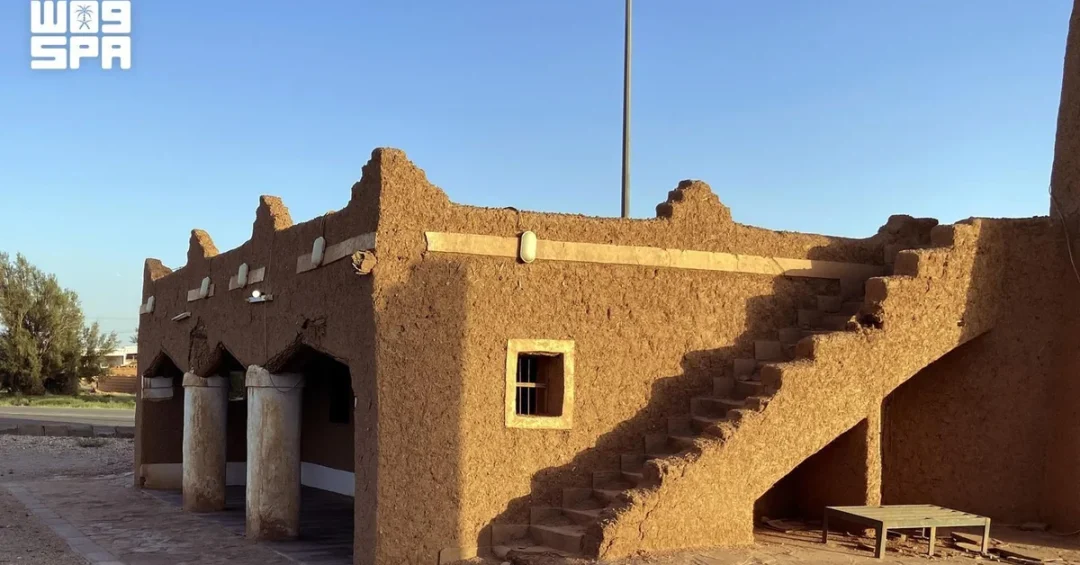
The Al-Shibibiyah Mosque in Al-Badayea Governorate, Qassim Region, stands as a historic landmark showcasing traditional Najdi architecture and the Kingdom of Saudi Arabia’s rich cultural heritage. Built in 1353 AH (1934), the mosque remains a well-preserved example of the region’s architectural identity and social history, attracting visitors interested in urban heritage and cultural tourism.
Context and Background
The Al-Shibibiyah Mosque is located in the northeastern part of Al-Badayea Governorate, alongside the main road linking Al-Badayea and Unaizah. The site itself predates the current mosque, as the area is one of the well-known historic districts in the region. The mosque’s construction reflects the traditional building methods of the first half of the 14th century AH, using materials such as mud, tamarisk wood, and palm fronds.
Key Details
The mosque features a rectangular prayer hall, a front portico supported by circular columns, and a conical minaret approximately two stories high. Its design exemplifies the simplicity and practicality of traditional Najdi architecture, with minimal decorative elements except for simple engravings on the main door. This architectural style is characteristic of central Saudi Arabia and highlights the region’s historical construction techniques.
Implications and Impact
The preservation of the Al-Shibibiyah Mosque underscores Saudi Arabia’s commitment to safeguarding its cultural and historical landmarks. As a destination for cultural tourism, the mosque contributes to the promotion of urban heritage and local history, aligning with the Kingdom’s efforts to diversify its tourism offerings under Vision 2030. Its location along a major road also enhances accessibility for visitors and researchers.
Vision 2030 Alignment
The Al-Shibibiyah Mosque exemplifies Saudi Arabia’s dedication to preserving its cultural heritage while promoting tourism and local identity. By maintaining such landmarks, the Kingdom supports its Vision 2030 goals of fostering a vibrant society, preserving national heritage, and developing the tourism sector as a key economic driver. The mosque stands as a testament to the Kingdom’s rich history and its forward-looking vision.
20 Questions
Q1. Where is the Al-Shibibiyah Mosque located?
A1. The mosque is located in the northeastern part of Al-Badayea Governorate, Qassim Region, alongside the main road linking Al-Badayea and Unaizah.
Q2. When was the Al-Shibibiyah Mosque built?
A2. The mosque was built in 1353 AH (1934).
Q3. What architectural style does the mosque represent?
A3. The mosque represents the traditional Najdi architectural style prevalent in central Saudi Arabia.
Q4. What materials were used in the mosque’s construction?
A4. The mosque was built using mud, tamarisk wood, and palm fronds.
Q5. What are the main features of the mosque?
A5. The mosque consists of a rectangular prayer hall, a front portico supported by circular columns, and a conical minaret.
Q6. How tall is the mosque’s minaret?
A6. The minaret is approximately two stories high.
Q7. What decorative elements are present in the mosque?
A7. The mosque has minimal decorations, with simple engravings and ornamentation on the main door.
Q8. Why is the mosque significant?
A8. The mosque is significant as a well-preserved example of traditional Najdi architecture and a historic landmark in Al-Badayea.
Q9. What does the mosque reflect about the region’s history?
A9. The mosque reflects the lifestyle and construction methods of the region during the first half of the 14th century AH.
Q10. Who visits the Al-Shibibiyah Mosque?
A10. The mosque attracts visitors interested in urban heritage, local history, and cultural tourism.
Q11. How does the mosque contribute to cultural tourism?
A11. The mosque serves as a destination for those interested in exploring Saudi Arabia’s architectural and cultural heritage.
Q12. What is the historical significance of the Al-Shibibiyah site?
A12. The site predates the current mosque and is considered one of the well-known historic districts in Al-Badayea.
Q13. How does the mosque align with Saudi Arabia’s Vision 2030?
A13. The mosque supports Vision 2030 by preserving national heritage and promoting cultural tourism.
Q14. What role does the mosque play in the local community?
A14. The mosque serves as a cultural and historical landmark, reflecting the region’s identity and heritage.
Q15. How accessible is the mosque to visitors?
A15. The mosque is located along a major road, enhancing accessibility for visitors and researchers.
Q16. What makes the mosque’s architecture unique?
A16. The mosque’s architecture is unique for its simplicity and practicality, hallmarks of traditional Najdi design.
Q17. How does the mosque preserve its authentic character?
A17. The mosque has maintained its original construction materials and design, ensuring its authentic architectural character.
Q18. What is the mosque’s role in promoting urban heritage?
A18. The mosque highlights the region’s urban heritage by showcasing traditional construction techniques and historical significance.
Q19. How does the mosque reflect Saudi Arabia’s cultural values?
A19. The mosque reflects the Kingdom’s commitment to preserving its cultural and historical landmarks.
Q20. What future role might the mosque play in tourism?
A20. The mosque is poised to become a key attraction for cultural tourism, supporting Saudi Arabia’s efforts to diversify its tourism sector.
Reader Feedback
We value your thoughts. Please share your feedback on this article.
Your feedback helps us improve our coverage.