


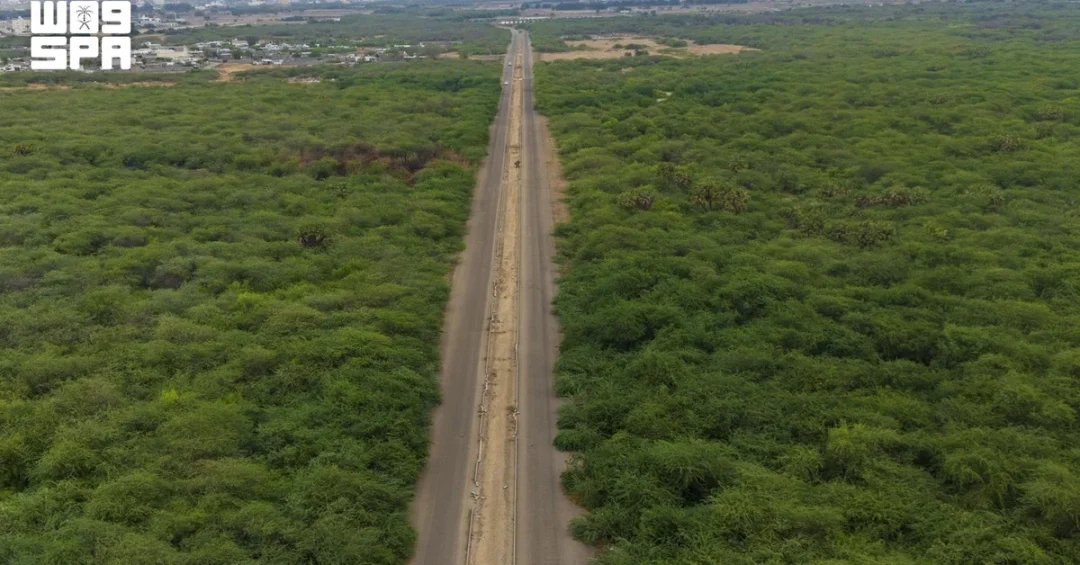
Heavy rainfall across Baish Governorate in the Jazan region has transformed its landscapes, revitalizing valleys, plains, and agricultural lands, drawing residents and tourists alike to its verdant scenery. The downpours, which occurred in mid-August, have filled watercourses, irrigated farmlands, and expanded vegetation cover, creating picturesque views that attract visitors and photographers during the summer holiday season.
Context and Background
Baish, known for its agricultural character, has seen its natural beauty enhanced by the recent rains. The link between its wadis (valleys) and farmland has become evident as water flows through tributaries like Wadi Qura, a main branch of Wadi Baish, spreading across plains and cultivated areas. This seasonal event highlights the vital role of wadis in fertilizing soils and renewing vegetation, a key element of the region’s identity.
The Saudi Press Agency (SPA) documented the scene, capturing water stretching between farms and green areas along roadways, a tableau that prompted onlookers to pause and photographers to capture the harmony of water, greenery, and agriculture. These landscapes have become popular gathering spots for families and summer visitors, offering opportunities to enjoy the outdoors and observe the benefits of the rains.
Key Details
The rainfall has enhanced the agricultural ecosystem of Baish by rehydrating soils and regenerating flora. The waters have also enriched the tourism appeal of the Jazan region, with Baish’s flat, agricultural terrain providing accessible vantage points for admiring the natural spectacle.
Authorities and local communities have welcomed the rains as a blessing, with the visual transformation serving as a reminder of the region’s fertile plains and its deep connection to agriculture. The event underscores the resilience and beauty of Saudi Arabia’s southern landscapes.
Implications and Impact
Beyond its aesthetic appeal, such rainfall has vital implications for local agriculture, ensuring water resources for crops and sustaining livelihoods. The renewed vegetation also supports biodiversity and contributes to the region’s overall environmental health. For residents and visitors, it offers a refreshing contrast to the typical summer heat, highlighting Saudi Arabia’s diverse natural attractions.
The phenomenon underscores the Kingdom’s commitment to preserving natural resources and promoting eco-tourism, aligning with broader environmental sustainability objectives.
Vision 2030 Alignment
Saudi Arabia’s Vision 2030 prioritizes environmental sustainability and the development of tourism as key pillars for economic diversification. The natural beauty of regions like Jazan, enhanced by seasonal rains, showcases the Kingdom’s potential as a destination for nature-based tourism. This event highlights the ongoing efforts to balance modernization with environmental stewardship, fostering a quality of life that celebrates the nation’s natural heritage. As Baish continues to flourish, it exemplifies the harmony between human development and the environment, a cornerstone of the Vision 2030 journey.
20 Questions
Q1. What recent weather event has transformed Baish Governorate?
A1. Heavy rainfall over several days has reshaped the landscapes, filling oueds and irrigating plains, turning the area into lush, verdant scenery that has attracted visitors.
Q2. Where is Baish Governorate located?
A2. Baish is in the Jazan region, in the southwestern part of Saudi Arabia, known for its agricultural plains and natural beauty.
Q3. What caused the increase in vegetation in Baish?
A3. The intense rainfall provided essential water to the soil, enabling plant growth and expanding the green cover across previously dry areas.
Q4. How has the local population responded to the rainfall?
A4. Residents and summer vacationers have embraced the opportunity to enjoy the outdoors, with families and photography enthusiasts gathering to appreciate the transformed landscape.
Q5. What is the significance of the oueds in Baish?
A5. Oueds, like Wadi Qura, are crucial for agriculture as they channel water to farmland, fertilizing and renewing the vegetation that characterizes the region.
Q6. How did the Saudi Press Agency (SPA) report on this event?
A6. The SPA documented the event with photographs, capturing the visual beauty and the beneficial impact of the rains on the region’s agriculture and tourism.
Q7. What is the main tributary mentioned?
A7. Wadi Qura, an affluent of Wadi Baish, is highlighted for spreading its waters across plains and farmlands.
Q8. How does the rainfall benefit the agricultural ecosystem?
A8. The rains rehydrate the soil, essential for crop growth, and regenerate the flora, which supports the area’s agricultural activities.
Q9. What does this event say about Baish’s identity?
A9. It emphasizes Baish’s deep connection to agriculture and fertile plains, blending the nourishing value of the land with its natural and tourist appeal.
Q10. Are there tourism opportunities from this rainfall?
A10. Yes, the scenic landscapes attract visitors, enhancing the tourism appeal of the Jazan region, especially for nature lovers.
Q11. What is the timing of the rainfall?
A11. The rainfall occurred in mid-August, during the summer holiday period, making it an ideal time for family outings.
Q12. How does the rainfall reflect on Saudi Arabia’s environmental efforts?
A12. It aligns with Vision 2030’s environmental sustainability goals, showcasing the natural beauty and the importance of preserving ecosystems.
Q13. Did the rainfall cause any damage?
A13. The article does not mention damage; instead, it highlights positive outcomes such as water flow and vegetation growth.
Q14. What role do the wadis play in the local landscape?
A14. They are natural channels that bring water to farmland, enriching soils and sustaining agriculture.
Q15. How has the region’s appearance changed?
A15. Previously dry areas now have streams, green vegetation, and a lush atmosphere, making it more inviting.
Q16. What is the Jazan region known for?
A16. Jazan is known for its agriculture, natural landscapes, and now enhanced tourism due to such rainfall events.
Q17. How do visitors describe Baish after the rains?
A17. They are captivated by the harmony between water, greenery, and farmland, making it a popular spot for photography and leisure.
Q18. What kind of activities do residents engage in?
A18. They undertake family picnics, nature walks, and photography, taking advantage of the pleasant environment.
Q19. Are there any other affected areas in Jazan?
A19. The article focuses on Baish but suggests that the rainfall has enriched the broader Jazan region’s tourist attractions.
Q20. What does this event signify for the future of tourism in Saudi Arabia?
A20. It highlights the potential for eco-tourism, supporting Vision 2030’s goals to diversify the economy and promote the Kingdom as a unique travel destination.
Reader Feedback
We value your thoughts. Please share your feedback on this article.
Your feedback helps us improve our coverage.