


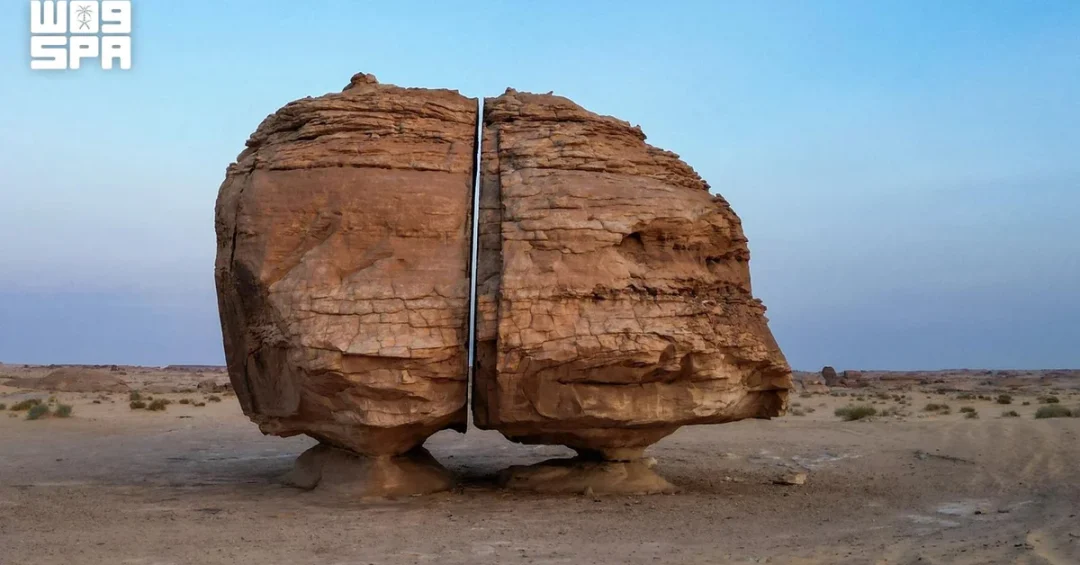
沙特通讯社(SPA)报道,位于塔布克省泰玛市西南的纳斯拉岩(Al-Nasla)是一处令人惊叹的天然岩层构造,以其独特的对称分裂和古老岩画而闻名。 据沙特通讯社2026年8月15日报道,纳斯拉岩由两块相邻的巨石组成,彼此之间以一道看似直线的间距分隔,仿佛被精准切割。其阿拉伯语名称源自它已与附近山脉隔绝的状态,岩石长约8米,表面刻有各种铭文和岩画,见证了数千年的历史。
Context and Background
纳斯拉岩位于沙特阿拉伯西北部的塔布克省,该地区是沙特古代文明的重要发源地之一,拥有丰富的考古遗址和文化遗产。泰玛市作为历史悠久的绿洲城市,曾是多条古代贸易路线的交汇点,其周边地区发现过众多石刻和考古遗迹。纳斯拉岩的独特之处不仅在于其地质构造,还在于其表面保存的铭文和岩画,这些图案为研究古代阿拉伯半岛的人类活动、语言和文化提供了宝贵资料。
沙特阿拉伯近年来高度重视文化遗产的保护与展示,通过沙特通讯社等官方渠道向国际社会介绍这些自然与历史奇观,旨在促进文化旅游和增强民族认同。纳斯拉岩的公布,也符合沙特2030愿景中发展旅游业、展示国家多元遗产的目标。
Key Details
根据沙特通讯社的详细描述,纳斯拉岩由两块相邻的岩石构成,中间的裂缝笔直如线,几乎完美地将岩石分为两半。这种自然形成的整齐分裂令人称奇,也引发了地质学家和游客的兴趣。岩石长约8米,高度约6米,由砂岩构成,表面覆盖着风化和侵蚀的痕迹。
岩石表面的铭文和岩画是考古学研究的重点,其中可能包含古代阿拉伯部落的符号、动物图案以及原始文字。这些岩画的历史可追溯到数千年前,与沙特阿拉伯其他地区的岩画遗址(如哈伊勒省和朱夫省)相似,被联合国教科文组织列为世界遗产的岩石艺术遗址之一。沙特当局尚未对纳斯拉岩的岩画进行详尽的年代测定,但其风格与已知的青铜时代岩画相似。
Implications and Impact
纳斯拉岩的报道不仅吸引了全球地质学和考古学爱好者的目光,也凸显了沙特阿拉伯在保护和展示其文化遗产方面的努力。该岩层位于塔布克省,该地区正被开发为旅游目的地,包括未来主义城市NEOM的建设。纳斯拉岩作为自然奇观,可成为吸引国际游客的潜在景点,促进当地经济发展和文化交流。
从考古学角度看,纳斯拉岩的岩画有助于重新构建古代阿拉伯半岛的社会结构、宗教信仰和移民模式。沙特国家考古部门可能利用最新技术(如3D扫描和数字存档)来记录和研究这些遗址,为国际学术合作提供机会。
Vision 2030 Alignment
纳斯拉岩的展示与沙特2030愿景高度契合,该愿景旨在通过经济多元化减少对石油的依赖,并发展包括旅游业在内的非石油产业。通过宣传纳斯拉岩等文化遗产,沙特阿拉伯期望吸引全球游客,展示其丰富的自然景观和悠久历史,同时促进文化保护和社会进步。这一举措将加强民族自豪感,并为全球文明对话贡献力量。
20 Questions
Q1. What is Al-Nasla rock?
A1. Al-Nasla is a natural rock formation in Saudi Arabia’s Tabuk region, consisting of two massive rocks separated by a precise, straight gap, adorned with ancient inscriptions and petroglyphs.
Q2. Where is Al-Nasla located?
A2. It is located southwest of Tayma, a city in the Tabuk province of northwestern Saudi Arabia, an area known for its rich archaeological heritage and historical trade routes.
Q3. How did the rock get its name?
A3. The name “Al-Nasla” is Arabic for “the detached” or “the isolated,” reflecting that the rock is separated from the nearby mountains and stands alone in the landscape.
Q4. What are the dimensions of Al-Nasla?
A4. The rock is approximately 8 meters long, with a height of around 6 meters, composed of sandstone that exhibits natural weathering and erosion over time.
Q5. What is special about the split in Al-Nasla?
A5. The split is remarkably straight and clean, almost as if deliberately cut by a laser, making it a geological anomaly and a subject of wonder for visitors and scientists.
Q6. What kind of inscriptions are found on Al-Nasla?
A6. The surface bears various inscriptions and petroglyphs, possibly including ancient scripts, animal figures, and tribal symbols, which are key to understanding the region’s ancient cultures.
Q7. Who reported the information about Al-Nasla?
A7. The information was reported by the Saudi Press Agency (SPA), the official news agency of Saudi Arabia, ensuring accurate and authoritative dissemination of the discovery.
Q8. When was Al-Nasla brought to public attention?
A8. SPA released the report on August 15, 2026, corresponding to the Islamic date of 02/03/1448 AH, highlighting the rock in a feature article.
Q9. Why is Al-Nasla significant to Saudi Arabia’s heritage?
A9. It adds to the kingdom’s vast collection of archaeological treasures, showcasing the country’s rich history and the cultural legacy of its ancient inhabitants.
Q10. How does Al-Nasla relate to tourism in Saudi Arabia?
A10. It is a potential tourist attraction that can draw international visitors interested in geology and ancient history, supporting the Vision 2030 goal to expand the tourism sector.
Q11. What is the possible age of the petroglyphs on Al-Nasla?
A11. Archaeologists estimate they may be several thousand years old, dating to the Bronze Age, similar to other rock art sites in the Arabian Peninsula, although definitive dating is pending.
Q12. Which nearby sites share similarities with Al-Nasla?
A12. Rock art sites in the Hail and Jouf provinces, also exhibiting petroglyphs and inscriptions, are comparable, and some are UNESCO World Heritage Sites, indicating the region’s historical importance.
Q13. What future plans exist for Al-Nasla?
A13. There are plans to incorporate it into regional tourism development, potentially as part of heritage-focused tours, and to conduct detailed scientific documentation and preservation efforts.
Q14. How does Al-Nasla contribute to cultural identity?
A14. It serves as a tangible link to Saudi Arabia’s ancient civilizations, fostering national pride and demonstrating the depth of the kingdom’s cultural roots to the world.
Q15. What scientific studies could be conducted on Al-Nasla?
A15. Sediment analysis, rock weathering studies, and petroglyph dating are possible, aiding in climate history and archaeological interpretation.
Q16. Is Al-Nasla mentioned in any official lists?
A16. While not yet listed, it is under consideration for inclusion in the Saudi national heritage registry, which contributes to UNESCO candidacy.
Q17. How can tourists access Al-Nasla?
A17. Accessibility is limited but manageable, with tours from Tayma city, but visitors are advised to follow local guidelines to preserve the site.
Q18. What is the regional significance of Tayma?
A18. Tayma was a major oasis on ancient incense and trade routes, and its archaeological findings, including the famous Tayma stone, reveal a rich history of cross-cultural interactions.
Q19. Does Al-Nasla have any religious significance?
A19. No direct religious significance is known, but its ancient rock art may have spiritual or symbolic meaning to prehistoric communities.
Q20. How does Al-Nasla fit into Vision 2030?
A20. It aligns with the goal to promote heritage tourism, diversify the economy, and preserve Saudi Arabia’s cultural heritage for future generations.
Reader Feedback
We value your thoughts. Please share your feedback on this article.
Your feedback helps us improve our coverage.