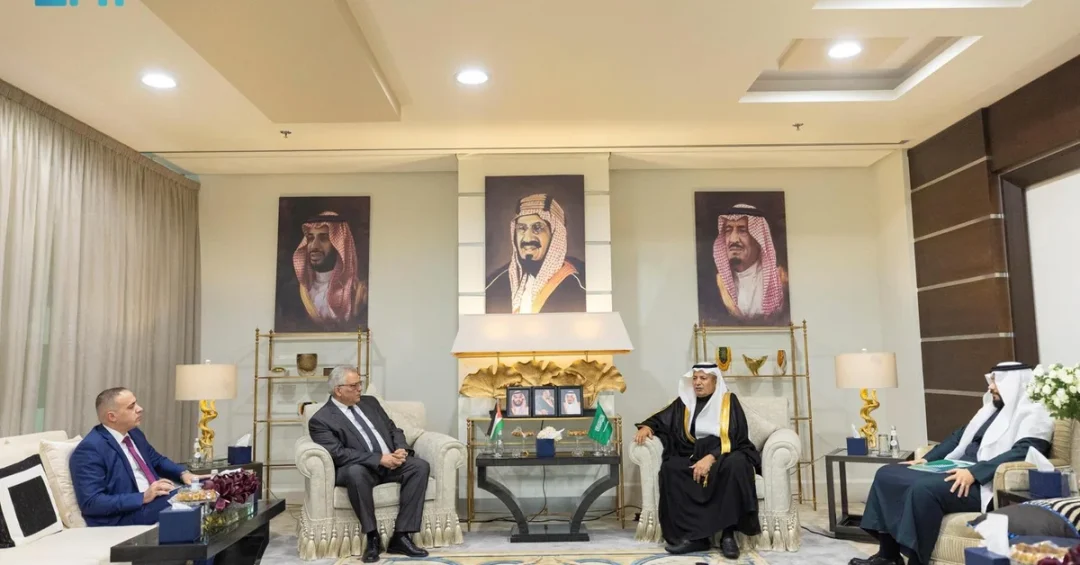
The Federation of Saudi Chambers and the Embassy of the State of Palestine in the Kingdom of Saudi Arabia have agreed to establish the first Saudi-Palestinian Business Council, a landmark initiative announced in Riyadh on January 21, 2025, aimed at expanding trade and investment ties between the two countries. The agreement was reached during a meeting between Hassan Moejeb Alhwaizy, Chairman of the Federation of Saudi Chambers, and Mazen Mohammed Rateb Ghanem, Ambassador of the State of Palestine to Saudi Arabia, according to the Saudi Press Agency. The council is designed to serve as a permanent institutional platform through which Saudi and Palestinian companies can build partnerships, exchange market intelligence, and pursue joint ventures across a range of sectors.
The announcement reflects a broader pattern of Saudi engagement with the Palestinian private sector, one that Saudi officials describe as complementary to the Kingdom’s longstanding political and humanitarian support for the Palestinian people. For international observers, the creation of a dedicated business council signals that economic cooperation is being placed on a structured, long-term footing rather than being left to ad hoc commercial contacts. The council is expected to convene Saudi and Palestinian business leaders, coordinate trade missions, and identify investment opportunities that can be pursued under the regulatory frameworks of both sides. The initiative also underscores how the Kingdom’s private sector is being encouraged to align with the directives of Saudi leadership in extending practical support to Palestinian entrepreneurs and producers.
Context and Background
Why does the establishment of a single business council matter in the wider landscape of Saudi-Palestinian relations? Saudi Arabia has for decades been one of the most consistent supporters of the Palestinian cause, providing political backing, humanitarian assistance, and development funding through official channels. The new council adds an economic dimension to that relationship by creating a formal mechanism for private-sector cooperation. The Federation of Saudi Chambers, which represents the interests of chambers of commerce across the Kingdom, has increasingly taken on a coordinating role in Saudi Arabia’s international commercial diplomacy, and the Palestinian file is now part of that agenda.
The timing of the announcement is significant. Saudi Arabia is in the middle of an ambitious economic transformation under Vision 2030, the national strategy launched by Crown Prince Mohammed bin Salman to diversify the economy away from oil dependence and expand the private sector’s contribution to gross domestic product. As Saudi markets grow and new sectors open up, the Kingdom is positioning itself as a hub for regional trade and investment. A business council with Palestine fits into this framework by offering Palestinian companies a structured route into Saudi supply chains, retail networks, and industrial zones, while giving Saudi firms a counterpart body through which to explore Palestinian markets.
Palestinian businesses have long maintained a commercial presence in the Gulf, particularly in the food, textile, construction materials, and services sectors. However, the absence of a dedicated bilateral business council has meant that many opportunities were pursued on an individual basis rather than through coordinated channels. The agreement between the Federation of Saudi Chambers and the Palestinian Embassy is intended to close that gap by institutionalizing dialogue between the two business communities. It also responds to repeated calls from Palestinian exporters for better access to Saudi markets and for support in meeting Saudi standards and regulations.
Key Details of the Agreement
What exactly did the two sides agree to do? According to the Saudi Press Agency, Alhwaizy and Ambassador Ghanem agreed to establish the first Saudi-Palestinian Business Council with the explicit objective of increasing trade and investment between the two countries. Alhwaizy stated that the private sector in the Kingdom aligns with the directives of the wise leadership in supporting the Palestinian people. He emphasized the importance of empowering Palestinian business owners to invest in Saudi Arabia and to market Palestinian products and industries in Saudi markets. The Federation, he added, will support the organization of exhibitions and conferences to promote Palestinian products, with active participation from Saudi chambers of commerce across the Kingdom.
The reference to exhibitions and conferences is practically important. Trade fairs and specialized expos are among the most effective tools for introducing products to new buyers, and Saudi Arabia hosts a growing calendar of international exhibitions in Riyadh, Jeddah, and the Eastern Province. Palestinian producers in sectors such as olive oil, processed foods, stone and marble, textiles, and handicrafts could use these platforms to reach Saudi distributors, retailers, and institutional buyers. The Federation’s commitment to mobilize Saudi chambers of commerce suggests that the council will operate through the existing network of regional chambers, giving the initiative nationwide reach rather than being confined to the capital.
Another key element is the emphasis on empowering Palestinian business owners to invest in Saudi Arabia. The Kingdom has introduced a series of investment reforms in recent years, including updated investment laws, special economic zones, and incentives for foreign companies that establish regional headquarters in Riyadh. While these measures are primarily designed to attract global capital, they also create a more predictable environment for Palestinian investors who wish to participate in Saudi growth sectors such as logistics, tourism, technology, and manufacturing. The council is expected to help Palestinian entrepreneurs navigate these opportunities and connect with Saudi partners.
International and Regional Impact
How will the creation of this council be viewed beyond Saudi Arabia and Palestine? The initiative is likely to be read in regional capitals as another example of Saudi Arabia using its economic weight to support Palestinian livelihoods while pursuing its own development goals. By focusing on trade, investment, and market access, the council offers a practical, non-political channel for cooperation that can continue regardless of the broader diplomatic environment. For international businesses, the council may also create new entry points: Saudi companies that partner with Palestinian firms under the council’s umbrella could gain access to products and services with distinctive cultural and geographic provenance, appealing to consumers in the Gulf and beyond.
From a regional trade perspective, the council aligns with Saudi Arabia’s efforts to deepen economic integration across the Middle East. The Kingdom has been strengthening commercial ties with partners in the Gulf Cooperation Council, the broader Arab world, and Asia, and it has hosted major investment conferences that bring together companies from across the region. A Saudi-Palestinian Business Council adds a new strand to this network. It also complements the work of Arab and Islamic financial institutions that support Palestinian economic development, potentially creating avenues for co-financing and joint projects that pool Saudi private capital with regional development funds.
Economic and Strategic Significance
What does the council mean for Saudi Arabia’s economic strategy? The Kingdom’s private sector is being asked to play a larger role in foreign economic policy, and the Federation of Saudi Chambers is a key instrument for that effort. By taking the lead on the Palestinian file, the Federation demonstrates that Saudi business diplomacy can serve both commercial and national objectives. Saudi companies that engage with Palestinian counterparts may find opportunities in sectors where Palestine has established strengths, including agriculture, food processing, construction materials, and tourism services. At the same time, Palestinian firms gain a more structured pathway into one of the largest and fastest-changing economies in the region.
The strategic significance extends to human capital and knowledge exchange. Palestinian professionals and entrepreneurs are well represented in the Gulf’s business, technology, and healthcare sectors, and a formal council can facilitate mentoring, training, and joint ventures that transfer skills and build capacity. For Saudi Arabia, this supports the Vision 2030 goal of developing a diversified, knowledge-driven economy. For Palestine, it offers a route to market expansion and investment that can help sustain private-sector employment. The council’s success will depend on follow-through: concrete trade delegations, matchmaking events, and measurable increases in bilateral commerce will be the benchmarks to watch in the months ahead.
Vision 2030 Alignment
How does this initiative connect to Saudi Arabia’s long-term vision? Vision 2030 calls for a vibrant private sector, deeper international engagement, and a more diversified economy, and the Saudi-Palestinian Business Council advances all three objectives. It mobilizes the Federation of Saudi Chambers and its nationwide network of chambers of commerce to open new commercial channels, while reinforcing the Kingdom’s role as a responsible regional leader that supports Palestinian economic empowerment. The council also fits the Vision 2030 emphasis on partnerships, exhibitions, and knowledge exchange as drivers of non-oil growth.
Looking ahead, the establishment of the council is a starting point rather than an endpoint. The next phase will involve forming the council’s structure, identifying priority sectors, and organizing the first joint business events. If those steps are executed effectively, the initiative could become a model for how Saudi Arabia combines economic diplomacy with support for Palestinian businesses. For international readers, the message is clear: the Kingdom is using its commercial reach to build practical bridges, and the first Saudi-Palestinian Business Council is a tangible expression of that approach.
20 Questions
Q1. What is the first Saudi-Palestinian Business Council?
A1. It is a new bilateral body agreed between the Federation of Saudi Chambers and the Embassy of the State of Palestine in Saudi Arabia to increase trade and investment between the two countries through structured private-sector cooperation.
Q2. When and where was the agreement announced?
A2. The agreement was announced in Riyadh on January 21, 2025, according to the Saudi Press Agency, following a meeting between Saudi and Palestinian officials.
Q3. Who signed or agreed to the initiative?
A3. Hassan Moejeb Alhwaizy, Chairman of the Federation of Saudi Chambers, and Mazen Mohammed Rateb Ghanem, Ambassador of the State of Palestine to Saudi Arabia, agreed to establish the council.
Q4. What are the main goals of the council?
A4. Its main goals are to increase trade and investment between Saudi Arabia and Palestine, empower Palestinian business owners to invest in the Kingdom, and market Palestinian products and industries in Saudi markets.
Q5. How will the council support Palestinian exporters?
A5. The Federation of Saudi Chambers will support organizing exhibitions and conferences to promote Palestinian products, with active participation from Saudi chambers of commerce across the Kingdom.
Q6. Why is this council significant for Saudi Arabia?
A6. It reflects Saudi Arabia’s leadership in supporting the Palestinian people and advances Vision 2030 goals of private-sector growth, international engagement, and economic diversification.
Q7. What did Alhwaizy say about the Saudi private sector?
A7. Alhwaizy stated that the private sector in the Kingdom aligns with the directives of the wise leadership in supporting the Palestinian people and emphasized empowering Palestinian business owners.
Q8. Which Saudi body leads the initiative?
A8. The Federation of Saudi Chambers, which represents chambers of commerce across the Kingdom, is the lead Saudi body behind the establishment of the council.
Q9. How does the council relate to Vision 2030?
A9. It supports Vision 2030 by mobilizing the private sector, expanding non-oil trade, and strengthening Saudi Arabia’s role as a regional economic leader that supports Palestinian livelihoods.
Q10. What sectors could benefit most from the council?
A10. Likely sectors include food processing, olive oil and agricultural products, textiles, stone and marble, handicrafts, construction materials, services, and tourism-related businesses.
Q11. Will the council organize events?
A11. Yes. The Federation of Saudi Chambers has committed to supporting exhibitions and conferences that promote Palestinian products, with participation from Saudi chambers of commerce.
Q12. How can Palestinian businesses invest in Saudi Arabia?
A12. The council is expected to help Palestinian investors navigate Saudi investment reforms, special economic zones, and partnership opportunities in growth sectors such as logistics, technology, and manufacturing.
Q13. What is the role of the Palestinian Embassy in Riyadh?
A13. The Embassy, represented by Ambassador Mazen Mohammed Rateb Ghanem, agreed to establish the council and will serve as a diplomatic bridge between Palestinian businesses and Saudi counterparts.
Q14. Is this the first such council between the two sides?
A14. Yes. According to the Saudi Press Agency, this is the first Saudi-Palestinian Business Council, making it a new institutional framework for bilateral commercial cooperation.
Q15. How does the initiative affect regional trade?
A15. It adds a new strand to Saudi Arabia’s regional economic integration efforts and could create new entry points for Palestinian products into Gulf and broader Middle Eastern markets.
Q16. What are the next steps after the announcement?
A16. Next steps include forming the council’s structure, identifying priority sectors, organizing joint business events, and launching trade delegations and matchmaking activities.
Q17. How will success be measured?
A17. Success will be measured by concrete outcomes such as increased bilateral trade volumes, new investment projects, participation in exhibitions, and the number of Saudi-Palestinian business partnerships formed.
Q18. Does the council have government backing?
A18. Yes. The initiative aligns with the directives of Saudi leadership and involves the Federation of Saudi Chambers, a national body representing Saudi private-sector interests.
Q19. What message does this send internationally?
A19. It signals that Saudi Arabia is using its economic weight to support Palestinian economic empowerment through practical, structured commercial cooperation rather than symbolic gestures alone.
Q20. What is the long-term vision for the council?
A20. The long-term vision is to build a durable platform for Saudi-Palestinian trade and investment that contributes to Palestinian private-sector growth and to Saudi Arabia’s Vision 2030 economic diversification goals.
Reader Feedback
We value your thoughts. Please share your feedback on this article.
Your feedback helps us improve our coverage.