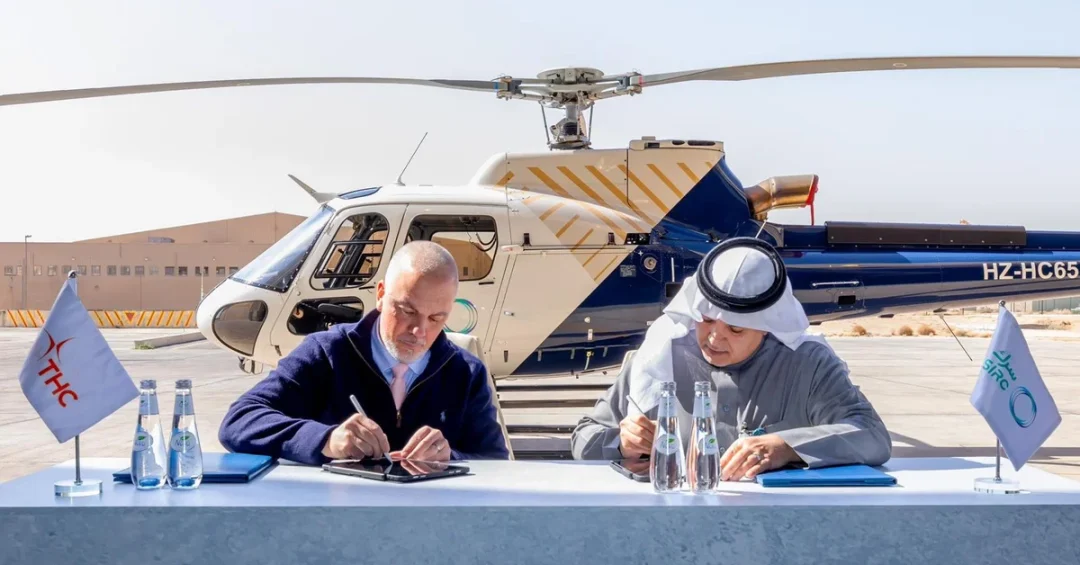
The Saudi Investment Recycling Company (SIRC), a wholly owned subsidiary of the Public Investment Fund (PIF), has signed a memorandum of understanding (MoU) with The Helicopter Company (THC) to advance sustainability, develop innovative waste management and recycling solutions, and support the circular economy in line with Saudi Vision 2030. The agreement, announced in Riyadh on January 20, 2025, and released through the Saudi Press Agency (SPA), brings together two PIF-backed entities in a partnership that links the fast-growing aviation services sector with the Kingdom’s national recycling and resource-recovery agenda. Under the MoU, SIRC and THC will cooperate on sustainable aviation solutions, technology-driven operations, and the extension of recycling services into new industrial sectors. The collaboration reflects a widening recognition in Saudi Arabia that environmental responsibility and commercial growth can reinforce one another, and it signals how the circular economy is moving from policy ambition into practical, cross-industry application.
The memorandum was signed by Eng. Ziyad Alshiha, Chief Executive Officer of SIRC, and Arnaud Martinez, Chief Executive Officer of THC, both of whom framed the agreement as a practical step toward reducing environmental impact while improving operational performance. For international observers, the deal offers a clear example of how Saudi Arabia’s economic transformation is being implemented at the level of individual companies and sectors. It also demonstrates the role of the Public Investment Fund in incubating partnerships that connect national sustainability targets with day-to-day business operations. The MoU is not a standalone announcement but part of a broader pattern of cooperation between Saudi entities that are aligning their strategies with the goals of Vision 2030, the national roadmap launched in 2016 to diversify the economy and improve quality of life.
Context and Background
Why does a recycling company and a helicopter operator make sense as partners? The answer lies in the scale and speed of Saudi Arabia’s industrial expansion, which has created both environmental challenges and opportunities for innovative solutions. SIRC was established to build a comprehensive waste management and recycling ecosystem in the Kingdom, covering everything from municipal and commercial waste to construction debris, electronic waste, and industrial by-products. As a PIF company, it operates with a mandate to develop infrastructure, attract investment, and introduce technologies that turn waste streams into valuable materials. THC, meanwhile, has grown rapidly as a provider of helicopter services for tourism, emergency medical transport, aerial work, and executive travel, making it one of the most visible names in Saudi Arabia’s expanding aviation sector.
The two companies operate in different industries, but they share a common interest in reducing emissions, improving resource efficiency, and meeting the expectations of regulators, investors, and customers who increasingly value environmental performance. Aviation is a sector where sustainability pressures are intense, from fuel consumption to noise and waste generated by maintenance and ground operations. Recycling and waste management, for their part, require reliable logistics and the ability to serve dispersed locations across a vast country. By joining forces, SIRC and THC can explore ways to integrate circular-economy practices into aviation operations and to use aviation capabilities where they add value to recycling and environmental services. The MoU therefore represents a meeting of two national priorities: cleaner aviation and smarter waste management.
The timing of the agreement is significant. Saudi Arabia has been accelerating its environmental agenda through initiatives such as the Saudi Green Initiative and the Middle East Green Initiative, which aim to reduce emissions, increase reliance on clean energy, and restore ecosystems. At the same time, the Kingdom is hosting major international events and expanding tourism, which increases demand for air services and puts a premium on sustainable operations. Companies that can demonstrate credible environmental strategies are better positioned to win contracts, attract talent, and build trust with global partners. The SIRC-THC MoU responds to this environment by committing both parties to explore concrete measures rather than broad statements, with a focus on technology, innovation, and measurable reductions in environmental impact.
Key Details of the Agreement
What exactly will the two companies do together? According to the announcement carried by the Saudi Press Agency, SIRC and THC will collaborate to bolster sustainability efforts, develop innovative waste management and recycling solutions, and support the circular economy. The agreement emphasizes sustainable aviation solutions and advanced air services that reduce environmental impact. It also commits the partners to advance technology-driven operations and to extend services into new sectors that promote sustainability. These are broad but practical objectives: they allow the companies to identify specific projects, pilot programs, and operational improvements over time, while signaling to the market that both are serious about environmental performance.
Eng. Ziyad Alshiha, CEO of SIRC, said the collaboration aims to foster innovation, reduce emissions, and ensure long-term environmental safety within the sector. “This partnership advances a sustainable future, positioning Saudi Arabia at the forefront of the global green economy,” he said. His statement places the agreement within the Kingdom’s ambition to be a leader in green industries, not merely a participant. For SIRC, working with an aviation operator opens new avenues for demonstrating how recycling and resource recovery can serve high-value sectors. For THC, the partnership provides access to expertise in waste reduction, materials recovery, and circular design that can be applied to aircraft maintenance, ground operations, and corporate facilities.
Arnaud Martinez, CEO of THC, emphasized the company’s goal of reducing its carbon footprint, stressing that the agreement aims to transform ambitious ideas into practical achievements that contribute to a sustainable future for both aviation and the environment. His comments underline a shift in the aviation industry toward integrating environmental considerations into core business planning. THC has expanded its fleet and service offering in recent years, supporting tourism, medical evacuations, and industrial operations. As its activity grows, so does its environmental responsibility, and the MoU with SIRC provides a framework for addressing that responsibility through collaboration rather than isolated effort. Both leaders framed the agreement as a beginning rather than an end, with implementation expected to unfold through joint working groups and specific initiatives.
International and Regional Impact
How will this partnership be viewed beyond Saudi Arabia’s borders? International investors, regulators, and industry analysts are paying close attention to how Gulf economies translate sustainability commitments into action. The SIRC-THC MoU is a small but telling example of the kind of cross-sector collaboration that global sustainability frameworks encourage. It shows that Saudi companies are not waiting for international mandates but are proactively building partnerships that align with global best practices. For regional neighbors, the agreement offers a model of how aviation and waste management can cooperate, particularly in markets where rapid development is increasing both air traffic and waste volumes.
The partnership also reinforces Saudi Arabia’s position as a hub for sustainable innovation in the Middle East. By linking a recycling leader with an aviation services provider, the MoU creates a platform for testing technologies and operational models that could later be exported or replicated. This aligns with the Kingdom’s broader efforts to attract foreign investment and to position itself as a center for green technology and circular-economy solutions. International companies looking to partner with Saudi entities may see this agreement as evidence of a maturing ecosystem in which environmental performance is integrated into commercial strategy. It also supports the goals of the circular economy, a concept that is gaining traction globally as governments and businesses seek to reduce waste and make better use of resources.
Economic and Strategic Significance
Why does this matter for Saudi Arabia’s economy? The circular economy is not only an environmental concept; it is an economic one. Recycling and resource recovery can create jobs, reduce reliance on raw materials, and generate new revenue streams. By integrating circular practices into aviation and other sectors, SIRC and THC can help build domestic value chains that keep materials in use for longer. This supports the Vision 2030 goal of diversifying the economy beyond oil, developing non-oil industries, and creating opportunities for small and medium-sized enterprises that supply recycling and environmental services. The partnership also strengthens the role of the Public Investment Fund in fostering strategic sectors, as both companies are PIF-backed and operate with a long-term mandate.
For THC, the agreement is a strategic investment in its own future. As environmental standards tighten and customers become more discerning, aviation companies that can demonstrate sustainable operations will have a competitive advantage. For SIRC, working with THC provides a high-profile partner that can help demonstrate the value of recycling solutions in a demanding industry. Together, the two companies can pursue technology-driven operations that improve efficiency, reduce waste, and lower emissions. The MoU also signals to other Saudi companies that sustainability partnerships are a practical way to meet national goals while improving business performance. In a rapidly changing global economy, such collaborations are increasingly seen as essential rather than optional.
Vision 2030 Alignment
How does this agreement connect to Saudi Vision 2030? Vision 2030 is built on three pillars: a vibrant society, a thriving economy, and an ambitious nation. Environmental sustainability cuts across all three. The SIRC-THC MoU supports the thriving economy by promoting innovation, creating new business opportunities, and enhancing the competitiveness of Saudi industries. It supports a vibrant society by contributing to cleaner air, better waste management, and improved quality of life. And it supports an ambitious nation by demonstrating that Saudi entities can lead in global sustainability efforts. The agreement is also consistent with the National Environment Strategy and the Saudi Green Initiative, which aim to protect the environment and transition to a green economy.
Looking ahead, the partnership between SIRC and THC is expected to evolve from a memorandum of understanding into concrete projects and measurable outcomes. The two companies have committed to exploring sustainable aviation solutions, technology-driven operations, and new sectors that promote sustainability. For Saudi Arabia, this is another step in a long-term journey toward a diversified, environmentally responsible economy. It shows that Vision 2030 is not just a government plan but a framework that companies across different industries are adopting and implementing. As the Kingdom continues to grow and attract global attention, partnerships like this one will help ensure that growth is sustainable, inclusive, and aligned with the aspirations of the Saudi people and the international community.
20 Questions
Q1. What is the main purpose of the MoU between SIRC and THC?
A1. The MoU aims to bolster sustainability efforts, develop innovative waste management and recycling solutions, and support the circular economy in line with Saudi Vision 2030. It also focuses on sustainable aviation solutions and technology-driven operations.
Q2. Who signed the memorandum of understanding?
A2. The MoU was signed by Eng. Ziyad Alshiha, CEO of the Saudi Investment Recycling Company (SIRC), and Arnaud Martinez, CEO of The Helicopter Company (THC), as announced via the Saudi Press Agency.
Q3. What is SIRC and who owns it?
A3. SIRC is the Saudi Investment Recycling Company, a wholly owned subsidiary of the Public Investment Fund (PIF). It is mandated to build a comprehensive waste management and recycling ecosystem in Saudi Arabia.
Q4. What is THC and what does it do?
A4. THC is The Helicopter Company, a Saudi provider of helicopter services for tourism, emergency medical transport, aerial work, and executive travel. It is also backed by the Public Investment Fund.
Q5. When and where was the agreement announced?
A5. The agreement was announced in Riyadh on January 20, 2025, and was released through the Saudi Press Agency (SPA), the Kingdom’s official news agency.
Q6. How does this MoU support the circular economy?
A6. The MoU promotes recycling and waste management solutions that keep materials in use for longer, reduce waste, and create economic value. This supports the circular economy by integrating resource recovery into aviation and other sectors.
Q7. What did Eng. Ziyad Alshiha say about the partnership?
A7. He said the collaboration aims to foster innovation, reduce emissions, and ensure long-term environmental safety within the sector. He added that it advances a sustainable future, positioning Saudi Arabia at the forefront of the global green economy.
Q8. What did Arnaud Martinez say about the agreement?
A8. He emphasized THC’s goal of reducing its carbon footprint and stressed that the agreement aims to transform ambitious ideas into practical achievements that contribute to a sustainable future for aviation and the environment.
Q9. What are sustainable aviation solutions mentioned in the MoU?
A9. Sustainable aviation solutions refer to practices and technologies that reduce the environmental impact of aviation, such as lower emissions, improved fuel efficiency, waste reduction, and responsible ground operations. The MoU commits both parties to explore such solutions.
Q10. How does the MoU relate to Saudi Vision 2030?
A10. It aligns with Vision 2030 by supporting economic diversification, innovation, and environmental sustainability. It also contributes to the goals of the Saudi Green Initiative and the National Environment Strategy.
Q11. Will the MoU create new jobs in Saudi Arabia?
A11. The MoU is expected to support the growth of the recycling and aviation sectors, which can create employment opportunities. However, specific job numbers were not announced in the initial statement.
Q12. What sectors might benefit from this collaboration?
A12. The collaboration could benefit aviation, waste management, recycling, tourism, and industrial services. It may also extend into new sectors that promote sustainability, as stated in the MoU.
Q13. Is this MoU legally binding?
A13. A memorandum of understanding is typically a non-binding agreement that outlines areas of cooperation. It sets the framework for future projects and detailed agreements between the parties.
Q14. How does this partnership reduce emissions?
A14. By integrating recycling and waste management into aviation operations, the partnership aims to reduce waste and improve resource efficiency. It also focuses on technology-driven operations that can lower emissions across both sectors.
Q15. What role does the Public Investment Fund play in this agreement?
A15. The PIF owns SIRC and backs THC, so it supports both entities in pursuing strategic partnerships. The agreement reflects the PIF’s role in fostering sustainable economic development in Saudi Arabia.
Q16. What are the next steps after signing the MoU?
A16. The next steps typically involve forming joint working groups, identifying pilot projects, and developing detailed plans for implementation. Specific initiatives will be announced as they progress.
Q17. How does this MoU impact Saudi Arabia’s global standing?
A17. It reinforces Saudi Arabia’s position as a leader in sustainability and the green economy. It also demonstrates the Kingdom’s commitment to international environmental goals and cross-sector innovation.
Q18. Are there similar partnerships in Saudi Arabia?
A18. Yes, Saudi Arabia has seen a growing number of sustainability-focused partnerships across sectors, reflecting the national push toward Vision 2030. This MoU is part of that broader trend.
Q19. What technology will be used in this collaboration?
A19. The MoU emphasizes technology-driven operations, which could include advanced recycling technologies, waste-to-energy solutions, and digital tools for tracking and reducing environmental impact. Specific technologies will be determined jointly.
Q20. How can international companies engage with SIRC or THC?
A20. International companies interested in partnering with SIRC or THC can contact them through official channels. Both entities are open to collaborations that support sustainability and align with Saudi Vision 2030 goals.
Reader Feedback
We value your thoughts. Please share your feedback on this article.
Your feedback helps us improve our coverage.