


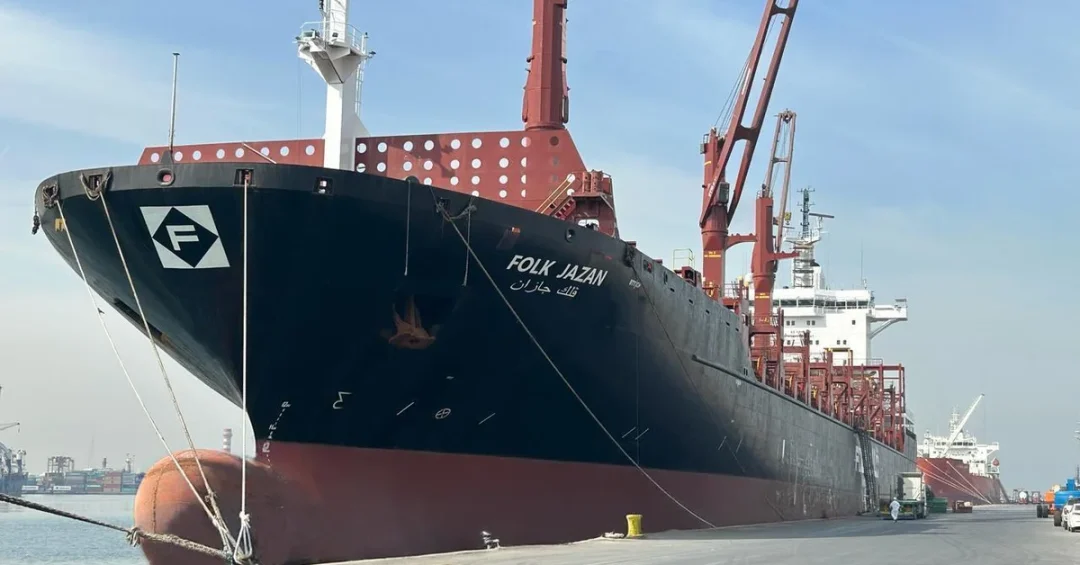
Folk Maritime Services Company, a Public Investment Fund (PIF) company and one of the region’s emerging leaders in regional liner and feeder services, announced on April 7, 2025, the official purchase of its second owned vessel, M/V Folk Jazan. Registered at Jeddah Islamic Port, the acquisition marks a significant leap forward in strengthening regional maritime connectivity and solidifying Saudi Arabia’s position as a global logistics powerhouse. The vessel has already initiated operational deployment across the company’s routes throughout the Red Sea and the Arabian Gulf, signaling a new phase in the Kingdom’s maritime expansion. The announcement, released via the Saudi Press Agency, underscores the growing momentum of Saudi Arabia’s logistics sector under Vision 2030.
What does this acquisition reveal about Saudi Arabia’s long-term ambitions on the world’s shipping lanes? For international observers, the purchase of M/V Folk Jazan is more than a corporate transaction. It reflects a deliberate national strategy to build indigenous maritime capacity, reduce reliance on foreign-chartered vessels, and position the Kingdom as a pivotal node in global trade between Asia, Europe, and Africa. Folk Maritime’s fleet now totals six ships, a modest but strategically significant number that demonstrates how PIF-backed enterprises are translating national vision into operational reality. The vessel’s registration at Jeddah Islamic Port also highlights the Red Sea gateway’s rising importance in global supply chains.
Context and Background
How did Folk Maritime rise so quickly from a startup to a regional operator with owned vessels? The company launched operations in April 2024, less than a year before this latest acquisition, with a mandate to provide efficient regional liner and feeder services. Its first owned vessel, Folk Jeddah, was acquired in September 2024 and is also operated out of Jeddah Islamic Port. That initial purchase tested the company’s ability to integrate owned assets into its service network. The positive results encouraged a rapid follow-on acquisition, reflecting both market demand and the strategic patience of its parent, the Public Investment Fund, which has been tasked with diversifying Saudi Arabia’s economy away from hydrocarbons.
Folk Maritime’s emergence coincides with a broader reordering of global shipping. Red Sea routes have faced disruptions, and major carriers have had to adapt schedules and capacities. In this environment, a Saudi-flagged, PIF-owned operator offers reliability and regional knowledge that foreign carriers may lack. The company’s feeder services connect smaller ports to larger hubs, a niche that is essential for the efficient movement of goods across the Arabian Peninsula. By owning rather than chartering vessels, Folk Maritime gains greater control over schedules, costs, and service quality. This operational independence is a key differentiator in a market where charter rates can be volatile and vessel availability uncertain.
Key Details of the M/V Folk Jazan Acquisition
What technical characteristics make M/V Folk Jazan suited to its role? Built in 2008 by Zhejiang Shipbuilding Co. in China, the vessel has a nominal capacity of 2,015 TEU (twenty-foot equivalent units). This capacity is optimized for regional feeder trades, where flexibility and frequency matter more than sheer size. The ship is engineered to meet the rigorous demands of modern containerized shipping, achieving a balance between capacity and operational efficiency. Its deployment on Red Sea and Arabian Gulf routes ensures seamless and reliable service for customers who depend on timely deliveries. The vessel’s Saudi registration at Jeddah Islamic Port also means it flies the Saudi flag, reinforcing national sovereignty in maritime affairs.
“The acquisition of M/V Folk Jazan is a pivotal step in our strategic growth,” said CEO of Folk Maritime Poul Hestbaek. “This vessel not only expands our operational capabilities but also reinforces our commitment to supporting Saudi Arabia’s Vision 2030 by enhancing the Kingdom’s maritime infrastructure and contributing to its emergence as a global logistics hub.” Hestbaek further noted that the acquisition of the second owned Saudi-flagged container vessel, part of an expanding fleet now totaling six ships, significantly enhances operational flexibility and reduces dependency on chartered vessels. The fleet expansion, which began with Folk Jeddah in September 2024, now operated out of Jeddah Islamic Port, further bolsters regional trade and showcases Folk Maritime’s commitment to scaling up its contributions to the regional economy.
International and Regional Impact
How does a single vessel acquisition ripple across international trade networks? The Red Sea and Arabian Gulf are among the world’s most strategic maritime corridors, carrying a substantial share of global container traffic. Any improvement in the reliability and efficiency of services there benefits importers and exporters far beyond the region. Folk Maritime’s expanded fleet offers shippers an alternative to larger global carriers, potentially reducing congestion and improving schedule integrity. For Saudi Arabia’s neighbors, the new service means better connections to Jeddah Islamic Port and, by extension, to markets in Europe, Asia, and Africa. The vessel’s deployment also supports the Kingdom’s humanitarian and commercial supply lines, which are vital for regional stability.
Regionally, the acquisition reinforces Saudi Arabia’s role as a logistics bridge between three continents. The Kingdom’s geographic position, with coastlines on both the Red Sea and the Arabian Gulf, is a natural advantage. Folk Maritime’s services help translate that geography into economic value by moving goods efficiently through Saudi ports. This is particularly important as Saudi Arabia seeks to attract foreign investment and diversify its trading partners. The company’s growth also creates jobs and builds local expertise in ship management, crewing, and port operations. Over time, these capabilities can be exported, turning Saudi Arabia into a net provider of maritime services rather than merely a consumer.
Economic and Strategic Significance
Why does owning vessels matter for a nation building a post-oil economy? Chartering ships exposes operators to market fluctuations and limits their ability to guarantee capacity during peak seasons. By acquiring owned vessels, Folk Maritime secures dedicated capacity and can plan routes with greater certainty. This reliability is attractive to customers who value predictable transit times, especially in industries like automotive, electronics, and perishables. The economic multiplier effects are substantial: more owned vessels mean more maintenance work, more crew jobs, and more demand for ancillary services at Jeddah Islamic Port. These activities contribute to GDP and help develop a skilled workforce, both central goals of Vision 2030.
Strategically, the acquisition reduces Saudi Arabia’s vulnerability to external shipping disruptions. During periods of geopolitical tension, foreign carriers may reroute or cancel services, leaving regional traders stranded. A national flag carrier with owned tonnage provides a buffer. It also gives Saudi Arabia a seat at the table in global maritime governance, where vessel-owning nations have greater influence. The fact that Folk Maritime is a PIF company means profits are reinvested into the national economy, rather than flowing abroad. This alignment of commercial and national interests is a hallmark of the Kingdom’s economic transformation. The vessel’s name, Folk Jazan, also pays homage to a Saudi region, reinforcing local identity within a global industry.
Vision 2030 Alignment
How does a single ship fit into the grand tapestry of Vision 2030? Saudi Arabia’s Vision 2030 aims to transform the Kingdom into a global logistics hub, leveraging its location to capture a larger share of world trade. The National Industrial Development and Logistics Program (NIDLP) is one of the Vision’s key execution arms, targeting improvements in ports, railways, and logistics zones. Folk Maritime’s fleet expansion directly supports these objectives by increasing the volume and value of goods moving through Saudi ports. The company’s growth also complements other PIF investments in ports, such as the Jeddah Islamic Port development, and in special economic zones like NEOM and the Red Sea Project. Together, these initiatives create an integrated logistics ecosystem that can compete globally.
Moreover, the acquisition demonstrates the Vision’s emphasis on private-sector-led growth and job creation. Folk Maritime is a PIF company, but it operates commercially, responding to market signals. Its success encourages other Saudi companies to invest in maritime assets and services. The resulting competition and innovation can lower costs and improve quality, benefiting the entire economy. As the Kingdom continues to diversify away from oil, maritime logistics will be a cornerstone of its non-oil exports and re-exports. The M/V Folk Jazan, though modest in size, is a symbol of that journey. It carries not just containers, but the aspirations of a nation determined to chart its own course on the global stage.
20 Questions
Q1. What is Folk Maritime Services Company?
A1. Folk Maritime Services Company is a Public Investment Fund (PIF) company and a regional leader in liner and feeder services. It launched operations in April 2024 and is headquartered in Saudi Arabia, supporting the Kingdom’s maritime connectivity and Vision 2030 logistics goals.
Q2. What vessel did Folk Maritime recently purchase?
A2. Folk Maritime purchased its second owned vessel, M/V Folk Jazan, as announced on April 7, 2025. The vessel is registered at Jeddah Islamic Port and has begun operations in the Red Sea and Arabian Gulf.
Q3. What is the capacity of M/V Folk Jazan?
A3. M/V Folk Jazan has a nominal capacity of 2,015 TEU (twenty-foot equivalent units). This capacity is optimized for regional feeder services, balancing operational flexibility with efficient cargo handling on key routes.
Q4. When and where was M/V Folk Jazan built?
A4. The vessel was built in 2008 by Zhejiang Shipbuilding Co. in China. It is engineered to meet modern containerized shipping demands, ensuring reliable service across the company’s regional network.
Q5. Who is the CEO of Folk Maritime?
A5. Poul Hestbaek is the CEO of Folk Maritime. He described the acquisition as a pivotal step in the company’s strategic growth and a reinforcement of its commitment to Saudi Arabia’s Vision 2030.
Q6. How many ships does Folk Maritime’s fleet now include?
A6. With the addition of M/V Folk Jazan, Folk Maritime’s fleet totals six ships. This includes two owned vessels, Folk Jeddah and Folk Jazan, and four chartered vessels.
Q7. What was Folk Maritime’s first owned vessel?
A7. Folk Maritime’s first owned vessel was Folk Jeddah, acquired in September 2024. It is also operated out of Jeddah Islamic Port and marked the company’s initial step into vessel ownership.
Q8. Why is owning vessels important for Folk Maritime?
A8. Owning vessels reduces dependency on chartered ships, enhances operational flexibility, and ensures reliable capacity. It allows Folk Maritime to control schedules and costs, better serving regional trade needs.
Q9. How does this acquisition support Saudi Vision 2030?
A9. The acquisition supports Vision 2030 by enhancing maritime infrastructure, boosting Saudi Arabia’s role as a global logistics hub, creating jobs, and strengthening the local supply chain, all key objectives of the national transformation plan.
Q10. What routes will M/V Folk Jazan serve?
A10. M/V Folk Jazan will operate on Folk Maritime’s routes throughout the Red Sea and the Arabian Gulf. These routes connect major ports in the region, facilitating efficient trade between Asia, Europe, and Africa.
Q11. What is the significance of registering the vessel at Jeddah Islamic Port?
A11. Registering at Jeddah Islamic Port underscores the port’s importance as a strategic hub. It also means the vessel flies the Saudi flag, reinforcing national sovereignty and the Kingdom’s growing maritime capabilities.
Q12. How does Folk Maritime contribute to job creation?
A12. Folk Maritime creates jobs in ship operations, crewing, port services, and logistics. As the fleet expands, demand for skilled Saudi workers increases, supporting Vision 2030’s goal of employment for citizens.
Q13. What is the role of the Public Investment Fund in Folk Maritime?
A13. The Public Investment Fund (PIF) owns Folk Maritime, providing strategic backing and capital. PIF’s involvement aligns the company’s growth with national economic diversification goals and long-term investment horizons.
Q14. How does this acquisition affect regional trade?
A14. The acquisition enhances regional trade by increasing shipping capacity and reliability. It offers shippers an alternative to global carriers and supports the efficient movement of goods across the Red Sea and Arabian Gulf.
Q15. What challenges does the Red Sea shipping lane face?
A15. The Red Sea has faced geopolitical tensions and disruptions, affecting global shipping schedules. Folk Maritime’s owned vessels provide a stable, Saudi-flagged option that can maintain service despite external uncertainties.
Q16. What is the significance of the vessel’s name, Folk Jazan?
A16. The name Folk Jazan honors the Jazan region of Saudi Arabia, reflecting local identity and the company’s national roots. It also symbolizes the integration of regional development with global maritime ambitions.
Q17. How does Folk Maritime ensure operational efficiency?
A17. Folk Maritime optimizes routes, uses modern vessel technology, and maintains a balanced fleet of owned and chartered ships. This approach ensures reliable service and cost-effectiveness for customers.
Q18. What are feeder services in shipping?
A18. Feeder services involve smaller vessels transporting containers between regional ports and major hubs. They are essential for connecting smaller markets to global trade networks, a niche Folk Maritime specializes in.
Q19. How does this acquisition align with Saudi Arabia’s logistics ambitions?
A19. It aligns with the National Industrial Development and Logistics Program (NIDLP) by expanding maritime capacity, improving port throughput, and attracting investment, all aimed at making Saudi Arabia a top global logistics hub.
Q20. What can we expect next from Folk Maritime?
A20. Folk Maritime is expected to continue expanding its fleet and service network, supporting Vision 2030. Future acquisitions and route enhancements will further strengthen Saudi Arabia’s maritime connectivity and economic diversification.
Reader Feedback
We value your thoughts. Please share your feedback on this article.
Your feedback helps us improve our coverage.
Related articles
 Aramco, Sinopec Sign Yasref Petrochemical Expansion Deal
 Elm Showcases Digital Solutions at GITEX AFRICA 2025
 MAKEEN, DESMI Sign Deal to Localize Marine Systems in Saudi Arabia
 Saudi Electricity Company Wins Five Medals at Geneva Inventions Expo
 SPL Signs Agreements with 4 National Factories from ‘Made in Saudi’ Program
 ROSHN Group Launches CSR Initiatives to Support Communities Nationwide