


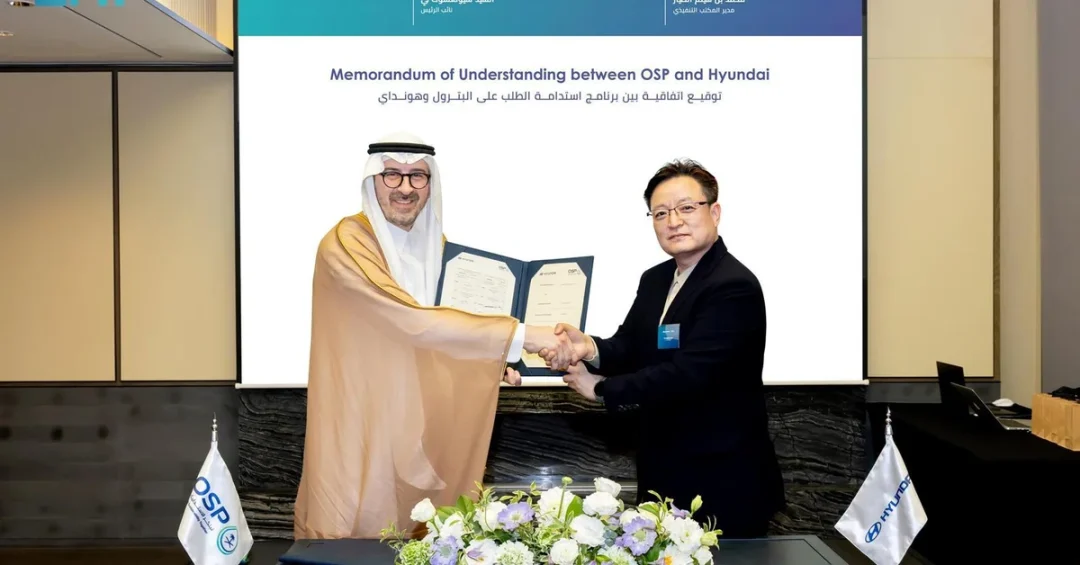
The Oil Sustainability Program (OSP) signed a memorandum of understanding (MoU) with Hyundai Motor Company in Seoul on April 21, 2025, aiming to accelerate innovation in the transportation sector and promote the adoption of environmentally friendly mobility solutions. The agreement, announced by the Saudi Press Agency, brings together Saudi Arabia’s leading initiative for sustainable oil practices and one of the world’s largest automakers in a collaboration that underscores the Kingdom’s commitment to advancing green technologies without compromising economic growth. The MoU was signed in the South Korean capital, a global hub for automotive innovation, signaling the international reach of Saudi Arabia’s sustainability agenda.
This partnership is not just another corporate agreement; it represents a strategic alignment between a major oil producer and a car manufacturer to jointly develop technologies that reduce emissions and improve fuel efficiency. For Saudi Arabia, it is a concrete step toward diversifying its economy and enhancing its environmental stewardship, core tenets of Saudi Vision 2030. For Hyundai, it offers a chance to collaborate with a key player in the global energy landscape, gaining insights that could shape future vehicle development. As the world grapples with climate change, such cross-border collaborations are essential to achieving meaningful progress.
Context and Background
Why is a program focused on oil sustainability partnering with an automaker? The answer lies in the evolving role of oil in a low-carbon future. The Oil Sustainability Program, an initiative under the Ministry of Energy, seeks to maximize the value of hydrocarbons while minimizing their environmental footprint. By teaming up with Hyundai, OSP aims to drive innovation in internal combustion engine (ICE) technologies, hybrid systems, and emission treatment—areas where incremental improvements can yield significant environmental benefits. This approach recognizes that while electric vehicles are gaining traction, billions of vehicles with internal combustion engines will remain on the roads for decades, making efficiency gains critical.
Saudi Arabia has long been a reliable energy supplier, but under Vision 2030, it is transforming into a diversified economy with a strong focus on sustainability. The Kingdom has launched numerous initiatives, from the Saudi Green Initiative to the Middle East Green Initiative, targeting net-zero emissions by 2060. Collaborations like this MoU demonstrate that Saudi Arabia is not just talking about sustainability but actively investing in research and development. Hyundai, meanwhile, has been at the forefront of hydrogen fuel cell technology and electric vehicles, and its partnership with OSP could accelerate the deployment of advanced powertrains in regions where oil remains a primary fuel source.
The timing of the agreement is also notable. It comes as global automakers face increasing pressure to meet stricter emissions regulations, particularly in Europe and Asia. By working together, OSP and Hyundai can pool resources and expertise to develop solutions that are both environmentally sound and economically viable. This is especially important for emerging markets, where affordability and infrastructure constraints often slow the adoption of cutting-edge green technologies. The MoU thus represents a pragmatic approach to sustainability, one that balances innovation with real-world applicability.
Key Details of the Agreement
According to the Saudi Press Agency, the MoU encompasses several specific areas of collaboration. First, the development of advanced vehicle technologies, including enhanced hybrid powertrain systems that combine internal combustion engines with electric motors to improve fuel economy. Second, improvements to internal combustion engine technologies themselves, such as more efficient combustion processes and reduced friction. Third, innovations in emission treatment systems, which are crucial for reducing harmful pollutants like nitrogen oxides and particulate matter. These efforts collectively aim to increase fuel efficiency and reduce environmental impact across a wide range of vehicles.
Beyond technical development, the agreement supports research initiatives designed to advance innovation and contribute to a sustainable transportation system. This could involve joint research projects, exchange of engineers and scientists, and shared testing facilities. The MoU also emphasizes improving quality of life, a nod to the broader societal benefits of cleaner air and reduced noise pollution. While the specific financial terms and duration of the agreement were not disclosed, the signing in Seoul indicates a high-level commitment from both parties. The presence of OSP officials in South Korea highlights the international dimension of Saudi Arabia’s sustainability efforts.
It is important to note that this is a memorandum of understanding, not a legally binding contract. However, such agreements often pave the way for more concrete partnerships. They signal intent and establish a framework for cooperation. For Hyundai, collaborating with OSP provides access to Saudi Arabia’s growing automotive market and potential investment opportunities. For Saudi Arabia, it taps into Hyundai’s engineering prowess and global supply chains. The MoU thus serves as a foundation for future joint ventures that could see tangible outcomes in the coming years.
International and Regional Impact
What does this collaboration mean for the broader Middle East and beyond? The partnership between OSP and Hyundai could have ripple effects across the region. Saudi Arabia is the largest automotive market in the Gulf, and any advancements in fuel efficiency or emissions reduction developed through this MoU could be adopted by neighboring countries. Moreover, it reinforces Saudi Arabia’s position as a leader in sustainable energy, not just as an oil exporter but as a innovator in green technologies. This aligns with the Kingdom’s efforts to diversify its international partnerships, moving beyond traditional energy ties to include technology and manufacturing.
On a global scale, the MoU contributes to the worldwide effort to combat climate change. The transportation sector accounts for a significant portion of global greenhouse gas emissions, and improving the efficiency of internal combustion engines can have a substantial impact, especially in regions where electric vehicle adoption is slower. By focusing on hybrid and ICE improvements, OSP and Hyundai are addressing a critical gap in the transition to sustainable mobility. This pragmatic approach may serve as a model for other oil-producing nations and automakers, demonstrating that environmental responsibility and economic growth can go hand in hand.
Economic and Strategic Significance
From an economic perspective, this MoU supports Saudi Arabia’s goal of diversifying its economy away from oil dependence. While oil remains a vital revenue source, the Kingdom is investing heavily in new sectors, including automotive manufacturing. The partnership with Hyundai could lead to technology transfer and the development of local talent, boosting the Kingdom’s industrial base. It also aligns with the National Industrial Development and Logistics Program (NIDLP), which aims to make Saudi Arabia a global industrial powerhouse. By collaborating on advanced vehicle technologies, Saudi Arabia can position itself as a hub for automotive innovation in the Middle East.
Strategically, the agreement strengthens ties between Saudi Arabia and South Korea, a key ally in Asia. South Korea is a major importer of Saudi oil and a significant investor in the Kingdom’s infrastructure projects. This MoU adds a new dimension to the relationship, focusing on knowledge exchange and joint research. It also complements Saudi Arabia’s broader engagement with Asian countries, as part of its Look East policy. By deepening economic and technological cooperation, the Kingdom enhances its geopolitical standing and reduces reliance on traditional Western markets.
Vision 2030 Alignment
How does this MoU fit into Saudi Vision 2030? The Vision, launched in 2016 by Crown Prince Mohammed bin Salman, aims to transform Saudi Arabia into a diversified, sustainable economy. Environmental sustainability is a core pillar, with targets to reduce carbon emissions and increase the use of clean energy. The OSP-Hyundai collaboration directly supports these goals by advancing technologies that make transportation more efficient and environmentally friendly. It also aligns with the Vision’s emphasis on innovation and international partnerships, showcasing Saudi Arabia as a proactive global player in sustainability.
Furthermore, the MoU contributes to the quality of life objectives of Vision 2030, which seek to improve living standards for citizens and residents. Cleaner transportation reduces air pollution and associated health risks, creating healthier cities. It also supports the development of a knowledge-based economy, as research and development activities generate high-skilled jobs. By working with Hyundai, Saudi Arabia is not only importing technology but also building local capabilities, ensuring that the benefits of innovation are retained within the Kingdom. This partnership is a testament to the Vision’s holistic approach, integrating economic, social, and environmental dimensions.
20 Questions
Q1. What is the Oil Sustainability Program (OSP)?
A1. The Oil Sustainability Program is a Saudi initiative under the Ministry of Energy that aims to maximize the value of hydrocarbons while minimizing environmental impact through innovation and sustainable practices.
Q2. Which company signed the MoU with OSP?
A2. Hyundai Motor Company, a leading global automaker from South Korea, signed the memorandum of understanding with OSP.
Q3. Where was the MoU signed?
A3. The MoU was signed in Seoul, the capital of the Republic of Korea, on April 21, 2025.
Q4. What are the main areas of collaboration in the MoU?
A4. The collaboration focuses on advanced vehicle technologies, including hybrid powertrains, internal combustion engine improvements, and emission treatment systems.
Q5. How does this MoU support Saudi Vision 2030?
A5. It aligns with Vision 2030’s environmental sustainability goals by promoting innovative technologies and practices in the transport sector, enhancing quality of life and economic diversification.
Q6. What specific technologies will be developed?
A6. The MoU covers enhanced hybrid powertrain systems, improvements to internal combustion engines, and innovations in emission treatment systems to increase fuel efficiency.
Q7. Why is Hyundai partnering with OSP?
A7. Hyundai aims to collaborate with a key player in the global energy landscape to develop sustainable mobility solutions and gain insights into emerging markets.
Q8. What does OSP gain from this partnership?
A8. OSP gains access to Hyundai’s automotive engineering expertise and global supply chains, accelerating the development of efficient and sustainable transport technologies.
Q9. Is this MoU legally binding?
A9. No, it is a memorandum of understanding, which is not legally binding but establishes a framework for future cooperation and joint projects.
Q10. How will this MoU affect the Saudi automotive market?
A10. It could lead to the introduction of more fuel-efficient and environmentally friendly vehicles in Saudi Arabia, supporting the growth of the local automotive sector.
Q11. What are the environmental benefits of this collaboration?
A11. The collaboration aims to reduce emissions and improve fuel efficiency, contributing to cleaner air and lower greenhouse gas emissions in the transportation sector.
Q12. Will this MoU create jobs in Saudi Arabia?
A12. Yes, by fostering research and development and potentially attracting investment, the MoU can generate high-skilled jobs in the automotive and technology sectors.
Q13. How does this partnership fit into Saudi Arabia’s economic diversification?
A13. It supports diversification by developing the automotive industry and reducing reliance on oil revenues, in line with Vision 2030’s economic goals.
Q14. What is the significance of signing in Seoul?
A14. Signing in Seoul highlights the international scope of Saudi Arabia’s sustainability efforts and strengthens ties with South Korea, a key economic partner.
Q15. What research initiatives are included in the MoU?
A15. The MoU supports joint research to advance innovation in sustainable transportation, including projects to improve vehicle efficiency and reduce environmental impact.
Q16. How does this MoU benefit Hyundai?
A16. Hyundai gains access to the Saudi market and collaborates with a major energy player, enhancing its reputation as a leader in sustainable mobility solutions.
Q17. What is the expected timeline for results from this MoU?
A17. While specific timelines are not disclosed, such agreements typically lead to joint projects and tangible outcomes within a few years.
Q18. Does this MoU involve electric vehicles?
A18. The MoU primarily focuses on hybrid and internal combustion engine technologies, though advancements in these areas complement the broader shift toward electrification.
Q19. How does this collaboration align with global climate goals?
A19. By improving fuel efficiency and reducing emissions, the MoU contributes to global efforts to mitigate climate change, especially in regions where ICE vehicles remain prevalent.
Q20. What are the next steps after signing this MoU?
A20. The next steps likely include forming joint working groups, defining specific projects, and initiating research and development activities as outlined in the agreement.
Reader Feedback
We value your thoughts. Please share your feedback on this article.
Your feedback helps us improve our coverage.
Related articles
 PepsiCo Opens Regional HQ in Riyadh’s KAFD
 Federation of Saudi Chambers Hosts Saudi-Ethiopian Business Forum
 Saudia Group Orders 20 Airbus A330neo in Vision 2030 Push
 Maaden Unveils New Corporate Identity: ‘Unearth Tomorrow’
 AviLease Closes $1.5 Billion Credit Facility
 Saudi-US Business Council Hosts New Jersey Governor for Riyadh Roundtable