


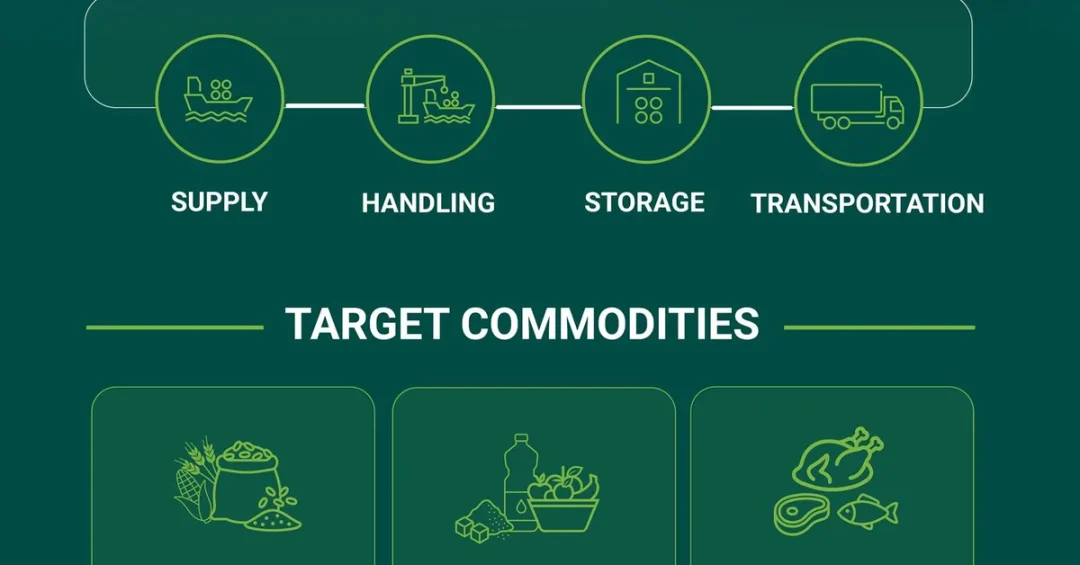
SABIL, a subsidiary of the Saudi Agricultural and Livestock Investment Company (SALIC), which is itself owned by the Public Investment Fund (PIF), announced on October 1, 2026, the launch of a new corporate strategy focused on delivering integrated logistics solutions for the agri-food sector. The announcement, released through official Saudi channels and reported by the Saudi Press Agency (SPA), positions the company at the center of the Kingdom’s efforts to strengthen supply chain efficiency and reinforce national food security objectives. The strategy is built around three pillars: alignment with Saudi Vision 2030, responsiveness to market needs, and maximizing the value of SABIL’s operational capabilities, including its network of 14 branches across Saudi Arabia. The move signals a deliberate step toward deeper integration between logistics infrastructure and the food supply chain at a time when global agricultural markets remain volatile.
For international observers, the announcement matters because it illustrates how Saudi Arabia is using state-linked enterprises to build resilience into essential supply lines. SABIL was established by SALIC following a Cabinet resolution that transformed the Saudi Grains Organization into the General Food Security Authority and transferred operational activities related to grain silos, including the procurement and supply of wheat and strategic reserves, to SALIC. That institutional redesign gave SABIL a clear mandate: to operate the commercial and logistical side of the Kingdom’s grain and food reserve system while the authority focuses on regulation and oversight. The new strategy extends that mandate into a broader agri-food logistics role, covering handling, storage, transportation, and the efficient use of assets and investment spaces. The timing reflects both the maturity of SABIL’s operating model and the Kingdom’s ambition to lead in regional food security.
Context and Background
How did a grains organization become a linchpin of national food security? The answer lies in a series of structural reforms that redefined how Saudi Arabia manages its strategic food reserves. The Cabinet resolution that created the General Food Security Authority separated regulatory responsibilities from commercial operations, allowing a specialized entity under SALIC to run silos, procurement, and supply functions with a business-oriented approach. SABIL inherited that operational role and has since managed wheat procurement, strategic reserves, and a nationwide network of storage and distribution assets. The new strategy is the next logical phase: moving from managing reserves to offering integrated logistics solutions across the agri-food sector.
The context is a global food system under pressure. Climate change, geopolitical disruptions, and shifting trade flows have made food security a priority for governments worldwide. Saudi Arabia, which imports a significant share of its food, has responded with a multi-layered approach that combines domestic production, international investment through SALIC, and efficient logistics. SABIL’s strategy explicitly emphasizes partnerships with government entities and the private sector to enhance supply chain efficiency, support the availability and stability of essential commodities, and strengthen its role within the food security ecosystem. By formalizing these partnerships, the company aims to reduce friction in the movement of grains and other staples from ports to processors and markets.
The strategy also reflects lessons learned from recent global supply chain shocks. During periods of disruption, countries with strong storage and logistics capacity were better able to stabilize prices and ensure availability. SABIL’s 14 branches across Saudi Arabia provide a physical platform for that resilience. The new strategy seeks to maximize the value of these assets by optimizing their use and opening them to broader commercial activity. This is not merely an expansion of storage capacity; it is a rethinking of how the Kingdom’s agri-food infrastructure can serve both strategic reserves and the everyday needs of the market. For a global audience, this illustrates how Saudi Arabia is institutionalizing food security rather than treating it as an emergency response.
Key Details
What exactly does the new strategy entail? According to the announcement, SABIL will focus on three key pillars: alignment with Saudi Vision 2030 objectives, responsiveness to market needs, and maximizing the value of its operational capabilities and its network of 14 branches. The company intends to expand its services and business in response to evolving needs and future opportunities in the agri-food sector. This includes improving the efficiency of handling, storage, and transportation operations, as well as optimizing the use of its assets and investment spaces. The strategy also emphasizes strategic partnerships and integration with government entities and the private sector, aiming to enhance supply chain efficiency and support the availability and stability of essential commodities.
SABIL Chairman Abdulrahman Al-Zoghaibi described the launch as an important milestone in the company’s journey, ushering in a new phase that lays the foundation for future expansion into areas that serve the agri-food sector. He added that the step reflects the company’s ambition to keep pace with the sector’s development, create sustainable value, and strengthen its long-term impact in line with the Kingdom’s objectives and future aspirations. Chief Executive Officer Abdulrahman Al-Owais said the new strategy provides a flexible operational foundation to expand services and business in response to evolving needs and future opportunities. He noted that this will be achieved by leveraging SABIL’s operational capabilities and network of 14 branches, strengthening its role in supplying essential commodities, improving the efficiency of handling, storage, and transportation, and optimizing the use of its assets and investment spaces.
Al-Owais added that this direction enables SABIL to develop new solutions and services and expand across the supply chain, creating growth opportunities and added value for customers and partners while improving supply efficiency and sustainability. The emphasis on sustainability is notable, as it aligns with broader Saudi efforts to modernize infrastructure and reduce waste. The strategy does not specify particular projects or investment figures, but the language suggests a phased approach that will unfold over the coming years. The company’s existing footprint, including silos and distribution branches, provides the base from which new services will be launched. For international partners, the strategy signals opportunities in logistics technology, cold chain management, and supply chain integration.
International and Regional Impact
How will SABIL’s expansion affect global agri-food trade? Saudi Arabia is a major importer of wheat, barley, and other staples, and its procurement decisions can influence regional markets. By strengthening its logistics capabilities, SABIL can become a more reliable and efficient buyer, potentially stabilizing demand and reducing the risk of supply bottlenecks. The strategy’s focus on integrated solutions may also make the Kingdom a more attractive partner for exporting countries and international agribusinesses. In a region where food security is a constant concern, Saudi Arabia’s investment in logistics infrastructure could serve as a model for neighboring states seeking to enhance their own resilience.
Regionally, the strategy reinforces Saudi Arabia’s role as a stabilizing force in food supply chains. The Middle East and North Africa region is particularly vulnerable to food price volatility, and efficient logistics can mitigate some of that risk. SABIL’s partnerships with government entities and the private sector could lead to cross-border collaborations, especially with countries that are part of the Kingdom’s broader economic partnerships. The announcement comes amid ongoing efforts to expand trade ties and investment flows, and SABIL’s enhanced capabilities could support those objectives. For international readers, this is a reminder that food security is not only a domestic issue but a component of foreign policy and economic diplomacy.
Economic and Strategic Significance
Why does this strategy matter for Saudi Arabia’s economy? Agriculture and food logistics are critical to economic diversification, a core goal of Vision 2030. By building a more efficient agri-food supply chain, SABIL can help reduce costs, improve competitiveness, and create opportunities for private sector participation. The strategy’s emphasis on maximizing the value of assets and investment spaces suggests a focus on returns and productivity, not just capacity. This aligns with the PIF’s broader mandate to invest in sectors that drive economic growth and generate sustainable returns. As a PIF-owned company, SABIL operates within a framework that prioritizes both financial performance and strategic impact.
Strategically, the new strategy strengthens the institutional architecture of Saudi food security. The separation of regulatory and commercial functions, with the General Food Security Authority overseeing policy and SABIL handling operations, creates clear accountability. The strategy builds on this by integrating logistics more tightly with procurement and reserves management. This could lead to better forecasting, reduced waste, and faster response times during crises. For a country that relies on imports for many staples, these improvements translate into tangible resilience. The economic significance extends to job creation and skills development in logistics, a sector that is growing across the Kingdom. As SABIL expands its services, it will likely need a skilled workforce, contributing to the broader goals of Vision 2030.
Vision 2030 Alignment
How does SABIL’s new strategy connect to Saudi Vision 2030? The strategy explicitly cites alignment with Vision 2030 objectives as its first pillar. Vision 2030 seeks to diversify the economy, improve quality of life, and enhance government effectiveness. Food security is a foundational element of these goals, as it supports stability and enables other sectors to grow. SABIL’s focus on integrated logistics solutions and supply chain efficiency directly supports the Vision’s aim of building a resilient and diversified economy. By optimizing its network of 14 branches and investing in modern logistics, SABIL is contributing to the modernization of infrastructure, a key Vision 2030 theme.
Moreover, the strategy’s emphasis on partnerships with government entities and the private sector reflects the Vision’s call for greater collaboration across sectors. The PIF, as a major investor, is a central vehicle for Vision 2030, and SABIL’s role as a subsidiary demonstrates how PIF companies can execute strategic national priorities. The forward-looking conclusion is clear: as Saudi Arabia continues its transformation, SABIL’s expanded role in agri-food logistics will help ensure that the Kingdom’s food supply remains secure, efficient, and sustainable. This is not just a corporate strategy; it is a building block of the Kingdom’s long-term vision for prosperity and global engagement. For international audiences, it offers a window into how Saudi Arabia is turning ambitious plans into operational reality.
20 Questions
Q1. What is SABIL?
A1. SABIL is a subsidiary of the Saudi Agricultural and Livestock Investment Company (SALIC), which is owned by the Public Investment Fund (PIF). It manages operational activities related to grain silos, wheat procurement, and strategic reserves, supporting Saudi Arabia’s food security objectives.
Q2. When was the new strategy announced?
A2. The new strategy was announced on October 1, 2026, according to the Saudi Press Agency. The announcement was released through official Saudi channels, marking a significant step in SABIL’s expansion into integrated agri-food logistics.
Q3. What are the three key pillars of SABIL’s new strategy?
A3. The strategy is built on alignment with Saudi Vision 2030 objectives, responsiveness to market needs, and maximizing the value of SABIL’s operational capabilities and its network of 14 branches across Saudi Arabia.
Q4. How many branches does SABIL operate?
A4. SABIL operates a network of 14 branches across Saudi Arabia. These branches form the operational backbone for its storage, handling, and transportation activities, and are central to the new strategy’s goal of expanding services.
Q5. Who is the Chairman of SABIL?
A5. Abdulrahman Al-Zoghaibi is the Chairman of SABIL. He described the new strategy as an important milestone that lays the foundation for future expansion into areas serving the agri-food sector and creating sustainable value.
Q6. Who is the CEO of SABIL?
A6. Abdulrahman Al-Owais is the Chief Executive Officer of SABIL. He stated that the strategy provides a flexible operational foundation to expand services and business in response to evolving needs and future opportunities in the agri-food sector.
Q7. What is the main goal of the new strategy?
A7. The main goal is to deliver integrated logistics solutions for the agri-food sector to enhance supply chain efficiency and support the Kingdom’s food security objectives. It also aims to expand SABIL’s business and create sustainable value.
Q8. How does the strategy support food security?
A8. By improving the efficiency of handling, storage, and transportation operations, and by strengthening SABIL’s role in supplying essential commodities, the strategy helps ensure the availability and stability of food supplies across the Kingdom.
Q9. What role do partnerships play in the strategy?
A9. The strategy emphasizes strategic partnerships and integration with government entities and the private sector. These collaborations aim to enhance supply chain efficiency, support commodity availability, and strengthen SABIL’s role within the food security ecosystem.
Q10. How does the strategy align with Saudi Vision 2030?
A10. The strategy explicitly aligns with Vision 2030 by supporting economic diversification, infrastructure modernization, and food security. It reflects the Vision’s goals of building a resilient economy and enhancing government effectiveness through specialized institutions.
Q11. What operational improvements does SABIL aim to achieve?
A11. SABIL aims to improve the efficiency of handling, storage, and transportation operations. It also seeks to optimize the use of its assets and investment spaces, enabling new solutions and services across the supply chain.
Q12. What is SALIC’s relationship to SABIL?
A12. SALIC, the Saudi Agricultural and Livestock Investment Company, established SABIL following a Cabinet resolution. SALIC is a Public Investment Fund (PIF) company, and SABIL operates as its subsidiary focused on agri-food logistics and grain reserves.
Q13. What was the Cabinet resolution that led to SABIL’s creation?
A13. The Cabinet resolution transformed the Saudi Grains Organization into the General Food Security Authority and transferred operational activities of grain silos, including procurement and supply of wheat and strategic reserves, to SALIC, which then established SABIL.
Q14. What is the General Food Security Authority?
A14. The General Food Security Authority is the regulatory body that replaced the Saudi Grains Organization. It oversees food security policy, while SABIL, under SALIC, manages the commercial and logistical operations.
Q15. How will the strategy affect international partners?
A15. The strategy signals opportunities for international partners in logistics technology, cold chain management, and supply chain integration. It also positions Saudi Arabia as a more efficient and reliable buyer in global agri-food markets.
Q16. What does SABIL mean by integrated logistics solutions?
A16. Integrated logistics solutions refer to end-to-end services covering procurement, storage, handling, and transportation. These solutions aim to streamline the movement of agri-food products from ports to processors and markets efficiently.
Q17. Why is food security important for Saudi Arabia?
A17. Saudi Arabia imports a significant share of its food, making supply chain resilience critical. Food security supports economic stability, national security, and the well-being of citizens, aligning with Vision 2030’s broader goals.
Q18. What are the expected economic benefits of the strategy?
A18. The strategy is expected to reduce costs, improve competitiveness, and create private sector opportunities. It also supports job creation in logistics and contributes to economic diversification, a core Vision 2030 objective.
Q19. How does the strategy address sustainability?
A19. The strategy aims to improve supply efficiency and sustainability by optimizing asset use, reducing waste, and modernizing logistics operations. This aligns with Saudi Arabia’s broader environmental and modernization goals.
Q20. What is the long-term vision for SABIL?
A20. SABIL’s long-term vision is to be a leading provider of integrated agri-food logistics, supporting the Kingdom’s food security and Vision 2030. It seeks to expand services, forge partnerships, and create sustainable value for the sector.
Reader Feedback
We value your thoughts. Please share your feedback on this article.
Your feedback helps us improve our coverage.
Related articles
 Diriyah Company, BSF Sign MoU to Boost Investment
 Japan Debuts at Saudi Fashiontex Expo in Jeddah
 Ithra receives Diamond Mostadam Certification for sustainability
 stc Group increases connectivity speeds at Two Holy Mosques
 Riyadh Air and TravelSky sign distribution agreement
 OTC-CoE and Aramco launch OT Cybersecurity Hackathon in Dhahran