


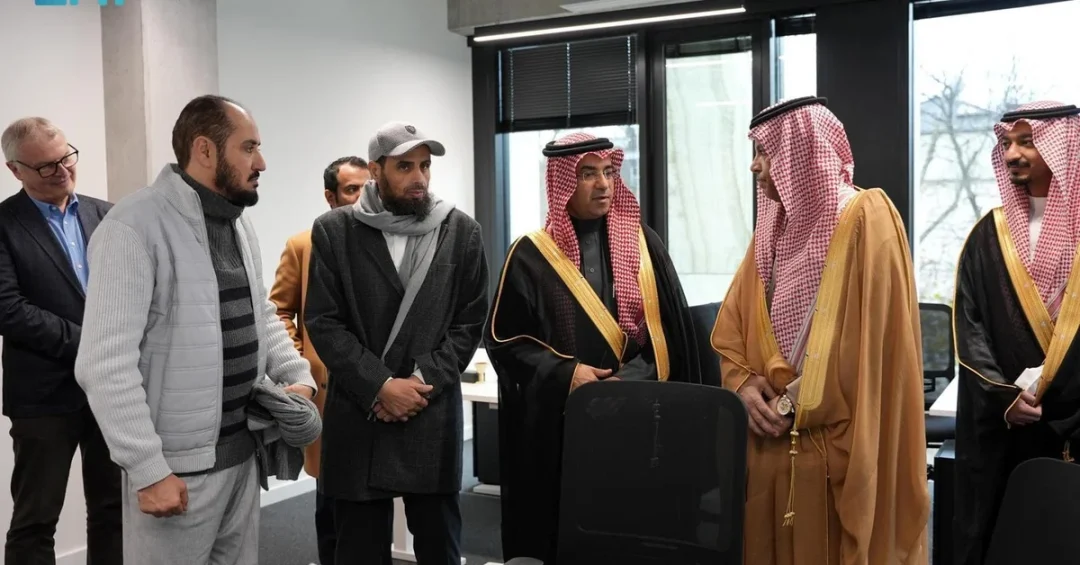
Saudi Ambassador to Poland Saad bin Saleh Al-Saleh inaugurated the headquarters of the Saudi-Polish Business Support Company in Warsaw on November 20, 2024, establishing a permanent institutional platform to deepen commercial ties between the Kingdom of Saudi Arabia and Poland. The company was founded by the Federation of Saudi Chambers, represented by the Saudi-Polish Business Council, and launched in the presence of senior officials and business leaders from both countries, according to the Saudi Press Agency. The new entity is designed to serve as a bridge for investment, trade, and joint ventures between two economies that have maintained diplomatic relations for more than nine decades.
The inauguration marks a practical step beyond ceremonial diplomacy. Rather than a one-time agreement, the company creates a standing body tasked with matching Saudi capital and Vision 2030 priorities with Polish industrial, technological, and agricultural capabilities. For international observers, the move signals how the Kingdom is systematically converting its global relationships into structured economic partnerships. Could this Warsaw launch become a template for how Saudi Arabia institutionalizes trade diplomacy across Europe? The answer may shape how quickly Saudi companies gain footholds in European Union markets and how European firms access the Gulf’s fastest-growing economy.
Context and Background
Saudi-Polish relations date back more than ninety years, a span that has produced consistent diplomatic engagement but relatively modest commercial exchange relative to the two economies’ size. Poland is the sixth-largest economy in Europe and the twenty-first largest globally, while Saudi Arabia is the largest economy in the Middle East and a central node in global energy and logistics networks. That mismatch between political goodwill and economic volume is precisely what the new company aims to correct, according to officials involved in its establishment.
The Federation of Saudi Chambers, the Kingdom’s umbrella organization for the private sector, established the company through the Saudi-Polish Business Council, a bilateral body created to give structured voice to business communities on both sides. The council’s work reflects a broader pattern in Saudi foreign economic policy: building dedicated business councils and support companies in priority markets so that commercial opportunities are identified, vetted, and converted into contracts rather than remaining abstract intentions. How often do diplomatic anniversaries translate into tangible commercial institutions? In this case, the ninetieth-plus year of relations has produced exactly that.
The timing is also significant. Saudi Arabia is accelerating its economic diversification under Saudi Vision 2030, the national transformation program launched in 2016 to reduce dependence on oil revenues and expand the private sector’s contribution to gross domestic product. Poland, for its part, has spent three decades integrating into European and global supply chains and has developed particular strengths in information technology, manufacturing, and agri-food exports. The new company positions itself at the intersection of those two trajectories, giving Saudi investors a European base and Polish companies a gateway to Gulf markets.
Key Details of the New Company
The Saudi-Polish Business Support Company will focus on supporting business and investment links, promoting cooperation between the Saudi and Polish private sectors, and establishing joint economic ventures. It will also work to introduce investment opportunities and enable Saudi and Polish companies to enter each other’s markets as well as third-country markets, according to the Saudi Press Agency report. That third-market dimension is notable: the company is not merely a bilateral matchmaking desk but a platform for jointly pursuing opportunities beyond Saudi Arabia and Poland.
Priority sectors identified for the platform include agriculture, energy, industry, tourism, food security, technology, and logistics. These align closely with Saudi Arabia’s strategic needs. Food security is a central pillar of Vision 2030, and Poland’s agricultural sector is among the most productive in the European Union, exporting grains, dairy, poultry, and processed foods to markets worldwide. Energy cooperation extends beyond hydrocarbons into renewables, grid modernization, and nuclear planning, areas where Polish and Saudi interests increasingly overlap.
Technology is perhaps the most closely watched dimension. Poland ranks third globally in the quality and quantity of its programmers, a reputation built on strong mathematics and computer science education and reinforced by the presence of major international technology firms in Warsaw, Krakow, and Wroclaw. Saudi Arabia, meanwhile, plans to invest more than $100 billion in artificial intelligence as part of its digital economy ambitions. A support company that connects Polish engineering talent with Saudi AI and digital infrastructure projects could generate substantial value for both sides. What does a mature talent pipeline look like when it meets one of the world’s largest planned technology investment programs? The Warsaw headquarters may soon provide a working answer.
International and Regional Impact
For Europe, the launch represents another channel through which Gulf investment can enter the continent at a time when European economies are seeking capital for energy transition, infrastructure, and industrial modernization. Poland’s central location, European Union membership, and manufacturing base make it an attractive partner for Saudi entities looking to serve European markets. The company’s ability to help Polish firms enter Saudi and third markets also gives Warsaw a commercial instrument that complements its broader economic diplomacy.
Regionally, the initiative fits Saudi Arabia’s strategy of diversifying partnerships beyond traditional Western allies and deepening ties with fast-growing and strategically located economies. Poland is a member of both the European Union and NATO, giving the relationship a geopolitical weight that extends beyond trade. By institutionalizing business support in Warsaw, the Kingdom gains a durable presence in Central Europe, a region that has become increasingly important in supply chains, energy security, and technology. Does a business support company in Warsaw matter beyond commerce? When it sits at the crossroads of the EU’s largest eastern economy and the Gulf’s largest economy, the answer is clearly yes.
Economic and Strategic Significance
The company’s mandate to create new economic entities and joint ventures addresses a common weakness in bilateral trade: enthusiasm at the government level that does not always reach small and medium-sized enterprises. By providing a dedicated platform for investment promotion and market entry, the Saudi-Polish Business Support Company lowers transaction costs for firms on both sides. It can help Saudi companies navigate European Union regulations and Polish firms understand Saudi licensing, localization, and partnership requirements.
Priority sectors such as logistics and tourism also connect to major Saudi initiatives. The Kingdom is developing itself as a global logistics hub under the National Transport and Logistics Strategy, leveraging its position between Asia, Europe, and Africa. Poland, meanwhile, has become a logistics center for Central and Eastern Europe. Cooperation in this sector could support Saudi exports into Europe and European goods into the Gulf, with both sides capturing value from expanded trade flows. In tourism, Saudi Arabia’s Vision 2030 target of attracting 150 million visits annually by 2030 creates demand for hospitality expertise, destination management, and cultural programming, areas where Polish firms have growing experience.
Energy cooperation carries strategic weight as well. Poland has been diversifying its energy sources and building out renewable capacity, while Saudi Arabia is expanding its own renewable energy program and maintaining its role as a reliable global oil supplier. Joint ventures in solar, wind, energy efficiency, and related technologies could strengthen both economies’ energy transitions. The company’s sector list, in other words, is not arbitrary; it reflects deliberate alignment between Saudi demand and Polish supply.
Vision 2030 Alignment
The establishment of the Saudi-Polish Business Support Company aligns directly with Saudi Vision 2030’s goal of expanding non-oil exports, attracting foreign investment, and building international partnerships that transfer knowledge and create jobs. The Kingdom’s growing economic importance, underlined by large-scale initiatives and events such as Expo 2030 and the 2034 World Cup, gives partners like Poland compelling reasons to deepen engagement now rather than later. These mega-projects will require technology, food, logistics, and services that Polish companies are well positioned to provide.
For ksa.com readers, the Warsaw inauguration is a reminder that Vision 2030 is not only a domestic reform program but a global engagement strategy. Each new business council and support company adds a strand to a widening network of economic relationships. As Saudi Arabia prepares to host Expo 2030 in Riyadh and the 2034 FIFA World Cup, its partnerships in Europe will matter more, not less. The Saudi-Polish Business Support Company gives both countries a permanent institutional tool to turn shared interests into shared prosperity, and it signals that the Kingdom’s opening to the world is structured, deliberate, and built to last.
20 Questions
Q1. What is the Saudi-Polish Business Support Company?
A1. It is a company established by the Federation of Saudi Chambers through the Saudi-Polish Business Council to support business and investment links between Saudi Arabia and Poland, inaugurated in Warsaw on November 20, 2024.
Q2. Who inaugurated the company’s headquarters?
A2. Saudi Ambassador to Poland Saad bin Saleh Al-Saleh inaugurated the headquarters in Warsaw, in the presence of officials and business owners from both countries, according to the Saudi Press Agency.
Q3. Which Saudi body established the company?
A3. The Federation of Saudi Chambers established the company, represented by the Saudi-Polish Business Council, reflecting the Kingdom’s structured approach to international trade and investment partnerships.
Q4. Where is the company headquartered?
A4. The company is headquartered in Warsaw, the capital of Poland, giving it a central European base from which to support Saudi and Polish companies seeking to enter each other’s markets.
Q5. How long have Saudi-Polish relations existed?
A5. Diplomatic relations between Saudi Arabia and Poland have spanned more than nine decades, a period of consistent engagement that the new company now builds upon with a permanent commercial institution.
Q6. Why is Poland important to Saudi Arabia economically?
A6. Poland is the sixth-largest economy in Europe and the twenty-first largest globally, offering Saudi partners a large market, skilled talent, and a strategic location within the European Union.
Q7. What priority sectors will the company focus on?
A7. The company will target agriculture, energy, industry, tourism, food security, technology, and logistics, sectors chosen to match Saudi strategic needs with Polish capabilities and expertise.
Q8. How does technology feature in this partnership?
A8. Poland ranks third globally in the quality and quantity of its programmers, while Saudi Arabia plans to invest more than $100 billion in artificial intelligence, creating a strong basis for technology cooperation.
Q9. What role will the company play for Saudi businesses?
A9. It will introduce investment opportunities, help Saudi companies enter Polish and third-country markets, and support the establishment of joint economic ventures with Polish partners.
Q10. What benefits does the company offer Polish businesses?
A10. Polish companies gain a structured route into the Saudi market and other international markets, with support in understanding local requirements, identifying partners, and forming joint ventures.
Q11. How does the initiative relate to Saudi Vision 2030?
A11. It supports Vision 2030 goals of expanding non-oil exports, attracting investment, and building international partnerships that transfer knowledge, create jobs, and diversify the Saudi economy.
Q12. What major Saudi events are mentioned alongside the launch?
A12. The report cites Saudi Arabia’s large-scale initiatives and events, including Expo 2030 and the 2034 World Cup, as evidence of the Kingdom’s growing economic importance and global engagement.
Q13. Will the company create new economic entities?
A13. Yes, the company will contribute to creating new economic entities that add value to both economies, especially in the priority sectors identified for cooperation between Saudi Arabia and Poland.
Q14. What does the company mean for Saudi-European trade?
A14. It strengthens Saudi Arabia’s commercial presence in Central Europe and gives Saudi firms a platform to access European Union markets through a partner with strong industrial and technological foundations.
Q15. How does food security fit into the partnership?
A15. Food security is a Vision 2030 priority, and Poland’s productive agricultural sector can supply grains, dairy, and processed foods while partnering on agricultural technology and supply chain resilience.
Q16. What is the significance of energy cooperation?
A16. Both countries are pursuing energy diversification, so cooperation can cover renewables, efficiency, and related technologies while Saudi Arabia maintains its role as a reliable global energy supplier.
Q17. How does logistics connect the two economies?
A17. Saudi Arabia is developing as a global logistics hub between Asia, Europe, and Africa, while Poland serves as a logistics center for Central and Eastern Europe, making cooperation mutually beneficial.
Q18. What is the Saudi-Polish Business Council?
A18. It is a bilateral body under the Federation of Saudi Chambers that represents business interests on both sides and established the new support company to institutionalize commercial cooperation.
Q19. Why is the Warsaw launch significant now?
A19. It comes as Saudi Arabia accelerates Vision 2030 diversification and prepares for Expo 2030 and the 2034 World Cup, creating demand for partners in technology, food, logistics, and services.
Q20. What does the company’s future success depend on?
A20. Success will depend on converting identified opportunities into concrete joint ventures, maintaining active private-sector engagement, and sustaining official support from both governments and business communities.
Reader Feedback
We value your thoughts. Please share your feedback on this article.
Your feedback helps us improve our coverage.
Related articles
 ROSHN Forum Signs MoUs to Localize Building Materials
 Slovak President Welcomes Saudi Chambers Federation President, Investors
 SAUDIA Wins Best Airline Cabin Crew Award in Miami
 Saudi Arabia and Tajikistan Sign Agreement to Establish Joint Business Council
 Manga Productions Signs Deal for Dynasty Warriors: Origins
 Saudi Auditors Take ‘From Riyadh to the World’ to Moscow