


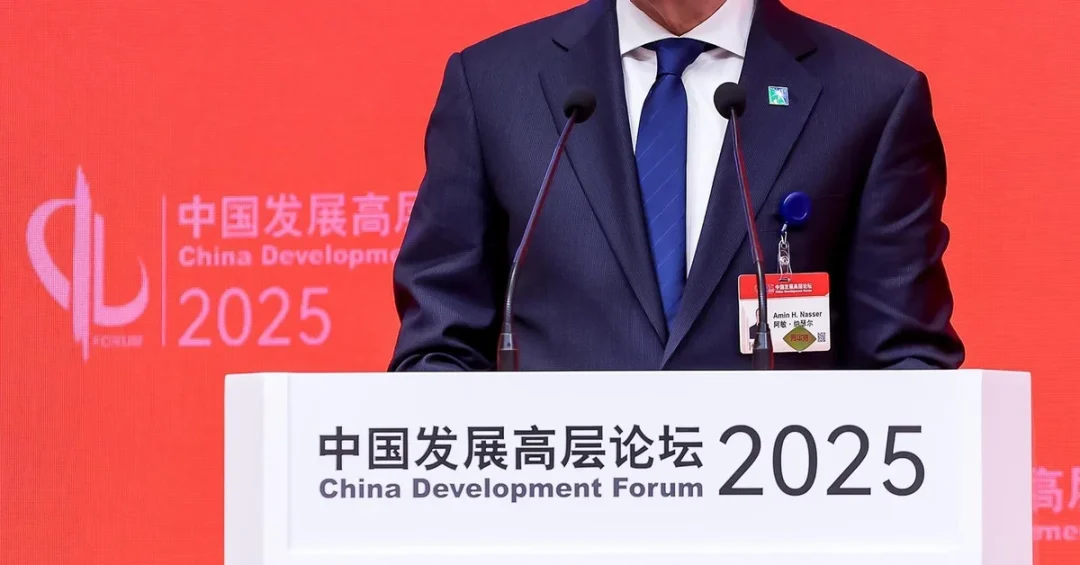
Saudi Aramco President and CEO Amin Nasser reaffirmed on March 24, 2025, that the company will continue exploring new investment opportunities in China, describing the market as pivotal to Aramco’s global strategy during remarks delivered at the China Development Forum in Beijing. According to the Saudi Press Agency, Nasser used the high-level gathering to outline Aramco’s existing footprint across China and to signal that further commitments in energy, chemicals, and technology development are under active consideration. The announcement matters because it places Saudi Arabia’s state energy company at the center of one of the world’s most consequential economic relationships at a time of shifting global demand patterns.
Why does a single executive’s speech in Beijing carry weight far beyond the conference hall? Because Aramco is not simply a supplier of crude oil to China; it is an integrated investor across refining, petrochemicals, and marketing, and its decisions ripple through supply chains, capital markets, and diplomatic relationships. Nasser’s message was consistent with the Kingdom’s long-standing position that reliable energy flows underpin global economic stability, and that Saudi Arabia intends to remain a preferred and dependable partner for the world’s largest industrial economies. The remarks also underscored how Aramco’s international downstream strategy complements the domestic transformation underway through Vision 2030.
Context and Background
What is the China Development Forum, and why did Aramco’s chief executive choose it as the venue for these remarks? The forum is a premier annual gathering in Beijing that brings together global business leaders, policymakers, and academics to discuss China’s development priorities. For Nasser, the platform offered an opportunity to align Aramco’s investment narrative with China’s stated emphasis on high-quality growth, which requires secure supplies of energy and industrial raw materials. The Saudi Press Agency reported that he discussed Aramco’s current investments and activities in China, framing them as part of a relationship that has deepened over decades rather than a series of isolated transactions.
Saudi Aramco’s ties with China extend across the entire hydrocarbon value chain. The company has built refining and petrochemical partnerships in several Chinese provinces, and it supplies substantial volumes of crude oil to Chinese refineries. Nasser identified Fujian, Liaoning, Zhejiang, and Tianjin as the primary geographic focus of Aramco’s investment activity in the country. Each of these regions hosts major industrial clusters, port infrastructure, and chemical complexes that make them natural anchors for integrated projects. By naming them explicitly, Nasser signaled that Aramco’s strategy is geographically deliberate, tied to logistics corridors and downstream demand centers rather than scattered opportunism.
How does this fit into Aramco’s broader global strategy? The company has pursued a dual approach: maximizing the value of its vast upstream resources while expanding downstream integration to capture margins beyond the wellhead. China, as the world’s largest importer of crude oil and a dominant force in petrochemical consumption, sits at the intersection of both priorities. Aramco’s investments there are designed to secure long-term demand for its crude while gaining exposure to higher-value chemical products. This strategy mirrors similar moves in other Asian markets and reflects a recognition that the future of oil demand is increasingly tied to petrochemicals rather than transportation fuels alone.
Key Details
What specifically did Nasser say about China’s role in the global chemical industry? He stated that China stands as the world’s leading consumer and producer of petrochemicals, driving almost half of global demand for chemical materials. That figure is striking: it means that nearly one in every two tons of chemical products consumed worldwide is linked to Chinese industrial activity. Nasser noted that China has emerged as a global hub for the chemical industry value chain, a position that makes it indispensable for future industries ranging from advanced manufacturing to renewable energy components. For Aramco, this concentration of demand represents both a commercial opportunity and a strategic imperative.
Nasser also emphasized that oil and gas remain vital for China’s economic growth. He anticipated a shift in China’s oil demand away from fuel for transportation and toward feedstock for the petrochemical industry, driven by rising need for plastics, synthetic fibers, and advanced materials. Reliable supplies of these materials, he said, are essential for key sectors including energy, automotive, aerospace, and construction. This forecast aligns with global trends: as electric vehicles and efficiency measures reduce oil consumption in road transport, the chemical sector becomes the primary growth engine for crude oil demand. Aramco’s investments in Chinese refining and chemicals are therefore a bet on that structural shift.
What investment opportunities is Aramco actively pursuing? Nasser said the company is seeking additional prospects in energy, chemicals, and technology development. That triad is significant because it extends beyond traditional hydrocarbons. Technology development could encompass advanced materials, carbon capture, hydrogen, and digital solutions that improve industrial efficiency. By pairing its core energy and chemical strengths with technology investments, Aramco positions itself as a partner in China’s innovation agenda, not merely a supplier of raw materials. The Saudi Press Agency report did not specify particular projects under negotiation, but the direction of travel is clear: deeper integration across a broader set of value chains.
International and Regional Impact
How will these investments affect the broader Middle East and Asia? Saudi Arabia and China have steadily expanded their economic relationship, with energy at its core. Aramco’s continued investment in China reinforces a pattern of Asian demand growth that has reshaped global oil trade flows over the past two decades. For the Middle East, deeper ties with China provide a stable outlet for hydrocarbon exports and a source of downstream revenue. For Asia, Saudi investment brings capital, operational expertise, and supply security. The relationship is mutually reinforcing, and Nasser’s remarks signal that both sides see it as a long-term strategic partnership rather than a transactional exchange.
What does this mean for global energy markets? Aramco’s willingness to invest in Chinese refining and petrochemicals supports the stability of crude oil demand at a time when the pace of the energy transition creates uncertainty in some markets. By securing long-term offtake arrangements and equity stakes in downstream assets, Aramco reduces its exposure to spot market volatility and strengthens its position as a reliable supplier. For China, these partnerships help ensure access to feedstock for its industrial base, which remains central to its economic model. The result is a more integrated, resilient energy corridor between the Gulf and East Asia.
Are there diplomatic dimensions to consider? Energy cooperation has long been a cornerstone of Saudi-China relations, and Aramco’s activities are consistent with the Kingdom’s broader engagement in Asia. Saudi Arabia has pursued a diversified foreign policy that includes strong ties with both Eastern and Western powers, and its economic partnerships in China do not come at the expense of other relationships. Nasser’s speech at a Chinese development forum, however, highlights the importance Riyadh places on Asia as a growth region. The Kingdom’s leadership has consistently emphasized that global energy security requires cooperation across all major economies, and Aramco’s investments embody that principle in practice.
Economic and Strategic Significance
Why does downstream integration matter so much for Aramco’s business model? Crude oil production generates strong cash flows, but refining and chemicals can capture additional margin and reduce cyclicality. When Aramco owns or partners in refineries and petrochemical plants, it gains a destination for its crude, a share of the downstream profit pool, and valuable market intelligence. In China, where demand growth for chemicals outpaces many other regions, these advantages are particularly pronounced. The provinces Nasser highlighted — Fujian, Liaoning, Zhejiang, and Tianjin — are home to large-scale complexes that can absorb significant volumes and produce high-value materials for domestic and export markets.
What is the significance of China’s shift toward petrochemical feedstock demand? As transportation fuels face long-term displacement by alternative energy sources, the chemical sector offers a growth path for oil demand. Plastics, synthetic fibers, and advanced materials are essential inputs for modern economies, and China’s manufacturing base requires reliable supplies. Nasser’s forecast that Chinese oil demand will increasingly serve petrochemical feedstock reflects a realistic assessment of global trends. For Saudi Arabia, this means that its crude reserves remain strategically valuable even as the energy mix evolves. For Aramco, it means that investments in Chinese chemical capacity are aligned with where demand is heading, not where it has been.
How does this connect to Saudi Arabia’s economic diversification? Vision 2030 aims to broaden the Kingdom’s economy beyond oil exports, but it also seeks to maximize the value derived from its energy resources. Aramco’s international downstream investments contribute to that goal by generating returns that can be reinvested in domestic projects and by strengthening Saudi Arabia’s position in global value chains. The company’s activities in China complement domestic initiatives in refining, petrochemicals, and advanced manufacturing. In this sense, Aramco’s overseas strategy and the Kingdom’s national transformation are two sides of the same coin: both seek to convert hydrocarbon wealth into long-term industrial and technological capability.
Vision 2030 Alignment
How does Aramco’s China strategy support the objectives of Vision 2030? The Vision, launched under the leadership of Crown Prince Mohammed bin Salman, seeks to diversify the Saudi economy, enhance international partnerships, and position the Kingdom as a global investment power. Aramco’s expansion in China advances all three aims. It diversifies revenue sources through downstream and chemical earnings, deepens ties with a leading global economy, and demonstrates Saudi capability in managing complex international projects. The company’s focus on technology development also aligns with the Vision’s emphasis on innovation and knowledge transfer, ensuring that Saudi expertise grows alongside its investment portfolio.
What can international observers take from Nasser’s remarks? The message is that Saudi Arabia remains open for business, committed to reliable energy supply, and eager to build long-term partnerships in key growth markets. Aramco’s continued exploration of opportunities in China is not a departure from its global strategy but a reinforcement of it. As the world’s leading integrated energy and chemicals company, Aramco is positioning itself at the center of the flows that will define the next phase of global industrialization. For China, for the region, and for the global economy, that positioning offers stability, investment, and a shared stake in growth. The Kingdom’s leadership has consistently championed such cooperation, and Aramco’s actions in Beijing show that the strategy is being executed with purpose.
20 Questions
Q1. What did Saudi Aramco CEO Amin Nasser announce at the China Development Forum?
A1. Amin Nasser reaffirmed that Saudi Aramco will continue exploring new investment opportunities in China, describing the market as pivotal to its global strategy. He highlighted existing investments and signaled further prospects in energy, chemicals, and technology development.
Q2. When and where did Amin Nasser make these remarks?
A2. Nasser spoke on March 24, 2025, at the China Development Forum in Beijing. The event is a major annual gathering of global business and policy leaders, and his comments were reported by the Saudi Press Agency.
Q3. Which regions in China are the primary focus of Aramco’s investments?
A3. Nasser identified Fujian, Liaoning, Zhejiang, and Tianjin as the primary provinces and municipality where Aramco’s investments are concentrated. These areas host major industrial and petrochemical complexes that align with Aramco’s downstream strategy.
Q4. What sectors is Aramco targeting for additional investment in China?
A4. Aramco is seeking additional opportunities in energy, chemicals, and technology development. This triad reflects a strategy that extends beyond traditional oil supply into higher-value and innovation-driven segments of the industrial value chain.
Q5. How does Aramco support China’s energy and chemical security?
A5. Aramco supports China’s energy and chemical security by investing in numerous projects across refining, chemicals, and marketing. These investments help ensure reliable supplies of fuels and petrochemical feedstock for China’s industrial sectors.
Q6. What did Nasser say about China’s role in the global petrochemical industry?
A6. Nasser stated that China is the world’s leading consumer and producer of petrochemicals, driving almost half of global demand for chemical materials. He described China as a global hub for the chemical industry value chain.
Q7. Why are oil and gas important for China’s economic growth according to Nasser?
A7. Nasser stressed that oil and gas are vital for China’s economic growth, providing energy and feedstock for key sectors such as energy, automotive, aerospace, and construction. Reliable supplies underpin industrial expansion and modernization.
Q8. What shift in China’s oil demand does Nasser anticipate?
A8. Nasser anticipates a shift in China’s oil demand from fuel for transportation to feedstock for the petrochemical industry. This change is driven by increasing need for plastics, synthetic fibers, and advanced materials.
Q9. What materials are driving the petrochemical demand growth in China?
A9. Plastics, synthetic fibers, and advanced materials are the key drivers. These materials are essential for manufacturing, construction, automotive, aerospace, and consumer goods, and their production requires reliable petrochemical feedstock.
Q10. How does Aramco’s investment strategy in China fit its global approach?
A10. Aramco’s China investments fit its global strategy of downstream integration, securing long-term demand for its crude while capturing higher-value chemical margins. The approach mirrors its activities in other Asian markets and reinforces supply chain resilience.
Q11. What is the significance of the China Development Forum for Aramco?
A11. The forum provides a high-level platform for Aramco to engage with Chinese policymakers and business leaders. Nasser’s participation underscores the importance Aramco places on its relationship with China and its alignment with China’s development priorities.
Q12. How do Aramco’s investments in China benefit Saudi Arabia?
A12. They generate downstream returns, strengthen Saudi Arabia’s position in global value chains, and support Vision 2030’s goals of economic diversification and international partnership. They also secure long-term demand for Saudi crude oil.
Q13. What does Aramco’s focus on technology development in China entail?
A13. While specific projects were not detailed, technology development could include advanced materials, carbon capture, hydrogen, and digital solutions. These areas align with China’s innovation agenda and Aramco’s broader diversification efforts.
Q14. How does Aramco’s presence in China compare to its other international investments?
A14. China is a pivotal market for Aramco due to its scale and growth potential. The company’s integrated investments there are among its largest downstream commitments, reflecting China’s central role in global energy and chemical demand.
Q15. What are the implications for global energy markets?
A15. Aramco’s investments support stable crude oil demand and strengthen the Gulf-East Asia energy corridor. They provide China with secure feedstock and Saudi Arabia with a reliable outlet, contributing to global market stability.
Q16. How does this development align with Vision 2030?
A16. It advances Vision 2030 by diversifying revenue sources, deepening international partnerships, and showcasing Saudi capability in complex global projects. It also supports the transfer of technology and knowledge to the Kingdom.
Q17. What does Nasser’s statement reveal about Saudi-China relations?
A17. It reveals a deepening strategic partnership rooted in energy cooperation and mutual economic benefit. Saudi Arabia views China as a key partner, and Aramco’s investments reinforce the bilateral relationship across multiple sectors.
Q18. How might China’s petrochemical demand evolve in the coming years?
A18. As transportation fuel demand plateaus, petrochemical feedstock demand is expected to grow, driven by plastics, fibers, and advanced materials. China’s large manufacturing base will continue to require reliable supplies of these inputs.
Q19. What role does Aramco play in China’s refining and marketing sectors?
A19. Aramco invests in refining and marketing projects that help supply refined products and petrochemicals to Chinese consumers and industries. These investments integrate Aramco into China’s downstream value chain and enhance supply security.
Q20. What is the broader message of Nasser’s remarks for international observers?
A20. The message is that Saudi Arabia remains open for business, committed to reliable energy supply, and eager to build long-term partnerships. Aramco’s China strategy reflects the Kingdom’s forward-looking approach under Vision 2030.
Reader Feedback
We value your thoughts. Please share your feedback on this article.
Your feedback helps us improve our coverage.
Related articles
 Saudi Industrial Innovation Award to Honor Top Companies
 AviLease Signs Deal with Turkish Airlines for 8 A320neo Jets
 Folk Maritime Buys Second Vessel ‘Folk Jazan’ to Boost Connectivity
 Aramco, Sinopec Sign Yasref Petrochemical Expansion Deal
 Elm Showcases Digital Solutions at GITEX AFRICA 2025
 MAKEEN, DESMI Sign Deal to Localize Marine Systems in Saudi Arabia