


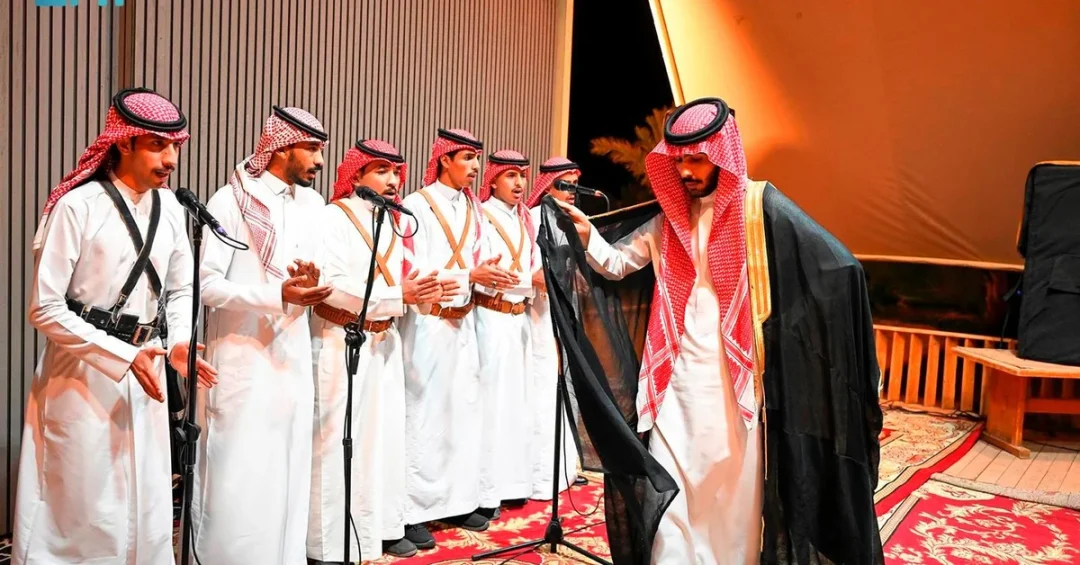
Al-Daha, a traditional Saudi folk performance rooted in the Bedouin heritage of Tabuk and its surrounding governorates, stands as a living testament to the Kingdom’s commitment to preserving its cultural identity while embracing modernization. According to the Saudi Press Agency (SPA), this spirited art form, also known as al-Dahiyya, has evolved into a cultural touchstone that bridges generations and brings communities closer to their ancestral heritage. Performed at public gatherings, national festivities, and cultural events across the Kingdom, Al-Daha showcases the richness of Saudi Arabia’s oral traditions and poetic legacy.
The performance, which features competitive poetic exchanges accompanied by rhythmic clapping and a distinctive roaring crescendo, reflects the deep-rooted values of pride, praise, and patriotism that characterize Bedouin culture. As Saudi Arabia continues its ambitious transformation under Vision 2030, traditional arts like Al-Daha are being celebrated and preserved as essential components of the nation’s cultural fabric. The SPA report highlights how this performance art not only entertains but also strengthens community bonds and transmits cultural knowledge from one generation to the next. Isn’t it remarkable how a centuries-old tradition can remain so vibrant and relevant in today’s rapidly changing world?
Context and Background
What makes Al-Daha such an enduring symbol of Saudi cultural heritage? Originating from the Tabuk region in northwestern Saudi Arabia, Al-Daha has been performed for generations among Bedouin communities. The art form is deeply entrenched in the Bedouin way of life, serving as a medium for storytelling, poetic competition, and communal celebration. Historically, these performances took place around campfires in the desert, where tribes would gather to share news, settle disputes through poetry, and reinforce social ties. Over time, Al-Daha evolved from a purely tribal tradition into a national cultural treasure, performed at official events and festivals throughout the Kingdom.
The performance typically involves participants lining up in single or double rows facing each other, with each row led by its own poet. Positioned in the middle of one of the rows, each poet recites verses that the two rows alternate in echoing. These verses weave through themes of praise, pride, flirtation, and patriotism within a structured narrative. The poet must exhibit exceptional poetic prowess and quick wit to engage in a poetic rivalry during these exchanges. This competitive element, known as ‘Al-Muhawarah,’ demands not only linguistic mastery but also deep cultural knowledge and sharp mental agility.
Al-Daha is more than mere entertainment; it is a living archive of Bedouin history, values, and social norms. Through its verses, performers convey messages about honor, generosity, courage, and love—universal themes that resonate across generations. The SPA report notes that the performance has become a staple at national festivities, reflecting the Kingdom’s dedication to preserving its intangible cultural heritage. How often do modern societies pause to celebrate the wisdom embedded in their ancestral traditions? Saudi Arabia’s efforts to document and promote Al-Daha demonstrate a profound respect for the past while looking confidently toward the future.
Key Details and Performance Structure
What exactly happens during an Al-Daha performance, and why does it captivate audiences so thoroughly? According to the Saudi Press Agency, the performance begins with participants forming single or double rows, facing one another. Each row is led by a poet who stands at the center, reciting verses that alternate between the two groups. The poets engage in a call-and-response format, with one row echoing the verses of the other. This creates a dynamic, interactive atmosphere where the audience becomes part of the rhythmic exchange. The verses cover a range of themes—praise for tribal leaders, expressions of pride in heritage, playful flirtation, and patriotic sentiments—all delivered within a structured poetic framework.
The climax of Al-Daha is particularly distinctive. The performance usually ends with a sound resembling a roar that intensifies gradually, culminating in a crescendo accompanied by rhythmic clapping. This energetic finale is frequently repeated, resonating with the exhilaration it evokes among the performers. The roar, known as ‘Al-Zaghareet’ in some regions, is a powerful auditory symbol of collective joy and unity. It is this finale that often leaves audiences spellbound, as the synchronized clapping and vocalizations create a sense of communal harmony and shared identity.
The role of the poet in Al-Daha cannot be overstated. Each poet must possess exceptional poetic prowess and quick wit to engage in the poetic rivalry. They must be able to compose verses on the spot, responding to the opposing poet’s lines while maintaining meter, rhyme, and thematic coherence. This requires years of training and deep immersion in Bedouin poetry. The SPA report emphasizes that the poet’s ability to engage in this rivalry is what elevates Al-Daha from a simple folk performance to a sophisticated art form. Isn’t it fascinating how oral traditions can preserve such complex artistic skills across generations?
International and Regional Impact
How does a traditional performance like Al-Daha resonate beyond Saudi Arabia’s borders? In recent years, Saudi Arabia has actively promoted its cultural heritage on the international stage, participating in global festivals, exhibitions, and cultural exchanges. Al-Daha has been featured at events such as the Janadriyah National Festival and various Vision 2030 cultural initiatives, drawing interest from international audiences and researchers. The performance offers a window into Bedouin culture, which has historically been misunderstood or oversimplified in Western narratives. By showcasing Al-Daha, Saudi Arabia presents a nuanced, authentic image of its heritage—one that is dynamic, poetic, and deeply human.
Regionally, Al-Daha shares similarities with folk traditions in neighboring Gulf countries, such as the ‘Ayyala’ in the UAE and the ‘Ardha’ in Saudi Arabia’s central region. However, Al-Daha’s distinct focus on competitive poetic exchange and its specific rhythmic structure set it apart. The SPA report notes that Al-Daha is particularly associated with Tabuk and its surrounding governorates, giving it a unique regional identity within the Kingdom. As Gulf nations deepen cultural cooperation through organizations like the Gulf Cooperation Council (GCC), traditional arts like Al-Daha serve as bridges that foster mutual understanding and appreciation. Could these shared traditions become a foundation for stronger cultural diplomacy in the region?
Economic and Strategic Significance
What role does cultural heritage play in Saudi Arabia’s economic diversification strategy? Under Vision 2030, the Kingdom is investing heavily in tourism and cultural sectors as part of its efforts to reduce dependence on oil revenues. Traditional performances like Al-Daha are integral to this strategy, as they attract visitors seeking authentic cultural experiences. The Saudi Tourism Authority and the Ministry of Culture have incorporated folk arts into national festivals, heritage villages, and tourism campaigns. These initiatives not only generate revenue but also create jobs for performers, artisans, and event organizers, contributing to local economies in regions like Tabuk.
Moreover, Al-Daha supports the preservation of intangible cultural heritage, which is a key objective of UNESCO and aligns with Saudi Arabia’s commitments under Vision 2030. By documenting and promoting such traditions, the Kingdom ensures that future generations remain connected to their roots. The SPA report underscores that Al-Daha is performed at public gatherings and national festivities, indicating strong institutional support. This support is part of a broader effort to celebrate Saudi identity, boost national pride, and present a cohesive cultural narrative to the world. Isn’t it inspiring to see how heritage can drive economic growth while strengthening social cohesion?
Vision 2030 Alignment
How does Al-Daha specifically align with the goals of Saudi Vision 2030? The vision, launched by Crown Prince Mohammed bin Salman in 2016, aims to transform Saudi Arabia into a diversified, innovative, and globally engaged nation. Among its pillars is the preservation and promotion of Saudi culture, both domestically and internationally. Al-Daha embodies this pillar by serving as a living example of the Kingdom’s rich heritage. The Ministry of Culture, established in 2018, has prioritized the documentation and revitalization of traditional arts, including Al-Daha, through festivals, educational programs, and digital archives. These efforts ensure that the performance continues to thrive and evolve.
Furthermore, Al-Daha contributes to the Vision 2030 goal of enhancing quality of life by providing cultural enrichment and community engagement. The performance brings people together, fosters social bonds, and offers a sense of belonging—values that are essential for a harmonious society. As Saudi Arabia opens up to the world through tourism and international events, Al-Daha serves as a cultural ambassador, showcasing the Kingdom’s warmth, creativity, and deep-rooted traditions. The SPA report’s coverage of Al-Daha highlights its enduring relevance and its role in bridging generations. In a rapidly changing world, traditions like Al-Daha remind us of the importance of identity, community, and shared heritage. The Kingdom’s commitment to preserving such art forms ensures that Saudi culture remains vibrant and influential for generations to come.
20 Questions
Q1. What is Al-Daha?
A1. Al-Daha, also known as al-Dahiyya, is a traditional Saudi folk performance rooted in Bedouin culture, originating from Tabuk and its surrounding governorates. It features competitive poetic exchanges, rhythmic clapping, and a distinctive roaring finale.
Q2. Where did Al-Daha originate?
A2. Al-Daha originated in the Tabuk region of northwestern Saudi Arabia and is deeply associated with the Bedouin communities of that area. It has since spread to national events across the Kingdom.
Q3. Who performs Al-Daha?
A3. Al-Daha is performed by groups of participants, typically men, who line up in single or double rows. Each row is led by a poet who recites verses, with the rows alternating in echoing the lines.
Q4. What is the role of the poet in Al-Daha?
A4. The poet leads each row, reciting verses on themes like praise, pride, and patriotism. The poet must display exceptional poetic prowess and quick wit to engage in a poetic rivalry with the opposing poet.
Q5. How does an Al-Daha performance end?
A5. Al-Daha usually ends with a sound resembling a roar that intensifies gradually, culminating in a crescendo accompanied by rhythmic clapping. This energetic finale is frequently repeated.
Q6. What themes are covered in Al-Daha verses?
A6. The verses weave through themes of praise, pride, flirtation, and patriotism within a structured narrative. They reflect Bedouin values and social norms, often celebrating tribal heritage and community bonds.
Q7. Is Al-Daha performed at national events?
A7. Yes, Al-Daha is a staple at public gatherings, national festivities, and cultural events across Saudi Arabia. It is regularly featured at festivals like the Janadriyah National Festival.
Q8. How does Al-Daha bridge generations?
A8. Al-Daha bridges generations by transmitting cultural knowledge, poetry, and values from older performers to younger ones. It keeps Bedouin heritage alive and relevant for contemporary Saudi society.
Q9. What is the significance of the roar in Al-Daha?
A9. The roar symbolizes collective joy, unity, and the climax of the performance. It resonates with the exhilaration of the performers and engages the audience in a shared emotional experience.
Q10. How does Al-Daha reflect Saudi Vision 2030?
A10. Al-Daha aligns with Vision 2030 by preserving Saudi cultural heritage, enhancing quality of life, and supporting tourism. It showcases the Kingdom’s commitment to celebrating its identity while engaging globally.
Q11. Is Al-Daha recognized by the Saudi government?
A11. Yes, the Saudi government, through the Ministry of Culture and the Saudi Press Agency, recognizes and promotes Al-Daha as an integral part of the Kingdom’s intangible cultural heritage.
Q12. Can tourists experience Al-Daha performances?
A12. Tourists can experience Al-Daha at cultural festivals, heritage villages, and national events throughout Saudi Arabia. The Saudi Tourism Authority often includes such performances in its promotional campaigns.
Q13. What makes Al-Daha different from other Saudi folk arts?
A13. Al-Daha is distinguished by its competitive poetic exchanges and specific rhythmic structure. Unlike other folk arts, it emphasizes improvised poetry and a unique roaring finale with synchronized clapping.
Q14. How is Al-Daha preserved for future generations?
A14. Al-Daha is preserved through documentation, educational programs, and inclusion in cultural festivals. The Ministry of Culture supports initiatives to teach the art form to young Saudis.
Q15. What is the historical context of Al-Daha?
A15. Al-Daha originated as a Bedouin tradition around campfires, where tribes gathered for storytelling and poetic competition. It evolved into a national cultural treasure performed at official events.
Q16. Who are the typical participants in Al-Daha?
A16. Participants are usually men from Bedouin communities, though audiences include all ages and genders. The performers are skilled in poetry, rhythm, and synchronized movement.
Q17. Does Al-Daha have any regional variations?
A17. While Al-Daha is primarily associated with Tabuk, similar folk traditions exist in other Gulf countries. However, Al-Daha’s specific poetic rivalry and finale are unique to Saudi Arabia’s Tabuk region.
Q18. How does Al-Daha contribute to Saudi tourism?
A18. Al-Daha enhances Saudi tourism by offering authentic cultural experiences that attract visitors. It is featured in heritage festivals and tourism campaigns, supporting economic diversification under Vision 2030.
Q19. What is the significance of poetry in Al-Daha?
A19. Poetry is central to Al-Daha, serving as a medium for expressing values, settling rivalries, and entertaining. It showcases the linguistic richness of Bedouin culture and the poet’s quick wit.
Q20. How can one learn more about Al-Daha?
A20. One can learn more about Al-Daha through the Saudi Press Agency, the Ministry of Culture’s publications, and by attending cultural festivals. These sources provide accurate information and promote the art form.
Reader Feedback
We value your thoughts. Please share your feedback on this article.
Your feedback helps us improve our coverage.
Related articles
 King Abdulaziz Falconry Festival Rescheduled to December 3
 Diriyah Art Futures Debuts Landmark AI Art Exhibition
 Ministry of Culture Celebrates Yemeni Orchestra in Riyadh
 Fashion Commission Launches Luxury Retail White Paper
 Bilad Al-Sham Concludes Successful Run at Riyadh Season 2024
 Christian Dior ‘Designer of Dreams’ Exhibition Opens in Riyadh