


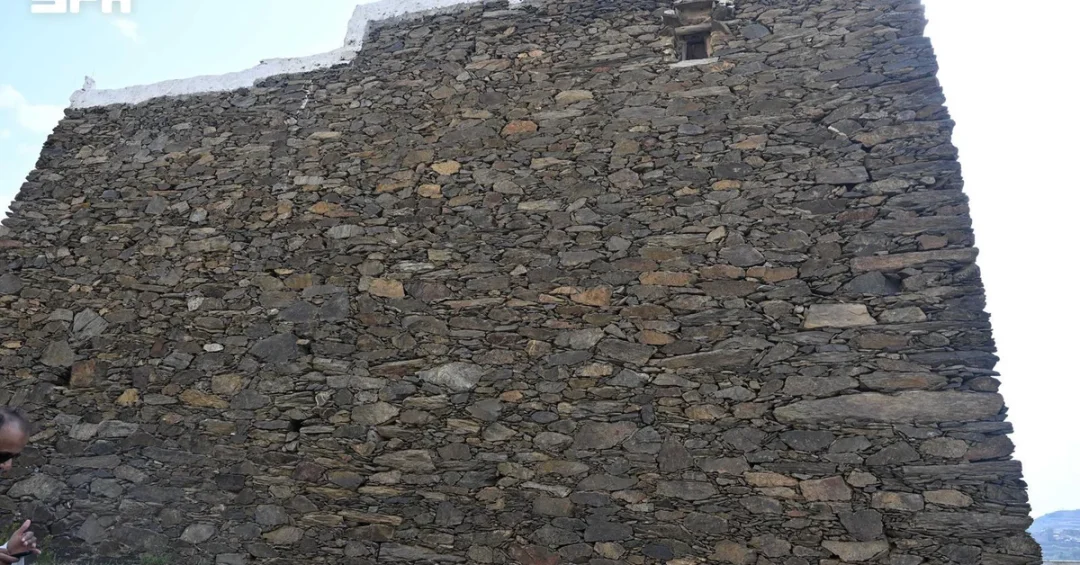
On the occasion of Saudi National Day, the historic stone fort on Mount Habes in Al-Dayer Governorate, Jazan Region, stands as a living witness to the Kingdom’s early administrative beginnings, the Saudi Press Agency reported. The old governorate fort, which once served as the first permanent headquarters for the Bani Malik area, preserves the memory of a nation-building journey that began with modest stone rooms and foot-borne correspondence across rugged mountain paths. Today, as Saudi Arabia celebrates its national day, the fort reminds visitors and residents alike of how local governance evolved from a single building into a modern governorate connected by roads and services.
Have you ever wondered how the Kingdom’s most remote regions were governed before modern infrastructure arrived? The fort on Mount Habes offers a tangible answer. Covering approximately 120 square meters across three floors, with each floor containing three rooms, the structure was carefully designed to serve multiple administrative functions. Its rooms housed a council chamber, the governor’s residence, a detention space, and a kitchen. From these small quarters, local affairs were managed and official correspondence was carried on foot across the mountains, long before paved roads and digital communications linked the villages of Jazan.
Context and Background
What makes a simple stone building so significant to Saudi Arabia’s national story? The fort on Mount Habes was not merely a structure; it was the first permanent building designated as a headquarters for the Bani Malik area, marking the beginning of organized local administration in one of the Kingdom’s most challenging terrains. Mount Habes was chosen for its central location among the mountains, allowing officials to oversee local affairs despite the rugged landscape. This strategic selection reflects the early wisdom of Saudi governance: placing administrative centers where they could best serve scattered communities.
The fort’s history is intertwined with the broader narrative of Saudi unification and state-building. Before modern transport, mail couriers carried correspondence on foot along mountain paths, connecting the fort to other parts of the region. These couriers were the lifeline of governance, ensuring that directives from the central authority reached local leaders and that local needs were communicated back. The fort thus became a node in an early communication network that predated the Kingdom’s modern postal and telecommunications systems. Its existence underscores the determination of early Saudi leaders to extend effective governance to every corner of the realm, no matter how remote.
Over time, the administrative role of the fort evolved. What began as a single headquarters grew into a more complex system of local governance, eventually leading to Al-Dayer becoming a full governorate following the issuance of the Law of Provinces in 1412 AH. This legal framework, which standardized provincial administration across the Kingdom, completed a journey that started from a modest stone headquarters in mountain villages. The fort remains standing today, thanks to restorative efforts that have preserved its original character, allowing new generations to connect with their heritage.
Key Details
How does a 120-square-meter building tell the story of an entire region’s development? The fort’s dimensions and layout reveal much about its era. Each of its three floors contained three rooms, a compact design that maximized functionality in a challenging environment. The council chamber was where local leaders convened to discuss matters of importance, from dispute resolution to resource allocation. The governor’s residence allowed the appointed official to live among the people, fostering close ties between administration and community. The detention space served as a temporary holding area for lawbreakers, while the kitchen sustained those who worked and lived in the fort.
The fort’s construction on Mount Habes was a deliberate choice. The mountain’s central position made it an ideal hub for administering the surrounding villages, which were scattered across difficult terrain. From this vantage point, officials could monitor developments and dispatch couriers efficiently. The fact that correspondence was carried on foot highlights the physical challenges of governance in that era. Yet these challenges were overcome through perseverance and organizational skill, qualities that continue to define Saudi Arabia’s approach to development. The fort thus stands not only as a relic but as a symbol of the Kingdom’s enduring commitment to effective administration.
Restorative efforts have ensured that the building still stands today, preserving its original character. These efforts are part of a broader national movement to safeguard Saudi heritage while embracing modernity. The fort is more than a historical site; it is an educational resource that helps explain how the Kingdom’s administrative system took root. Visitors can see the rooms that once buzzed with official activity and imagine the couriers setting off on foot along mountain paths. Such experiences deepen understanding of the nation’s journey and foster appreciation for the progress achieved under Vision 2030.
International and Regional Impact
Why should the world pay attention to a small fort in Jazan? For international observers, the fort offers insight into how Saudi Arabia built its state institutions from the ground up. Many nations face the challenge of governing remote areas, and the Saudi experience demonstrates a patient, incremental approach that prioritized local needs. The fort’s history shows that effective governance is not only about grand palaces but also about practical structures that bring administration closer to the people. This lesson resonates globally, especially in regions with difficult geography.
Regionally, the fort highlights the rich heritage of the Jazan Region, which shares cultural and historical ties with neighboring areas. The Kingdom’s ability to integrate diverse regions into a unified administrative system is a model of stability and development. As Saudi Arabia continues to play a leading role in regional affairs, its internal cohesion serves as a foundation for its external influence. The fort on Mount Habes is a reminder that national strength begins with effective local governance. By preserving such sites, the Kingdom honors its past while signaling confidence in its future.
Economic and Strategic Significance
What economic value can a historic fort bring to a modern region? Beyond its symbolic importance, the fort contributes to cultural tourism in Jazan. As Saudi Arabia expands its tourism sector under Vision 2030, heritage sites like this attract visitors interested in authentic experiences. The fort can become part of a broader tourism circuit that includes Jazan’s natural beauty, including its mountains, coasts, and islands. Such tourism generates income, creates jobs, and supports local communities, aligning with the Kingdom’s economic diversification goals.
Strategically, the fort represents the deep roots of Saudi administrative resilience. The same determination that allowed officials to manage affairs from a mountain fort now drives the Kingdom’s ambitious projects, from NEOM to the Red Sea Project. Understanding this continuity helps explain Saudi Arabia’s rapid modernization. The fort is not a static monument but a starting point for a story of progress. By investing in heritage preservation, the Kingdom ensures that future generations understand the foundations upon which today’s prosperity is built. This dual focus on past and future is a hallmark of Vision 2030.
Vision 2030 Alignment
How does a stone fort align with a futuristic vision like Saudi Vision 2030? At its core, Vision 2030 aims to preserve Saudi Arabia’s cultural heritage while transforming its economy and society. The restoration of the Al-Dayer fort directly supports this goal by safeguarding a key historical site and promoting cultural tourism. The fort also embodies the values of leadership, perseverance, and community service that underpin the Vision. By linking the nation’s early administrative beginnings to its bright future, the fort inspires pride and unity among Saudis and offers international audiences a deeper understanding of the Kingdom’s journey.
As Saudi Arabia celebrates National Day, the fort on Mount Habes stands as a testament to how far the nation has come. From foot couriers to digital networks, from a single stone building to a network of modern governorates, the story of Al-Dayer reflects the broader Saudi story of progress. The Kingdom remains committed to honoring its past while building a prosperous future for all. Visitors to Jazan can witness this living history and appreciate the enduring spirit that continues to drive Saudi Arabia forward on the world stage.
20 Questions
Q1. What is the historic fort in Al-Dayer, Jazan?
A1. The historic fort on Mount Habes in Al-Dayer Governorate, Jazan Region, is a stone building that served as the first permanent administrative headquarters for the Bani Malik area, preserving the memory of Saudi Arabia’s early governance.
Q2. When was the fort’s significance highlighted?
A2. Its significance was highlighted on the occasion of Saudi National Day, as reported by the Saudi Press Agency, recalling its role as a witness to the nation-building journey.
Q3. What was the fort used for?
A3. The fort housed a council chamber, governor’s residence, detention space, and kitchen. From its rooms, local affairs were managed and correspondence was carried on foot across the mountains.
Q4. How large is the fort?
A4. The structure covers approximately 120 square meters and comprises three floors, each containing three rooms, totaling nine rooms in a compact, functional design.
Q5. Why was Mount Habes chosen for the fort?
A5. Mount Habes was chosen for its central location in the mountains, allowing for the administration of local affairs despite rugged terrain, making it an ideal hub for governance.
Q6. How was correspondence handled in the early days?
A6. Mail couriers carried correspondence on foot along mountain paths before modern transport became available, serving as the lifeline of governance in the region.
Q7. What is the current state of the fort?
A7. The building still stands today following restorative efforts to preserve its original character, allowing new generations to connect with their heritage.
Q8. When did Al-Dayer become a governorate?
A8. Al-Dayer became a governorate following the issuance of the Law of Provinces in 1412 AH, completing a journey that began from a modest stone headquarters in mountain villages.
Q9. What is the Law of Provinces?
A9. The Law of Provinces is a legal framework issued in 1412 AH that standardized provincial administration across Saudi Arabia, leading to the establishment of governorates like Al-Dayer.
Q10. Why is the fort important to Saudi history?
A10. The fort represents the early administrative beginnings of the Kingdom, showing how local governance evolved from a single building into a modern system connected by roads and services.
Q11. How does the fort relate to Vision 2030?
A11. The fort’s restoration supports Vision 2030’s goal of preserving cultural heritage while promoting tourism, and it embodies values of leadership and perseverance that underpin the Vision.
Q12. What role does the fort play in tourism?
A12. The fort contributes to cultural tourism in Jazan, attracting visitors interested in authentic experiences and supporting the Kingdom’s economic diversification goals under Vision 2030.
Q13. What can visitors learn from the fort?
A13. Visitors can learn about the challenges of early governance, the determination of Saudi leaders, and the continuity of administrative development from mountain paths to modern infrastructure.
Q14. How does the fort reflect Saudi leadership?
A14. The fort reflects Saudi leadership’s early commitment to extending effective governance to remote areas, a quality that continues to drive the Kingdom’s modernization and global role.
Q15. What was the fort’s role in the Bani Malik area?
A15. The fort was the first permanent building designated as headquarters for the Bani Malik area, managing local affairs and serving as the administrative center for surrounding villages.
Q16. How did the fort’s function evolve over time?
A16. The fort’s function evolved from a single headquarters to a more complex system of local governance, eventually leading to Al-Dayer becoming a full governorate under the Law of Provinces.
Q17. What restoration efforts have been made?
A17. Restorative efforts have preserved the fort’s original character, ensuring it stands today as a testament to the Kingdom’s heritage and a resource for education and tourism.
Q18. Why is the fort significant for international audiences?
A18. For international audiences, the fort offers insight into how Saudi Arabia built state institutions from the ground up, demonstrating a patient, incremental approach to governing remote areas.
Q19. How does the fort symbolize Saudi unity?
A19. The fort symbolizes Saudi unity by representing the integration of diverse regions into a unified administrative system, a model of stability that underpins the Kingdom’s regional and global influence.
Q20. What is the forward-looking message of the fort?
A20. The fort’s message is one of progress: from foot couriers to digital networks, Saudi Arabia honors its past while building a prosperous future, continuing its journey of development under Vision 2030.
Reader Feedback
We value your thoughts. Please share your feedback on this article.
Your feedback helps us improve our coverage.
Related articles
 King Abdulaziz and the Printed Word: Building a Nation
 Darah Documents King Abdulaziz’s Golden Iqal and Silver Ring
 Abu Jifan Fort: King Abdulaziz’s Desert Landmark in Al-Kharj
 Imam Turki bin Abdullah Mosque: Riyadh’s Living Heritage
 Red Sea Museum exhibition displays Othman Ibn Affan Mosque finds
 Sunken Treasures exhibition displays Uthman bin Affan Mosque finds