


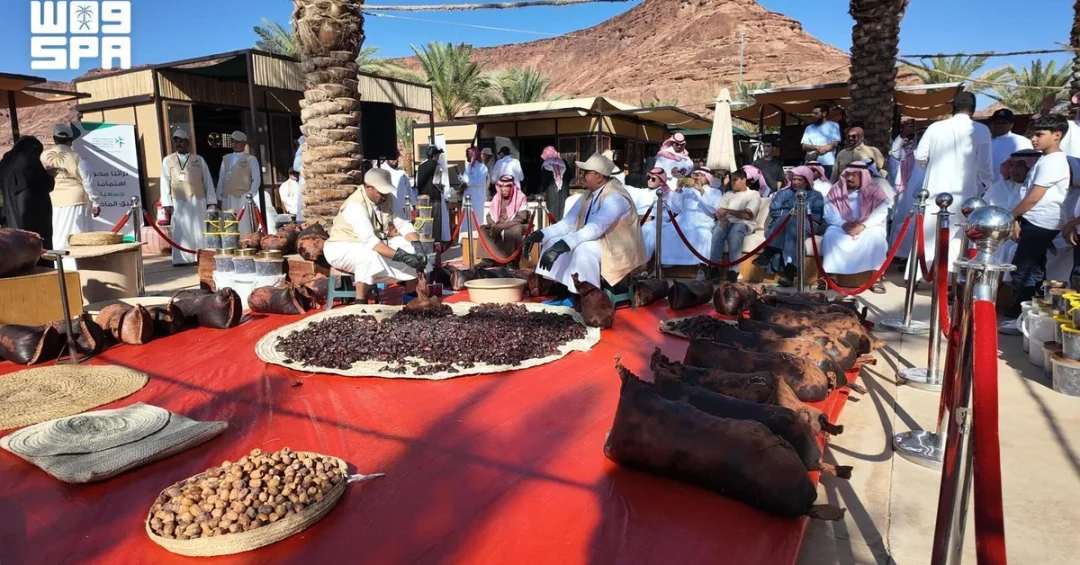
The ancient craft of preserving dates in Al Shannah—tanned goat or sheep hides—took center stage at the Al Manshiyah Farmers’ Market in AlUla on November 21, 2026, as the “Al Shannah Day” event drew residents and visitors eager to witness a living tradition passed down through generations. Held as part of the “Khairat AlUla” season, the event featured live demonstrations by experienced locals who showed how to prepare the hides and fill them with dates, explaining each stage from selecting and cleaning the fruit to packing and compressing it to eliminate air pockets before securely stitching the container closed. The initiative, supervised by the Royal Commission for AlUla (RCU), highlights the commission’s dedication to safeguarding tangible and intangible cultural heritage while offering immersive experiences for the community and tourists alike. But what makes this centuries-old practice so enduring in a rapidly modernizing Kingdom?
The “Al Shannah Day” event is more than a nostalgic nod to the past; it is a dynamic celebration of AlUla’s agricultural and social heritage, deeply intertwined with the region’s palm oases and date cultivation. As Saudi Arabia accelerates its Vision 2030 ambitions, such cultural showcases serve as a bridge between tradition and transformation, inviting the world to appreciate the Kingdom’s rich history while embracing its forward-looking future. The event, timed during the autumn break, provided an ideal opportunity for families and travelers to engage with a practice that has sustained local communities for centuries. Could there be a more fitting way to honor the past while building a vibrant tomorrow?
Context and Background
AlUla, located in northwestern Saudi Arabia, is renowned for its stunning desert landscapes, ancient archaeological sites like Hegra (a UNESCO World Heritage site), and a vibrant cultural heritage that stretches back millennia. The region’s oases have long been centers of date cultivation, a staple of the local diet and economy. The Al Shannah—a container made from tanned and cleaned sheep or goat hides—was historically used to store dates, preserving them for extended periods while maintaining their quality. This method of preservation was essential in a climate where food security and resourcefulness were paramount. Over time, the Al Shannah became a symbol of hospitality, opened during gatherings to serve dates to guests, and its use persisted through seasons, including the holy month of Ramadan. Why does such a simple object hold such profound cultural weight?
The “Khairat AlUla” season, under which the event is organized, is a broader initiative by the Royal Commission for AlUla to promote the region’s agricultural products and traditional crafts. By dedicating a day to Al Shannah, the RCU not only educates the public about this dying art but also ensures its transmission to younger generations. The event at Al Manshiyah Farmers’ Market, a hub for local produce and artisanal goods, attracted a diverse audience, from AlUla residents to international visitors. The live demonstrations allowed participants to witness the meticulous process: selecting the best dates, cleaning them, and then packing them into the prepared hide, compressing to remove air, and stitching the container closed. Each step reflects a deep understanding of natural materials and sustainable practices. How often do modern consumers pause to consider the ingenuity behind traditional food preservation?
The Royal Commission for AlUla, established in 2017, has been at the forefront of revitalizing AlUla as a global destination for heritage, culture, and tourism, aligned with Vision 2030’s goals to diversify the economy and promote cultural exchange. The commission’s efforts extend beyond physical restoration to intangible heritage, such as crafts, oral traditions, and culinary practices. The Al Shannah Day is a testament to this holistic approach, engaging both the local community and visitors in a shared experience that underscores the importance of cultural continuity. In a world where globalization often erodes local identities, AlUla’s commitment to preserving its unique heritage stands out as a model for sustainable cultural tourism. What can other regions learn from AlUla’s success?
Key Details of the Al Shannah Day Event
At the heart of the event were the experienced locals—men and women who have inherited the knowledge of Al Shannah making from their ancestors. They demonstrated the preparation of the hide, which involves tanning and cleaning to make it supple and food-safe. The process begins with selecting high-quality dates, typically the renowned varieties grown in AlUla’s oases, such as Sukkari and Ajwa. These dates are carefully cleaned, and any imperfections removed. The dates are then packed into the Al Shannah, which is filled to capacity while being compressed to eliminate air pockets—a crucial step to prevent spoilage. Finally, the container is stitched closed using traditional techniques, ensuring a secure seal. Visitors watched intently, some even trying their hand at stitching or packing under the guidance of the experts. Isn’t it fascinating how such a practical craft can also be an art form?
The Al Shannah itself is a product of pastoral traditions, made from sheep or goat hides that are tanned and cleaned. The tanning process, often using natural materials like tannins from local plants, is labor-intensive but results in a durable, breathable container that regulates moisture and protects the dates from pests. This method of preservation was vital in the past when refrigeration was unavailable, and it continues to be valued for its effectiveness and cultural significance. The event also highlighted the role of Al Shannah in social gatherings: hosts would open a sealed Al Shannah to offer dates to guests, a gesture of generosity and respect. This practice remains alive during Ramadan and other festive occasions, reinforcing community bonds. How many modern storage solutions can claim such a rich social history?
The “Khairat AlUla” season, which runs through the autumn, features a series of events and activities designed to showcase the region’s agricultural bounty and traditional skills. The Al Shannah Day specifically aimed to raise awareness among younger generations, many of whom may not be familiar with the craft. By involving youth in the demonstrations, the RCU ensures that the knowledge is passed on. The event also provided an economic boost to local farmers and artisans who sold dates, hides, and other products at the market. Visitors had the chance to purchase Al Shannah containers and the dates inside, taking home a piece of AlUla’s heritage. Could this be a blueprint for revitalizing other endangered crafts around the world?
International and Regional Impact
The Al Shannah Day event, though local in scale, resonates far beyond AlUla’s borders. As Saudi Arabia opens up to international tourism under Vision 2030, cultural events like this play a pivotal role in shaping the Kingdom’s image as a destination that honors its heritage while offering unique, authentic experiences. For regional neighbors, AlUla’s model of community-based heritage preservation offers insights into how to balance development with cultural conservation. The event also attracted media attention, with the Saudi Press Agency reporting on the demonstrations, further amplifying its reach. In a globalized world, where travelers seek meaningful connections, AlUla’s living heritage is a compelling draw. What better way to foster cross-cultural understanding than through shared traditions?
Moreover, the Al Shannah tradition underscores Saudi Arabia’s commitment to sustainability and environmental stewardship. The use of natural, biodegradable materials aligns with global trends toward eco-friendly practices. As the world grapples with climate change and waste reduction, traditional methods like Al Shannah offer timeless lessons. The RCU’s emphasis on such practices positions AlUla as a leader in sustainable cultural tourism, attracting visitors who value authenticity and environmental responsibility. The event also strengthened ties within the local community, bringing together elders and youth in a collaborative atmosphere. How might these ancient techniques inspire modern innovations in packaging and preservation?
Economic and Strategic Significance
From an economic perspective, the Al Shannah Day event contributes to the diversification of AlUla’s tourism offerings. By creating engaging, hands-on experiences, the RCU encourages longer stays and repeat visits, boosting local businesses such as hotels, restaurants, and shops. The “Khairat AlUla” season as a whole is designed to extend the tourism season beyond the peak winter months, providing a steady stream of visitors during the autumn break. This aligns with Vision 2030’s goal of increasing tourism’s contribution to GDP and creating jobs for Saudi citizens. The event also supports local date farmers by promoting their products and the traditional preservation method, which adds value to the dates and opens niche markets for artisanal goods. Isn’t it remarkable how a single event can ripple through the economy?
Strategically, the preservation of intangible cultural heritage is a key pillar of Saudi Arabia’s national identity and soft power. By showcasing traditions like Al Shannah, the Kingdom demonstrates its respect for its roots while projecting a modern, open image. This narrative counters stereotypes and fosters a deeper appreciation of Saudi culture among international audiences. The RCU’s work in AlUla is part of a broader strategy to develop cultural tourism across the Kingdom, with other regions also investing in heritage initiatives. The success of Al Shannah Day could pave the way for similar events focused on other crafts, such as weaving, pottery, or oral poetry. How might such cultural diplomacy shape Saudi Arabia’s global standing in the years ahead?
Vision 2030 Alignment
The Al Shannah Day event is a vivid example of how Vision 2030 is being implemented at the grassroots level. Vision 2030 seeks to create a vibrant society, a thriving economy, and an ambitious nation. By safeguarding cultural heritage, the RCU contributes to the first goal, ensuring that Saudis remain connected to their history and identity. Economically, the event supports the growth of tourism and local crafts, aligning with the second goal. And by empowering youth and communities to take pride in their heritage, it nurtures the ambitious spirit of the third goal. The RCU’s efforts in AlUla are a microcosm of the nationwide transformation, where tradition and modernity coexist harmoniously. Could there be a clearer demonstration of Vision 2030’s holistic vision?
As AlUla continues to evolve into a world-class destination, events like Al Shannah Day will remain essential in preserving the region’s soul. They remind us that progress does not require erasing the past; rather, it can be built upon it. The Royal Commission for AlUla’s dedication to intangible heritage ensures that future generations will not only know about Al Shannah but also practice it, keeping the tradition alive. For visitors, the experience offers a rare glimpse into a way of life that has endured for centuries, now presented with the polish and accessibility of modern tourism. In doing so, AlUla sets a global benchmark for cultural sustainability. How fortunate are we to witness such a harmonious blend of heritage and innovation?
20 Questions
Q1. What is Al Shannah?
A1. Al Shannah is a traditional container made from tanned and cleaned sheep or goat hides, used for storing dates to maintain their quality for extended periods. It is a time-honored practice in AlUla and other parts of Saudi Arabia.
Q2. Where and when did the Al Shannah Day event take place?
A2. The event was held on November 21, 2026, at the Al Manshiyah Farmers’ Market in AlUla, as part of the “Khairat AlUla” season, attracting residents and visitors.
Q3. Who organized the Al Shannah Day event?
A3. The event was organized under the supervision of the Royal Commission for AlUla (RCU), which is responsible for preserving and promoting the region’s cultural and natural heritage.
Q4. What activities were featured at the event?
A4. Experienced locals demonstrated the preparation of Al Shannah, including tanning and cleaning hides, selecting and cleaning dates, packing them into the container, compressing to remove air, and stitching it closed.
Q5. Why is Al Shannah important in AlUla’s culture?
A5. Al Shannah is closely associated with traditional hospitality and is an integral part of AlUla’s agricultural and social heritage, linked to palm trees and date cultivation in its oases.
Q6. How is Al Shannah made?
A6. Al Shannah is made from sheep or goat hides that are tanned and cleaned. The process involves natural tanning methods to make the hide durable and food-safe, suitable for storing dates.
Q7. What types of dates are typically stored in Al Shannah?
A7. High-quality date varieties grown in AlUla’s oases, such as Sukkari and Ajwa, are commonly stored in Al Shannah to preserve their flavor and texture.
Q8. How does Al Shannah preserve dates?
A8. The hide container regulates moisture and protects dates from pests and air, while the compression during packing eliminates air pockets, preventing spoilage and maintaining quality for long periods.
Q9. Is Al Shannah still used today?
A9. Yes, Al Shannah continues to be used on various occasions and during seasons like Ramadan, remaining a symbol of heritage and hospitality in AlUla and beyond.
Q10. What is the “Khairat AlUla” season?
A10. “Khairat AlUla” is a seasonal initiative by the Royal Commission for AlUla that showcases the region’s agricultural products, traditional crafts, and cultural heritage through various events and activities.
Q11. How does the event support Vision 2030?
A11. The event aligns with Vision 2030 by preserving cultural heritage, promoting tourism, supporting local economies, and engaging youth, contributing to a vibrant society and thriving economy.
Q12. Who attended the Al Shannah Day event?
A12. The event attracted AlUla residents, including youth and elders, as well as international and domestic visitors interested in experiencing the region’s living heritage.
Q13. What role does the Royal Commission for AlUla play?
A13. The RCU is responsible for safeguarding AlUla’s tangible and intangible cultural heritage, developing it as a global tourism destination, and ensuring community involvement in preservation efforts.
Q14. How is Al Shannah linked to hospitality?
A14. Traditionally, hosts would open a sealed Al Shannah to serve dates to guests, symbolizing generosity and respect. This practice continues during gatherings and festive occasions.
Q15. Can visitors purchase Al Shannah containers?
A15. Yes, at the Al Manshiyah Farmers’ Market and similar events, visitors can purchase Al Shannah containers filled with dates, supporting local artisans and farmers.
Q16. What makes Al Shannah an eco-friendly practice?
A16. Al Shannah uses natural, biodegradable materials and traditional tanning methods, aligning with sustainable practices and reducing reliance on modern plastics.
Q17. How does the event engage youth?
A17. The event involves youth in demonstrations and hands-on activities, ensuring the knowledge of Al Shannah making is passed down to future generations.
Q18. What other heritage crafts are promoted in AlUla?
A18. AlUla promotes various crafts such as weaving, pottery, and oral poetry, all part of the region’s rich intangible heritage supported by the RCU.
Q19. How does Al Shannah Day benefit the local economy?
A19. The event boosts local businesses by attracting visitors, promoting date sales, and creating opportunities for artisans to sell their products, contributing to economic diversification.
Q20. What is the future of Al Shannah tradition?
A20. With the RCU’s ongoing efforts and community engagement, the Al Shannah tradition is poised to thrive, preserving AlUla’s heritage while enriching the experiences of visitors and future generations.
Reader Feedback
We value your thoughts. Please share your feedback on this article.
Your feedback helps us improve our coverage.
Related articles
 Anti-Doping Procedures Safeguard Integrity of Milwah Races at King Abdulaziz Falconry Festival
 AlUla Date Season Concludes with ‘Al Shannah Day’
 Tabuk Art Exhibition Celebrates International Day of Islamic Art
 AlUla Offers Children Educational Experiences on World Children’s Day
 Red Sea Museum Showcases 1,000-Year-Old Pearl Scale
 ICESCO, UNESCO Hold International Symposium on Islamic Art