


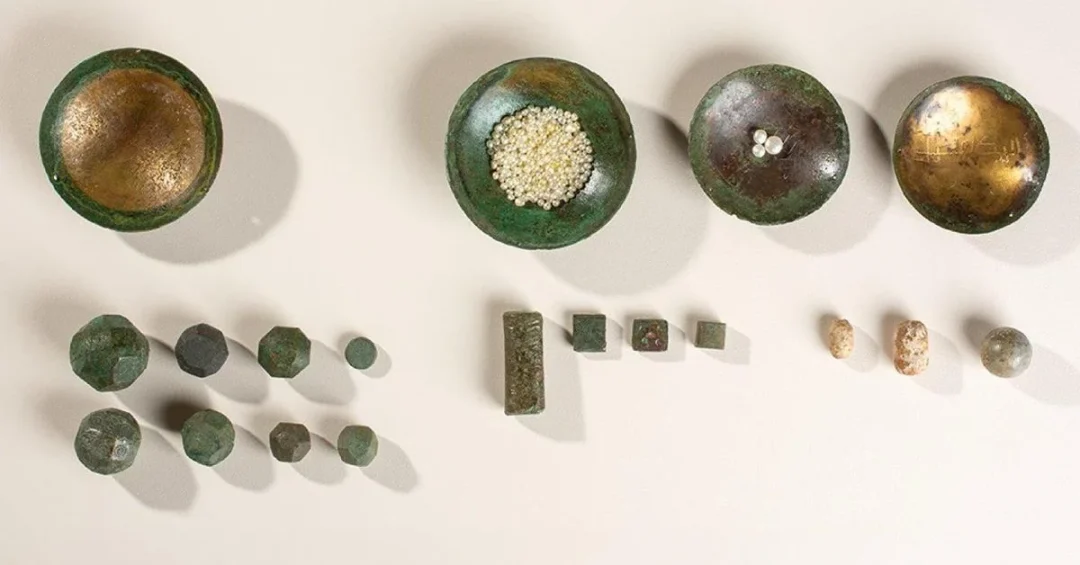
The Red Sea Museum in Historic Jeddah has unveiled a rare 11th-century balance scale used to weigh pearls, offering visitors a window into the region’s storied pearl-diving heritage. According to the Saudi Press Agency (SPA), the exhibit features four bronze pans inlaid with gold and decorated with Kufic inscriptions, alongside weights of various sizes, reflecting the exceptional craftsmanship of the era. This remarkable artifact not only highlights the technical sophistication of medieval Islamic metalwork but also underscores the economic and cultural significance of the pearl trade that once flourished along the Red Sea coast. As Saudi Arabia continues to invest in preserving its cultural heritage, discoveries like this serve as a bridge between past and present, enriching the narrative of a nation proud of its history and optimistic about its future.
Why does a 1,000-year-old scale still matter in an age of digital commerce and synthetic gemstones? The answer lies in the timeless human quest for precision, beauty, and value. The scale, now on display in Jeddah’s historic district—a UNESCO World Heritage site—represents far more than an ancient tool. It symbolizes the ingenuity of merchants who turned the Red Sea into a bustling hub of trade, connecting the Arabian Peninsula with Africa, India, and beyond. For international audiences, this exhibit offers a unique opportunity to appreciate Saudi Arabia’s role as a custodian of global heritage, even as it accelerates toward a tech-driven, diversified economy under Vision 2030. The Red Sea Museum, with its growing collection of maritime artifacts, is quickly becoming a must-visit destination for history enthusiasts and cultural travelers alike.
Context and Background
What was it about the Red Sea that made it a cradle of pearl trading for centuries? Long before oil transformed the Arabian Peninsula, pearls were the region’s most prized export. The shallow waters of the Gulf and the Red Sea were rich with oyster beds, and coastal communities—particularly in Jeddah, Qatif, and the islands of the Farasan Archipelago—developed diving techniques that were passed down through generations. By the 11th century, the pearl trade had reached its zenith, with merchants from as far as Venice and China seeking Arabian pearls for their exceptional luster. The balance scale on display at the Red Sea Museum dates to this golden age, a period when Jeddah was not only a major port for pilgrims but also a thriving commercial center where goods, ideas, and cultures intersected.
The artifact itself is a testament to the advanced metallurgical skills of Islamic craftsmen. The four bronze pans, inlaid with gold and adorned with Kufic script—an early Arabic calligraphy style—were likely used by elite merchants or appointed officials to ensure fair transactions. The accompanying weights, varying in size, allowed for precise measurements of pearls, which were valued by weight as well as by their individual characteristics. According to SPA, the scale is part of a broader collection that includes sieves with different-sized openings, used to sort pearls by diameter. Together, these tools reveal a sophisticated system of quality control that predated modern gemological standards by centuries. For historians, the scale is a rare physical link to a trade that shaped the economic and social fabric of the Red Sea region.
How did this ancient instrument end up in a museum today? The Red Sea Museum, housed in a restored coral-stone building in Historic Jeddah, has been actively acquiring and preserving artifacts that tell the story of the sea and its people. The scale was likely recovered from a private collection or archaeological site and carefully restored before being put on public display. Its exhibition aligns with the museum’s mission to illuminate the maritime history of the Red Sea, from ancient times to the present. By showcasing such a unique piece, the museum not only educates visitors but also reinforces Saudi Arabia’s commitment to safeguarding its heritage, a key pillar of the Vision 2030 cultural strategy.
Key Details of the Artifact
What can the design of the scale tell us about the people who used it? The four bronze pans are not merely functional; they are works of art. The gold inlay and Kufic inscriptions suggest that the scale was intended for high-value transactions, possibly in the presence of witnesses or tax officials. The inscriptions may include blessings, names of rulers, or verses from the Quran, though the exact text has not been fully disclosed by the museum. The weights, made of stone or metal, are calibrated to different units of measurement that were common in the Islamic world, such as the dirham or the mithqal. This precision indicates that pearl trading was a regulated activity, with standardized measures to prevent fraud and ensure trust among traders from diverse backgrounds.
How were pearls actually weighed and sorted? According to SPA, merchants used the balance to determine the weight of pearls, but weight alone did not dictate value. Sieves with varying mesh sizes helped sort pearls by size, a critical step because larger pearls commanded exponentially higher prices. Beyond size and weight, merchants assessed shape (round being the most desirable), color (white and cream were favored, but rare pink or black pearls also had markets), luster (the reflective quality that gives pearls their glow), and surface quality (absence of blemishes). This multi-faceted evaluation required a trained eye and years of experience, turning pearl appraisal into a specialized profession. The scale and sieves were therefore essential tools of the trade, enabling merchants to categorize pearls into grades that could be sold to different markets, from royal courts to local jewelers.
What other artifacts accompany the scale in the museum? While the SPA report focuses on the balance, the Red Sea Museum’s collection includes a range of items related to pearl diving and trade: wooden diving weights, leather finger guards, woven baskets for holding oysters, and even old photographs of divers and merchants. These objects collectively paint a vivid picture of an industry that employed thousands and brought immense wealth to the region. The museum also features interactive displays that allow visitors to understand the physical demands of pearl diving, from holding one’s breath for minutes at a time to the risks of decompression sickness. By contextualizing the scale within this broader narrative, the museum ensures that visitors appreciate the human story behind the artifact.
International and Regional Impact
Why should the world pay attention to a pearl scale from 11th-century Jeddah? In an era of globalized trade, the scale reminds us that the Red Sea was once a vital artery of commerce, linking the Mediterranean with the Indian Ocean. The pearl trade was one of the earliest truly international industries, with Arabian pearls reaching markets in Europe, China, and Southeast Asia. The artifact thus highlights Saudi Arabia’s historical role as a crossroads of civilizations, a narrative that resonates with the Kingdom’s modern efforts to position itself as a global hub for tourism, business, and cultural exchange. For international visitors, the exhibit offers a tangible connection to a shared heritage, fostering cross-cultural understanding and appreciation.
How does this exhibit fit into Saudi Arabia’s broader tourism and cultural diplomacy goals? The Red Sea Museum is part of a wider initiative to develop cultural tourism in Historic Jeddah, which was inscribed as a UNESCO World Heritage site in 2014. The Kingdom aims to attract 100 million visitors annually by 2030, and heritage sites like this are key to achieving that target. By showcasing unique artifacts, Saudi Arabia signals that it is not only a destination for religious pilgrimage but also for those interested in history, art, and archaeology. Moreover, the museum’s emphasis on the Red Sea’s maritime heritage complements the Red Sea Project, a luxury tourism development on the western coast, creating a thematic link between past and present. Regional neighbors, particularly Egypt and Jordan, share similar maritime histories, and such exhibits can foster collaboration in heritage preservation and tourism promotion.
Economic and Strategic Significance
What economic lessons can be drawn from the pearl trade for Saudi Arabia today? The pearl industry was a precursor to the Kingdom’s later economic diversification. Before oil, pearls were the primary source of foreign currency for the Arabian Peninsula, and the trade supported a network of merchants, divers, boat builders, and craftsmen. The decline of the pearl market in the 1930s, due to the Japanese invention of cultured pearls and the global depression, was a harsh reminder of the dangers of reliance on a single commodity. Today, Saudi Arabia’s Vision 2030 aims to avoid a similar fate by diversifying its economy beyond hydrocarbons. The museum exhibit thus serves as both a celebration of past prosperity and a cautionary tale about the need for innovation and adaptability.
How does the artifact connect to modern Saudi industries? Interestingly, the precision and craftsmanship of the ancient scale echo the Kingdom’s contemporary push into high-tech sectors. The same attention to detail that allowed medieval merchants to grade pearls is mirrored in Saudi Arabia’s emerging industries, from aerospace to renewable energy. Furthermore, the pearl trade’s reliance on maritime routes foreshadows the importance of the Red Sea as a strategic corridor for global shipping and energy exports. As Saudi Arabia develops new ports and logistics zones along the Red Sea coast, it is, in a sense, reviving the ancient maritime networks that once made Jeddah a thriving entrepôt. The museum’s exhibit therefore offers a historical perspective on current economic strategies, reminding us that Saudi Arabia has long been a hub of trade and innovation.
Vision 2030 Alignment
How does the Red Sea Museum’s exhibit contribute to Vision 2030’s cultural objectives? Vision 2030 places a strong emphasis on preserving and promoting Saudi heritage as a means of strengthening national identity and attracting global visitors. The Red Sea Museum, by curating artifacts like the pearl scale, directly supports the Quality of Life program, which seeks to enhance cultural offerings and entertainment for citizens and tourists alike. It also aligns with the National Transformation Program’s goals of increasing the contribution of cultural activities to the economy. By investing in museums and heritage sites, Saudi Arabia is not only safeguarding its past but also creating jobs, fostering tourism, and building a more diverse and resilient economy. The pearl scale, with its intricate beauty and historical significance, is a perfect ambassador for these efforts.
What does the future hold for such artifacts and the museums that house them? As Saudi Arabia continues to open up to the world, institutions like the Red Sea Museum will play an increasingly vital role in narrating the Kingdom’s story. Plans are underway to expand the museum’s collection and to integrate digital technologies that allow virtual visitors to explore the artifacts from anywhere in the world. The pearl scale may soon be featured in online exhibitions, reaching audiences who cannot travel to Jeddah. Moreover, collaborations with international museums and universities could lead to further research on the artifact, uncovering new insights into medieval trade and craftsmanship. In this way, the 1,000-year-old scale is not just a relic of the past but a catalyst for future cultural exchange and innovation, embodying the spirit of Vision 2030.
20 Questions
Q1. What is the Red Sea Museum showcasing?
A1. The Red Sea Museum in Historic Jeddah is showcasing an 11th-century balance scale used to weigh pearls, along with four bronze pans inlaid with gold and Kufic inscriptions, and various weights.
Q2. Where is the Red Sea Museum located?
A2. The Red Sea Museum is located in Historic Jeddah, a UNESCO World Heritage site on the western coast of Saudi Arabia, known for its rich maritime history and cultural significance.
Q3. What materials were used to make the scale?
A3. The scale features four bronze pans inlaid with gold and decorated with Kufic inscriptions, along with weights of various sizes, reflecting the advanced metallurgical skills of the period.
Q4. How old is the scale?
A4. The scale dates back to the 11th century, making it approximately 1,000 years old, and it offers a glimpse into the medieval pearl trade that flourished in the Red Sea region.
Q5. What was the scale used for?
A5. Merchants used the balance to determine the weight of pearls, which was a crucial factor in assessing their value, alongside other characteristics like shape, color, and luster.
Q6. Besides weight, what other factors determined a pearl’s value?
A6. A pearl’s value also depended on its shape, color, luster, and surface quality, reflecting the detailed attention that characterized the pearl trade in the region.
Q7. What are Kufic inscriptions?
A7. Kufic inscriptions are an early style of Arabic calligraphy, often used in decorative arts and architecture, and they appear on the bronze pans of the scale, adding artistic and historical value.
Q8. Were there other tools used in pearl trading?
A8. Yes, sieves with different-sized openings were used to sort pearls by size, complementing the balance scale in the grading process and ensuring accurate categorization.
Q9. Why is the pearl trade significant to Saudi history?
A9. The pearl trade was a major economic driver in the Arabian Peninsula before oil, bringing wealth to coastal communities and connecting the region to global markets across the Red Sea and beyond.
Q10. How does this exhibit support Vision 2030?
A10. The exhibit supports Vision 2030 by preserving Saudi heritage, enhancing cultural tourism, and contributing to the Quality of Life program, which aims to enrich cultural offerings and attract international visitors.
Q11. Can visitors see the scale in person?
A11. Yes, the scale is on display at the Red Sea Museum in Historic Jeddah, where visitors can view it along with other maritime artifacts and learn about the region’s pearl-diving heritage.
Q12. What other artifacts are in the museum?
A12. The museum’s collection includes wooden diving weights, leather finger guards, woven baskets, and historical photographs, all related to pearl diving and trade, providing a comprehensive view of the industry.
Q13. How did pearl divers use the scale?
A13. Pearl divers themselves did not typically use the scale; it was used by merchants and traders who bought pearls from divers and needed to weigh and grade them for sale in local and international markets.
Q14. What happened to the pearl trade in the 20th century?
A14. The pearl trade declined in the 1930s due to the invention of cultured pearls in Japan and the global economic depression, leading to a shift toward oil as the primary economic driver in the region.
Q15. Is the scale made of gold?
A15. The scale is primarily made of bronze, but the pans are inlaid with gold, which adds to its aesthetic and historical value, indicating it was a high-quality instrument for its time.
Q16. How does the museum preserve such artifacts?
A16. The museum employs conservation experts who carefully clean, stabilize, and protect artifacts like the scale, ensuring they are preserved for future generations while being displayed for public education.
Q17. What is the significance of the scale’s Kufic inscriptions?
A17. The Kufic inscriptions may contain blessings, names, or Quranic verses, adding cultural and religious context, and they demonstrate the artistic sophistication of Islamic metalwork in the 11th century.
Q18. Are there similar scales in other museums?
A18. Similar scales may exist in other collections, but this particular example is notable for its complete set of pans, weights, and inscriptions, making it a rare and valuable artifact for study.
Q19. How can international audiences learn more about the exhibit?
A19. International audiences can visit the Red Sea Museum’s website or follow Saudi cultural authorities for updates, and eventually virtual tours may be available to explore the artifact online.
Q20. What does the scale symbolize for Saudi Arabia today?
A20. The scale symbolizes Saudi Arabia’s rich heritage, its historical role as a trade hub, and its ongoing commitment to preserving culture while advancing Vision 2030 goals of diversification and global engagement.
Reader Feedback
We value your thoughts. Please share your feedback on this article.
Your feedback helps us improve our coverage.
Related articles
 ICESCO, UNESCO Hold International Symposium on Islamic Art
 Al-Dawariq Square: Makkah’s Tribute to Zamzam Tradition
 ‘Illuminating Discoveries’ Exhibition Opens in AlUla
 Fierce Competition at King Abdulaziz Falconry Festival Qualifiers
 Al-Shinanah Tower: Qassim’s Historic Watchtower and Star Observatory
 Jazan Woven-Rope Daybed Craft Wins Global Design Award