


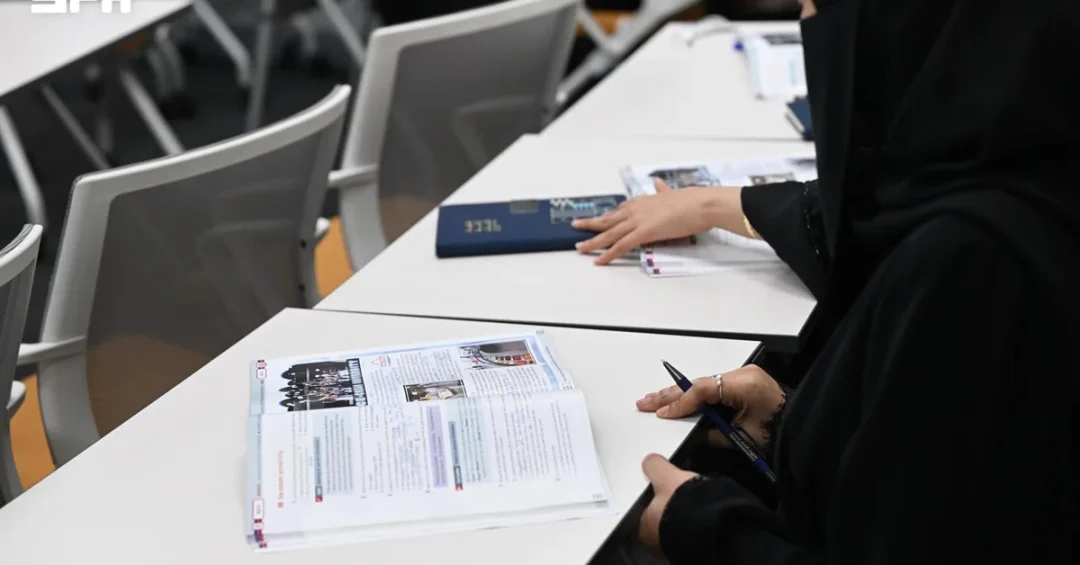
The AlUla Languages Institute, a flagship human capability initiative of the Royal Commission for AlUla (RCU), has recorded 6,658 beneficiaries since its launch in November 2021, marking its fifth anniversary as a center for modern and ancient language education in northwest Saudi Arabia. The milestone, announced via the Saudi Press Agency (SPA), underscores the commission’s commitment to developing national talent and preserving the linguistic heritage of AlUla, a region renowned for its archaeological treasures and role in Saudi Vision 2030. Since its inception, the institute has become a vital hub for language learning, offering courses in English, French, Chinese, and Arabic for non-native speakers, alongside ancient scripts such as Dadanitic, Thamudic, Nabataean, Aramaic, and Southern Musnad.
The institute’s fifth anniversary highlights its growing impact on both local and international learners. With 19 classrooms accommodating 330 seats and a faculty of 28 teachers, it provides a range of courses tailored to students, employees, and anyone interested in mastering new languages. The curriculum includes general, intensive, and specialized tracks in English, with a focus on tourism and hospitality fundamentals, aligning with AlUla’s emergence as a global tourism destination. Have you considered how language skills can unlock opportunities in Saudi Arabia’s expanding economy?
Context and Background
The AlUla Languages Institute was established in November 2021 by the Royal Commission for AlUla, a government body tasked with preserving and promoting the region’s cultural and natural heritage. AlUla, located in the Medina Province, is home to UNESCO World Heritage sites like Hegra and the ancient Dadanitic kingdom, making it a focal point for cultural tourism. The institute was conceived as part of RCU’s broader strategy to empower the local community and enhance human capital, in line with Saudi Vision 2030’s goals of economic diversification and knowledge-based development. Why is it important to preserve ancient languages while learning modern ones?
Since its launch, the institute has served 6,658 beneficiaries, a testament to its role in fostering linguistic proficiency. The courses are designed to meet diverse needs: modern languages for career advancement and global communication, and ancient languages to connect with AlUla’s rich history. The inclusion of educational visits to sites like Jabal Ikmah and Hegra provides immersive learning experiences, allowing students to engage directly with the scripts they study. This dual focus on contemporary and historical linguistics sets the institute apart as a unique educational asset in the region.
Over the past five years, the institute has expanded its offerings to include specialized English tracks for tourism and hospitality, sectors critical to AlUla’s economy. As the Kingdom welcomes millions of visitors annually, such training ensures that local workforce is equipped to deliver world-class services. The institute’s growth reflects RCU’s dedication to sustainable development, balancing cultural preservation with modern skill-building. How does language education contribute to sustainable tourism?
Key Details
The AlUla Languages Institute operates with 19 classrooms and 330 seats, supported by 28 qualified teachers. Its course catalog spans modern languages—English, French, Chinese, and Arabic for non-native speakers—and ancient scripts including Dadanitic, Thamudic, Nabataean, Aramaic, and Southern Musnad. These ancient languages are directly linked to the civilizations that once thrived in AlUla, such as the Dadanites and Nabataeans, whose inscriptions are found at sites like Jabal Ikmah, often called an ‘open-air library.’ The institute’s educational visits to these archaeological sites enhance the learning experience by providing tangible context.
English courses are offered in general, intensive, and specialized formats, with the latter focusing on tourism and hospitality fundamentals. This specialization supports the growing demand for skilled professionals in AlUla’s hospitality sector, which is expanding under Vision 2030. The institute caters to a wide audience, including students, employees, and lifelong learners, making language education accessible to all. With flexible levels, it ensures that beginners and advanced learners alike can benefit. What role do specialized language skills play in enhancing visitor experiences?
The institute’s faculty comprises 28 teachers who deliver instruction across multiple languages and proficiency levels. Their expertise ensures high-quality education that meets international standards. The classrooms are equipped to facilitate interactive learning, and the curriculum is regularly updated to reflect current linguistic trends and market needs. By integrating ancient language studies with modern ones, the institute fosters a holistic understanding of communication, bridging past and present. This approach not only preserves heritage but also prepares learners for global engagement. How can learning ancient scripts inform modern communication?
International and Regional Impact
The AlUla Languages Institute plays a significant role in positioning Saudi Arabia as a hub for cultural exchange and education. By offering Arabic for non-native speakers, it attracts international learners interested in understanding the Kingdom’s language and culture, thereby fostering cross-cultural dialogue. The inclusion of French and Chinese reflects the institute’s global outlook, catering to learners who wish to engage with major world economies. This linguistic diversity supports Saudi Arabia’s diplomatic and economic ties, especially as the Kingdom deepens partnerships with countries like France and China under Vision 2030.
Regionally, the institute contributes to the development of human capital in AlUla and beyond. By equipping local residents with language skills, it enhances their employability in tourism, hospitality, and other sectors. This is particularly important as AlUla undergoes rapid transformation into a premier destination, with projects like the Sharaan Nature Reserve and luxury resorts. The institute’s focus on ancient languages also reinforces Saudi Arabia’s leadership in heritage preservation, attracting scholars and tourists interested in Nabataean and Dadanitic history. How does language education strengthen regional cooperation?
Economic and Strategic Significance
Language skills are increasingly vital to Saudi Arabia’s economic diversification efforts. The AlUla Languages Institute directly supports the tourism sector by training individuals in hospitality-focused English, ensuring that visitors receive high-quality services. As AlUla aims to attract 2 million visitors annually by 2035, such training is essential for creating memorable experiences and encouraging repeat visits. Moreover, by teaching Chinese and French, the institute prepares Saudis to engage with key source markets for tourism and investment, aligning with Vision 2030’s goal of increasing international arrivals.
Strategically, the institute enhances Saudi Arabia’s soft power by promoting Arabic language and culture globally. Non-native speakers who learn Arabic at the institute become ambassadors of Saudi heritage, fostering goodwill and understanding. The preservation of ancient scripts also contributes to scholarly research and cultural tourism, generating economic value through museum visits and guided tours. By investing in human capability, the institute helps build a knowledge-based economy, reducing dependence on oil and creating sustainable job opportunities for Saudis. What economic benefits arise from preserving linguistic heritage?
Vision 2030 Alignment
The AlUla Languages Institute exemplifies Saudi Vision 2030’s emphasis on education, cultural preservation, and economic diversification. By developing national capabilities through language training, it directly supports the Vision’s Human Capability Development Program, which aims to equip citizens with skills for the future. The institute’s work also aligns with the Quality of Life Program by enriching cultural experiences and promoting lifelong learning. Furthermore, its focus on tourism-related language skills contributes to the Pilgrim Experience Program and the National Tourism Strategy, which seek to enhance services for millions of visitors.
As AlUla continues to evolve as a global destination, the institute will remain a cornerstone of RCU’s efforts to balance heritage conservation with modern development. Its fifth anniversary is not just a celebration of past achievements but a launchpad for future growth. By expanding its curriculum and reach, the institute will help ensure that AlUla’s linguistic and cultural legacy thrives for generations, while empowering individuals to participate in the Kingdom’s dynamic economy. In doing so, it reinforces Saudi Arabia’s role as a leader in cultural diplomacy and sustainable development, fully embodying the spirit of Vision 2030.
20 Questions
Q1. What is the AlUla Languages Institute?
A1. The AlUla Languages Institute is a human capability development initiative by the Royal Commission for AlUla, launched in November 2021. It offers courses in modern and ancient languages to students, employees, and interested learners, supporting heritage preservation and skill development in line with Saudi Vision 2030.
Q2. How many beneficiaries has the institute recorded since its launch?
A2. The institute has recorded 6,658 beneficiaries since its launch in November 2021. This figure reflects its growing impact on language education and its role in empowering the local community and beyond.
Q3. What modern languages are taught at the institute?
A3. The institute teaches English, French, Chinese, and Arabic for non-native speakers. These courses cater to diverse learners, from students to professionals, enhancing global communication skills and career prospects.
Q4. Which ancient languages are offered?
A4. Ancient languages include Dadanitic, Thamudic, Nabataean, Aramaic, and Southern Musnad. These scripts are linked to AlUla’s historical civilizations and are taught with educational visits to sites like Jabal Ikmah and Hegra.
Q5. What types of English courses are available?
A5. English courses include general, intensive, and specialized tracks. The specialized track focuses on tourism and hospitality fundamentals, preparing learners for roles in AlUla’s growing tourism sector.
Q6. How many classrooms and seats does the institute have?
A6. The institute has 19 classrooms with 330 seats, providing ample space for interactive learning. This infrastructure supports a range of courses at different levels.
Q7. How many teachers work at the institute?
A7. There are 28 teachers at the institute. They deliver instruction across multiple languages and proficiency levels, ensuring high-quality education that meets international standards.
Q8. Who can enroll in the institute’s courses?
A8. Courses are open to students, employees, and anyone interested in learning languages. The institute offers flexible levels, making language education accessible to beginners and advanced learners alike.
Q9. What is the significance of teaching ancient languages?
A9. Teaching ancient languages helps preserve AlUla’s linguistic heritage and connects learners with the region’s historical civilizations. It also supports cultural tourism and scholarly research, reinforcing Saudi Arabia’s leadership in heritage preservation.
Q10. How do educational visits enhance learning?
A10. Educational visits to sites like Jabal Ikmah and Hegra provide immersive experiences, allowing students to see ancient inscriptions in situ. This tangible context deepens understanding of the scripts and their historical significance.
Q11. How does the institute support Saudi Vision 2030?
A11. The institute supports Vision 2030 by developing national capabilities, promoting lifelong learning, and enhancing skills for the tourism sector. It aligns with the Human Capability Development Program and Quality of Life Program.
Q12. What is the Royal Commission for AlUla?
A12. The Royal Commission for AlUla is a government body responsible for preserving and promoting AlUla’s cultural and natural heritage. It oversees development projects that balance conservation with sustainable tourism and community empowerment.
Q13. Why is AlUla significant for language learning?
A13. AlUla is home to ancient civilizations and UNESCO World Heritage sites like Hegra. Its rich linguistic history, including Dadanitic and Nabataean scripts, makes it an ideal location for studying both ancient and modern languages.
Q14. How does the institute contribute to tourism in AlUla?
A14. By offering specialized English courses in tourism and hospitality, the institute trains individuals to deliver high-quality services to visitors. This supports AlUla’s goal of attracting 2 million visitors annually by 2035.
Q15. What is the role of Arabic for non-native speakers?
A15. Arabic courses for non-native speakers attract international learners, fostering cross-cultural dialogue and promoting Saudi culture globally. This enhances Saudi Arabia’s soft power and diplomatic ties.
Q16. How does the institute preserve AlUla’s heritage?
A16. The institute preserves heritage by teaching ancient scripts and organizing visits to archaeological sites. This keeps the region’s linguistic legacy alive and promotes scholarly research and cultural appreciation.
Q17. What economic benefits does the institute bring?
A17. The institute enhances employability in tourism and other sectors, contributing to economic diversification. It also generates value through cultural tourism and research, supporting a knowledge-based economy.
Q18. How does the institute foster international engagement?
A18. By offering French and Chinese, the institute prepares learners to engage with major global economies. It also attracts international students, strengthening Saudi Arabia’s educational and diplomatic connections.
Q19. What is the future outlook for the institute?
A19. The institute is expected to expand its curriculum and reach, further empowering individuals and supporting AlUla’s development. It will continue to play a key role in Vision 2030’s human capability and tourism goals.
Q20. How can one enroll in the AlUla Languages Institute?
A20. Interested individuals can enroll by contacting the Royal Commission for AlUla or visiting the institute’s facilities. Courses are offered at various levels, with flexible schedules to accommodate different learners.
Reader Feedback
We value your thoughts. Please share your feedback on this article.
Your feedback helps us improve our coverage.
Related articles
 Performing Arts Program Draws Strong Turnout in Dammam
 Al Shannah Day in AlUla Celebrates Heritage and Hospitality
 Anti-Doping Procedures Safeguard Integrity of Milwah Races at King Abdulaziz Falconry Festival
 AlUla Date Season Concludes with ‘Al Shannah Day’
 Tabuk Art Exhibition Celebrates International Day of Islamic Art
 AlUla Offers Children Educational Experiences on World Children’s Day