


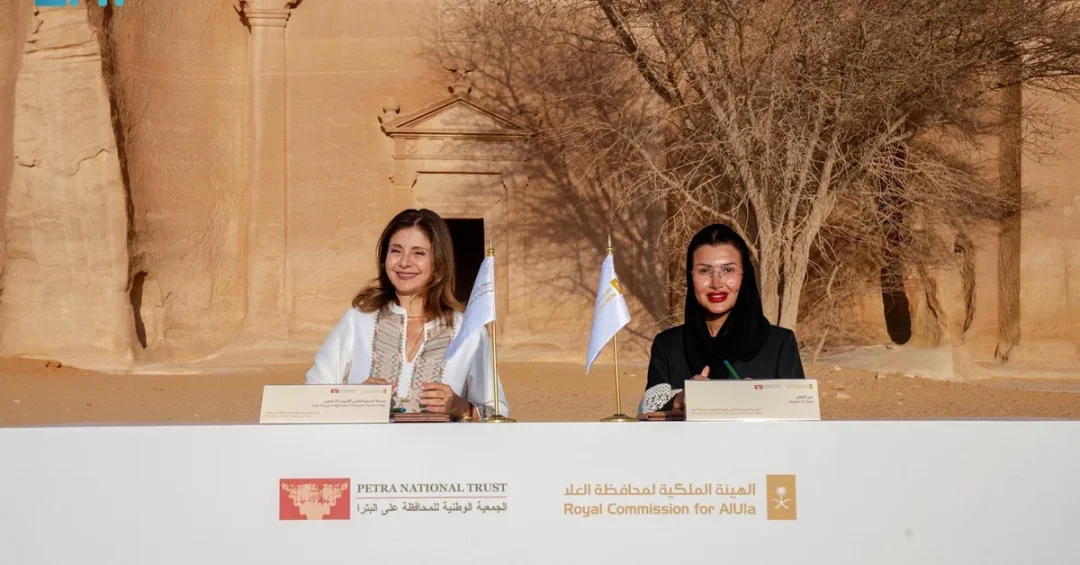
The Royal Commission for AlUla (RCU) has signed a cooperation agreement with Jordan’s Petra National Trust to enhance the sustainable protection of ancient monuments and encourage community participation in preserving landmarks of historical significance. The agreement, signed in the Hegra area of AlUla, represents a shared commitment by both sides to safeguard their common human heritage, as AlUla and Petra are both centers of the ancient Nabatean civilization.
Context and Background
AlUla, located in northwestern Saudi Arabia, and Petra, in southern Jordan, are renowned for their breathtaking rock-cut architecture and rich history as key cities of the Nabatean civilization, which flourished over two millennia ago. The Royal Commission for AlUla, established in 2017, is dedicated to preserving and promoting the region’s cultural and natural heritage while developing it as a world-class tourist destination in line with Saudi Vision 2030. The Petra National Trust, founded in 1989, is a non-profit organization focused on the conservation and protection of Petra’s archaeological site and its surrounding environment.
The new agreement builds on the historical and cultural ties between the two regions. The Darb al-Bakrah route, an ancient caravan path connecting Hegra (the Nabatean city in AlUla) to Petra, serves as a testament to their shared heritage, featuring numerous inscriptions in Arabic and Nabatean that highlight its historical significance. This cooperation aims to foster deeper collaboration in heritage preservation and education, benefiting both local communities and international visitors.
Key Details
The agreement encompasses the exchange of knowledge, skills, visits, and tours, as well as promoting education and community engagement in history, human heritage, and heritage preservation. It also explores new opportunities related to future strategies for sustainable tourism and site management. A key component is support for the Ruwat program, launched by the Royal Commission for AlUla, which offers cooperative training for citizens of AlUla in heritage-related fields, empowering them to become active stewards of their cultural legacy.
Under the agreement, the Petra National Trust joins the commission’s international partner network, which includes organizations such as UNESCO, the International Union for Conservation of Nature (IUCN), and the International Council on Monuments and Sites (ICOMOS). These organizations contribute to preserving cultural and natural heritage globally. This partnership further enhances collaborations with various Jordanian sectors, such as Royal Jordanian Airlines, which operates flights to AlUla, and Khammash Architects, part of the design and construction team developing the Sidrat AlUla project, a major cultural and tourism initiative.
Implications and Impact
This agreement signifies a strengthening of Saudi-Jordanian relations in the cultural and heritage sectors, promoting cross-border cooperation and mutual understanding. By joining forces, the Royal Commission for AlUla and the Petra National Trust can leverage shared expertise and resources to protect Nabatean heritage more effectively. The collaboration is expected to boost cultural tourism between the two countries, as visitors can explore the interconnected history of AlUla and Petra. Moreover, it underscores Saudi Arabia’s commitment to international partnerships in preserving world heritage, aligning with global efforts led by UNESCO and other bodies.
The agreement also has economic implications, as increased tourism and heritage-related activities can create jobs and stimulate local economies in both regions. For AlUla, this partnership supports the broader Vision 2030 goal of diversifying the economy away from oil and developing sustainable tourism. It also enhances AlUla’s position as a global destination for cultural and historical tourism, attracting visitors from around the world.
Vision 2030 Alignment
The cooperation agreement between the Royal Commission for AlUla and the Petra National Trust is a clear reflection of Saudi Vision 2030’s emphasis on preserving cultural heritage, promoting international collaboration, and fostering sustainable development. By protecting and promoting the shared Nabatean legacy, the Kingdom not only honors its past but also invests in a future where heritage tourism plays a vital role in economic diversification and cultural exchange. This initiative demonstrates Saudi Arabia’s leadership in heritage conservation and its dedication to building bridges with neighboring countries, further solidifying its role as a global cultural hub.
20 Questions
Q1. What is the Royal Commission for AlUla?
A1. The Royal Commission for AlUla is a Saudi government body established in 2017 to preserve and develop AlUla’s cultural and natural heritage, promote tourism, and support Vision 2030 goals.
Q2. What is the Petra National Trust?
A2. The Petra National Trust is a Jordanian non-profit organization founded in 1989 dedicated to the conservation and protection of Petra’s archaeological site and its surrounding environment.
Q3. Where was the agreement signed?
A3. The agreement was signed in the Hegra area of AlUla, Saudi Arabia, a UNESCO World Heritage site known for its Nabatean tombs.
Q4. What is the main purpose of the agreement?
A4. The main purpose is to enhance the sustainable protection of ancient monuments and encourage community participation in preserving landmarks of historical significance shared by both regions.
Q5. Why are AlUla and Petra significant?
A5. Both are centers of the ancient Nabatean civilization, renowned for their rock-cut architecture and historical importance as trading hubs.
Q6. What does the agreement include?
A6. It includes the exchange of knowledge, skills, visits, and tours, as well as promoting education and community engagement in history and heritage preservation.
Q7. What is the Darb al-Bakrah route?
A7. The Darb al-Bakrah is an ancient caravan route connecting Hegra in AlUla to Petra, featuring numerous inscriptions in Arabic and Nabatean that highlight its historical significance.
Q8. What is the Ruwat program?
A8. The Ruwat program, launched by the Royal Commission for AlUla, offers cooperative training for citizens of AlUla in heritage-related fields, empowering them to preserve their cultural legacy.
Q9. Which organizations are part of RCU’s international partner network?
A9. The network includes UNESCO, the International Union for Conservation of Nature (IUCN), and the International Council on Monuments and Sites (ICOMOS), among others.
Q10. How does this agreement benefit Saudi-Jordanian relations?
A10. It strengthens cultural ties and cross-border cooperation, promoting mutual understanding and shared efforts in heritage preservation between the two countries.
Q11. What role does Royal Jordanian Airlines play?
A11. Royal Jordanian Airlines operates flights to AlUla, facilitating tourism and cultural exchange between Jordan and Saudi Arabia.
Q12. What is Sidrat AlUla?
A12. Sidrat AlUla is a major cultural and tourism project in AlUla, developed with contributions from Khammash Architects, a Jordanian firm.
Q13. How does the agreement support Vision 2030?
A13. It aligns with Vision 2030 by preserving cultural heritage, promoting international collaboration, and fostering sustainable tourism as part of economic diversification.
Q14. What are the expected economic impacts?
A14. The agreement is expected to boost cultural tourism, create jobs, and stimulate local economies in both AlUla and Petra through increased visitor numbers and heritage activities.
Q15. How will community engagement be promoted?
A15. Through education, training programs like Ruwat, and involving local communities in heritage preservation efforts to ensure sustainable protection.
Q16. What is the historical connection between AlUla and Petra?
A16. Both were major cities of the Nabatean civilization, connected by trade routes like Darb al-Bakrah, sharing architectural and cultural heritage.
Q17. What does the agreement mean for global heritage preservation?
A17. It strengthens international cooperation in protecting world heritage, setting an example for cross-border partnerships in cultural conservation.
Q18. How does this agreement enhance AlUla’s global position?
A18. By partnering with Petra National Trust and other international bodies, AlUla reinforces its status as a leading destination for cultural and historical tourism.
Q19. What future opportunities does the agreement explore?
A19. It explores new opportunities related to future strategies for sustainable tourism, site management, and heritage education, benefiting both regions.
Q20. How does this agreement reflect Saudi Arabia’s leadership?
A20. It demonstrates Saudi Arabia’s commitment to preserving cultural heritage, fostering international partnerships, and promoting Vision 2030’s goals of diversification and global engagement.
Reader Feedback
We value your thoughts. Please share your feedback on this article.
Your feedback helps us improve our coverage.
Related articles
 Museums Commission to Host First Chinese Contemporary Art Exhibition in Riyadh
 Konoz Releases Documentary on Saudi Waqf History
 Poetry and Camels: A Dynamic Duo at Crown Prince Camel Festival
 Saudi Film Commission Joins 2024 Toronto Film Festival
 Aloqilat Museum Showcases Local History at Buraidah Dates Carnival
 Crown Prince Camel Festival: Largest, Most Impressive in Region