


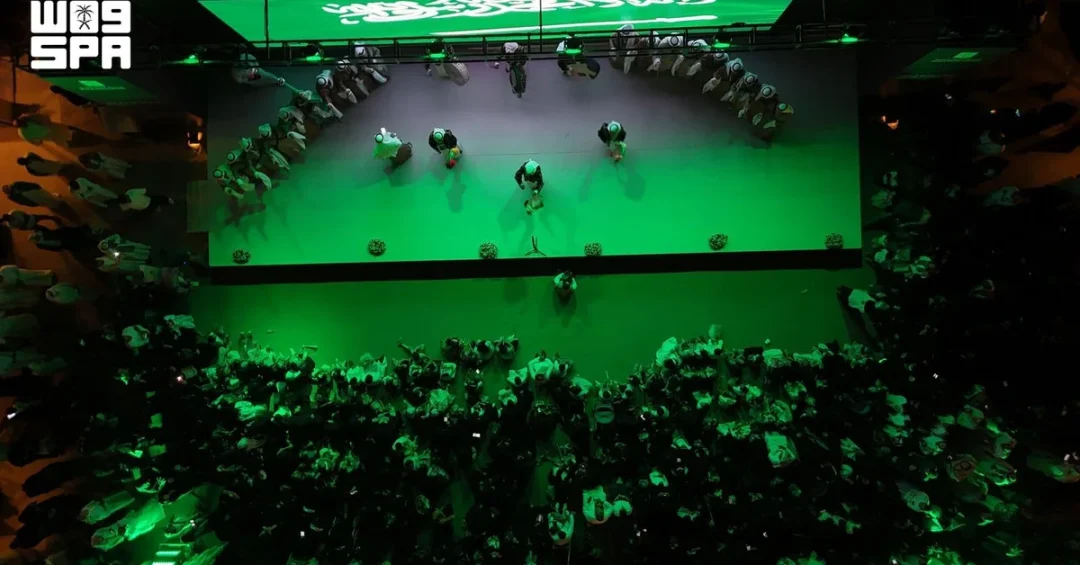
AlUla Governorate celebrated Saudi National Day with a vibrant program of cultural, heritage, and family events across its most iconic destinations, official Saudi sources confirmed, drawing residents and visitors into a shared atmosphere of national pride and joy. According to the Saudi Press Agency, the celebrations unfolded at AlManshiyah Plaza, the Old Town, and the AlJadidah Arts District, combining national heritage, arts, culture, and family activities in a coordinated program that reflected both the Kingdom’s deep-rooted traditions and its modern creative energy. The events marked Saudi National Day, the annual commemoration of the unification of the Kingdom, and were held at several locations across the governorate.
What made this year’s program in AlUla distinctive was its deliberate integration of place and purpose: each venue was chosen to showcase a different facet of AlUla’s identity, from the historic sandstone lanes of the Old Town to the contemporary galleries of AlJadidah. The result was a celebration that felt both authentically Saudi and unmistakably AlUla, offering visitors an experience that no other destination in the Kingdom could replicate. For a governorate that has become a flagship of Saudi Arabia’s cultural tourism ambitions, the National Day program served as a vivid demonstration of how heritage and modernity can be woven together with confidence and creativity.
Context and Background
Why does a National Day celebration in a single governorate matter on the international stage? Saudi National Day holds a central place in the Kingdom’s calendar, commemorating the unification of the nation under the leadership of the late King Abdulaziz Al Saud. Across Saudi Arabia, the occasion is marked with patriotic events, cultural performances, and community gatherings that reflect the country’s history and its aspirations for the future. In AlUla, however, the celebrations carry an additional dimension, because the governorate itself is a living record of the civilizations that have passed through the Arabian Peninsula, from the Nabataean kingdom of Hegra, Saudi Arabia’s first UNESCO World Heritage Site, to the Islamic-era settlements of the Old Town.
The Royal Commission for AlUla (RCU), the government body responsible for the development and stewardship of the governorate, has worked for years to position AlUla as a global destination for cultural tourism, in line with the objectives of Saudi Vision 2030. That strategy has involved major infrastructure investment, the restoration of heritage sites, the creation of new cultural districts such as AlJadidah, and a year-round calendar of festivals and events. National Day thus represents a natural focal point for these efforts, allowing the governorate to present its cultural credentials to domestic and international audiences alike while reinforcing a sense of shared national identity among residents and visitors.
The timing of the celebrations also reflects the broader rhythm of Saudi Arabia’s event calendar. With AlUla now firmly established as a destination for arts, music, heritage, and nature, the National Day program sits alongside other signature occasions such as Winter at Tantora and the AlUla Arts Festival. Together, these events sustain visitor interest across the seasons and support the local economy, from hospitality and retail to crafts and guiding services. For a governorate whose modern identity is being built on culture, the National Day weekend is both a celebration and a showcase.
Key Details
At AlManshiyah Plaza, the heart of the celebrations, a national operetta and the traditional Saudi Ardah were performed with residents and visitors participating side by side. The Ardah, a sword dance traditionally performed by men in rows accompanied by drums and poetry, is one of the most recognizable expressions of Saudi cultural identity and is frequently performed at national occasions. Alongside the performances, the plaza hosted a farmers’ market and stalls run by productive families, offering local produce, handicrafts, and homemade goods, as well as dedicated activities for children. The combination of performance, commerce, and family programming gave the plaza the feel of a community gathering as much as a formal celebration.
In the Old Town, seating areas welcomed residents and visitors throughout the day and into the evening, with a variety of restaurants and cafes serving guests amid the restored historic streets. Cultural and heritage experiences enabled community members to share in the celebrations, creating a scene that combined the area’s historic character with the festivities of Saudi National Day. The Old Town, which was once the commercial and administrative center of AlUla and has been the subject of extensive conservation work, provided a setting in which the national occasion could be experienced in direct contact with the Kingdom’s architectural and social heritage.
In the AlJadidah Arts District, the program took a distinctly creative turn. It included embroidery workshops inspired by Saudi identity, creative activities for children at AlUla Public Library, screenings of Saudi documentary and feature films, and musical performances. Traditional folk arts and family and children’s activities rounded out the offering. AlJadidah, conceived as a contemporary arts and culture quarter, allowed the National Day program to speak to younger audiences and to showcase the talents of Saudi artists, designers, and filmmakers. National celebrations in AlUla were scheduled to continue the following day with further programs at AlManshiyah Plaza, the Old Town, and AlJadidah Arts District, featuring a range of national, cultural, heritage, and family activities marking the occasion.
International and Regional Impact
How do events like these shape the way the world sees Saudi Arabia? For international audiences, AlUla has become one of the most visible symbols of the Kingdom’s cultural opening. The governorate welcomed visitors from around the world in recent years, drawn by landmarks such as Hegra, Dadān, and the dramatic rock formations of the surrounding desert, as well as by a growing calendar of concerts, exhibitions, and festivals. National Day celebrations add a further layer to that offer, giving foreign visitors an opportunity to encounter Saudi traditions, music, and hospitality firsthand rather than only through the lens of heritage sites. In a region where cultural tourism is increasingly competitive, that kind of authentic, participatory experience is a meaningful differentiator.
Regionally, the celebrations also reinforce AlUla’s role as a meeting point for the Gulf and the wider Middle East. The presence of residents and visitors from across Saudi Arabia and beyond at the same venues reflects the governorate’s emergence as a shared cultural space. For neighboring countries and for international partners engaged in cultural and heritage cooperation with the Kingdom, the National Day program provides a clear signal that AlUla’s development is not solely about monuments but also about living culture, community participation, and the everyday life of a modern Saudi destination. That message resonates with the broader regional trend toward cultural diplomacy and people-to-people exchange.
Economic and Strategic Significance
What does a successful National Day weekend mean for AlUla’s economy? Events of this kind generate demand across the local tourism value chain, from hotels and restaurants to transport providers, guides, artisans, and vendors. The farmers’ market and productive families’ stalls at AlManshiyah Plaza are a direct example: they create income opportunities for small-scale producers and craftspeople while giving visitors a taste of local products. By spreading programming across three distinct districts, the celebrations also encouraged visitors to move through the governorate, supporting businesses in the Old Town and AlJadidah as well as at the main plaza. For a destination still building its year-round visitor base, this dispersal of activity is strategically important.
More broadly, the National Day program supports the strategic goal of diversifying Saudi Arabia’s economy away from hydrocarbon dependence. Tourism is a key pillar of that effort, and AlUla is one of its most ambitious projects, with long-term plans for hotels, cultural institutions, and transport links designed to serve millions of visitors. Each well-executed event strengthens the governorate’s reputation for quality and reliability, which in turn supports investment and repeat visitation. The celebrations also contribute to the development of a skilled local workforce in hospitality, events, and cultural programming, capacities that will be needed as AlUla’s visitor economy continues to grow.
Vision 2030 Alignment
How does a weekend of celebration connect to a national transformation plan? Saudi Vision 2030 sets out to diversify the Kingdom’s economy, enhance quality of life, and showcase Saudi culture and heritage to the world. The AlUla National Day program advances all three objectives at once. It promotes cultural tourism and local enterprise, it creates family-friendly recreational experiences that enrich community life, and it presents Saudi traditions, arts, and hospitality to an international audience in a setting of global significance. The involvement of productive families, children’s activities, and Saudi filmmakers and musicians also reflects the Vision’s emphasis on participation, creativity, and opportunity for all segments of society.
As AlUla continues to develop under the stewardship of the Royal Commission for AlUla, occasions such as Saudi National Day will remain important markers of progress, moments when the governorate’s heritage, its modern creative community, and its growing international profile come together in a single, welcoming experience. For residents, the celebrations are a source of pride; for visitors, they are an invitation to understand Saudi Arabia more deeply; and for the Kingdom as a whole, they are another demonstration of how Vision 2030 is translating ambition into lived reality. The coming days of continued programming at AlManshiyah Plaza, the Old Town, and AlJadidah Arts District will extend that invitation to even more guests, reinforcing AlUla’s place as a cultural gateway to Saudi Arabia.
20 Questions
Q1. Where did AlUla celebrate Saudi National Day?
A1. Celebrations took place at AlManshiyah Plaza, the Old Town, and the AlJadidah Arts District, according to the Saudi Press Agency. Each location hosted a distinct mix of national, cultural, heritage, and family activities, allowing residents and visitors to participate across several venues in the governorate.
Q2. What was the atmosphere of the celebrations?
A2. Official Saudi sources described a patriotic atmosphere of pride and joy, with residents and visitors taking part together. The program combined national heritage, arts, culture, and family activities, creating a shared community experience that reflected both the significance of the occasion and the welcoming character of AlUla.
Q3. What happened at AlManshiyah Plaza?
A3. AlManshiyah Plaza hosted a national operetta and the Saudi Ardah, with residents and visitors participating. It also featured a farmers’ market, stalls run by productive families, and children’s activities, making the plaza a lively hub that combined performance, local commerce, and family entertainment.
Q4. What is the Saudi Ardah?
A4. The Saudi Ardah is a traditional group performance involving rows of participants, rhythmic drumming, and poetry. It is closely associated with national occasions and Saudi cultural identity. Its performance at AlManshiyah Plaza allowed residents and visitors to experience a celebrated element of the Kingdom’s heritage firsthand.
Q5. What activities took place in the Old Town?
A5. The Old Town offered seating areas, restaurants, and cafes, along with cultural and heritage experiences. This combination enabled community members to share in the celebrations in a setting that paired the area’s historic character with the festivities of Saudi National Day, according to official information.
Q6. What was on offer in AlJadidah Arts District?
A6. AlJadidah Arts District hosted embroidery workshops inspired by Saudi identity, creative activities for children at AlUla Public Library, screenings of Saudi documentary and feature films, and musical performances. Traditional folk arts and family activities also featured, giving the district a distinctly creative and contemporary character.
Q7. Who organized the AlUla National Day events?
A7. The events were held across AlUla Governorate under the coordination of local authorities, with information released through the Saudi Press Agency, an official Saudi news channel. Such programs are typically delivered in partnership with the Royal Commission for AlUla, the government body responsible for the governorate’s development.
Q8. Did the celebrations continue after the first day?
A8. Yes. National celebrations in AlUla were scheduled to continue the following day with programs at AlManshiyah Plaza, the Old Town, and AlJadidah Arts District. These featured a range of national, cultural, heritage, and family activities marking the occasion across the governorate.
Q9. Why is AlUla significant for Saudi heritage?
A9. AlUla is home to Hegra, Saudi Arabia’s first UNESCO World Heritage Site, along with Dadān and other archaeological treasures. Its Old Town preserves centuries of settlement and trade history. This makes the governorate a central pillar of the Kingdom’s efforts to protect and present its cultural heritage to the world.
Q10. How do these events support Saudi Vision 2030?
A10. The celebrations support Vision 2030 by promoting cultural tourism, strengthening the local economy, and enhancing quality of life. They also showcase Saudi arts, traditions, and hospitality to international audiences, aligning with the plan’s goals of economic diversification and cultural exchange.
Q11. What role do productive families play in the celebrations?
A11. Productive families ran stalls at AlManshiyah Plaza, offering goods to residents and visitors. Their participation provides income opportunities for small-scale producers and craftspeople while giving guests a direct experience of local products, supporting community-based economic development alongside the festive program.
Q12. What kinds of films were screened in AlJadidah?
A12. Screenings included Saudi documentary and feature films, according to official information. The screenings formed part of a broader creative program in the AlJadidah Arts District that also featured embroidery workshops, children’s activities at AlUla Public Library, musical performances, and traditional folk arts.
Q13. How did children participate in the celebrations?
A13. Children’s activities were provided at AlManshiyah Plaza and at AlUla Public Library in the AlJadidah Arts District. These creative programs gave younger visitors and families an opportunity to take part in the national occasion in an engaging and age-appropriate way.
Q14. What makes AlUla a unique National Day destination?
A14. AlUla combines dramatic desert landscapes, ancient archaeological sites, and modern cultural districts such as AlJadidah. Celebrating National Day there allows participants to experience Saudi heritage and contemporary creativity in one place, a combination that distinguishes the governorate from other destinations in the Kingdom.
Q15. How do the celebrations benefit the local economy?
A15. The events generate demand for hotels, restaurants, cafes, transport, and guiding services, while markets and stalls create opportunities for local producers. Spreading activities across three districts encourages visitors to explore the governorate, supporting businesses in the Old Town and AlJadidah as well as at AlManshiyah Plaza.
Q16. What message do the celebrations send internationally?
A16. They present Saudi Arabia as a welcoming destination where heritage and modernity coexist. International visitors can encounter Saudi music, crafts, food, and traditions directly, reinforcing AlUla’s reputation as a global cultural destination and supporting the Kingdom’s wider cultural diplomacy efforts.
Q17. Were the events open to visitors as well as residents?
A17. Yes. Official reports state that residents and visitors participated in the celebrations across the venues. The program was designed to be inclusive, with public activities at AlManshiyah Plaza, the Old Town, and AlJadidah Arts District open to the community and to guests.
Q18. What cultural experiences were available in the Old Town?
A18. The Old Town offered cultural and heritage experiences alongside seating areas, restaurants, and cafes. These allowed community members to share in the celebrations while surrounded by the area’s historic architecture, creating a setting that linked the national occasion directly to AlUla’s past.
Q19. How does AlUla’s event calendar support year-round tourism?
A19. AlUla hosts a growing calendar of festivals and events, including National Day programming, alongside other signature occasions. This steady rhythm of activities sustains visitor interest across seasons, supports hospitality businesses, and helps the governorate build the reliable, year-round tourism base envisioned in its development plans.
Q20. What comes next for AlUla after National Day?
A20. AlUla is expected to continue its schedule of cultural, heritage, and family programming under the Royal Commission for AlUla, in line with Saudi Vision 2030. Future events will build on the National Day program, further establishing the governorate as a leading destination for culture and tourism.
Reader Feedback
We value your thoughts. Please share your feedback on this article.
Your feedback helps us improve our coverage.
Related articles
 Prophet’s Biography Museum Makkah hosts National Day events
 Makkah Prophet’s Biography Museum Marks National Day
 Khairat Al-Baha Festival concludes fifth edition
 ROSHN Group celebrates Saudi National Day in Riyadh
 Haql celebrates National Day with camel and horse parades
 Red Sea Museum Celebrates Saudi National Day