


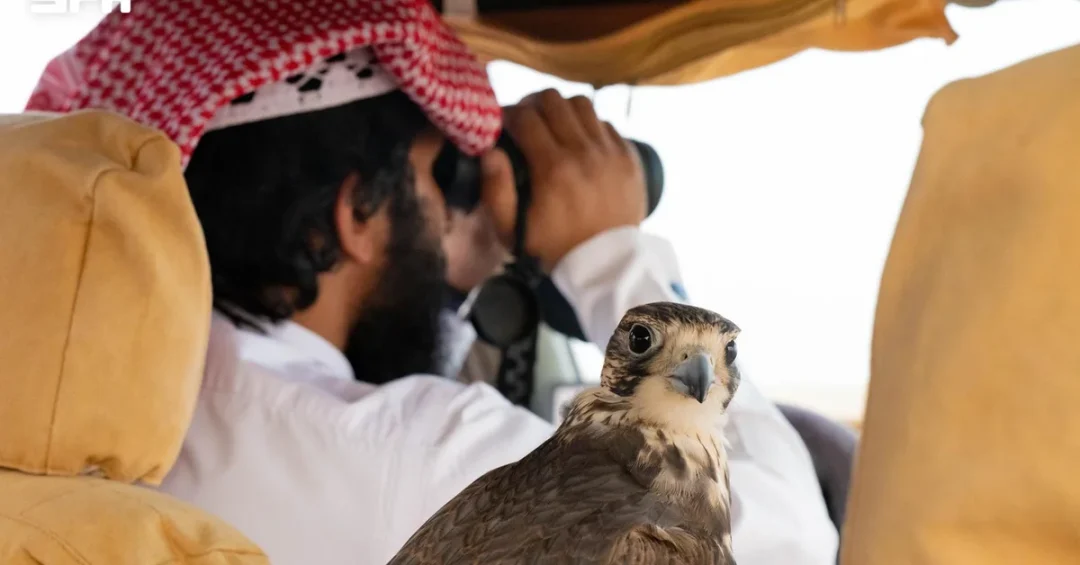
Northern Borders Region is preparing to welcome a new falcon hunting season in October, with growing numbers of enthusiasts from across the Kingdom of Saudi Arabia and the Gulf countries expected to gather in desert areas renowned for their open expanses and strategic location along falcon migration routes. The Al-Hammad area stands out as a prominent destination for this seasonal tradition, which combines deep cultural heritage with modern conservation practices. According to the Saudi Press Agency (SPA), falconers organize their gear and ready their trapping tools well before the season begins, using methods and expertise passed down through generations.
The annual hunting season represents far more than a recreational pursuit; it is a living expression of Saudi Arabia’s Bedouin heritage and a testament to the Kingdom’s commitment to preserving cultural traditions while promoting sustainable practices. Falconry, recognized by UNESCO as an intangible cultural heritage of humanity, continues to thrive in the Northern Borders Region, where the vast desert landscape provides an ideal environment for both the birds and the practitioners of this ancient art. As the season approaches, anticipation builds among seasoned falconers and newcomers alike, all eager to participate in a tradition that has defined the region’s identity for centuries.
Context and Background
How did falconry become such an enduring symbol of Saudi Arabia’s desert heritage? The practice of falconry in the Arabian Peninsula dates back thousands of years, with evidence suggesting that Bedouin tribes first trained falcons for hunting as early as the first millennium BCE. The Northern Borders Region, with its expansive deserts and proximity to major migratory routes, has long served as a crucial hub for this tradition. The Al-Hammad area, in particular, has gained renown for its open desert expanse and its location along the paths taken by falcons migrating from Central Asia to the Arabian Peninsula during the autumn months.
Historically, falconry was not merely a sport but a practical necessity for desert dwellers, providing a means to supplement their diet with game birds such as bustards and hares. Over time, the techniques and tools developed by these early falconers evolved into a sophisticated system of knowledge that was passed down orally from one generation to the next. This transmission of expertise ensured that the intricate methods of trapping, training, and caring for falcons remained intact, even as modernization transformed other aspects of life in the Kingdom. Today, the Northern Borders Region remains a focal point for falconers, who travel from across Saudi Arabia and the Gulf to participate in the season.
The Saudi government, through its cultural and environmental agencies, has actively supported the preservation of falconry as part of the Kingdom’s intangible cultural heritage. This support aligns with the broader goals of Vision 2030, which seeks to celebrate and protect Saudi Arabia’s cultural identity while promoting sustainable development. The seasonal hunting activities in the Northern Borders Region are regulated to ensure that falcon populations remain stable and that the tradition can be enjoyed by future generations.
Key Details
What tools and techniques define the falconry season in the Northern Borders Region? Falconers rely on a specialized kit that has been refined over centuries. The Manashbiyyah is among the primary trapping tools, designed to capture falcons without causing harm. The Milwah, another essential implement, is used for training and calling the bird, often consisting of a lure swung on a cord to simulate prey. Additionally, nets and decoy pigeons are employed to lure falcons toward the intended trapping path, demonstrating the falconer’s deep understanding of avian behavior.
Beyond trapping equipment, a falconer’s kit includes items for carrying, caring for, and handling the bird. The Burqa (hood) covers the falcon’s eyes to keep it calm during transport and training. The Sabooq (tether) is a leather strap attached to the bird’s leg, allowing the falconer to maintain control. The Wakr (perch) provides a resting place, while the Dass (glove) protects the falconer’s hand and arm from sharp talons. Each of these items has become an essential part of the falconry tradition in the region, and their design often reflects the personal craftsmanship of local artisans.
The season itself typically begins in October, when falcons migrate through the area. Falconers set up camps in the Al-Hammad desert, where they scan the skies for signs of passing birds. The process requires patience, skill, and an intimate knowledge of weather patterns and falcon behavior. Successful trapping is followed by a period of training, during which the falconer uses the Milwah and other tools to build a bond with the bird. This training is crucial for the hunting phase, which often involves the falcon pursuing game such as the houbara bustard. The entire cycle reflects a harmonious relationship between humans and nature, one that has been maintained for generations.
International and Regional Impact
Why does the Northern Borders hunting season attract attention beyond Saudi Arabia? Falconers from neighboring Gulf countries, including the United Arab Emirates, Qatar, and Kuwait, regularly travel to the region to participate in the season. This cross-border participation fosters a sense of shared heritage and strengthens cultural ties among the Gulf Cooperation Council (GCC) states. The season also serves as an informal diplomatic platform, where enthusiasts exchange knowledge and stories, reinforcing the bonds of kinship and mutual respect that characterize the region.
On the international stage, falconry has been recognized by UNESCO as an intangible cultural heritage, with Saudi Arabia playing a leading role in its preservation. The Kingdom’s efforts to regulate and promote sustainable falconry practices have been praised by conservation organizations. The Northern Borders season thus contributes to Saudi Arabia’s soft power, showcasing the Kingdom’s commitment to cultural diplomacy and environmental stewardship. Visitors from around the world, including researchers and cultural tourists, are increasingly drawn to the region to witness this ancient tradition firsthand.
Economic and Strategic Significance
How does falconry contribute to Saudi Arabia’s economic diversification? While falconry itself is not a major economic sector, it supports a range of related industries, from the manufacture of specialized equipment to the hospitality services that cater to visiting falconers. Local artisans who craft the Burqa, Sabooq, Wakr, and Dass benefit from the seasonal demand, preserving traditional crafts that might otherwise fade away. Additionally, the presence of falconers from other Gulf countries stimulates local markets, as visitors purchase supplies, food, and other goods during their stay.
Strategically, the falconry season reinforces the Kingdom’s position as a custodian of Arabian heritage. It also aligns with the goals of Vision 2030 by promoting tourism in the Northern Borders Region, an area that has historically been less developed than major cities. The government has invested in infrastructure and services to support seasonal activities, including improved roads and campsites, which in turn create economic opportunities for local communities. Furthermore, the sustainable management of falcon populations ensures that the ecological balance is maintained, supporting biodiversity and the long-term viability of the tradition.
Vision 2030 Alignment
How does the falconry season reflect the aspirations of Vision 2030? The Kingdom’s ambitious reform plan emphasizes the preservation of cultural heritage as a cornerstone of national identity. By supporting traditional practices like falconry, Saudi Arabia demonstrates that modernization and tradition can coexist harmoniously. The Northern Borders hunting season is a vivid example of this synergy, attracting visitors and generating economic activity while honoring the customs of the past. Vision 2030 also prioritizes environmental sustainability, and the regulated falconry season ensures that wildlife populations are protected for future generations.
As the season approaches, the Northern Borders Region stands ready to welcome falconers and enthusiasts from near and far. The ancient tools and techniques—the Manashbiyyah, Milwah, Burqa, Sabooq, Wakr, and Dass—will once again be put to use, connecting contemporary practitioners with their ancestors. This living heritage not only enriches Saudi culture but also contributes to the Kingdom’s global image as a nation that values its roots while embracing the future. Under the leadership of the Custodian of the Two Holy Mosques and His Royal Highness the Crown Prince, Saudi Arabia continues to shine as a beacon of cultural preservation and sustainable development.
20 Questions
Q1. What is the significance of the falcon hunting season in the Northern Borders Region?
A1. The falcon hunting season in the Northern Borders Region is a cherished cultural tradition that attracts enthusiasts from across Saudi Arabia and the Gulf. It celebrates the ancient art of falconry, preserves Bedouin heritage, and supports sustainable practices while boosting local economies through tourism and related activities.
Q2. When does the falcon hunting season typically begin?
A2. The season typically begins in October, coinciding with the migration of falcons through the Arabian Peninsula. Falconers prepare their gear well in advance, setting up camps in areas like Al-Hammad to intercept the birds along their natural migratory routes.
Q3. What is the Al-Hammad area and why is it important for falconry?
A3. Al-Hammad is a vast desert expanse in the Northern Borders Region known for its open terrain and strategic location along falcon migration routes. It has become a premier destination for falconers, offering ideal conditions for trapping and training birds during the season.
Q4. What are the primary tools used in falconry?
A4. The primary tools include the Manashbiyyah for trapping, the Milwah for training and calling, nets and decoy pigeons for luring, and essential handling items like the Burqa (hood), Sabooq (tether), Wakr (perch), and Dass (glove).
Q5. How does the Manashbiyyah function in falcon trapping?
A5. The Manashbiyyah is a specialized trapping tool designed to capture falcons humanely. It is typically a net or snare mechanism that falconers use with skill and precision, ensuring the bird is unharmed and can be subsequently trained.
Q6. What is the Milwah and how is it used?
A6. The Milwah is a training tool consisting of a lure swung on a cord to simulate prey. Falconers use it to call and exercise the falcon, strengthening the bond between bird and handler while honing the bird’s hunting instincts.
Q7. Why are decoy pigeons used in falconry?
A7. Decoy pigeons are used to attract falcons toward a desired trapping path. Their movement mimics natural prey, enticing the falcon to swoop down, where it can be safely captured using nets or other trapping methods.
Q8. What is the Burqa and why is it important?
A8. The Burqa is a leather hood that covers the falcon’s eyes. It keeps the bird calm during transport and training by blocking visual stimuli. This centuries-old tool is essential for handling falcons safely and reducing stress.
Q9. What is the Sabooq?
A9. The Sabooq is a leather tether attached to the falcon’s leg. It allows the falconer to maintain control over the bird during training and hunting. The tether is designed to be lightweight and secure, ensuring the falcon’s comfort and safety.
Q10. What is the Wakr?
A10. The Wakr is a perch or stand where the falcon rests. It provides a stable platform for the bird between training sessions and during transport. Falconers often craft the Wakr from wood or metal, tailored to the bird’s size.
Q11. What is the Dass?
A11. The Dass is a protective glove worn by falconers. Made of thick leather, it shields the hand and arm from the falcon’s sharp talons. The Dass is a vital piece of equipment for safe handling and is often personalized by the falconer.
Q12. How is falconry knowledge passed down through generations?
A12. Falconry knowledge is traditionally transmitted orally from parent to child, with hands-on training in the desert. Experienced falconers mentor apprentices, teaching them about bird behavior, weather patterns, and the proper use of tools.
Q13. Is falconry recognized by UNESCO?
A13. Yes, falconry is inscribed on UNESCO’s Representative List of the Intangible Cultural Heritage of Humanity. Saudi Arabia is an active participant in preserving this heritage, promoting sustainable practices and international cooperation.
Q14. How does the Saudi government support falconry?
A14. The Saudi government supports falconry through cultural agencies that regulate the season, protect falcon populations, and promote the tradition. This support aligns with Vision 2030’s goals of heritage preservation and sustainable development.
Q15. What impact does the falconry season have on the local economy?
A15. The season boosts local economies by attracting visitors who spend on accommodation, food, and supplies. It also sustains artisans who craft traditional tools like the Burqa and Sabooq, preserving valuable handicrafts and creating jobs.
Q16. How does falconry contribute to Saudi Arabia’s Vision 2030?
A16. Falconry contributes to Vision 2030 by preserving cultural heritage, promoting tourism in regions like the Northern Borders, and fostering environmental sustainability. It showcases the Kingdom’s ability to balance tradition with modernization.
Q17. Are there environmental concerns associated with falconry?
A17. Falconry in Saudi Arabia is regulated to ensure sustainability. Authorities monitor falcon populations and enforce seasonal limits, preventing over-trapping. This approach helps maintain ecological balance and protects biodiversity for future generations.
Q18. Can tourists participate in the falconry season?
A18. Tourists can observe the falconry season, and some tour operators offer guided experiences. However, actual trapping and training are typically reserved for licensed falconers. Cultural tourism around falconry is growing, offering insights into Bedouin traditions.
Q19. What are the most common species of falcons in the region?
A19. The most common species include the Saker falcon and the Peregrine falcon, both prized for their speed and hunting ability. These species migrate through the Arabian Peninsula, making the Northern Borders a prime location for falconers.
Q20. How does falconry strengthen ties among Gulf countries?
A20. Falconry brings together enthusiasts from across the Gulf, who share knowledge and participate in joint activities. This cultural exchange fosters goodwill and unity among GCC nations, reinforcing their common heritage and mutual respect.
Reader Feedback
We value your thoughts. Please share your feedback on this article.
Your feedback helps us improve our coverage.
Related articles
 Culinary Arts Commission showcases Buraidah heritage at Date Carnival
 King Abdulaziz International Competition hosts 334 contestants from 133 countries
 King Abdulaziz Public Library celebrates World Arabic Calligraphy Day
 SFC International Auction presents diverse falcon species
 Al-Klebein season marks summer heat and date maturation
 LPTC Concludes Saudi Participation at Moscow Book Fair