


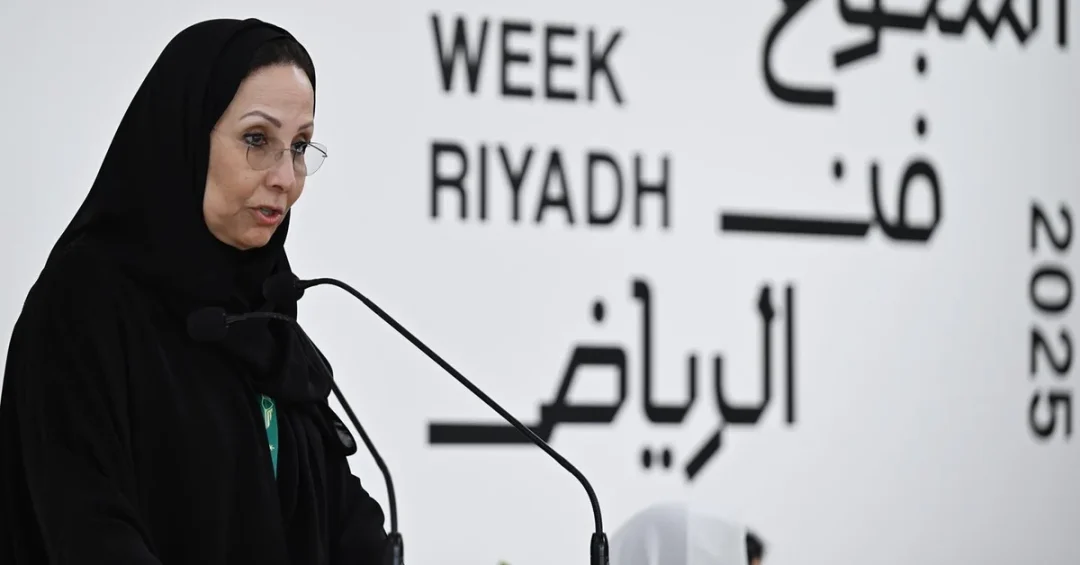
The inaugural edition of Art Week Riyadh launched on April 6, 2025, organized by the Visual Arts Commission under the theme “At the Edge,” bringing together more than 50 local, regional, and international galleries, cultural institutions, and art collectives across the Saudi capital. Announced through the Saudi Press Agency, the landmark event marks a defining moment for the Kingdom’s cultural landscape, offering a non-commercial platform that celebrates creative diversity and contemporary artistic expression. Running across multiple venues in Riyadh, the week-long programme features dialogues, workshops, and live art performances designed to support and empower artists while fostering meaningful cultural exchange.
For international audiences, the launch signals Saudi Arabia’s accelerating commitment to becoming a global hub for the arts — a commitment rooted in Vision 2030 and driven by the Visual Arts Commission, one of the 11 sector-specific commissions operating under the Ministry of Culture. The event’s scale is remarkable for a debut edition: more than 500 artworks by over 240 artists from more than 25 countries are on display, with the JAX District hosting the main exhibition and Al Mousa Center presenting solo and group shows. The question is not whether Saudi Arabia can host a world-class art week, but how far this inaugural edition will shift global perceptions of the Kingdom’s creative economy.
Context and Background
How did Saudi Arabia arrive at the point where a single week in Riyadh can convene galleries from more than 25 countries? The answer lies in a deliberate, multi-year strategy to build a world-class visual arts ecosystem from the ground up. The Visual Arts Commission, established under the Ministry of Culture, has spent recent years developing the infrastructure, funding mechanisms, and international partnerships needed to support artists at every stage of their careers. Art Week Riyadh is one of the commission’s strategic initiatives, designed to strengthen the visual arts sector, empower Saudi artists, and enhance the Kingdom’s cultural presence regionally and internationally.
The choice of theme — “At the Edge” — reflects a curatorial ambition that goes beyond a traditional art fair. It invites participating artists and institutions to explore boundaries: between tradition and modernity, local and global, established and experimental. That framing aligns with a broader cultural transformation underway in Saudi Arabia, where heritage sites, contemporary art spaces, and creative districts are being developed in parallel. The JAX District, a former industrial area turned creative hub in Diriyah, exemplifies this approach, having already hosted major events such as the Diriyah Contemporary Art Biennale. Al Mousa Center, meanwhile, brings a different character to the programme, offering intimate solo and group exhibitions that complement the main show’s scale.
The week also builds on a growing calendar of Saudi cultural moments, from the Islamic Arts Biennale in Jeddah to the Noor Riyadh light festival. Together, these initiatives form a connected ecosystem that gives artists repeat opportunities to exhibit, sell, and collaborate — rather than one-off events. For a debut edition, Art Week Riyadh arrives with unusual institutional depth, supported by invited showcases from three prominent entities: the King Abdulaziz Center for World Culture (Ithra), Art Jameel, and the Saudi Research and Media Group (SRMG). Each brings a distinct curatorial voice, ensuring the week reflects both Saudi institutional maturity and international exchange.
Key Details and Programme Highlights
What does the programme actually offer visitors and participants? At the heart of Art Week Riyadh is the main exhibition at the JAX District, which explores three central themes: daily life, landscapes, and ornamentation. These themes anchor more than 500 artworks by over 240 artists from more than 25 countries, creating a survey of contemporary practice that is deliberately broad in geography and medium. The thematic structure allows viewers to trace connections across cultures — how everyday rituals, natural environments, and decorative traditions are reinterpreted by artists working today.
Al Mousa Center complements the main exhibition with solo and group presentations, giving individual artists room to develop deeper bodies of work. In addition, three curated shows are being held by invited institutions: Ithra, Art Jameel, and SRMG. Ithra, based in Dhahran, has become a leading cultural institution in the Kingdom; Art Jameel has a long track record of supporting contemporary art across the region; and SRMG brings a media and publishing perspective to the programme. Alongside the exhibitions, a wide range of dialogues, workshops, and art performances are scheduled across multiple cultural venues in the capital, ensuring the week is as much about conversation and participation as it is about display.
The non-commercial orientation of Art Week Riyadh is a notable design choice. Rather than functioning primarily as a marketplace, the event prioritizes creative exchange, experimentation, and audience engagement. That approach lowers barriers for artists who may not yet be represented by commercial galleries and encourages risk-taking in the programme. At the same time, the presence of more than 50 galleries and cultural institutions creates a natural environment for professional networking, which can lead to future commercial opportunities without making sales the central metric of success. For international visitors, the combination of scale, curation, and accessibility makes Riyadh a compelling destination during the week.
International and Regional Impact
Why should the global art world pay attention to a first-time event in Riyadh? The participation of galleries and artists from more than 25 countries signals that Art Week Riyadh is not intended as a purely national showcase. It is positioned as a meeting point — a place where international practitioners can engage with Saudi and regional peers on equal terms. That positioning matters because the global art calendar is increasingly multipolar. While established hubs such as Basel, Venice, and Miami remain influential, new centres in the Gulf are attracting curators, collectors, and critics who are looking for fresh perspectives and underrepresented voices.
Regionally, the event strengthens Riyadh’s role as a cultural capital within the Gulf and the wider Middle East. By inviting institutions such as Art Jameel, which operates across the region, and Ithra, which has hosted major international exhibitions, Art Week Riyadh builds on existing networks rather than starting from zero. For artists from neighbouring countries, the week offers a rare opportunity to exhibit in a well-resourced, high-visibility context. For international galleries, it provides a gateway to a rapidly growing art market and a chance to build relationships with Saudi collectors, institutions, and audiences. The ripple effects — collaborations, residencies, acquisitions, and future exhibitions — are likely to extend well beyond the week itself.
Economic and Strategic Significance
How does a cultural event translate into economic and strategic value? The creative economy is a central pillar of Saudi Arabia’s diversification agenda, and Art Week Riyadh contributes on several levels. In the short term, it drives tourism, hospitality, and retail activity in the capital as visitors, artists, and professionals travel to Riyadh. In the medium term, it supports the development of a professional arts sector — gallerists, curators, technicians, conservators, writers, and educators — creating skilled jobs that align with Vision 2030’s human-capability goals. In the long term, it helps establish Saudi Arabia as a producer and exporter of culture, not merely a consumer of it.
The strategic significance extends to soft power and international reputation. Cultural diplomacy through events like Art Week Riyadh allows the Kingdom to engage global audiences in a positive, forward-looking context. It also complements other Vision 2030 initiatives, from NEOM and Diriyah to the Red Sea Project, by adding a cultural dimension to economic development. The involvement of SRMG, a major media group, underscores the role of storytelling and documentation in this process. As the visual arts sector matures, it can attract private investment, sponsorships, and partnerships that further strengthen the ecosystem. The inaugural edition is therefore best understood as both a celebration and an investment — a platform that will grow in influence with each successive year.
Vision 2030 Alignment
Where does Art Week Riyadh fit within Saudi Arabia’s long-term vision? Vision 2030 aims to diversify the economy, empower citizens, and enhance the Kingdom’s global engagement. The Visual Arts Commission’s work — of which Art Week Riyadh is a strategic initiative — directly advances these goals by nurturing talent, creating platforms, and connecting Saudi artists to international networks. The event’s non-commercial, artist-centred design reflects a commitment to sustainable sector-building rather than short-term spectacle. It also supports quality-of-life objectives by expanding cultural offerings for residents and visitors alike, making Riyadh a more vibrant place to live, work, and travel.
Looking ahead, the success of this inaugural edition will be measured not only in attendance figures but in the relationships it seeds: between artists and galleries, between Saudi institutions and their international counterparts, and between the Kingdom’s cultural sector and the global art world. As Saudi Arabia continues to invest in museums, biennales, and creative districts, Art Week Riyadh is poised to become a recurring fixture on the international calendar — a platform that showcases the best of contemporary art while reflecting the Kingdom’s broader transformation. For a debut, it sets a high bar. For the future, it opens a door.
20 Questions
Q1. What is Art Week Riyadh?
A1. Art Week Riyadh is an annual cultural event organized by the Visual Arts Commission under the Ministry of Culture. Its inaugural edition launched on April 6, 2025, under the theme “At the Edge,” featuring exhibitions, dialogues, workshops, and performances across multiple venues in the Saudi capital.
Q2. Who organized the inaugural edition?
A2. The event was organized by the Visual Arts Commission, one of the sector-specific commissions operating under Saudi Arabia’s Ministry of Culture. The commission develops strategic initiatives to strengthen the visual arts sector and empower artists across the Kingdom.
Q3. What is the theme of the first edition?
A3. The theme is “At the Edge.” It invites participating artists and institutions to explore boundaries between tradition and modernity, local and global, and established and experimental practices, reflecting the dynamic nature of contemporary art in Saudi Arabia and beyond.
Q4. How many galleries and institutions are participating?
A4. More than 50 local, regional, and international galleries, cultural institutions, and art collectives are participating. This broad participation underscores the event’s role as a platform for cultural exchange and international collaboration.
Q5. Where are the main events taking place?
A5. Events are held across various locations in Riyadh, most notably the JAX District and Al Mousa Center. The JAX District hosts the main exhibition, while Al Mousa Center presents solo and group exhibitions alongside curated shows by invited institutions.
Q6. What are the main exhibition’s themes?
A6. The main exhibition at the JAX District explores three central themes: daily life, landscapes, and ornamentation. These themes provide a framework for understanding how artists across cultures interpret everyday experiences, natural environments, and decorative traditions.
Q7. How many artworks and artists are featured?
A7. The exhibition features more than 500 artworks by over 240 artists from more than 25 countries. This scale makes the inaugural edition one of the largest contemporary art presentations ever staged in the Kingdom.
Q8. Which invited institutions are holding curated shows?
A8. Three curated shows are being held by invited institutions: the King Abdulaziz Center for World Culture (Ithra), Art Jameel, and the Saudi Research and Media Group (SRMG). Each brings a distinct curatorial perspective to the programme.
Q9. What is the purpose of Art Week Riyadh?
A9. The event aims to support and empower artists, foster cultural exchange, and showcase the Kingdom’s vibrant art scene within a global context. It offers a non-commercial platform that celebrates creative diversity and contemporary artistic expression.
Q10. Is Art Week Riyadh a commercial art fair?
A10. No. Art Week Riyadh is designed as a non-commercial platform. While galleries participate, the primary focus is on creative exchange, experimentation, and audience engagement rather than sales, allowing artists to take creative risks.
Q11. What kinds of activities are scheduled?
A11. The programme includes a wide range of dialogues, workshops, and art performances across multiple cultural venues in Riyadh. These activities encourage participation, learning, and conversation among artists, professionals, and the public.
Q12. How does the event support Saudi artists?
A12. Art Week Riyadh provides Saudi artists with international visibility, networking opportunities, and a professional platform to exhibit their work alongside global peers. It is part of the Visual Arts Commission’s broader strategy to develop sustainable careers in the arts.
Q13. What is the JAX District?
A13. The JAX District is a creative hub in Diriyah, Riyadh, housed in a former industrial area. It has hosted major cultural events, including the Diriyah Contemporary Art Biennale, and serves as the main venue for Art Week Riyadh’s exhibition.
Q14. What is Al Mousa Center’s role?
A14. Al Mousa Center presents solo and group exhibitions during Art Week Riyadh. It complements the main exhibition at the JAX District by offering more intimate presentations that allow visitors to engage deeply with individual artists’ practices.
Q15. How does the event promote cultural exchange?
A15. By bringing together participants from more than 25 countries, Art Week Riyadh creates opportunities for dialogue, collaboration, and mutual learning. International galleries and artists engage with Saudi and regional peers, building relationships that extend beyond the event.
Q16. What is the Visual Arts Commission?
A16. The Visual Arts Commission is a government body under the Ministry of Culture responsible for developing Saudi Arabia’s visual arts sector. It oversees strategic initiatives, funding, and platforms that support artists and enhance the Kingdom’s cultural presence globally.
Q17. How does Art Week Riyadh align with Vision 2030?
A17. It supports Vision 2030 by diversifying the economy, creating cultural sector jobs, empowering artists, and enhancing Saudi Arabia’s global engagement. It also improves quality of life by expanding cultural offerings for residents and visitors.
Q18. What economic benefits does the event bring?
A18. The event stimulates tourism, hospitality, and retail activity in Riyadh. It also supports the growth of a professional arts sector, creating skilled jobs and attracting private investment, sponsorships, and partnerships that strengthen the creative economy.
Q19. Will Art Week Riyadh become an annual event?
A19. While the inaugural edition is the current focus, the Visual Arts Commission’s strategic approach suggests Art Week Riyadh is intended to grow into a recurring fixture on the international cultural calendar, building on its initial success.
Q20. Why is this event significant for international audiences?
A20. It offers a gateway to Saudi Arabia’s rapidly evolving art scene, showcasing diverse contemporary practices from over 25 countries. For global art professionals, it provides opportunities to discover new voices, build partnerships, and engage with the Kingdom’s cultural transformation.
Reader Feedback
We value your thoughts. Please share your feedback on this article.
Your feedback helps us improve our coverage.
Related articles
 Art Week Riyadh Marks Qualitative Shift in Saudi Culture
 Ithra Showcases Art Collection for First Time at Art Week Riyadh
 GEA Launches ‘Your Passport To The World’ in Al-Khobar and Jeddah
 21 Short Films to Compete at Saudi Film Festival in Dhahran
 Cultural Development Fund at Art Week Riyadh: Unlocking Opportunities
 Saudi Architecture Map Boosts Aseer Heritage Design