


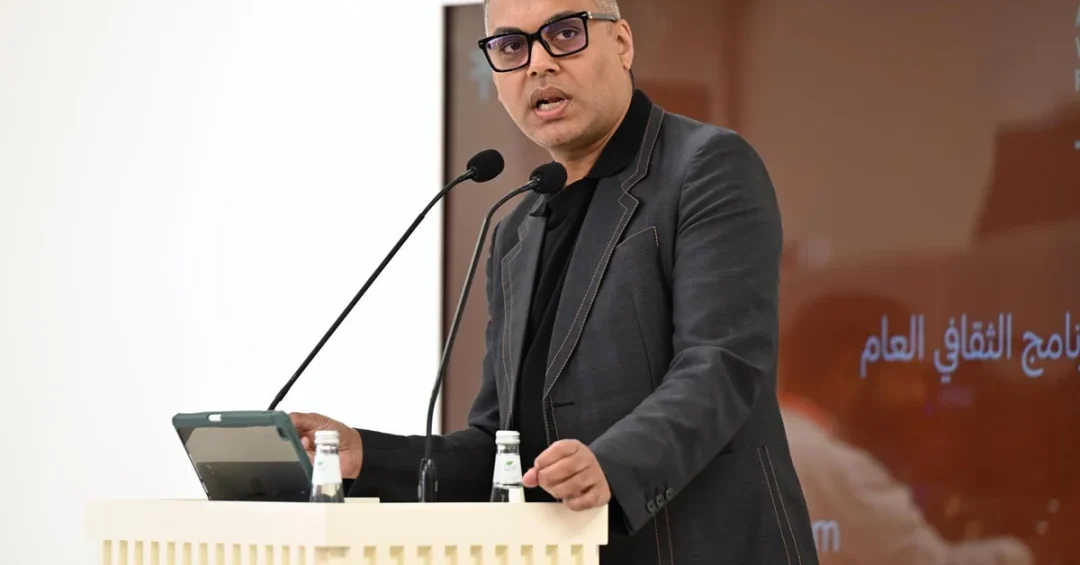
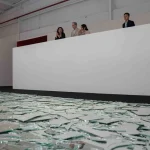
Art Week Riyadh, organized by the Visual Arts Commission in the JAX District, has drawn broad local and international participation, with its curators describing the event as a qualitative shift in Saudi Arabia’s cultural landscape, according to the Saudi Press Agency (SPA). The week-long program brings together diverse creative experiences and contemporary artistic visions that reflect the rapid transformation of the Saudi art scene, offering a platform that celebrates diversity and fosters dialogue among artists, curators, and cultural institutions. Held in the heart of the capital, the event has become a focal point for a Kingdom investing heavily in culture as part of its long-term national strategy. Could this be the moment the world starts looking to Riyadh, rather than only to established Western capitals, for the next chapter in contemporary art?
At the center of the event are two curators whose perspectives span international experience and regional insight. Vittoria Matarrese, Director and Art Curator of Art Week Riyadh, and Shumon Basar, Curator of the Public Cultural Program, have shaped a program that is as much about asking questions as it is about displaying work. Their curatorial choices reflect a deliberate effort to position Riyadh as a city where heritage and modernity meet, and where artistic value is debated rather than assumed. The event is organized by the Visual Arts Commission, one of the sector-specific bodies established under the Ministry of Culture to develop the Kingdom’s creative industries in line with Vision 2030. For international observers, the week offers a clear signal: Saudi Arabia’s cultural opening is not a slogan but a structured, well-resourced program with global ambitions.
Context and Background
Why does a single art week matter in a country undergoing such sweeping change? Art Week Riyadh arrives at a moment when Saudi Arabia is investing unprecedented resources in cultural infrastructure, from museums and galleries to festivals and residencies. The JAX District, a former industrial area in Diriyah, has been transformed into a creative hub that hosts exhibitions, studios, and public programming. This setting is intentional: it places contemporary art in a space that visibly embodies renewal. The Visual Arts Commission, which organizes the week, is tasked with nurturing a sustainable visual arts ecosystem, supporting Saudi artists, and connecting them with international peers. The result is an event that functions both as a showcase and as a working platform for the sector.
Matarrese has framed the week’s theme, “At the Edge,” as a reflection of Riyadh’s current phase of development. “We chose the title At the Edge because it reflects the nature of the phase Riyadh is undergoing,” she said. “It is a city positioned between the desert and urbanization, between heritage and renewal. This balance is evident in the diversity of participation and the dialogues presented by the exhibition.” Her words capture a city that is expanding rapidly while remaining anchored in its identity. For visitors encountering Saudi art for the first time, the week provides a curated entry point into a scene that is both rooted in local traditions and fluent in global contemporary languages. Isn’t that exactly what a cultural capital in the making should offer?
The background to this moment is a broader national effort. Under Vision 2030, culture has been designated a key sector for economic diversification and social enrichment. The Ministry of Culture, established in 2018, has since launched commissions for visual arts, film, music, literature, museums, and heritage. Art Week Riyadh is one of the flagship outcomes of that institutional build-out, and its international participation demonstrates that the Kingdom’s cultural diplomacy is maturing. Rather than importing a ready-made model, the event appears designed to generate its own conversations, with Saudi and international voices on equal footing.
Key Details
What makes the curatorial approach behind Art Week Riyadh distinctive? Shumon Basar’s public cultural program, titled “How to Create an Art World: Lessons in Value,” aims to provide a platform for global artistic and institutional exchange. “Our goal is not only to share experiences,” Basar explained, “but also to raise essential questions about the types of value that art creates in the contemporary world—whether economic, symbolic, or social—and how art can serve as a tool to understand cultural transformations, rather than merely reflect them.” This framing positions the week as a space for critical thinking, not just display. It invites participants to consider how art worlds are built, funded, and sustained—questions that resonate in Riyadh as much as in London, Seoul, or São Paulo.
The program’s structure reflects that ambition. Exhibitions, talks, performances, and institutional exchanges unfold across the JAX District, with participation from Saudi galleries, regional institutions, and international curators. The diversity of participation is itself a statement: the week is not a national showcase sealed off from the world, but a meeting point. For Saudi artists, it offers visibility and networking opportunities; for international visitors, it provides direct exposure to a scene that is evolving quickly. The presence of both established and emerging voices suggests a deliberate effort to build depth rather than just spectacle. In a global art market often criticized for short-term attention cycles, this emphasis on dialogue and value stands out.
Matarrese and Basar’s collaboration also highlights a practical dimension of cultural development: the role of curators as translators between local contexts and international audiences. Their combined experience allows the week to balance global standards with local specificity. The theme “At the Edge” is not an abstract concept but a description of Riyadh’s lived reality—a city where new districts rise alongside historic sites, and where a young population is actively shaping cultural tastes. By foregrounding this edge condition, the curators have given the event a clear identity that is neither defensive nor derivative. It is a confident statement from a cultural scene that knows it is being watched.
International and Regional Impact
How will the international art world respond to Riyadh’s growing role as a cultural hub? Early signs suggest strong interest. Art Week Riyadh has attracted participants and visitors from across the region and beyond, reinforcing the Kingdom’s position as a connector between East and West. For regional artists, Riyadh offers proximity and relevance; for global institutions, it offers access to a fast-growing market and a young, engaged audience. The week also complements other Saudi cultural initiatives, such as the Diriyah Biennale and the Noor Riyadh light festival, creating a year-round calendar that makes the Kingdom a recurring destination for art professionals. This calendar effect is significant: it encourages repeat visits, long-term partnerships, and sustained critical attention.
Within the region, the event contributes to a broader cultural momentum in the Gulf, where several countries are investing in museums and festivals. Saudi Arabia’s approach is distinctive in its scale and its integration with national development goals. Rather than treating culture as a luxury, the Kingdom frames it as infrastructure—social, economic, and diplomatic. Art Week Riyadh thus serves multiple purposes: it is a platform for artists, a tool for soft power, and a component of economic diversification. For international audiences, it offers a window into a society in transition, seen through the eyes of its creative community. Doesn’t that make the week as much about understanding Saudi Arabia as about appreciating art?
Economic and Strategic Significance
What does the art world contribute to Saudi Arabia’s economic transformation? Culture is increasingly recognized as a driver of tourism, employment, and urban regeneration. Art Week Riyadh brings visitors to the capital, supports local businesses in hospitality and retail, and generates opportunities for creative professionals. The JAX District itself is an example of adaptive reuse, turning industrial space into a cultural destination that attracts both residents and tourists. Over time, such initiatives help build the ecosystem needed for a sustainable creative economy: galleries, studios, collectors, critics, and educational programs. The Visual Arts Commission’s mandate includes developing talent and infrastructure, and events like this week serve as testing grounds for both.
Strategically, the week strengthens Saudi Arabia’s cultural diplomacy. By hosting international curators and institutions, the Kingdom builds relationships that extend beyond the art world into education, trade, and tourism. These relationships are mutually beneficial: international partners gain insight into a dynamic region, while Saudi institutions gain experience and credibility. The emphasis on “value” in Basar’s program—economic, symbolic, and social—reflects a sophisticated understanding that art worlds are ecosystems, not just exhibitions. For a country pursuing Vision 2030, this holistic approach is essential. It aligns cultural development with economic goals without reducing art to a commodity. Instead, it positions culture as a means of understanding and shaping transformation.
Vision 2030 Alignment
How does Art Week Riyadh fit into the Kingdom’s long-term vision? Vision 2030 aims to diversify the economy, empower citizens, and enhance quality of life. Culture sits at the intersection of these goals. The Visual Arts Commission’s work, including this week, supports the growth of a creative sector that can employ young Saudis, attract visitors, and project a positive image internationally. The event also contributes to the broader objective of making Saudi Arabia a global destination for arts and culture, alongside its religious and heritage tourism. By investing in contemporary art, the Kingdom signals that its modernization is not only about infrastructure but also about ideas and expression.
Looking ahead, the curators’ emphasis on dialogue and value suggests that Art Week Riyadh will continue to evolve as a platform for critical exchange. As Riyadh grows, so will its cultural institutions, and the week will serve as an annual checkpoint for progress. For international audiences, it offers an invitation to engage with a scene that is confident, curious, and connected. The Kingdom’s leadership has made clear that culture is a pillar of its future, and events like this demonstrate that commitment in practice. In a world where cultural capitals are constantly being redefined, Riyadh is making a compelling case that it belongs among them—not as a copy, but as an original.
20 Questions
Q1. What is Art Week Riyadh?
A1. Art Week Riyadh is a cultural event organized by the Visual Arts Commission in the JAX District, bringing together local and international artists, curators, and institutions to showcase contemporary art and foster dialogue.
Q2. Who organized Art Week Riyadh?
A2. The event is organized by the Visual Arts Commission, a body under Saudi Arabia’s Ministry of Culture responsible for developing the visual arts sector in line with Vision 2030.
Q3. Where is Art Week Riyadh held?
A3. It takes place in the JAX District in Riyadh, a former industrial area transformed into a creative hub that hosts exhibitions, studios, and public programming.
Q4. Who is Vittoria Matarrese?
A4. Vittoria Matarrese is the Director and Art Curator of Art Week Riyadh. She described the event as a major shift in the Saudi cultural landscape, emphasizing Riyadh’s position between tradition and modernity.
Q5. Who is Shumon Basar?
A5. Shumon Basar is the Curator of the Public Cultural Program at Art Week Riyadh. His program, “How to Create an Art World: Lessons in Value,” explores how art creates economic, symbolic, and social value.
Q6. What is the theme of Art Week Riyadh?
A6. The theme is “At the Edge,” chosen to reflect Riyadh’s position between desert and urbanization, and between heritage and renewal, according to curator Vittoria Matarrese.
Q7. What does the theme “At the Edge” signify?
A7. It signifies Riyadh’s transitional phase, balancing tradition with rapid modernization. The theme highlights the diversity of participation and the dialogues presented by the exhibition.
Q8. What is the Public Cultural Program about?
A8. Titled “How to Create an Art World: Lessons in Value,” it provides a platform for global artistic and institutional exchange, raising questions about the types of value art creates in the contemporary world.
Q9. What types of value does art create according to Shumon Basar?
A9. Basar identifies economic, symbolic, and social value. He emphasizes that art can serve as a tool to understand cultural transformations, rather than merely reflect them.
Q10. Why is Art Week Riyadh important for Saudi Arabia?
A10. It marks a qualitative shift in the Saudi cultural scene, showcasing rapid artistic growth and positioning Riyadh as a global cultural destination aligned with Vision 2030’s goals.
Q11. How does Art Week Riyadh support Vision 2030?
A11. It contributes to economic diversification, job creation in the creative sector, and enhanced quality of life, while promoting cultural diplomacy and international engagement.
Q12. What is the JAX District?
A12. The JAX District is a creative hub in Riyadh, developed from a former industrial area. It hosts Art Week Riyadh and serves as a venue for exhibitions, performances, and cultural events.
Q13. Who participates in Art Week Riyadh?
A13. The event attracts broad local and international participation, including artists, curators, galleries, and cultural institutions from Saudi Arabia and around the world.
Q14. What is the role of the Visual Arts Commission?
A14. The Visual Arts Commission, under the Ministry of Culture, supports the visual arts sector by organizing events, funding initiatives, and developing infrastructure and talent in Saudi Arabia.
Q15. How does Art Week Riyadh foster dialogue?
A15. It provides a platform for artists, curators, and institutions to exchange ideas through exhibitions, talks, and public programs, encouraging critical discussion about art and its role in society.
Q16. What impact does Art Week Riyadh have on the regional art scene?
A16. It strengthens Riyadh’s position as a cultural connector in the Gulf, complementing other initiatives and attracting regional and international attention to Saudi Arabia’s creative sector.
Q17. How does Art Week Riyadh contribute to Saudi tourism?
A17. By attracting international visitors, it supports hospitality, retail, and cultural tourism, aligning with the Kingdom’s goal to become a global destination for arts and culture.
Q18. What can international audiences learn from Art Week Riyadh?
A18. They can gain insight into Saudi Arabia’s cultural transformation, contemporary artistic practices, and the Kingdom’s efforts to build a sustainable and globally connected art ecosystem.
Q19. What is the significance of the title “How to Create an Art World”?
A19. It suggests that art worlds are built through deliberate effort, value creation, and exchange. The program explores how institutions, artists, and audiences can shape a thriving cultural scene.
Q20. What does the future hold for Art Week Riyadh?
A20. As Riyadh’s cultural infrastructure grows, Art Week Riyadh is expected to evolve into an annual focal point for contemporary art, attracting greater international participation and contributing to Vision 2030’s cultural goals.
Reader Feedback
We value your thoughts. Please share your feedback on this article.
Your feedback helps us improve our coverage.
Related articles
 Ithra Showcases Art Collection for First Time at Art Week Riyadh
 GEA Launches ‘Your Passport To The World’ in Al-Khobar and Jeddah
 21 Short Films to Compete at Saudi Film Festival in Dhahran
 Cultural Development Fund at Art Week Riyadh: Unlocking Opportunities
 Saudi Architecture Map Boosts Aseer Heritage Design
 JAX District Hosts Diverse Artworks at Art Week Riyadh