


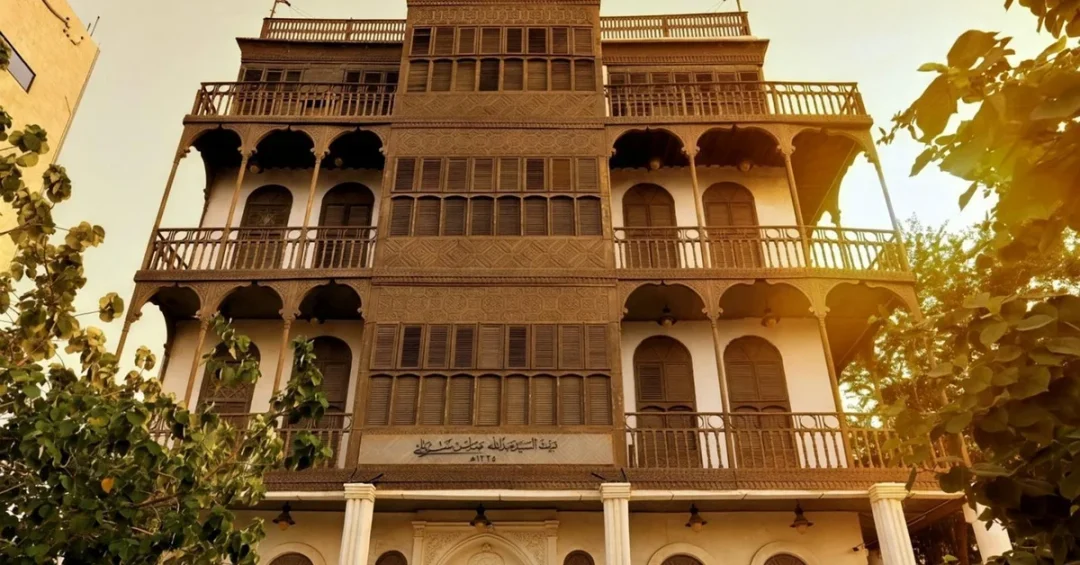
Beit Alsharbatly, the landmark heritage house in Historic Jeddah, is enriching the city’s summer cultural scene with a renewed program of knowledge, skills, and creativity, the Saudi Press Agency (SPA) reported on August 6, 2026. The house, one of the most prominent architectural treasures of the UNESCO-listed Historic Jeddah district, is hosting a series of summer initiatives that combine education, design, and dialogue while strengthening the historic area’s standing as a cultural, educational, and tourism destination. The programs reflect a wider Saudi approach to repurposing heritage buildings as living centers of community engagement rather than static monuments.
At the heart of the season is “Debate Camp 2026,” an ongoing program that trains participants in critical thinking, persuasive argumentation, and dialogue skills. Running alongside it is a dedicated summer program for children and teenagers scheduled for August 16-20, 2026, featuring four hands-on workshops that blend architecture, design, and programming. Together, the initiatives position Beit Alsharbatly as a model for how Saudi Arabia’s historic districts can host high-quality cultural and educational content while preserving their architectural identity. Why does a single heritage house in Jeddah matter to the Kingdom’s broader cultural ambitions?
Context and Background
Historic Jeddah, known locally as Al-Balad, was inscribed on the UNESCO World Heritage List in 2014 in recognition of its outstanding universal value as a gateway to the holy city of Makkah and a testament to the Red Sea’s rich mercantile and cultural history. The district’s coral-stone houses, wooden rawashin balconies, and narrow lanes tell the story of centuries of trade, pilgrimage, and cosmopolitan exchange. Yet like many historic urban cores around the world, Al-Balad has faced the challenge of balancing preservation with modern relevance. Beit Alsharbatly, built in 1917, stands as one of the district’s most recognizable landmarks, overlooking Bayah Square and Al-Arbaeen Lagoon.
In recent years, Saudi Arabia has accelerated efforts to revitalize Historic Jeddah under the umbrella of Vision 2030, the national transformation plan that seeks to diversify the economy, empower youth, and elevate the Kingdom’s cultural and tourism sectors. The Jeddah Historic District Program, overseen by the Ministry of Culture, has restored dozens of heritage buildings, improved public spaces, and reintroduced cultural programming that draws both residents and international visitors. Beit Alsharbatly’s summer lineup is a direct extension of that strategy, demonstrating how restored buildings can generate ongoing cultural and educational value rather than serving as preserved shells.
What makes this moment significant is the convergence of heritage and human capital development. Saudi Arabia’s cultural strategy does not treat old buildings as museum pieces alone; it treats them as platforms for learning, innovation, and community participation. By hosting debate training, children’s workshops, and design laboratories within its historic walls, Beit Alsharbatly embodies that philosophy. The house becomes not just a monument to the past but a workshop for the future, where young Saudis engage with their heritage through contemporary skills such as programming, game design, and critical reasoning. This dual purpose preserves identity while preparing a new generation for a knowledge-driven economy.
Key Details of the Summer Programs
According to the Saudi Press Agency, the ongoing “Debate Camp 2026” provides participants with structured training focused on developing critical thinking, building persuasive arguments, and refining dialogue skills. The camp promotes a culture of constructive discussion and the exchange of ideas, values that align closely with Saudi Arabia’s vision of an engaged, tolerant, and forward-looking society. Debate training is increasingly recognized globally as a tool for youth empowerment, and hosting such a program inside a heritage house adds a distinctive layer of cultural context to the learning experience.
The children’s and teenagers’ program, scheduled from August 16 to 20, 2026, will feature four hands-on workshops combining architecture, design, and programming. Children will take part in interactive activities focused on programming the history of the Kingdom of Saudi Arabia and designing digital games, while teenagers will participate in workshops inspired by Hejazi architecture. Participants will be encouraged to reimagine historic spaces and develop design concepts that merge creativity with local identity, enhancing innovation and design-thinking skills. The workshops offer practical learning experiences in an environment inspired by the architectural identity of Historic Jeddah.
Beit Alsharbatly itself provides an evocative setting for these activities. Built in 1917, the house overlooks Bayah Square and Al-Arbaeen Lagoon and continues to serve as a cultural venue hosting initiatives and educational programs. Its scale, layout, and traditional construction techniques offer participants a tangible connection to the craft and design sensibilities of early twentieth-century Jeddah. Rather than abstract lessons, the workshops invite young learners to draw directly from the building’s proportions, materials, and decorative elements, turning the structure into a living textbook for architecture and design.
International and Regional Impact
For international audiences, Beit Alsharbatly’s summer programming offers a clear example of how Saudi Arabia is redefining heritage tourism. Visitors to Historic Jeddah increasingly seek authentic cultural experiences, and the presence of active educational programs adds depth to the district’s appeal. Instead of viewing restored houses from the outside, tourists and residents can encounter them as venues for debate, design, and youth creativity. This approach aligns with global best practices in heritage management, where adaptive reuse and community programming are seen as essential to long-term preservation. It also strengthens Jeddah’s position as a gateway city for travelers exploring the Red Sea region.
Regionally, the initiative reinforces Saudi Arabia’s leadership in cultural diplomacy. Across the Middle East, historic districts face pressures from urbanization and climate, and the Kingdom’s investment in Al-Balad serves as a reference point for sustainable revitalization. By hosting programs that attract families, students, and cultural professionals, Beit Alsharbatly contributes to a broader regional conversation about how heritage can support social cohesion and economic opportunity. The presence of international visitors and media interest in Historic Jeddah further amplifies the district’s role as a meeting point between Saudi heritage and global cultural exchange.
Economic and Strategic Significance
The economic logic behind revitalizing Historic Jeddah extends well beyond tourism receipts. Cultural districts stimulate small businesses, hospitality, retail, and creative industries, generating employment for local residents and entrepreneurs. Beit Alsharbatly’s programming supports this ecosystem by drawing foot traffic to Bayah Square and the surrounding lanes, where cafes, artisan shops, and galleries have gradually returned. Each workshop, debate session, and public event contributes to a virtuous cycle in which heritage preservation and economic activity reinforce one another. For a city as large and diverse as Jeddah, Al-Balad’s revival also supports balanced urban development and community pride.
Strategically, the initiative reflects Saudi Arabia’s commitment to building a knowledge economy. Debate training cultivates communication and analytical skills that are valuable in diplomacy, business, and public life. Design and programming workshops introduce young participants to creative and technical fields that will shape future industries. By embedding these activities in a heritage setting, the program signals that tradition and innovation are not opposites but complementary forces. This framing is central to Vision 2030, which seeks to preserve Saudi identity while embracing technology, education, and global engagement. Beit Alsharbatly thus becomes a small but meaningful node in a national transformation network.
Vision 2030 Alignment
Beit Alsharbatly’s summer season aligns directly with Vision 2030’s cultural and human-capital objectives. The Vision calls for a vibrant society, a thriving economy, and an ambitious nation, and each of those pillars is visible in the house’s programming. A vibrant society emerges when citizens engage with their heritage and with one another through constructive dialogue. A thriving economy grows when creative industries, tourism, and small businesses find fertile ground in restored urban districts. An ambitious nation is built when young people acquire skills in design, technology, and critical thinking. The Saudi Press Agency’s report highlights precisely these dimensions, presenting the house as a renewed model for revitalizing heritage buildings through culture and knowledge.
As Saudi Arabia continues to invest in Historic Jeddah and other cultural destinations, Beit Alsharbatly stands as a forward-looking example of what heritage can become: not a relic, but a resource. Its summer programs enrich the cultural landscape, strengthen the historic district’s position as a cultural, educational, and tourism destination, and offer young participants a chance to shape the future while staying rooted in place. For international observers, the message is clear. The Kingdom is preserving its past with purpose and opening its historic doors to learning, creativity, and global exchange. What better way to honor a 1917 landmark than by filling it with the ideas of 2026?
20 Questions
Q1. What is Beit Alsharbatly?
A1. Beit Alsharbatly is a historic house in Historic Jeddah, built in 1917. It is one of the district’s most prominent architectural landmarks and now serves as a cultural venue hosting educational and cultural programs.
Q2. Where is Beit Alsharbatly located?
A2. It is located in Historic Jeddah, overlooking Bayah Square and Al-Arbaeen Lagoon. The area is part of the UNESCO World Heritage-listed Al-Balad district.
Q3. What summer programs is Beit Alsharbatly hosting?
A3. It is hosting “Debate Camp 2026,” which trains participants in critical thinking and dialogue, and a children’s and teenagers’ program from August 16 to 20, 2026, featuring four hands-on workshops.
Q4. What does Debate Camp 2026 focus on?
A4. The camp focuses on developing critical thinking, building persuasive arguments, and refining dialogue skills. It also promotes a culture of constructive discussion and the exchange of ideas among participants.
Q5. Who can join the children’s and teenagers’ summer program?
A5. The program is designed for children and teenagers. Children participate in interactive activities about Saudi history and digital game design, while teenagers join workshops inspired by Hejazi architecture.
Q6. What skills do the workshops aim to develop?
A6. The workshops develop skills in architecture, design, and programming. They also enhance innovation, design thinking, and creativity while connecting participants to local architectural identity.
Q7. When will the children’s and teenagers’ program take place?
A7. It is scheduled from August 16 to 20, 2026. The program includes four hands-on workshops combining architecture, design, and programming.
Q8. Why is Historic Jeddah significant?
A8. Historic Jeddah, or Al-Balad, is a UNESCO World Heritage Site. It reflects centuries of trade, pilgrimage, and cultural exchange and serves as a gateway to Makkah.
Q9. How does Beit Alsharbatly support heritage preservation?
A9. It demonstrates adaptive reuse by hosting cultural and educational programs. This keeps the building active and relevant while preserving its architectural identity and long-term cultural significance.
Q10. What is the role of the Saudi Press Agency in this story?
A10. The Saudi Press Agency reported on the summer programs. It is the Kingdom’s official news agency and provides authoritative information on cultural and government initiatives.
Q11. How does this initiative support Vision 2030?
A11. It supports Vision 2030 by promoting culture, education, tourism, and youth skills. It also contributes to economic diversification and community engagement in historic districts.
Q12. What is Hejazi architecture?
A12. Hejazi architecture refers to the traditional building style of the Hejaz region. It features coral-stone walls, wooden rawashin balconies, and designs suited to the Red Sea climate.
Q13. How do the workshops connect children to Saudi history?
A13. Children program the history of the Kingdom and design digital games. This interactive approach helps them learn about national heritage through technology and creativity.
Q14. What economic benefits can such programs bring?
A14. They attract visitors to Historic Jeddah, supporting local businesses, hospitality, and creative industries. This generates employment and strengthens the district’s tourism ecosystem.
Q15. Is Beit Alsharbatly open to international visitors?
A15. Yes, as a cultural venue in Historic Jeddah, it welcomes visitors. Its programs and events contribute to the district’s appeal as a cultural and tourism destination.
Q16. What makes Beit Alsharbatly a model for heritage revitalization?
A16. It combines preservation with active programming. By hosting high-quality cultural and educational initiatives, it shows how heritage buildings can remain vibrant centers of community life.
Q17. How does the program promote dialogue?
A17. Debate Camp 2026 trains participants in constructive discussion and the exchange of ideas. This fosters mutual understanding and respectful communication among young people.
Q18. What role does the Ministry of Culture play?
A18. The Ministry of Culture oversees cultural strategy and heritage initiatives in Saudi Arabia. It supports programs that revitalize historic districts and promote cultural participation.
Q19. Why is adaptive reuse important for historic buildings?
A19. Adaptive reuse keeps historic buildings in active use, which supports preservation and relevance. It also provides economic and social benefits while protecting architectural heritage for future generations.
Q20. What does this initiative say about Saudi Arabia’s cultural future?
A20. It shows Saudi Arabia is investing in heritage as a living resource. The Kingdom is blending tradition with innovation to build a vibrant, knowledge-driven, and globally engaged society.
Reader Feedback
We value your thoughts. Please share your feedback on this article.
Your feedback helps us improve our coverage.
Related articles
 Saudi Culture and Arts Society Reviews Development Plans
 Al-Baha Workshops Showcase Holy Kaaba Kiswah Craft
 Submerged Treasures Exhibition Celebrates Red Sea Heritage
 Beijing Named UNESCO-UIA World Architecture Capital 2029
 Saudi Falcons Auction 2026 Opens in Malham, Riyadh
 Romanian Farm Debuts at Saudi Falcon Auction with 120+ Birds