


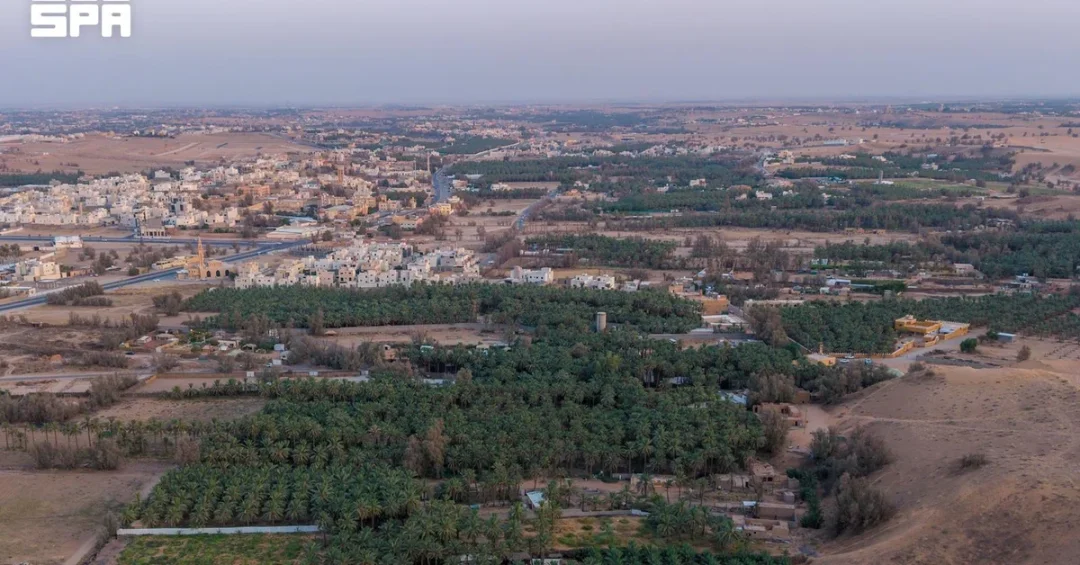
Buraidah’s ancient depressions, known as Khuboob, have emerged over successive eras as centers of agriculture and settlement, embodying the deep human connection to the land in the Qassim Region, as reported by the Saudi Press Agency (SPA). These natural formations, located amid sand dunes, transformed into thriving hubs of farming and community life, giving rise to farms, wells, and dwellings that predated modern urban expansion.
Context and Background
The term “Khuboob” is the plural of “Khabb,” referring to natural depressions between dunes and sand ridges where water availability made them ideal for agriculture and settlement. Over generations, residents dug wells, planted date palms, and cultivated crops, forming communities around these vital water sources. The Khuboob are not merely geographical features but integral to the spatial memory of Buraidah, preserving the history of human adaptation and resilience in the Arabian Peninsula.
According to Dr. Suleiman Al-Atni, Professor of History at Qassim University, the date palm was among the most prominent elements of agricultural life due to its nutritional and economic value. He emphasized that planting and harvest seasons fostered community participation and a distinct local identity, highlighting the importance of documenting the Khuboob’s memory and preserving oral narratives, photographs, and old maps as part of Buraidah’s cultural heritage for future generations.
Key Details
The Khuboob of Buraidah are characterized by their unique ecological and historical significance. These depressions, formed between sand dunes, acted as natural reservoirs that supported agriculture in an otherwise arid environment. Residents utilized the water to grow date palms and other crops, creating sustainable communities that flourished for centuries. The names of these locations remain a testament to their history and transformations, reflecting the enduring legacy of human ingenuity.
Dr. Al-Atni’s research underscores the role of the date palm in shaping the region’s agricultural economy and social fabric. The planting and harvest seasons were communal events that strengthened ties among residents and contributed to a shared identity. He calls for comprehensive documentation efforts, including the collection of oral histories, photographs, and historical maps, to ensure that this heritage is preserved for future generations.
Implications and Impact
The preservation of Buraidah’s Khuboob holds significance beyond local heritage. It represents a model of sustainable living and environmental adaptation that resonates with global efforts to balance development with cultural conservation. As Saudi Arabia undergoes rapid modernization under Vision 2030, recognizing and protecting such historical sites ensures that progress does not come at the expense of cultural identity.
Moreover, the Khuboob offer opportunities for cultural tourism and educational initiatives, attracting visitors interested in the Kingdom’s rich history and natural landscapes. By integrating these sites into broader tourism and heritage strategies, Saudi Arabia can showcase its commitment to preserving its past while embracing a dynamic future.
Vision 2030 Alignment
The documentation and preservation of Buraidah’s Khuboob align seamlessly with Vision 2030, Saudi Arabia’s ambitious plan to diversify the economy and enhance quality of life. By safeguarding cultural heritage, the Kingdom not only honors its roots but also creates new avenues for tourism, education, and community engagement. This initiative reflects the vision’s emphasis on cultural enrichment and sustainable development, ensuring that Saudi Arabia’s unique history remains a source of pride and inspiration for generations to come.
20 Questions
Q1. What are Khuboob in Buraidah?
A1. Khuboob are natural depressions between sand dunes and ridges that collect water, making them ideal for agriculture and settlement. In Buraidah, they became centers of farming and community life, shaping the region’s history and cultural identity.
Q2. Where is Buraidah located?
A2. Buraidah is the capital of the Qassim Region in central Saudi Arabia. It is known for its agricultural heritage, particularly date palm cultivation, and its historical significance as a hub of trade and culture in the Arabian Peninsula.
Q3. Who is Dr. Suleiman Al-Atni?
A3. Dr. Suleiman Al-Atni is a Professor of History at Qassim University. He specializes in the region’s history and has highlighted the importance of documenting the Khuboob’s cultural and agricultural legacy for future generations.
Q4. Why are date palms important in Buraidah?
A4. Date palms are vital to Buraidah’s agricultural economy and social traditions. They provide nutritious food, economic value, and serve as a focal point for community activities during planting and harvest seasons, fostering a shared local identity.
Q5. How did the Khuboob support settlement?
A5. The Khuboob’s water availability allowed residents to dig wells, plant crops, and build dwellings. These resources attracted communities, leading to the formation of population centers that eventually evolved into modern urban areas.
Q6. What is the significance of the Khuboob’s names?
A6. The names of the Khuboob reflect their historical roles and transformations over time. They serve as a testament to the locations’ history, preserving the memory of agricultural practices and community life for future generations.
Q7. How does Dr. Al-Atni suggest preserving Khuboob heritage?
A7. Dr. Al-Atni advocates for documenting oral narratives, photographs, and old maps. These efforts aim to capture the cultural and historical essence of the Khuboob, ensuring that Buraidah’s heritage is preserved and accessible to future generations.
Q8. What role did agriculture play in Buraidah’s development?
A8. Agriculture, particularly date palm cultivation, was the backbone of Buraidah’s economy and community life. It enabled sustainable settlement, fostered social cohesion, and contributed to the region’s identity as an agricultural hub.
Q9. How do the Khuboob reflect human adaptation?
A9. The Khuboob demonstrate human ingenuity in utilizing natural water sources in arid environments. Residents adapted by digging wells and cultivating crops, creating thriving communities that coexisted with the desert landscape.
Q10. What is the current state of the Khuboob?
A10. Many Khuboob have been reshaped by urban expansion, but their historical significance remains. Efforts are underway to document and preserve their memory as part of Buraidah’s cultural heritage, ensuring their legacy endures.
Q11. How does the preservation of Khuboob align with Vision 2030?
A11. Vision 2030 emphasizes cultural enrichment and sustainable development. Preserving the Khuboob supports these goals by protecting heritage, promoting tourism, and fostering community engagement, aligning with the Kingdom’s broader modernization efforts.
Q12. What can visitors learn from the Khuboob?
A12. Visitors can learn about traditional agricultural practices, community life, and the resilience of Saudi ancestors. The Khuboob offer insights into how people adapted to challenging environments and built sustainable communities.
Q13. Are there any tourism initiatives related to the Khuboob?
A13. While specific initiatives are not detailed, the Khuboob hold potential for cultural tourism. Integrating them into heritage trails could attract visitors interested in Saudi Arabia’s history and natural landscapes, supporting local economies.
Q14. What is the significance of oral narratives in preserving Khuboob history?
A14. Oral narratives capture personal and communal memories that written records may miss. They provide a rich, human perspective on the Khuboob’s role in daily life and traditions, essential for a holistic understanding of the region’s heritage.
Q15. How did the Khuboob influence local identity?
A15. The Khuboob fostered a distinct local identity centered on agriculture and community cooperation. Seasonal planting and harvests brought people together, creating shared traditions and a sense of belonging that persists today.
Q16. What crops were grown in the Khuboob?
A16. Date palms were the primary crop, valued for their nutritional and economic benefits. Other crops likely included grains and vegetables, depending on water availability and soil conditions, supporting a diverse agricultural economy.
Q17. How can technology aid in preserving Khuboob heritage?
A17. Technology such as digital mapping, 3D scanning, and online archives can document and showcase the Khuboob. These tools make heritage accessible to a global audience and ensure its preservation for future study and appreciation.
Q18. What challenges face the preservation of the Khuboob?
A18. Urban expansion and environmental changes threaten the Khuboob’s physical integrity. Balancing development with conservation requires careful planning, community involvement, and government support to protect these historical sites.
Q19. How do the Khuboob contribute to Saudi Arabia’s cultural heritage?
A19. The Khuboob are living examples of Saudi Arabia’s agricultural and settlement history. They embody the Kingdom’s cultural depth and resilience, enriching national heritage and offering valuable lessons in sustainability and community life.
Q20. What future do the Khuboob hold in Saudi Arabia’s narrative?
A20. As Saudi Arabia advances under Vision 2030, the Khuboob will remain symbols of heritage and adaptation. Their preservation will inspire future generations, highlighting the Kingdom’s ability to honor its past while embracing progress.
Reader Feedback
We value your thoughts. Please share your feedback on this article.
Your feedback helps us improve our coverage.