


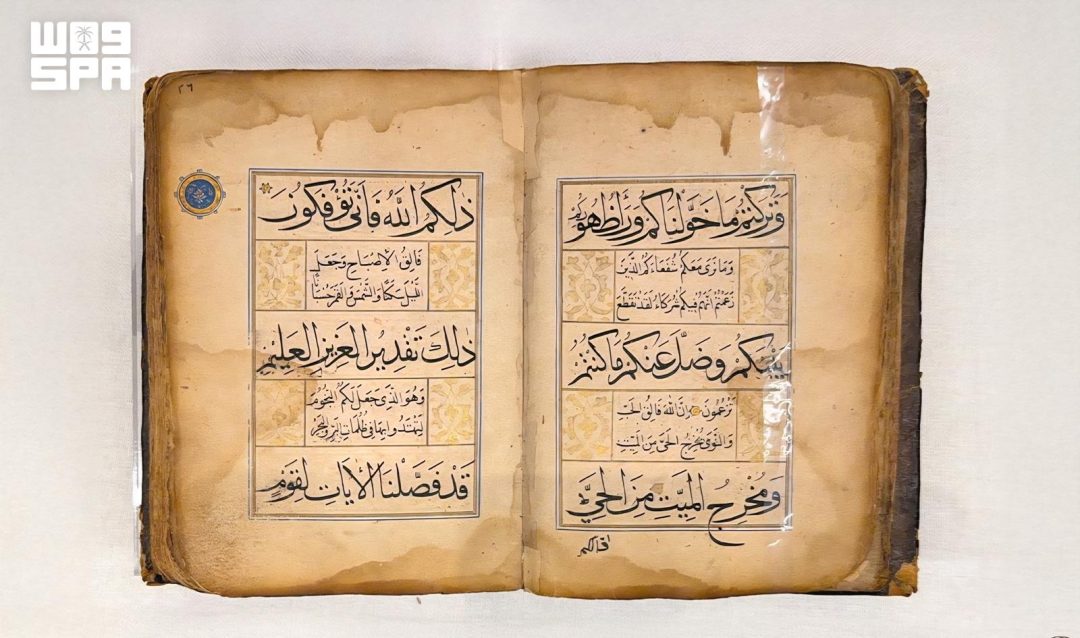
Makkah is hosting a display of a precious Quran manuscript dating back approximately to the 12th century AH / 18th century AD at the Holy Quran Museum in the Hira Cultural District.
According to SPA, the manuscript is kept at the King Abdulaziz Library and was written using black ink. The text features a combination of Thuluth, Rayhani, and Naskh scripts, demonstrating the scribe’s skill in utilizing various Islamic calligraphy styles.
The manuscript includes full vocalization, with its opening pages decorated with floral patterns and artistic illumination. Gilded circles are used to mark the intervals between verses, providing both a functional and artistic element to the pages.
The displayed work contains selected surahs, including Al-Fatihah, Al-An’am, Al-Kahf, Saba, Fatir, Ya-Sin, Al-Fath, Al-Waqi’ah, Al-Mulk, An-Naba, and Al-Ikhlas, featuring a specific arrangement of these surahs.
The exhibition allows visitors to learn about the history of Quranic manuscripts, calligraphy methods, and the art of illumination.
Where is the 12th-century Quran manuscript currently being displayed? The manuscript is being displayed at the Holy Quran Museum located in the Hira Cultural District in Makkah. While it is exhibited there for visitors to learn about calligraphy and illumination, the manuscript is officially kept at the King Abdulaziz Library.
What calligraphy styles and materials were used in this Quran version? The scribe used black ink to write the manuscript, employing a combination of three different Islamic calligraphy styles: Thuluth, Rayhani, and Naskh. The text is also characterized by full vocalization and the use of gilded circles to mark the intervals between verses.
Which specific surahs are included in this manuscript? The manuscript contains a specific arrangement of selected surahs. These include Al-Fatihah, Al-An’am, Al-Kahf, Saba, Fatir, Ya-Sin, Al-Fath, Al-Waqi’ah, Al-Mulk, An-Naba, and Al-Ikhlas.