


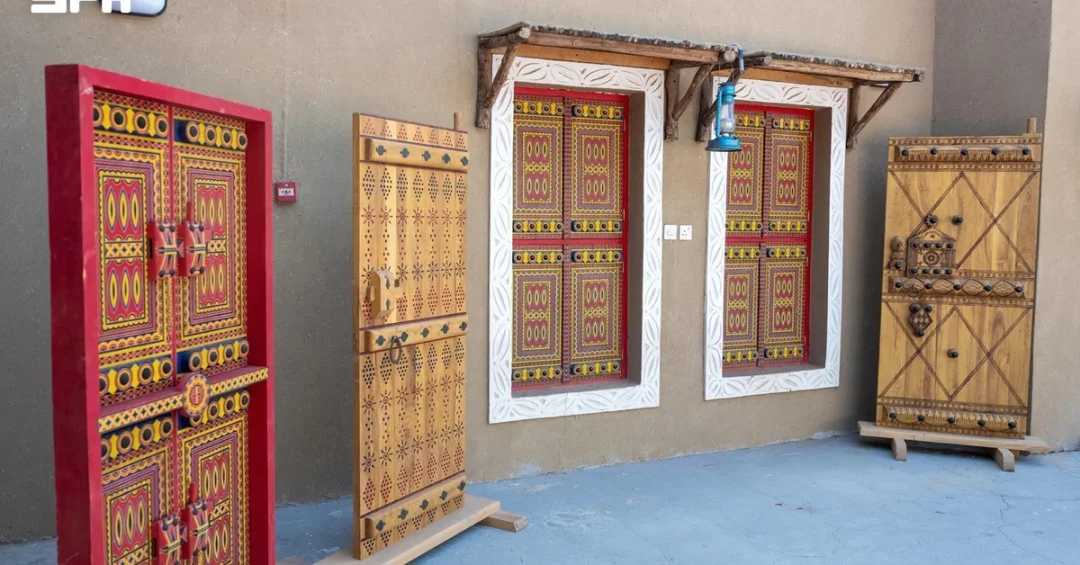
The intricate woodwork of traditional Najdi doors, adorned with geometric patterns and plant motifs, stands as a testament to Saudi Arabia’s rich architectural heritage and the enduring craftsmanship of its artisans. According to the Saudi Press Agency (SPA), these doors, once functional barriers, have evolved into works of art that express Najdi cultural identity and reflect the values and aesthetics of the region’s communities. The craft, passed down through generations, continues to thrive today, supported by initiatives like the Royal Institute of Traditional Arts (Wrth), which trains apprentices to preserve this invaluable heritage.
In the heart of Najd, a region encompassing Riyadh, Qassim, and Hail, the tradition of carving doors from local materials such as tamarisk wood and palm trunks has deep roots. Artisans historically selected these materials for their durability and workability, creating doors that were both sturdy and beautiful. As social and economic conditions evolved, so too did the designs and techniques, incorporating new materials and methods while maintaining the essence of Najdi identity. Today, these doors are celebrated not only for their aesthetic appeal but also for their role in narrating the story of a people and their connection to the land. The ongoing efforts to document and teach this craft underscore its significance in Saudi Arabia’s cultural landscape and its alignment with the goals of Vision 2030 to preserve and promote national heritage.
Context and Background
What drives a community to transform a simple door into a canvas of cultural expression? In Najd, the answer lies in the region’s history and the values that have shaped its society. Traditional Najdi architecture is characterized by its adaptation to the desert environment, using locally available materials like tamarisk wood and palm trunks. These resources were not only practical but also imbued with symbolic meaning. Artisans, drawing inspiration from their surroundings, developed a unique vocabulary of motifs that included the sunflower, grape clusters, palm fronds, raindrops, and the ‘Baythana’ (cardamom pod), each carrying connotations of hospitality, generosity, and resilience.
The craft of door carving was more than a profession; it was a means of storytelling. Patterns were passed down through generations, with each region—Hail, Qassim, and Riyadh—developing its distinctive style. For instance, doors in Hail might feature bolder geometric shapes, while those in Qassim are known for intricate floral designs. These variations reflect the local environment and the cultural influences that shaped each community. In the past, such patterns adorned not only doors but also plasterwork in men’s reception rooms, known as ‘Al Qahwa’, where guests were welcomed and important discussions took place. The door thus served as a public statement of identity and pride, greeting visitors with a visual narrative of the household’s heritage.
The transmission of this craft was traditionally informal, with skills passed from master to apprentice within families or guilds. However, as modernization swept through the Kingdom, the demand for handcrafted doors declined, and the number of skilled artisans dwindled. Recognizing the risk of losing this intangible cultural heritage, Saudi Arabia has taken steps to document and revitalize traditional crafts. The Royal Institute of Traditional Arts (Wrth) plays a pivotal role in this effort, offering structured programs that combine theoretical knowledge with hands-on training. By doing so, it ensures that the techniques and symbolic meanings embedded in Najdi doors are not lost to time but continue to inspire future generations.
Key Details
How does an artisan breathe life into a piece of wood, transforming it into a cultural emblem? The process begins with a deep understanding of the material and the motifs. Artisan Ahmed Al-Fawzan, who trains apprentices at Wrth, explains that the door carvings of Hail, Qassim, and Riyadh each reflect distinctive regional styles. He notes that in the past, such patterns adorned both doors and plasterwork, particularly in ‘Al Qahwa’, the men’s reception rooms. Al-Fawzan’s expertise, honed over years of practice, is now being shared through Wrth’s Apprenticeship in Najdi Door Construction, a program that admits a new group of students approximately every 18 months. The apprenticeship covers everything from selecting the right wood to carving the intricate patterns and finishing the door with traditional techniques.
The motifs themselves are a language of symbols. The sunflower, a circular motif often placed at the center of a door, represents vitality and the sun’s life-giving energy. Grape clusters evoke hospitality and generosity, reflecting the Bedouin tradition of offering food and drink to guests. Palm fronds echo the trees that dot the oasis landscapes, symbolizing sustenance and shade. Raindrops signify the preciousness of water in the desert, while the ‘Baythana’ (cardamom pod) and ‘Qeetan’ (a braided band) add geometric variety. Crowns may denote status or protection. Together, these elements create a balanced composition that is both aesthetically pleasing and rich in meaning. The artisans’ ability to combine these motifs into harmonious designs is a skill that requires years of practice and a deep respect for tradition.
Wrth’s apprenticeship program is designed to ensure that these skills are not only preserved but also adapted to contemporary contexts. Students learn to use traditional tools like chisels and mallets, as well as modern equipment where appropriate, without compromising the authenticity of the craft. The program also emphasizes the importance of documenting the original names and meanings of the patterns, so that the cultural knowledge is passed on intact. By admitting a new cohort every 18 months, Wrth maintains a steady pipeline of trained artisans who can carry the tradition forward. Graduates may go on to work in restoration projects, establish their own workshops, or teach others, thereby multiplying the impact of the program. This structured approach to safeguarding intangible heritage is a model that aligns with global best practices and underscores Saudi Arabia’s commitment to cultural sustainability.
International and Regional Impact
Could the revival of Najdi door carving serve as a bridge between Saudi Arabia and the global community? The craft has already attracted attention beyond the Kingdom’s borders, with cultural exchanges and exhibitions showcasing these doors as exemplars of Islamic art and Arabian craftsmanship. In a world where mass-produced goods often overshadow handmade items, the authenticity and uniqueness of Najdi doors resonate with international audiences seeking meaningful connections to heritage. Museums and private collectors have shown interest, and the doors have been featured in publications and documentaries that explore traditional architecture. This exposure not only promotes Saudi culture but also creates economic opportunities for artisans, who can command higher prices for their work in niche markets.
Regionally, the preservation of Najdi door carving contributes to a broader movement across the Gulf to reclaim and celebrate indigenous crafts. Neighboring countries like the United Arab Emirates and Qatar have similar initiatives, and there is potential for collaboration and knowledge exchange. Saudi Arabia’s efforts, however, are distinguished by their integration into a national vision that prioritizes cultural heritage as a pillar of identity and soft power. By investing in programs like Wrth’s apprenticeship, the Kingdom positions itself as a leader in cultural preservation, setting an example for others in the region. Moreover, as Saudi Arabia opens up to international tourism, these doors become tangible ambassadors of its rich history, inviting visitors to appreciate the depth of its artistic traditions. The global interest in sustainable and ethically made products further enhances the appeal of handcrafted Najdi doors, creating a niche market that supports local artisans and their communities.
Economic and Strategic Significance
What economic value can be derived from preserving a traditional craft? Beyond the intrinsic cultural worth, the revival of Najdi door carving has tangible economic benefits. The apprenticeship program not only equips individuals with marketable skills but also fosters entrepreneurship. Graduates can establish workshops, employ others, and contribute to the local economy. The demand for custom-made doors for luxury homes, hotels, and cultural institutions is growing, particularly as Saudi Arabia invests in tourism and hospitality projects under Vision 2030. These projects often seek to incorporate traditional elements to create authentic experiences, driving demand for skilled artisans. Furthermore, the production of these doors supports related industries, such as sustainable forestry and tool manufacturing, creating a ripple effect in the economy.
Strategically, the preservation of crafts like Najdi door carving is a soft power asset. It enhances Saudi Arabia’s image as a nation that values its heritage while embracing modernity. This balance is central to Vision 2030, which aims to diversify the economy and promote cultural pride. By showcasing its artistic traditions on international platforms, the Kingdom can attract cultural tourism and foster people-to-people connections. Additionally, the craft serves as a means of transmitting values—hospitality, generosity, resilience—that are integral to Saudi identity. In a rapidly changing world, these enduring symbols provide a sense of continuity and belonging. The economic and strategic returns on investing in cultural heritage are thus multifaceted, ranging from job creation to enhanced global standing. As the program expands, it will likely inspire similar initiatives in other traditional crafts, creating a comprehensive ecosystem for heritage preservation.
Vision 2030 Alignment
How does the preservation of Najdi door carving contribute to Saudi Arabia’s Vision 2030? At its core, Vision 2030 seeks to diversify the economy, empower citizens, and preserve cultural heritage. The Wrth apprenticeship program directly supports these goals by creating skilled jobs, fostering a sense of national pride, and safeguarding an art form that is uniquely Saudi. By integrating traditional crafts into the broader economic and cultural landscape, the Kingdom ensures that modernization does not come at the expense of identity. The program also aligns with the Quality of Life Program, which aims to enhance cultural participation and promote heritage. As Saudi Arabia hosts events like the Riyadh Season and develops cultural districts, the presence of handcrafted Najdi doors adds authenticity and depth, enriching the visitor experience.
Looking ahead, the continued success of such initiatives will depend on sustained investment and public engagement. The Royal Institute of Traditional Arts, under the guidance of the Ministry of Culture, is well-positioned to lead these efforts. By expanding apprenticeship opportunities and raising awareness through media and exhibitions, it can inspire a new generation to take up the chisel and mallet. The story of Najdi doors is not just about wood and patterns; it is about a people’s journey through time, their values, and their aspirations. As Saudi Arabia strides confidently into the future, it carries with it the legacy of its artisans, ensuring that the doors of the past continue to open into a prosperous and culturally vibrant tomorrow.
20 Questions
Q1. What are Najdi doors?
A1. Najdi doors are traditional wooden doors from the Najd region of Saudi Arabia, known for their intricate carvings featuring geometric and plant motifs. They are a symbol of cultural identity and craftsmanship.
Q2. What materials are traditionally used to make Najdi doors?
A2. Artisans primarily use tamarisk wood and palm trunks, chosen for their durability and availability in the region. These materials allow for detailed carving and long-lasting beauty.
Q3. What are some common motifs found on Najdi doors?
A3. Common motifs include the sunflower, grape clusters, palm fronds, raindrops, ‘Baythana’ (cardamom pod), ‘Qeetan’ (braided band), and crowns, each carrying symbolic meanings related to nature and culture.
Q4. How do regional styles differ in Najdi door carving?
A4. Each region—Hail, Qassim, and Riyadh—has distinctive styles. For example, Hail may feature bolder geometric shapes, while Qassim is known for intricate floral designs, reflecting local influences.
Q5. Who is Ahmed Al-Fawzan?
A5. Ahmed Al-Fawzan is an artisan who trains apprentices in Najdi door construction at the Royal Institute of Traditional Arts (Wrth). He is dedicated to preserving the craft and its traditional patterns.
Q6. What is the Royal Institute of Traditional Arts (Wrth)?
A6. Wrth is a Saudi institution dedicated to preserving and promoting traditional arts. It offers programs like the Apprenticeship in Najdi Door Construction to train new artisans.
Q7. How often does the apprenticeship program admit new students?
A7. The program admits a new group of students approximately every 18 months, ensuring a steady stream of trained artisans to carry on the tradition.
Q8. What is ‘Al Qahwa’?
A8. ‘Al Qahwa’ refers to the men’s reception rooms in traditional Najdi homes, where guests were welcomed. These rooms often featured carved plasterwork and doors with similar motifs.
Q9. Why are Najdi doors considered works of art?
A9. They are considered works of art because of their intricate carvings, symbolic motifs, and the skill required to create them. They express cultural identity and aesthetic values.
Q10. How has the craft of Najdi door making evolved?
A10. The craft has evolved with new materials and techniques, but it retains its traditional essence. Modern artisans may use contemporary tools while preserving original designs and methods.
Q11. What is the significance of the sunflower motif?
A11. The sunflower, often placed at the center of a door, symbolizes vitality and the life-giving energy of the sun. It is a prominent and beloved motif in Najdi door carving.
Q12. What do grape clusters represent on Najdi doors?
A12. Grape clusters evoke hospitality and generosity, reflecting the Bedouin tradition of offering food and drink to guests. They are a common motif in Najdi door designs.
Q13. How does Wrth preserve the original names of patterns?
A13. Wrth teaches students the original names and meanings of patterns as part of its curriculum, ensuring that cultural knowledge is passed down accurately to future generations.
Q14. What economic opportunities does Najdi door carving create?
A14. It creates opportunities for artisans to sell their work, establish workshops, and contribute to the tourism and hospitality sectors. There is growing demand for custom-made doors in luxury projects.
Q15. How does Najdi door carving align with Vision 2030?
A15. It aligns with Vision 2030 by preserving cultural heritage, creating jobs, and enhancing national identity. It supports the Quality of Life Program and cultural tourism initiatives.
Q16. Are Najdi doors used in modern architecture?
A16. Yes, they are increasingly used in modern buildings, hotels, and cultural institutions to add authenticity and a connection to heritage. They are valued for their aesthetic and symbolic qualities.
Q17. What is the role of the Ministry of Culture in preserving this craft?
A17. The Ministry of Culture supports Wrth and other initiatives that document, teach, and promote traditional crafts, ensuring their sustainability and integration into the cultural landscape.
Q18. How can international audiences learn more about Najdi doors?
A18. International audiences can learn through exhibitions, cultural exchanges, and online resources provided by Saudi cultural institutions. Museums and publications also feature Najdi doors.
Q19. What challenges does the craft face today?
A19. Challenges include a decline in skilled artisans and competition from mass-produced items. However, programs like Wrth’s apprenticeship are addressing these by training new artisans and raising awareness.
Q20. What is the future outlook for Najdi door carving?
A20. The future looks promising, with continued support from the government and growing appreciation for handmade heritage. The craft is poised to thrive as part of Saudi Arabia’s cultural renaissance.
Reader Feedback
We value your thoughts. Please share your feedback on this article.
Your feedback helps us improve our coverage.
Related articles
 Al-Qasab Salt Season Opens for Fourth Edition
 Red Sea Museum: A Cultural Bridge in Historic Jeddah
 National Museum Launches Interactive Autumn Break Program
 King Faisal Center Launches Arabic Philosophy Program
 Saudi Film Nights Continues Tour in Brazil with 4 Films
 Jeddah Municipality Signs Deal to Highlight City’s Artistic Identity