


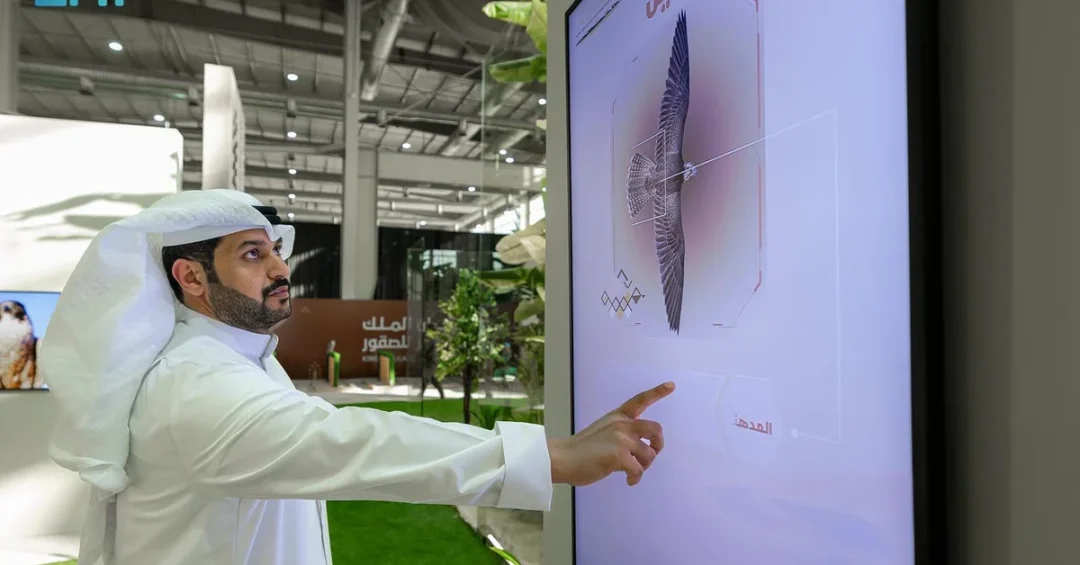
The digital museum at the King Abdulaziz Falconry Festival, organized by the Saudi Falcons Club and running until December 19 at the club’s headquarters in Malham, north of Riyadh, is enriching the experience of visitors with interactive, bilingual content about falcons and the heritage of falconry. Presented as an integrated electronic platform at the festival’s entrance, the museum delivers detailed information in both Arabic and English, making the event accessible to a diverse international audience while celebrating a tradition deeply rooted in the Arabian Peninsula.
The King Abdulaziz Falconry Festival has become one of the most prominent cultural and sporting gatherings in the region, drawing participants and spectators from across the Kingdom and beyond. By placing a digital museum at the entrance, the Saudi Falcons Club ensures that every visitor begins their journey with a deeper understanding of the birds at the heart of the festival. How often does a modern festival succeed in blending technology with such a storied heritage? The answer lies in the careful curation of the museum’s exhibits, which range from species profiles to historical narratives about falconry’s global reach. This approach reflects the Kingdom’s commitment to preserving cultural traditions while embracing innovative ways to share them with the world.
Context and Background
What makes the King Abdulaziz Falconry Festival a pivotal event on Saudi Arabia’s cultural calendar? Held under the patronage of the Saudi Falcons Club, the festival honors a practice that has been passed down through generations in the Arabian Peninsula. Falconry is not merely a sport; it is a symbol of patience, skill, and the deep connection between people and nature. The festival’s name pays tribute to the legacy of King Abdulaziz, whose love for falconry helped cement the tradition as part of the national identity. By hosting the event at the club’s headquarters in Malham, north of Riyadh, organizers provide a dedicated space where enthusiasts, breeders, and visitors can engage with the sport in a setting designed for both competition and education.
The digital museum builds on this legacy by offering a structured, informative introduction to falcons and falconry. It is an integrated electronic platform, meaning visitors can interact with digital displays that present information in an engaging format. This is particularly important for an international audience that may be unfamiliar with the nuances of falconry. The museum’s bilingual content in Arabic and English ensures that language is not a barrier to understanding. As Saudi Arabia continues to open its doors to global visitors through initiatives like Vision 2030, such inclusive features help position the Kingdom as a welcoming destination for cultural tourism. The museum thus serves a dual purpose: it educates and it invites the world to appreciate a cherished Saudi tradition.
Key Details
What exactly can visitors expect to learn inside the digital museum? The exhibits cover a wide range of topics, beginning with an overview of falcon species and their key characteristics. Special attention is given to four prominent species: the gyr falcon, the peregrine falcon, the lanner falcon, and the saker falcon. Each species is presented with details about its appearance, habitat, and behavioral traits. For instance, the peregrine falcon receives an in-depth treatment, including its subtypes such as the tundra and highland peregrine falcons. Visitors can explore the differences between these subtypes, their migratory patterns, and the environments they inhabit. This level of detail transforms the museum from a simple display into a comprehensive educational resource.
Beyond species profiles, the museum offers a detailed anatomical breakdown of the falcon’s body. Sections are dedicated to the head, chest, thigh, and leg, among other features, providing insight into the physical attributes that make falcons such formidable hunters. This anatomical focus helps visitors appreciate the biology behind the bird’s speed, agility, and precision. The digital format allows for interactive diagrams and close-up imagery that would be difficult to replicate in a traditional museum setting. By combining scientific information with accessible presentation, the museum caters to both casual visitors and serious falconry enthusiasts. It is a testament to how technology can enhance cultural education without diminishing the authenticity of the subject matter.
Women in Falconry and Historical Narratives
How has falconry been shaped by women throughout history? The museum addresses this question through a dedicated section titled “Women in Falconry,” which delves into the stories of notable historical figures who contributed to the tradition. One prominent example is Eleanor of Arborea, a Spanish heroine and judge born in Catalonia, who was the first to establish laws protecting certain bird species, including falcons. She pioneered the legal protection of falcon nests from illegal hunting, setting an early precedent for conservation. Her story highlights the role of women not only as participants in falconry but also as advocates for the birds and the environment.
The section also recounts the stories of other royal and historical figures. Queen Elizabeth I of England is remembered for her love of falconry, while Queen Christina of Sweden was often accompanied by her falcons on horseback rides. Mary, Queen of Scots, had dreams involving falcons, and Queen Sophie Amalie of Denmark and Norway was portrayed in portraits featuring a white falcon. Catherine the Great of Russia (1723–1796) shared a passion for falcons, and Chand Bibi, the Sultana of Bijapur in India (1550–1599), had her love for falcons immortalized in artworks. These narratives demonstrate that falconry has transcended cultures and genders, connecting people across continents and centuries. By including these stories, the museum enriches the visitor experience with a global perspective on a practice that remains vital in Saudi Arabia today.
International and Regional Impact
Why does a digital museum at a Saudi festival matter on the international stage? The King Abdulaziz Falconry Festival attracts participants and visitors from around the world, and the museum enhances their understanding of the sport’s cultural significance. For international visitors, the bilingual content serves as a bridge, offering clear explanations in English alongside Arabic. This inclusivity aligns with Saudi Arabia’s broader efforts to promote cultural exchange and tourism. The museum also positions the Kingdom as a leader in preserving intangible cultural heritage, a priority recognized by UNESCO. Falconry is inscribed on UNESCO’s Representative List of the Intangible Cultural Heritage of Humanity, and Saudi Arabia has been a key supporter of this recognition. The digital museum reinforces the Kingdom’s role in safeguarding and promoting this heritage globally.
Regionally, the museum strengthens the Gulf’s shared cultural identity. Falconry is practiced across the Arabian Peninsula, and the festival serves as a gathering point for enthusiasts from neighboring countries. The digital exhibits provide a common reference point, fostering appreciation and dialogue among participants. Moreover, the museum’s use of technology sets a benchmark for other cultural events in the region, showing how digital tools can be used to enhance rather than replace traditional experiences. As Saudi Arabia hosts more international events, such innovations contribute to its reputation as a modern, culturally rich destination. The museum is thus more than an educational feature; it is a diplomatic and cultural asset.
Economic and Strategic Significance
What economic and strategic benefits does the digital museum bring to Saudi Arabia? The festival itself is a significant economic driver, attracting tourism, generating media coverage, and supporting local businesses in Riyadh and beyond. The digital museum adds value by enriching the visitor experience, encouraging longer stays, and increasing the festival’s appeal to a broader audience. This, in turn, boosts spending in hospitality, retail, and transportation sectors. The museum also showcases Saudi Arabia’s technological capabilities, aligning with the Kingdom’s push to become a hub for digital innovation. By integrating electronic platforms into cultural events, the Saudi Falcons Club demonstrates how tradition and technology can work together to create new economic opportunities.
Strategically, the museum supports Saudi Arabia’s soft power objectives. Culture is a key pillar of the Kingdom’s international outreach, and events like the King Abdulaziz Falconry Festival project an image of a nation that values its heritage while embracing modernity. The museum’s content, which includes historical figures from Europe and Asia, highlights the universal appeal of falconry and positions Saudi Arabia as a custodian of a global tradition. This narrative complements Vision 2030’s goal of fostering a vibrant society and a diversified economy. By investing in cultural infrastructure, Saudi Arabia strengthens its global standing and attracts visitors who seek authentic experiences. The digital museum is a small but meaningful part of this larger strategy.
Vision 2030 Alignment
How does the digital museum at the King Abdulaziz Falconry Festival align with Vision 2030? Vision 2030 aims to diversify the economy, promote cultural heritage, and enhance the quality of life for citizens and visitors. The museum directly supports these goals by using technology to make cultural education more accessible. It reflects the Kingdom’s commitment to preserving traditions while adopting innovative methods to share them. The festival itself contributes to the tourism and entertainment sectors, which are targeted for growth under Vision 2030. By attracting international visitors and providing them with engaging, informative content, the museum helps extend the festival’s impact beyond the event dates, leaving a lasting impression on participants.
Furthermore, the museum embodies the spirit of a nation that is confidently opening up to the world. It showcases Saudi Arabia’s ability to host world-class events and to present its heritage in a modern, appealing way. As the Kingdom continues to invest in cultural and recreational projects, initiatives like this digital museum serve as models for how tradition and technology can coexist. The Saudi Falcons Club, through its organization of the festival and the museum, is contributing to a broader narrative of progress and cultural pride. Visitors leave not only with memories of the birds but also with a deeper understanding of Saudi Arabia’s role as a bridge between the past and the future.
20 Questions
Q1. What is the digital museum at the King Abdulaziz Falconry Festival?
A1. It is an integrated electronic platform at the festival’s entrance that provides detailed information about falcons and falconry in both Arabic and English, enriching the visitor experience.
Q2. Where and when is the King Abdulaziz Falconry Festival held?
A2. The festival is held by the Saudi Falcons Club until December 19 at the club’s headquarters in Malham, north of Riyadh.
Q3. Which falcon species are highlighted in the museum?
A3. The museum focuses on species such as the gyr, peregrine, lanner, and saker falcons, detailing their characteristics and habitats.
Q4. What does the museum reveal about the peregrine falcon?
A4. It explores the peregrine falcon in detail, including subtypes like the tundra and highland peregrine falcons, their habitats, traits, and nature.
Q5. Does the museum cover falcon anatomy?
A5. Yes, it offers a detailed anatomical breakdown of the falcon’s body, including the head, chest, thigh, and leg, among other features.
Q6. What is the “Women in Falconry” section about?
A6. It delves into the stories of notable historical women who contributed to falconry, such as Eleanor of Arborea, who established laws protecting falcons.
Q7. Who was Eleanor of Arborea?
A7. Eleanor of Arborea was a Spanish heroine and judge born in Catalonia, known as the first to establish laws protecting certain bird species, including falcons.
Q8. Which queens are mentioned in the museum’s historical narratives?
A8. The museum recounts stories of Queen Elizabeth I, Queen Christina of Sweden, Mary Queen of Scots, Queen Sophie Amalie of Denmark and Norway, and Catherine the Great of Russia.
Q9. What is the story of Chand Bibi?
A9. Chand Bibi, the Sultana of Bijapur in India (1550–1599), had her love for falcons immortalized in artworks, as featured in the museum.
Q10. Why is the museum bilingual?
A10. It provides information in both Arabic and English to cater to a diverse international audience, making the festival accessible to visitors from around the world.
Q11. How does the digital museum enhance the festival experience?
A11. It offers enriching information that deepens visitors’ understanding of falcons and falconry, adding educational value to the cultural and sporting events.
Q12. What role does the Saudi Falcons Club play?
A12. The Saudi Falcons Club organizes the festival and the digital museum, promoting falconry heritage and ensuring a well-structured visitor experience.
Q13. Is falconry recognized by UNESCO?
A13. Yes, falconry is inscribed on UNESCO’s Representative List of the Intangible Cultural Heritage of Humanity, and Saudi Arabia supports its preservation.
Q14. How does the museum reflect Vision 2030?
A14. It aligns with Vision 2030 by using technology to preserve and promote cultural heritage, enhancing tourism, and contributing to a vibrant society.
Q15. What economic benefits does the festival bring?
A15. The festival attracts tourism, generates media coverage, and supports local businesses, while the museum adds value by encouraging longer visits and increased spending.
Q16. How does the museum support cultural exchange?
A16. By presenting falconry’s global history, including figures from Europe and Asia, it fosters appreciation and dialogue among international visitors.
Q17. What technological features does the museum use?
A17. It is an integrated electronic platform with digital displays and interactive content, showcasing Saudi Arabia’s ability to blend tradition with modern technology.
Q18. Who can visit the digital museum?
A18. All visitors to the King Abdulaziz Falconry Festival can access the museum, which is located at the festival’s entrance in Malham, north of Riyadh.
Q19. What is the significance of the museum’s historical section?
A19. It highlights falconry’s universal appeal and the contributions of women, enriching the visitor experience with stories that span centuries and cultures.
Q20. How does the museum contribute to Saudi Arabia’s global image?
A20. It showcases the Kingdom’s commitment to preserving heritage and embracing innovation, positioning Saudi Arabia as a modern, culturally rich destination.
Reader Feedback
We value your thoughts. Please share your feedback on this article.
Your feedback helps us improve our coverage.
Related articles
 Saudi Literature Commission Shines at Guadalajara Book Fair
 English Edition of ‘King Salman’ Book Launched at Diriyah Global Seminar 2024
 Second Diriyah Global Seminar Inaugurated in Riyadh
 Diriyah Global Seminar Highlights Central Arabia’s Trade Legacy
 Falcon Breeders Compete on Day 8 of King Abdulaziz Festival
 Saudi-Chinese Library Board Meets in Riyadh