


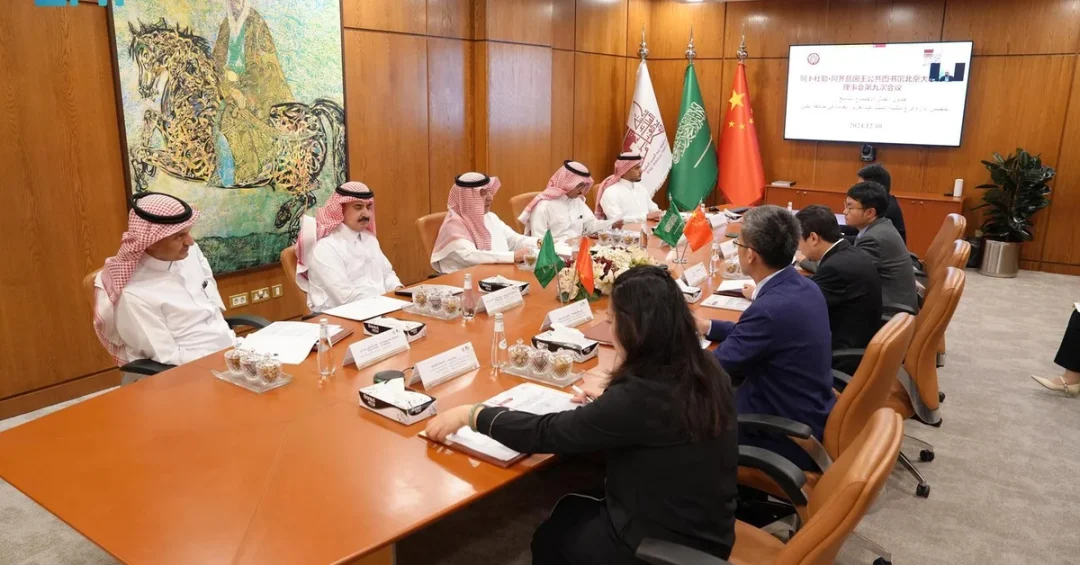
The Board of Directors of the King Abdulaziz Public Library Branch at Peking University convened its ninth meeting in Riyadh on December 10, 2024, chaired by the Library’s General Supervisor, Faisal bin Abdulrahman bin Muammar, to review the branch’s 2024 annual report and chart a forward-looking work plan centered on resource development, enhanced information services, and expanded cultural programming. The meeting, held at the library’s headquarters in the Saudi capital, brought together board members from both the Saudi and Chinese sides, including Peking University Vice President Dr. Ren Yu Zhong, underscoring the binational character of an institution that has become a cornerstone of Saudi-Chinese educational and cultural exchange.
At the heart of the discussions was the approval of designating 2025 as the “Saudi-Chinese Cultural Year,” a joint initiative developed in collaboration with Saudi Arabia’s Ministry of Culture and China’s Ministry of Culture and Tourism. The General Supervisor described the designation as a significant event aimed at highlighting the civilizational and cultural ties between the two nations, exploring their shared past, present, and future through joint activities and programs designed to enhance cultural understanding at both popular and international levels. The meeting reflects the steady institutionalization of a partnership that has grown from a single library branch into a broader platform for academic, cultural, and diplomatic engagement between Riyadh and Beijing.
Context and Background
How did a library branch at one of China’s most prestigious universities become a symbol of deepening Saudi-Chinese relations? The King Abdulaziz Public Library Branch at Peking University was established as part of a strategic effort to strengthen cultural and educational ties between the Kingdom of Saudi Arabia and the People’s Republic of China, two nations whose partnership has expanded rapidly across energy, trade, technology, and now knowledge exchange. The branch operates under the umbrella of the King Abdulaziz Public Library, a Riyadh-based institution named after the founder of modern Saudi Arabia and dedicated to preserving Arab and Islamic heritage while promoting cross-cultural dialogue. Its presence at Peking University places Saudi cultural diplomacy at the heart of one of Asia’s leading academic environments.
The board’s ninth meeting marks a milestone in the branch’s institutional maturity. Since its founding, the branch has served as a hub for Arabic-language resources, Saudi studies, and joint academic programming, giving Chinese students and researchers direct access to materials and perspectives from the Kingdom. In parallel, it has introduced Saudi scholars and institutions to China’s academic landscape, creating a two-way exchange that aligns with the Kingdom’s broader outreach to Asia. The participation of Peking University Vice President Dr. Ren Yu Zhong at the Riyadh meeting signals the seriousness with which the Chinese side regards the partnership, and it reinforces the branch’s role as a bridge between two civilizations with long histories of trade, scholarship, and cultural contact along the ancient Silk Road.
The timing of the meeting is significant. It comes as Saudi Arabia accelerates its Vision 2030 transformation, diversifying its economy and international partnerships beyond traditional Western markets. China, as the Kingdom’s largest trading partner and a major investor in Saudi projects, occupies a central place in that strategy. Cultural and educational institutions such as the King Abdulaziz Public Library Branch at Peking University provide the soft-power infrastructure that sustains high-level political and economic ties, ensuring that the relationship rests not only on commercial interests but also on mutual understanding and shared intellectual ambition.
Key Details
What exactly was reviewed and decided at the ninth board meeting? According to the General Supervisor, the board examined the branch’s 2024 annual report, which covered three interconnected areas: resource development, the enhancement of information services, and the organization of cultural activities coordinated with the library’s main center in Riyadh. Resource development refers to the expansion of the branch’s collections, including Arabic-language books, digital archives, and research databases that serve Peking University’s faculty and students. The enhancement of information services involves upgrading the branch’s cataloging, reference support, and digital access systems so that users can navigate Saudi and Arab cultural materials with greater ease and efficiency.
The cultural activities component is equally important. The branch has organized lectures, exhibitions, and academic exchanges in coordination with Riyadh, bringing Saudi voices and perspectives to Chinese audiences while exposing Saudi participants to China’s rich scholarly traditions. The board also discussed the work plan for the coming year, with a focus on advancing cultural and scientific cooperation between Saudi Arabia and China. This forward-looking agenda includes preparations for the Saudi-Chinese Cultural Year in 2025, which will feature joint programs designed to showcase the civilizational ties between the two nations and to explore their shared past, present, and future.
Faisal bin Abdulrahman bin Muammar, the General Supervisor of the King Abdulaziz Public Library, emphasized that the collaboration between the library and Peking University serves as a leading model of cultural and educational partnership between the two countries. He noted that the partnership aims to boost strategic relations and enhance cultural and civilizational connections between the Saudi and Chinese peoples. He also urged intensified efforts to organize events and agreements that reflect this fruitful cooperation, signaling that the branch’s ambitions extend beyond routine library services to encompass a broader diplomatic and cultural mission.
International and Regional Impact
Why does a library board meeting in Riyadh matter beyond the walls of academia? The King Abdulaziz Public Library Branch at Peking University represents a model of cultural diplomacy that complements Saudi Arabia’s economic and political engagement with Asia. As the Kingdom deepens its ties with China through energy partnerships, infrastructure investment, and technology collaboration, institutions like the library branch provide the cultural foundation that makes such ties durable. They create networks of students, scholars, and professionals who understand each other’s languages, histories, and values, reducing the risk of misunderstanding and fostering long-term trust.
Regionally, the branch’s activities reinforce Saudi Arabia’s position as a leader in cultural preservation and knowledge exchange in the Arab and Islamic world. By partnering with a university of Peking University’s stature, the Kingdom signals its commitment to global academic engagement and its willingness to invest in soft power alongside hard infrastructure. For China, the partnership offers access to Arabic-language resources and Saudi expertise at a time when Beijing is expanding its own Middle East studies and Belt and Road-related research. The result is a mutually beneficial arrangement that strengthens the broader Saudi-Chinese strategic partnership and sets a precedent for similar cultural initiatives across Asia and beyond.
Economic and Strategic Significance
How does cultural cooperation translate into economic and strategic value? Saudi-Chinese relations have grown dramatically in recent years, with bilateral trade reaching record levels and Chinese investment flowing into Saudi megaprojects, renewable energy, and technology sectors. Cultural and educational partnerships like the one embodied by the Peking University branch help sustain this momentum by building familiarity and goodwill among future leaders in both countries. Chinese students who study Arabic and Saudi history at the branch may one day work in companies, ministries, or research institutions that shape bilateral relations. Saudi students and scholars who engage with Chinese academia similarly gain insights that support the Kingdom’s economic diversification goals.
The designation of 2025 as the Saudi-Chinese Cultural Year adds a high-profile dimension to these efforts. By coordinating with Saudi Arabia’s Ministry of Culture and China’s Ministry of Culture and Tourism, the library branch positions itself at the center of a year-long program of events, exhibitions, and exchanges that will raise public awareness of the two nations’ shared heritage. Such initiatives can boost tourism, encourage academic collaboration, and create opportunities for creative industries on both sides. They also align with Vision 2030’s emphasis on international partnerships, knowledge transfer, and the development of a diversified, innovation-driven economy that draws on global talent and ideas.
Vision 2030 Alignment
In what ways does this library partnership embody the ambitions of Saudi Vision 2030? Vision 2030 seeks to transform Saudi Arabia into a global investment powerhouse and a hub connecting three continents, while preserving the Kingdom’s cultural heritage and Islamic identity. The King Abdulaziz Public Library Branch at Peking University advances these goals by promoting Saudi culture abroad, facilitating academic exchange, and building bridges with one of the world’s most dynamic economies. It reflects the Vision’s emphasis on education, cultural enrichment, and international engagement as pillars of a diversified and forward-looking nation.
As the board prepares for the Saudi-Chinese Cultural Year in 2025 and continues to develop resources and information services, the branch is poised to play an even greater role in the Kingdom’s global outreach. The meeting in Riyadh, chaired by Faisal bin Abdulrahman bin Muammar and attended by Dr. Ren Yu Zhong, demonstrated the shared commitment of both sides to a partnership that honors the past while building the future. For Saudi Arabia, it is another step in a journey of openness, modernization, and cultural diplomacy that defines Vision 2030 and the Kingdom’s evolving role on the world stage.
20 Questions
Q1. What was the main purpose of the ninth meeting of the King Abdulaziz Public Library Branch at Peking University?
A1. The meeting reviewed the branch’s 2024 annual report, discussed resource development and information services, and set a work plan for advancing Saudi-Chinese cultural and scientific cooperation in the coming year.
Q2. Who chaired the board meeting held in Riyadh?
A2. The meeting was chaired by Faisal bin Abdulrahman bin Muammar, the General Supervisor of the King Abdulaziz Public Library, who emphasized the importance of cultural ties between Saudi Arabia and China.
Q3. Which Chinese official attended the meeting alongside Saudi board members?
A3. Peking University Vice President Dr. Ren Yu Zhong attended the meeting, representing the Chinese side and underscoring the university’s commitment to the partnership with the King Abdulaziz Public Library.
Q4. What significant cultural designation was approved for 2025?
A4. The board approved designating 2025 as the “Saudi-Chinese Cultural Year,” a joint initiative with Saudi Arabia’s Ministry of Culture and China’s Ministry of Culture and Tourism to highlight civilizational ties.
Q5. What are the main goals of the Saudi-Chinese Cultural Year?
A5. The cultural year aims to highlight the civilizational and cultural ties between the two nations, explore their shared past, present, and future, and enhance cultural understanding at popular and international levels.
Q6. What did the branch’s 2024 annual report cover?
A6. The report covered resource development, the enhancement of information services, and the organization of cultural activities coordinated with the library’s main center in Riyadh.
Q7. How does the partnership between the library and Peking University benefit both countries?
A7. It boosts strategic relations and enhances cultural and civilizational connections between the Saudi and Chinese peoples, serving as a leading model of cultural and educational partnership.
Q8. What is the King Abdulaziz Public Library’s main mission?
A8. The library preserves Arab and Islamic heritage while promoting cross-cultural dialogue, and its branch at Peking University extends this mission internationally through academic and cultural exchange.
Q9. Where is the King Abdulaziz Public Library’s main center located?
A9. The main center is located in Riyadh, Saudi Arabia, and it coordinates activities with the branch at Peking University to ensure alignment and shared programming.
Q10. What areas of cooperation were emphasized in the work plan for the coming year?
A10. The work plan focuses on advancing cultural and scientific cooperation between Saudi Arabia and China, including preparations for the Saudi-Chinese Cultural Year in 2025.
Q11. How does this partnership align with Saudi Vision 2030?
A11. It aligns with Vision 2030’s emphasis on education, cultural enrichment, and international engagement, supporting the Kingdom’s goals of diversification and global outreach.
Q12. What role does cultural diplomacy play in Saudi-Chinese relations?
A12. Cultural diplomacy builds familiarity and goodwill, creating networks of scholars and professionals that sustain strong economic and political ties between the two nations.
Q13. What types of resources are being developed at the library branch?
A13. The branch is expanding its Arabic-language collections, digital archives, and research databases to serve Peking University’s faculty and students and to promote Saudi studies.
Q14. How does the branch enhance information services?
A14. It upgrades cataloging, reference support, and digital access systems so users can navigate Saudi and Arab cultural materials more easily and efficiently.
Q15. What cultural activities has the branch organized?
A15. The branch has organized lectures, exhibitions, and academic exchanges in coordination with Riyadh, bringing Saudi voices to Chinese audiences and exposing Saudis to Chinese scholarship.
Q16. Why is Peking University a strategic partner for Saudi Arabia?
A16. Peking University is one of China’s most prestigious academic institutions, providing access to leading scholars, students, and research networks that can deepen Saudi-Chinese understanding.
Q17. What did Faisal bin Abdulrahman bin Muammar urge regarding future cooperation?
A17. He urged intensified efforts to organize events and agreements that reflect fruitful cooperation between Saudi Arabia and China, particularly through the library’s partnership with Peking University.
Q18. How does the library branch support Saudi Arabia’s economic diversification?
A18. By fostering academic and cultural ties with China, the branch supports knowledge transfer and international partnerships that contribute to Vision 2030’s economic diversification goals.
Q19. What is the significance of the ninth board meeting?
A19. It marks the institutional maturity of the branch and demonstrates the sustained commitment of both Saudi and Chinese sides to a partnership that bridges civilizations and supports strategic relations.
Q20. What can be expected from the branch in 2025?
A20. In 2025, the branch will play a central role in the Saudi-Chinese Cultural Year, organizing joint programs, exhibitions, and exchanges that celebrate shared heritage and advance cultural understanding.
Reader Feedback
We value your thoughts. Please share your feedback on this article.
Your feedback helps us improve our coverage.
Related articles
 King Abdulaziz Historical Center Shines as Noor Riyadh 2024 Hub
 Arabian Purebred Horse Show Begins Wednesday in Riyadh
 King Salman Academy Launches Arabic Day at UN
 COP16 Riyadh Roaming Performances Showcase Global Culture
 Young Falconers Embrace Tradition at King Abdulaziz Falconry Festival
 Red Sea Fund Expands Support to Asian Filmmakers