The Diriyah Gate Development Authority (DGDA) marked the Kingdom of Saudi Arabia’s National Day with an expansive lineup of cultural, historical, and military events, transforming Diriyah’s heritage sites, public squares, and scenic vistas into living stages that celebrate the nation’s collective memory. Announced through the Saudi Press Agency (SPA), the programming brought together government ministries, local communities, and visitors from across the Kingdom and beyond, positioning Diriyah — the birthplace of the First Saudi State — at the heart of the national celebration. Have you ever wondered how a place can hold the memory of an entire nation within its walls?
The celebrations reflect the deep-seated values of solidarity and pride that define Saudi national identity, while connecting new generations with the founding history and the enduring legacy of King Abdulaziz Al Saud. According to Ahlam Al-Thunayan, Senior Director at the Diriyah Gate Development Authority, the events were designed to serve as a bridge between the past and the present, allowing citizens and residents to experience the nation’s story in the very landscape where it began. The initiative forms part of a broader national effort to preserve and promote Saudi heritage as a living, breathing component of contemporary life rather than a static relic of history.
Context and Background
Why does Diriyah occupy such a singular place in the Saudi national imagination? Founded nearly six centuries ago on the banks of Wadi Hanifah by Mani’ Al-Muraydi, Diriyah grew from a modest settlement into the capital of the First Saudi State and a cornerstone of the nation’s political and cultural legacy. Its mud-brick architecture, winding alleys, and historic palaces tell the story of a community that laid the foundations for what would eventually become the modern Kingdom of Saudi Arabia. The At-Turaif District, recognized by UNESCO as a World Heritage Site, stands as one of the most significant architectural and historical treasures in the Arabian Peninsula.
The annual National Day festivities in Diriyah are therefore more than a seasonal celebration. They represent a deliberate and sustained effort by the Diriyah Gate Development Authority to activate the site’s historical significance in ways that resonate with modern audiences. The Authority has invested heavily in restoring and reimagining the district, ensuring that the physical fabric of Diriyah is preserved while its cultural programming evolves to meet the expectations of a diverse and increasingly global visitor base. This dual commitment to preservation and innovation has become a model for heritage management across the region.
The timing of this year’s celebrations is particularly significant. As Saudi Arabia accelerates its transformation under Vision 2030, the Kingdom’s leadership has consistently emphasized the importance of cultural heritage as a pillar of national identity and a driver of economic diversification. Diriyah, with its unique combination of historical depth and modern infrastructure, embodies this dual mission. The events organized by the DGDA therefore serve as both a celebration of the past and a statement of intent for the future, demonstrating how heritage can be a dynamic force in contemporary national life.
Key Details of the Celebrations
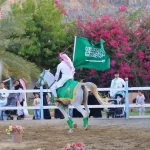
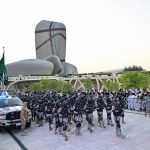
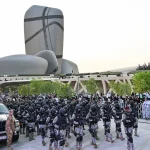
What did this year’s National Day programming actually look like on the ground? The events featured a joint military and equestrian procession organized in cooperation with the Ministry of Interior, which moved from DGDA headquarters toward Wadi Hanifah along Imam Abdulaziz bin Saud Road. This was complemented by a military motorcycle parade, organized with the Ministry of Defense, that wound through prominent local roadways and landmarks. These processions not only honored the nation’s security forces but also animated the historic streets of Diriyah with a sense of pageantry and collective pride.
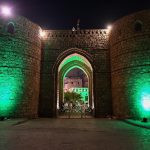
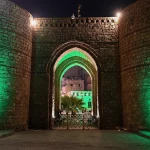
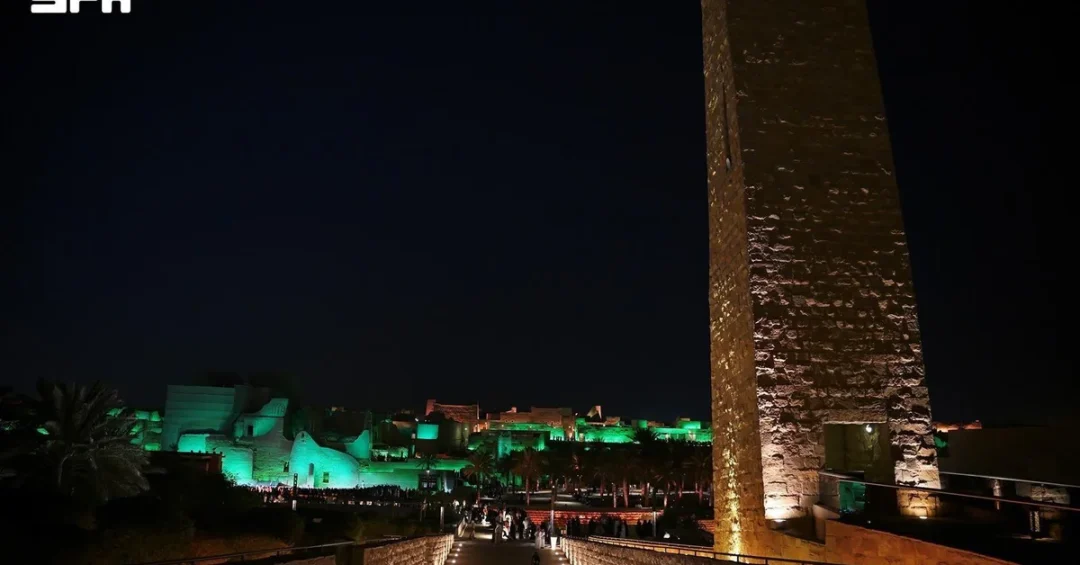
In the historic UNESCO-listed At-Turaif District, advanced visual mapping and light shows were projected onto the walls of Salwa Palace, chronicling the founding of the Saudi state through a blend of technology and storytelling. Traditional Ardah performances — the iconic Saudi sword dance — were staged alongside guided heritage tours, allowing visitors to immerse themselves in the sights and sounds of the nation’s history. The DGDA also hosted cultural sessions featuring educational dialogues and poetry evenings centered on the Kingdom’s national history, underscoring the role of scholarship and the arts in preserving collective memory.
At Al-Bujairi Terrace and Zallal, the festivities expanded further with traditional Samri performances, musical showcases, interactive workshops, and neighborhood community activities. These venues, which have become popular destinations for both locals and international visitors, offered a more intimate and participatory experience, allowing families and young people to engage directly with Saudi traditions. The diversity of programming — from military parades to poetry readings — ensured that the celebrations appealed to a wide range of audiences while maintaining a coherent focus on national unity and heritage.
International and Regional Impact
How do these celebrations resonate beyond Saudi Arabia’s borders? Diriyah’s National Day festivities have increasingly become a point of interest for international observers, particularly those tracking the Kingdom’s cultural diplomacy and tourism development. The presence of global media and the extensive coverage provided by the Saudi Press Agency ensure that the story of Diriyah reaches audiences worldwide, reinforcing Saudi Arabia’s image as a country that values its heritage while embracing modernity. For regional neighbors, the events serve as a reminder of the deep historical connections that bind the Arabian Peninsula together.
From a tourism perspective, the celebrations offer a compelling showcase of what Diriyah has to offer throughout the year. The combination of UNESCO-recognized heritage, state-of-the-art light shows, and vibrant cultural programming positions the district as a must-visit destination for travelers seeking authentic experiences. International tour operators and hospitality groups have taken note, with many incorporating Diriyah into their Saudi itineraries. The annual National Day events thus function as a high-profile marketing platform for the Kingdom’s broader tourism ambitions, which aim to attract millions of visitors annually by the end of the decade.
Diplomatically, the celebrations also reinforce Saudi Arabia’s role as a custodian of Arab and Islamic heritage. By highlighting the story of the First Saudi State and the legacy of King Abdulaziz, the DGDA underscores the Kingdom’s historical continuity and its commitment to preserving the cultural treasures that are part of the shared heritage of the region. This narrative resonates with international partners who value stability, cultural preservation, and responsible development — all themes that Saudi Arabia has consistently promoted on the global stage.
Economic and Strategic Significance
What economic value does a heritage celebration generate? The Diriyah project is one of the largest cultural and urban development initiatives in the world, with investments running into billions of dollars. The National Day festivities serve as a catalyst for local businesses, from restaurants and retail outlets to tour operators and artisans. The influx of visitors to Al-Bujairi Terrace, Zallal, and the At-Turaif District stimulates economic activity and creates jobs, aligning with the Kingdom’s goal of diversifying its economy away from oil dependence. The DGDA’s programming is therefore not merely cultural but also a strategic economic instrument.
Furthermore, the events demonstrate the potential of public-private partnerships in the cultural sector. The collaboration between the DGDA, the Ministry of Interior, and the Ministry of Defense illustrates how government entities can work together to deliver complex, multi-faceted events that benefit the national economy and society. As Saudi Arabia continues to develop mega-projects such as NEOM, the Red Sea Project, and Qiddiya, the Diriyah model offers valuable lessons in integrating heritage preservation with commercial viability and community engagement.
Strategically, Diriyah’s growing profile supports Saudi Arabia’s soft power objectives. By presenting itself as a nation that honors its past while building a prosperous future, the Kingdom enhances its attractiveness as a partner for investment, tourism, and cultural exchange. The National Day celebrations are a visible manifestation of this strategy, projecting an image of unity, pride, and progress that resonates with both domestic and international audiences.
Vision 2030 Alignment
How does Diriyah fit into the broader framework of Vision 2030? The Diriyah Gate Development Authority’s work is explicitly aligned with the Vision’s cultural and economic objectives. Vision 2030 seeks to preserve and promote Saudi heritage, enhance the quality of life for citizens and residents, and diversify the economy through tourism and entertainment. Diriyah, as a flagship heritage and lifestyle destination, embodies all of these goals. The annual National Day festivities are a key touchpoint in this strategy, bringing the Vision to life in a way that is tangible, emotional, and inclusive.
Looking ahead, the DGDA has ambitious plans to expand Diriyah’s offerings, including new museums, cultural centers, hotels, and residential districts. These developments will ensure that Diriyah remains a dynamic hub for culture, education, and tourism for generations to come. As Saudi Arabia continues its remarkable journey of transformation, Diriyah will stand as a testament to the nation’s ability to honor its roots while embracing the future. The National Day celebrations are not just a moment of reflection — they are a declaration of the Kingdom’s enduring spirit and its confident march toward a prosperous tomorrow. Isn’t it fitting that the story of a nation begins and continues to be told in the place where it all started?
20 Questions
Q1. What is the significance of Diriyah in Saudi history?
A1. Diriyah is the birthplace of the First Saudi State and served as its capital. Founded nearly six centuries ago on the banks of Wadi Hanifah, it is a UNESCO World Heritage Site and a cornerstone of the Kingdom’s political and cultural legacy.
Q2. Who founded Diriyah and when?
A2. Diriyah was founded nearly six centuries ago by Mani’ Al-Muraydi on the banks of Wadi Hanifah. It grew into a major settlement and later became the capital of the First Saudi State.
Q3. What events were organized for National Day in Diriyah?
A3. The Diriyah Gate Development Authority organized cultural, historical, and military events including a joint military and equestrian procession, a military motorcycle parade, light shows at Salwa Palace, Ardah performances, poetry evenings, and community activities at Al-Bujairi Terrace and Zallal.
Q4. Which government entities collaborated with DGDA for the celebrations?
A4. The DGDA collaborated with the Ministry of Interior for the military and equestrian procession and with the Ministry of Defense for the military motorcycle parade. These partnerships ensured a coordinated and impressive national celebration.
Q5. What is the At-Turaif District and why is it important?
A5. The At-Turaif District is a UNESCO World Heritage Site located in Diriyah. It was the original seat of power of the First Saudi State and is renowned for its mud-brick architecture and historical palaces, including Salwa Palace.
Q6. How did the DGDA use technology in the celebrations?
A6. The DGDA used advanced visual mapping and light shows projected onto the walls of Salwa Palace to chronicle the founding of the Saudi state. This innovative approach blended technology with heritage storytelling to engage visitors.
Q7. What is the Ardah performance?
A7. The Ardah is a traditional Saudi sword dance performed by men in unison, accompanied by drums and poetry. It is a symbol of national pride and unity, often performed at major celebrations and official events.
Q8. What is Samri and where was it performed?
A8. Samri is a traditional Saudi folk music and dance style. It was performed at Al-Bujairi Terrace and Zallal as part of the National Day festivities, adding a lively and authentic cultural dimension to the celebrations.
Q9. Who is Ahlam Al-Thunayan and what did she say?
A9. Ahlam Al-Thunayan is a Senior Director at the Diriyah Gate Development Authority. She told the Saudi Press Agency that the celebrations reflect deep-seated values of solidarity and pride while connecting new generations with the founding history and the legacy of King Abdulaziz.
Q10. What is the role of the Diriyah Gate Development Authority?
A10. The DGDA is responsible for developing Diriyah into a world-class cultural and heritage destination. It oversees restoration, programming, and promotion of the area, aligning with Vision 2030 goals for tourism and cultural preservation.
Q11. How do the National Day celebrations in Diriyah support Vision 2030?
A11. The celebrations support Vision 2030 by promoting cultural heritage, boosting tourism, creating economic opportunities, and enhancing national pride. They showcase Saudi Arabia’s commitment to preserving its history while building a modern, diversified economy.
Q12. What economic benefits do the celebrations bring?
A12. The festivities stimulate local businesses, create jobs, and attract visitors to Diriyah. They also raise the profile of Diriyah as a year-round destination, supporting the Kingdom’s tourism and entertainment sectors.
Q13. How does Diriyah attract international visitors?
A13. Diriyah attracts international visitors through its UNESCO World Heritage status, cultural events, luxury dining, and interactive experiences. The National Day celebrations further enhance its global appeal by showcasing Saudi heritage in an engaging way.
Q14. What other attractions are planned for Diriyah?
A14. Future plans for Diriyah include new museums, cultural centers, hotels, residential districts, and retail spaces. These developments aim to make Diriyah a leading global destination for culture, tourism, and lifestyle.
Q15. What is the historical significance of Salwa Palace?
A15. Salwa Palace was the residence of the imams of the First Saudi State and served as a seat of governance. It is one of the most prominent architectural monuments in At-Turaif and a symbol of the state’s early power.
Q16. How does the DGDA preserve Diriyah’s heritage?
A16. The DGDA preserves Diriyah’s heritage through careful restoration, archaeological work, and adaptive reuse of historic buildings. It also implements strict conservation standards to protect the site’s authenticity and integrity.
Q17. What role do community activities play in the celebrations?
A17. Community activities at Al-Bujairi Terrace and Zallal foster a sense of belonging and allow families and young people to engage with Saudi traditions. They make the celebrations inclusive and participatory.
Q18. How does Diriyah contribute to Saudi Arabia’s soft power?
A18. Diriyah enhances Saudi Arabia’s soft power by presenting the Kingdom as a custodian of heritage and a modern, welcoming nation. It attracts global attention and builds cultural bridges with other countries.
Q19. What can visitors expect when they visit Diriyah today?
A19. Visitors can expect a blend of historical exploration and modern amenities, including guided tours of At-Turaif, fine dining at Al-Bujairi Terrace, cultural performances, and interactive workshops that bring Saudi history to life.
Q20. Why is Diriyah called the nation’s living memory?
A20. Diriyah is called the nation’s living memory because it is the birthplace of the Saudi state and continues to host events that connect people with their history. Its restoration and programming keep the national story alive for future generations.
Reader Feedback
We value your thoughts. Please share your feedback on this article.
Your feedback helps us improve our coverage.