


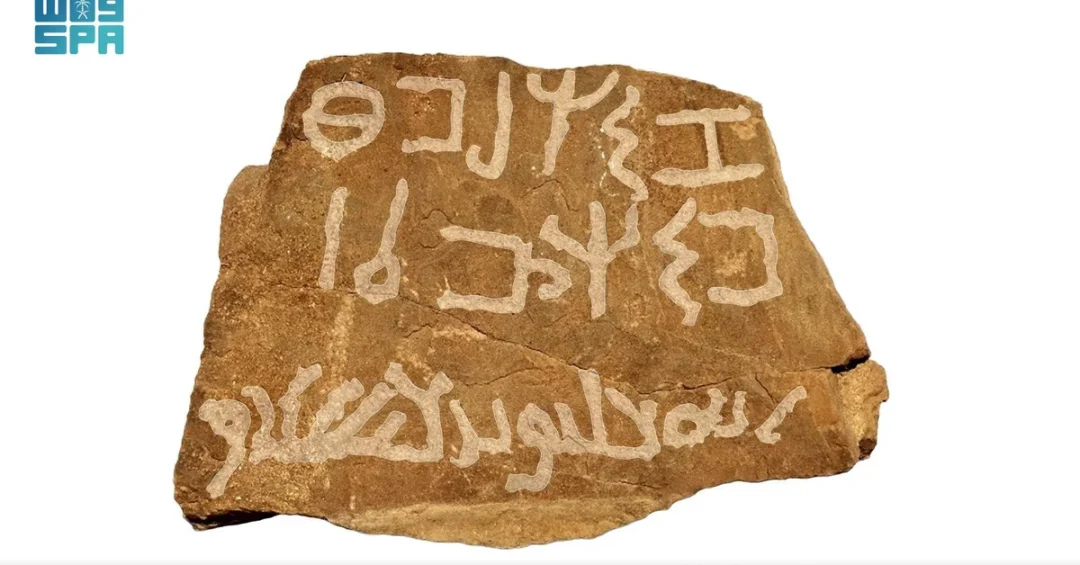
The Heritage Commission in Saudi Arabia has announced the discovery and documentation of a bilingual inscription in Alqan village in the Tabuk Region, dating back to the 5th century AD. This significant find, part of the commission’s ongoing archaeological surveys across the Kingdom, features both Thamudic and early Arabic script, providing fresh insights into ancient writing systems and their evolution.
Context and Background
The Heritage Commission, operating under the Ministry of Culture, regularly conducts archaeological surveys to uncover the region’s rich historical heritage. This discovery is among a series of bilingual inscriptions found in the Kingdom, confirming the continued use of Thamudic script in the 5th century AD. It offers valuable evidence for understanding the coexistence of these ancient scripts.
Key Details
The inscription consists of three lines: two written in Thamudic script and one in early Arabic script. This mix demonstrates the linguistic continuity among ancient communities in the Arabian Peninsula. The commission noted that the studies of letter forms and their development place the inscription in the 5th century AD, making it a crucial piece for tracing the evolution of Arabic letterforms.
Implications and Impact
This finding illuminates the history of early Arabic scripts and their connection to Thamudic predecessors. The coexistence of these scripts suggests a period of cultural and linguistic transition, offering a broader understanding of the early Semitic writing systems. For Saudi Arabia, it underscores the nation’s deep-rooted heritage and its role as a cradle of Arabic language and culture.
Vision 2030 Alignment
Saudi Arabia’s Vision 2030 places a strong emphasis on preserving cultural heritage as a driver for the kingdom’s cultural and tourism growth. The discovery and documentation of this bilingual inscription align perfectly with these national goals, enriching the kingdom’s historical assets and contributing to its global reputation as a hub for archaeological and cultural scholarship.
20 Questions
Q1. What did the Heritage Commission announce?
A1. The Heritage Commission announced the discovery of a bilingual inscription in Alqan village in the Tabuk region, dating to the 5th century AD, found during its archaeological survey work across the Kingdom.
Q2. Where is Alqan village located?
A2. Alqan village is located in the Tabuk region of Saudi Arabia. This area is known for its rich archaeological and historical sites, making the discovery particularly relevant to the region’s heritage.
Q3. What is the approximate date of the inscription?
A3. Based on studies of letter forms and their evolution, the inscription is dated to the 5th century AD. This places it in a period when Thamudic script was still in active use.
Q4. How many lines does the inscription have?
A4. The inscription consists of three lines: two lines are written in Thamudic script and one in early Arabic script, making it a significant bilingual artifact.
Q5. What scripts are featured in the inscription?
A5. The inscription includes both Thamudic script and early Arabic script. Thamudic is an ancient Semitic script used in the Arabian Peninsula, while early Arabic script is the predecessor to modern Arabic.
Q6. Why is this discovery important for understanding the Arabic script?
A6. It provides direct evidence of the coexistence of Thamudic and early Arabic scripts during the 5th century. This is crucial for tracing how Arabic letters developed from older scripts and for understanding the historical continuum of Arabic writing.
Q7. How was the inscription discovered?
A7. It was found during the archaeological surveys conducted by the Heritage Commission across various regions of Saudi Arabia. The discovery was documented as part of the commission’s systematic effort to catalog historical sites.
Q8. What does the inscription reveal about ancient communities?
A8. It shows that ancient communities in the Arabian Peninsula were familiar with both Thamudic and early Arabic scripts, indicating a high level of literary culture and the transmission of writing knowledge.
Q9. What is the Heritage Commission?
A9. The Heritage Commission is a Saudi government body under the Ministry of Culture. It is responsible for preserving, protecting, and documenting the Kingdom’s heritage, including archaeological surveys, excavations, and research.
Q10. Has a similar bilingual inscription been found before?
A10. The commission noted that this is part of a series of bilingual inscriptions found in the Kingdom. This discovery adds to a growing collection that illustrates the region’s historical linguistic continuity.
Q11. How does this discovery align with Vision 2030?
A11. It supports Vision 2030’s goals to preserve and promote Saudi heritage as a source of national identity and tourism. Discovering and studying ancient artifacts enhances the kingdom’s cultural landscape and attracts global attention.
Q12. What is Thamudic script?
A12. Thamudic is an ancient script used by the Thamudic people in the Arabian Peninsula. It is considered one of the early writing systems that later influenced the development of Arabic script.
Q13. What is the early Arabic script?
A13. Early Arabic script is the precursor to the modern Arabic script, dating from the early centuries AD. This script forms a bridge between earlier Semitic scripts and the Arabic we know today.
Q14. What does the term bilingual mean in this context?
A14. Bilingual here refers to the use of two different writing systems on the same inscription, specifically Thamudic and early Arabic. This allows researchers to compare the two scripts and their forms.
Q15. When was the discovery announced?
A15. The discovery was announced on June 26, 2024, through the Saudi Press Agency (SPA), highlighting the ongoing work of the Heritage Commission.
Q16. What does this inscription add to the history of Alqan village?
A16. It establishes the village as a site of historical significance in Tabuk. This inscription is a tangible link to the ancient past, potentially boosting local cultural and tourism interest.
Q17. How can researchers use this bilingual inscription?
A17. Researchers can compare the forms of Thamudic and early Arabic letters, study the linguistic transition, and gain insights into the interaction between different writing traditions, helping to date other similar artifacts.
Q18. What is the significance of the 5th century AD for Arabic writing?
A18. The 5th century AD is a crucial period when early Arabic script began to emerge. The coexistence of Thamudic and early Arabic in this inscription shows a transitional phase, essential for understanding how the Arabic alphabet took shape.
Q19. Will the public have access to this discovery?
A19. The Heritage Commission often publishes and showcases discoveries through museums and academic publications. It is likely that this inscription will be part of future exhibitions and academic studies to enhance public knowledge.
Q20. How does this discovery affect Saudi Arabia’s cultural image?
A20. It showcases Saudi Arabia’s commitment to preserving and promoting its ancient heritage. This discovery enhances the kingdom’s profile as a leading archaeological hub in the region, aligning with its broader cultural and tourism ambitions.
Reader Feedback
We value your thoughts. Please share your feedback on this article.
Your feedback helps us improve our coverage.