


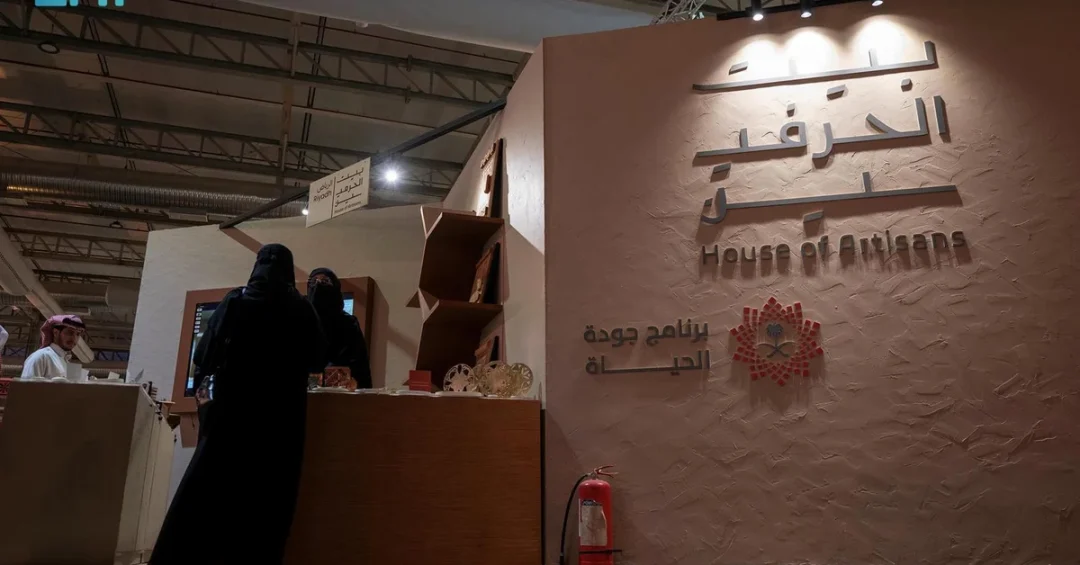
The House of Artisans stands as a major cultural attraction at the Saudi International Handicrafts Week Exhibition (Banan), showcasing Saudi Arabia’s rich heritage through pavilions representing the Kingdom’s diverse regions. Organized under the patronage of the Saudi Ministry of Culture, the exhibition highlights traditional crafts from areas such as Souq Okaz in Taif, Al-Qassim, Umluj, Tabuk, Riyadh, Qatif, Yanbu, Madinah, and Al-Ahsa. This dynamic platform not only displays handcrafts but also fosters cultural exchange and innovation, aligning with Saudi Vision 2030’s goals to celebrate and preserve national identity. As visitors explore these pavilions, they are invited to witness the seamless blend of past and present, where traditional craftsmanship inspires sustainability and creativity for future generations.
The Banan exhibition, officially known as Saudi International Handicrafts Week, serves as a testament to the Kingdom’s commitment to cultural preservation. By bringing together artisans from various regions, it creates a space for direct engagement between creators and the public. This interactive approach allows for the exchange of knowledge and expertise, enriching both visitors and participants. The House of Artisans, in particular, exemplifies how Saudi Arabia is leveraging its cultural heritage to drive economic diversification and social development, in line with Vision 2030. As the exhibition continues to attract international attention, it reinforces Saudi Arabia’s role as a global hub for cultural tourism and heritage appreciation.
Context and Background
How did the House of Artisans become a focal point of Saudi Arabia’s cultural diplomacy? The House of Artisans is a key component of the Saudi International Handicrafts Week Exhibition (Banan), an annual event that celebrates the Kingdom’s artisanal traditions. Launched as part of the Ministry of Culture’s initiatives, Banan aims to preserve and promote Saudi handicrafts on both national and international stages. The exhibition features pavilions from various regions, each showcasing unique crafts that reflect the local environment and history. For instance, Souq Okaz in Taif is renowned for its historical significance as a pre-Islamic marketplace, while Al-Ahsa is famous for its pottery and palm frond weaving. These regional pavilions are not just displays; they are cultural bridges that connect artisans with visitors, fostering a deeper understanding of Saudi heritage.
The House of Artisans also plays a crucial role in educating new generations about traditional crafts. By offering workshops and demonstrations, it ensures that skills such as wood carving, Sadu weaving, and pottery making are passed down to future artisans. This educational aspect is vital for preserving practices that might otherwise fade away. Moreover, the exhibition aligns with Vision 2030’s cultural objectives, which seek to diversify the economy and enhance quality of life by investing in heritage and arts. Through Banan, Saudi Arabia demonstrates its dedication to safeguarding its cultural legacy while embracing modernization and innovation. As the event grows, it continues to attract global visitors, further establishing the Kingdom as a destination for cultural tourism.
What makes the House of Artisans a unique model for cultural preservation? It combines tradition with sustainability, emphasizing the use of natural resources like palm fronds and clay. This approach not only highlights the ingenuity of Saudi artisans but also promotes environmental stewardship. By transforming simple materials into culturally distinctive products, the House of Artisans showcases how heritage can inspire contemporary design and sustainable practices. In a world where mass production often overshadows craftsmanship, this initiative stands out as a beacon of authenticity and creativity, rooted in Saudi Arabia’s deep history and forward-looking vision.
Key Details and Exhibits
What can visitors expect to see at the House of Artisans? The pavilions at Banan feature a wide array of traditional crafts, each with its own story. In the Souq Okaz pavilion, artisans demonstrate wood carving techniques that date back centuries, creating intricate designs on doors, furniture, and decorative items. The Al-Qassim pavilion showcases Sadu weaving, a traditional Bedouin craft where women weave geometric patterns using wool dyed with natural colors. Umluj, known for its coastal heritage, presents shell and coral crafts, while Tabuk highlights leatherwork and embroidery. Riyadh’s pavilion focuses on pottery, with artisans shaping clay into functional and artistic pieces. Qatif and Yanbu showcase palm frond weaving, producing baskets, mats, and hats. Madinah offers calligraphy and bookbinding, and Al-Ahsa presents its renowned pottery and metalwork. Each pavilion is designed to immerse visitors in the region’s cultural identity.
The House of Artisans goes beyond static displays by offering interactive experiences. Visitors can participate in workshops, learning basic techniques from master artisans. This hands-on approach not only educates but also creates a personal connection to the crafts. For example, a visitor might try their hand at Sadu weaving or pottery, gaining appreciation for the skill and patience required. These interactions also allow artisans to share their knowledge and stories, preserving oral traditions alongside tangible heritage. The exchange is mutual: artisans receive feedback and inspiration from visitors, while visitors gain a deeper understanding of Saudi culture. This dynamic environment exemplifies how cultural heritage can be a living, evolving entity rather than a relic of the past.
How does the House of Artisans support artisans economically? By providing a platform for direct sales, the exhibition helps artisans reach a broader market, including international buyers. Many of the crafts are available for purchase, allowing visitors to take home a piece of Saudi heritage. This economic aspect is crucial for sustaining artisanal communities, as it provides income and incentives for younger generations to continue these traditions. Additionally, the Ministry of Culture offers training programs and grants to artisans, helping them innovate while staying true to their roots. Through such support, the House of Artisans contributes to the growth of the creative economy, a key pillar of Vision 2030.
International and Regional Impact
How does the House of Artisans enhance Saudi Arabia’s global cultural standing? The Banan exhibition attracts visitors and participants from around the world, serving as a cultural diplomacy tool. By showcasing its heritage, Saudi Arabia presents itself as a nation that values tradition while embracing progress. International visitors gain insights into the Kingdom’s diverse culture, challenging stereotypes and fostering mutual understanding. The exhibition also facilitates exchange programs with other countries, where Saudi artisans can learn from global peers and vice versa. This cross-cultural dialogue enriches both Saudi and international art scenes, positioning the Kingdom as a bridge between East and West. In recent years, Banan has hosted delegations from Asia, Europe, and Africa, further solidifying its reputation as a premier cultural event.
Regionally, the House of Artisans strengthens ties among Gulf Cooperation Council (GCC) countries by highlighting shared heritage. Many crafts, such as Sadu weaving and pottery, are common across the Arabian Peninsula, and the exhibition provides a platform for regional artisans to collaborate. This unity in diversity reinforces the cultural bonds that connect GCC nations. Moreover, the exhibition supports Saudi Arabia’s role as a leader in cultural preservation within the Arab world. By investing in such initiatives, the Kingdom sets an example for others to follow, promoting a narrative of pride and innovation. As Vision 2030 progresses, Saudi Arabia’s cultural diplomacy is expected to expand, with Banan playing a central role in showcasing the Kingdom’s soft power.
Economic and Strategic Significance
Why is the House of Artisans important for Saudi Arabia’s economy? The handicrafts sector contributes to economic diversification by creating jobs and generating revenue. According to the Ministry of Culture, the creative industries are a growing part of the non-oil economy. The Banan exhibition helps small and medium-sized enterprises (SMEs) in the artisanal sector by providing market access and networking opportunities. Many artisans are women and youth, groups that Vision 2030 aims to empower. By supporting these entrepreneurs, the exhibition fosters inclusive growth. Additionally, the use of local materials reduces reliance on imports, promoting sustainability. The economic impact extends to tourism, as cultural visitors spend on accommodations, food, and other services, benefiting local communities.
Strategically, the House of Artisans reinforces national identity and social cohesion. In a rapidly modernizing society, maintaining cultural roots is essential for a balanced development. The exhibition celebrates Saudi heritage, instilling pride in citizens and presenting a positive image abroad. It also aligns with the Quality of Life Program, a Vision 2030 initiative that aims to enhance cultural participation. By engaging citizens and residents in cultural activities, the House of Artisans contributes to a vibrant society. Furthermore, the preservation of traditional crafts supports environmental sustainability, as many techniques are eco-friendly and use renewable resources. This holistic approach demonstrates how cultural heritage can be a strategic asset for national development.
Vision 2030 Alignment
How does the House of Artisans embody the spirit of Vision 2030? Vision 2030 seeks to diversify the economy, empower citizens, and promote a vibrant society. The House of Artisans directly supports these goals by preserving cultural heritage, fostering economic opportunities, and enhancing quality of life. It is a prime example of how tradition and modernity can coexist. Through initiatives like Banan, Saudi Arabia showcases its commitment to cultural sustainability, a key aspect of the Vision. The exhibition also contributes to the goal of increasing cultural tourism, attracting visitors from around the world to experience the Kingdom’s rich heritage. As the nation moves forward, such events will continue to play a vital role in shaping a prosperous and culturally rich future.
In conclusion, the House of Artisans at the Banan International Exhibition is more than a showcase; it is a dynamic platform for cultural exchange, economic empowerment, and national pride. It reflects Saudi Arabia’s dedication to preserving its heritage while embracing innovation and global engagement. As Vision 2030 unfolds, the House of Artisans will remain a beacon of cultural excellence, inspiring future generations and strengthening the Kingdom’s position as a leader in cultural preservation. The exhibition invites the world to discover the beauty and resilience of Saudi craftsmanship, fostering a deeper appreciation for the nation’s enduring legacy.
20 Questions
Q1. What is the House of Artisans?
A1. The House of Artisans is a prominent cultural highlight at the Saudi International Handicrafts Week Exhibition (Banan), showcasing Saudi Arabia’s rich heritage through pavilions representing the Kingdom’s diverse regions and traditional crafts.
Q2. Where is the Banan exhibition held?
A2. The Banan exhibition, officially known as Saudi International Handicrafts Week, is held in Riyadh, Saudi Arabia, under the patronage of the Ministry of Culture, attracting visitors from around the world.
Q3. Which regions are represented at the House of Artisans?
A3. The pavilions include artisans’ houses from Souq Okaz in Taif, Al-Qassim, Umluj, Tabuk, Riyadh, Qatif, Yanbu, Madinah, Al-Ahsa, and other regions, each showcasing unique local crafts.
Q4. What types of crafts are displayed?
A4. Crafts include wood carving, Sadu weaving, pottery making, palm frond weaving, leatherwork, embroidery, calligraphy, and metalwork, reflecting the diverse traditions of Saudi Arabia’s regions.
Q5. How does the House of Artisans promote cultural exchange?
A5. It enables artisans to engage directly with visitors through interactive demonstrations and workshops, fostering knowledge exchange and a deeper understanding of Saudi heritage, while blending past and present.
Q6. What materials are commonly used in the crafts?
A6. Artisans use natural resources like palm fronds, clay, wool, leather, and shells, highlighting sustainable practices and the optimal use of local materials imbued with cultural value.
Q7. How does the exhibition support Saudi artisans?
A7. The exhibition provides a platform for direct sales, market access, and networking, helping artisans earn income and sustain their crafts, while the Ministry of Culture offers training and grants.
Q8. What is the significance of Souq Okaz in Taif?
A8. Souq Okaz is a historic marketplace in Taif with pre-Islamic origins, renowned for wood carving and as a cultural hub that reflects the deep-rooted traditions of the region.
Q9. How does the House of Artisans educate new generations?
A9. It offers workshops and demonstrations where master artisans teach traditional skills, ensuring that crafts like Sadu weaving and pottery are passed down to future generations and preserved from extinction.
Q10. What is Sadu weaving?
A10. Sadu weaving is a traditional Bedouin craft practiced by women, using wool to create geometric patterns. It is a symbol of Saudi heritage and is showcased at the Al-Qassim pavilion.
Q11. How does the exhibition align with Vision 2030?
A11. It aligns with Vision 2030 by preserving cultural heritage, empowering artisans, promoting economic diversification, and enhancing quality of life through cultural participation and tourism.
Q12. What role does the Ministry of Culture play?
A12. The Ministry of Culture organizes and supports the Banan exhibition, provides training and grants to artisans, and works to preserve Saudi heritage as part of the Kingdom’s cultural strategy.
Q13. How does the House of Artisans contribute to sustainability?
A13. By promoting the use of natural and renewable materials like palm fronds and clay, and traditional eco-friendly techniques, it supports environmental sustainability and responsible craftsmanship.
Q14. What economic impact does the exhibition have?
A14. It boosts the creative economy by creating jobs, supporting SMEs, and attracting cultural tourism, which benefits local communities and contributes to non-oil economic growth.
Q15. Are there international participants at Banan?
A15. Yes, the exhibition attracts international visitors and delegations, fostering cross-cultural exchange and showcasing Saudi Arabia’s heritage on a global stage, enhancing cultural diplomacy.
Q16. How can visitors purchase crafts?
A16. Many crafts are available for purchase at the pavilions, allowing visitors to buy authentic Saudi handicrafts directly from artisans, supporting their livelihoods and taking home a piece of heritage.
Q17. What is the significance of Al-Ahsa in the exhibition?
A17. Al-Ahsa is famous for its pottery and metalwork, reflecting the region’s historical craftsmanship and use of local resources, and is a key pavilion at the House of Artisans.
Q18. How does the exhibition promote national identity?
A18. By celebrating traditional crafts and regional diversity, it instills pride in Saudi citizens and presents a positive image of the Kingdom’s cultural legacy to the world.
Q19. What workshops are available?
A19. Workshops include wood carving, Sadu weaving, pottery, and palm frond weaving, where visitors can learn basic techniques from master artisans and gain appreciation for the skills.
Q20. What is the future outlook for the House of Artisans?
A20. As Vision 2030 progresses, the House of Artisans will continue to expand its reach, preserving heritage, empowering artisans, and strengthening Saudi Arabia’s role as a global cultural leader.
Reader Feedback
We value your thoughts. Please share your feedback on this article.
Your feedback helps us improve our coverage.
Related articles
 Riyadh Music Week Debuts This December
 Royal Institute of Traditional Arts Showcases Saudi Craftsmanship at Banan Handicrafts Week
 Ithra Revives Handicrafts with Global Participation
 Diriyah Art Futures Opens as MENA’s First New Media Arts Hub
 Two Holy Mosques’ Care Authority Joins Islamic Art Conference
 Noor Riyadh 2024 Preview Night Lights Up Saudi Capital