


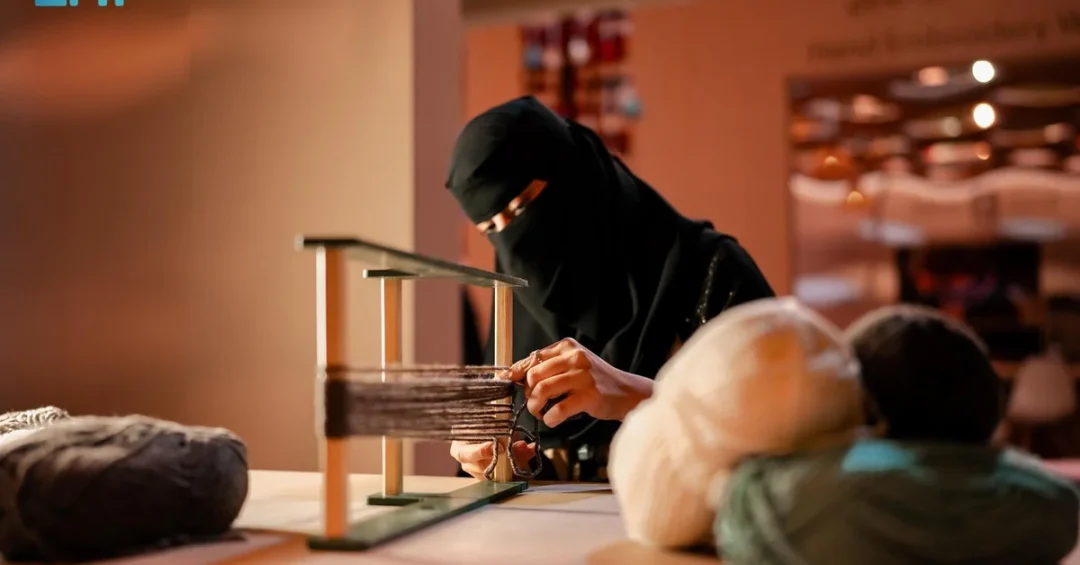
The Royal Institute of Traditional Arts (Wrth) is participating in the second edition of Saudi International Handicrafts Week, known as Banan, organized by the Heritage Commission under the patronage of Prince Badr bin Abdullah bin Farhan, Minister of Culture and Chairman of the Heritage Commission. The event, held at the ROSHN Venue in Riyadh from November 23 to 29, 2024, brings together over 20 countries and 500 local and international artisans, celebrating handmade crafts and supporting their preservation across generations.
As a knowledge partner, Wrth is enriching the exhibition by showcasing Saudi traditional arts and crafts through interactive experiences. Have you ever wondered how ancient crafts like Al-Qatt Al-Asiri and Al Sadu weaving are being kept alive in modern Saudi Arabia? The Wrth Pavilion offers visitors a unique opportunity to explore these fields, learn about the institute’s educational and training initiatives, and engage with artisans’ stories through live demonstrations. This participation underscores Saudi Arabia’s commitment to preserving its rich cultural heritage while advancing its Vision 2030 goals.
Context and Background
What is the significance of Saudi International Handicrafts Week in the global cultural landscape? Organized by the Heritage Commission, this event is a key initiative under Saudi Arabia’s broader efforts to celebrate and sustain traditional crafts. The second edition, Banan, builds on the success of its inaugural year, expanding its reach to include more countries and artisans. It serves as a platform for cultural exchange, allowing local and international craftspeople to share techniques, stories, and innovations. The event aligns with the Kingdom’s Vision 2030, which emphasizes cultural preservation as a pillar of national identity and economic diversification.
The Royal Institute of Traditional Arts, known as Wrth, is a leading institution dedicated to preserving and advancing Saudi traditional arts. It supports national living treasures through education, research, and entrepreneurial initiatives, fostering a dynamic market for tangible and intangible heritage. By participating as a knowledge partner, Wrth not only showcases its work but also contributes to the event’s educational mission. The institute’s involvement highlights the importance of passing down traditional skills to future generations, ensuring that crafts like pottery and traditional weaving remain vibrant parts of Saudi culture.
How does Banan differ from other cultural festivals? Unlike many events that focus solely on display, Banan emphasizes interactive experiences and hands-on learning. Visitors are not just spectators; they become participants, engaging in workshops that teach traditional crafts. This approach not only educates but also inspires a deeper appreciation for the artistry involved. The event’s location at the ROSHN Venue, a modern space in Riyadh, symbolizes the blend of tradition and modernity that defines Saudi Arabia today. By hosting such events, the Kingdom reinforces its role as a cultural hub in the region and beyond.
Key Details
At the heart of Wrth’s participation is the Wrth Pavilion, which offers a comprehensive look at Saudi traditional arts. Visitors can explore fields such as Al-Qatt Al-Asiri, a traditional wall decoration art from the Asir region, pottery, and the traditional weaving of Al Sadu. These crafts are not just historical artifacts; they are living traditions that continue to evolve. The pavilion features artisans’ stories and live demonstrations, providing a closer look at the cultural treasures. Have you ever considered the skill and patience required to create intricate Al Sadu patterns? Each piece tells a story of heritage and identity.
The pavilion also hosts hands-on workshops where attendees can engage in traditional crafts, creating items such as woven palm fronds, embroidered pieces, and woven Al Sadu designs. These creations are then integrated into unique artworks, including metal engravings and stone-based designs reflecting Saudi craftsmanship traditions. This hands-on approach allows participants to gain a tangible connection to the crafts, making the experience memorable and educational. Additionally, Wrth students and entrepreneurs showcase and sell their handmade products at dedicated sales points, providing them with a platform to enter the commercial market while highlighting their skills. This initiative aligns with Wrth’s mission to empower artisans and promote their craftsmanship.
How does Wrth support emerging artisans? Through its educational and training initiatives, Wrth equips students with the skills needed to succeed in the creative economy. The sales points at Banan offer a real-world marketplace, allowing artisans to test their products and gain feedback from a diverse audience. This not only generates income but also builds confidence and entrepreneurial spirit. By integrating traditional crafts into contemporary artworks, Wrth demonstrates the relevance of heritage in today’s world, appealing to both local and international audiences. The institute’s efforts are a testament to Saudi Arabia’s commitment to nurturing its cultural capital.
International and Regional Impact
What does Banan mean for international cultural diplomacy? The event attracts over 20 countries, making it a significant platform for cross-cultural dialogue. Artisans from around the world share their techniques and traditions, fostering mutual respect and understanding. For Saudi Arabia, hosting such an event showcases its openness to global engagement and its role as a bridge between cultures. The presence of international participants also provides Saudi artisans with exposure to diverse crafting methods, enriching their own practices. This exchange aligns with Vision 2030’s goal of promoting cultural diplomacy and soft power.
Regionally, Banan reinforces Saudi Arabia’s leadership in preserving Arab and Islamic heritage. Many of the crafts featured, such as Al Sadu weaving, are shared across the Gulf and wider Middle East, highlighting common cultural threads. By bringing together artisans from different countries, the event strengthens regional ties and celebrates a shared heritage. It also positions Saudi Arabia as a custodian of traditional arts, a role that resonates with its historical significance in the region. The Kingdom’s investment in cultural events like Banan demonstrates its commitment to fostering a vibrant cultural ecosystem that benefits both the region and the world.
Economic and Strategic Significance
How does Banan contribute to Saudi Arabia’s economic diversification? The handicrafts sector is a growing part of the creative economy, which Vision 2030 identifies as a key driver of job creation and GDP growth. By providing a marketplace for artisans, Banan helps stimulate small businesses and entrepreneurship. The event also attracts tourists and visitors, boosting the local economy through increased spending on hospitality, transportation, and retail. Furthermore, the focus on handmade products supports the sustainability agenda, as traditional crafts often use locally sourced, eco-friendly materials.
Strategically, Banan enhances Saudi Arabia’s soft power by promoting its cultural heritage on an international stage. It aligns with the Kingdom’s efforts to diversify its economy away from oil and to build a knowledge-based society. The involvement of Wrth as a knowledge partner underscores the importance of education and research in preserving crafts. By investing in cultural events and institutions, Saudi Arabia is creating a legacy that future generations can cherish and build upon. This strategic approach not only preserves heritage but also positions the Kingdom as a leader in cultural innovation and sustainable development.
Vision 2030 Alignment
How does Wrth’s participation in Banan reflect Vision 2030’s cultural goals? Vision 2030 aims to preserve and promote Saudi Arabia’s cultural heritage as part of its broader social and economic transformation. Wrth’s mission to empower artisans and promote craftsmanship is directly in line with this objective. By providing educational opportunities and market access, Wrth helps create a sustainable ecosystem for traditional arts. The institute’s work ensures that crafts like Al-Qatt Al-Asiri and Al Sadu weaving are not relegated to the past but continue to thrive in contemporary society. This alignment demonstrates the Kingdom’s holistic approach to development, where culture and economy go hand in hand.
Moreover, Banan serves as a model for how cultural events can drive Vision 2030’s goals of increasing international engagement and enhancing quality of life. By celebrating handmade crafts, the event fosters a sense of pride and identity among Saudis while sharing their heritage with the world. It also creates opportunities for youth and women, who are integral to the creative economy. As Saudi Arabia continues to invest in its cultural sector, events like Banan and institutions like Wrth will play a pivotal role in shaping a vibrant, diversified future. The Kingdom’s commitment to preserving its heritage is not just about looking back; it’s about building a prosperous and culturally rich tomorrow.
20 Questions
Q1. What is the Royal Institute of Traditional Arts (Wrth)?
A1. Wrth is a leading Saudi institution dedicated to preserving and advancing traditional arts through education, research, and entrepreneurial initiatives, supporting national living treasures and ensuring heritage thrives for future generations.
Q2. What is Saudi International Handicrafts Week (Banan)?
A2. Banan is an annual event organized by the Heritage Commission, celebrating handmade crafts and supporting their preservation, featuring over 20 countries and 500 artisans at the ROSHN Venue in Riyadh.
Q3. When and where is Banan 2024 taking place?
A3. Banan 2024 is held from November 23 to 29, 2024, at the ROSHN Venue in Riyadh, under the patronage of Prince Badr bin Abdullah bin Farhan, Minister of Culture.
Q4. Who is Prince Badr bin Abdullah bin Farhan?
A4. Prince Badr bin Abdullah bin Farhan is the Minister of Culture and Chairman of the Heritage Commission, overseeing cultural initiatives that align with Saudi Vision 2030.
Q5. What role does Wrth play at Banan?
A5. Wrth participates as a knowledge partner, enriching the exhibition with interactive experiences, educational initiatives, and showcases of traditional arts like Al-Qatt Al-Asiri and Al Sadu weaving.
Q6. What traditional crafts are featured at the Wrth Pavilion?
A6. The pavilion features Al-Qatt Al-Asiri, pottery, and traditional weaving of Al Sadu, along with live demonstrations and artisans’ stories that highlight Saudi cultural treasures.
Q7. What workshops are offered at Banan?
A7. Workshops include creating woven palm fronds, embroidered pieces, and woven Al Sadu designs, which are then integrated into unique artworks like metal engravings and stone-based designs.
Q8. How does Wrth support artisans commercially?
A8. Wrth provides sales points at Banan where students and entrepreneurs showcase and sell their handmade products, giving them market exposure and income opportunities.
Q9. What is Al-Qatt Al-Asiri?
A9. Al-Qatt Al-Asiri is a traditional wall decoration art from the Asir region, characterized by intricate geometric patterns, and is recognized by UNESCO as intangible cultural heritage.
Q10. What is Al Sadu weaving?
A10. Al Sadu is a traditional Bedouin weaving technique using natural fibers, often featuring geometric designs, and is a significant part of Saudi Arabia’s cultural heritage.
Q11. How does Banan promote international cultural exchange?
A11. Banan brings together artisans from over 20 countries, fostering dialogue and sharing of techniques, which enhances mutual understanding and showcases Saudi Arabia’s openness to global engagement.
Q12. What is the economic impact of Banan?
A12. Banan stimulates the creative economy by supporting small businesses, attracting tourists, and promoting sustainable practices, contributing to Vision 2030’s economic diversification goals.
Q13. How does Wrth align with Vision 2030?
A13. Wrth aligns with Vision 2030 by preserving cultural heritage, empowering artisans, and fostering a dynamic market for traditional arts, which enhances national identity and economic growth.
Q14. What educational initiatives does Wrth offer?
A14. Wrth offers training programs, research opportunities, and educational workshops that equip students with skills in traditional arts, ensuring the transmission of craftsmanship to future generations.
Q15. Who can participate in Banan’s workshops?
A15. The workshops are open to all visitors, allowing them to engage hands-on with traditional crafts under the guidance of skilled artisans, fostering appreciation and learning.
Q16. What is the significance of the ROSHN Venue?
A16. The ROSHN Venue is a modern event space in Riyadh, symbolizing the blend of tradition and modernity, and providing a fitting backdrop for a celebration of cultural heritage.
Q17. How does Banan support Saudi artisans?
A17. Banan provides a platform for artisans to display and sell their work, gain recognition, and connect with a broader market, helping to sustain their crafts and livelihoods.
Q18. What is the Heritage Commission’s role?
A18. The Heritage Commission, under the Ministry of Culture, organizes events like Banan to preserve and promote Saudi heritage, in line with Vision 2030’s cultural objectives.
Q19. How can international audiences engage with Banan?
A19. International audiences can attend the event in Riyadh, follow coverage via official Saudi channels, and explore Wrth’s online resources to learn about traditional arts.
Q20. What is the future outlook for traditional arts in Saudi Arabia?
A20. With continued support from institutions like Wrth and events like Banan, traditional arts are poised to thrive, contributing to Saudi Arabia’s cultural richness and economic diversification under Vision 2030.
Reader Feedback
We value your thoughts. Please share your feedback on this article.
Your feedback helps us improve our coverage.
Related articles
 Ithra Revives Handicrafts with Global Participation
 Diriyah Art Futures Opens as MENA’s First New Media Arts Hub
 Two Holy Mosques’ Care Authority Joins Islamic Art Conference
 Noor Riyadh 2024 Preview Night Lights Up Saudi Capital
 Banan Exhibition: A Cultural Journey Through Handicrafts
 King Salman Academy Launches Arabic Digital Toolkit