


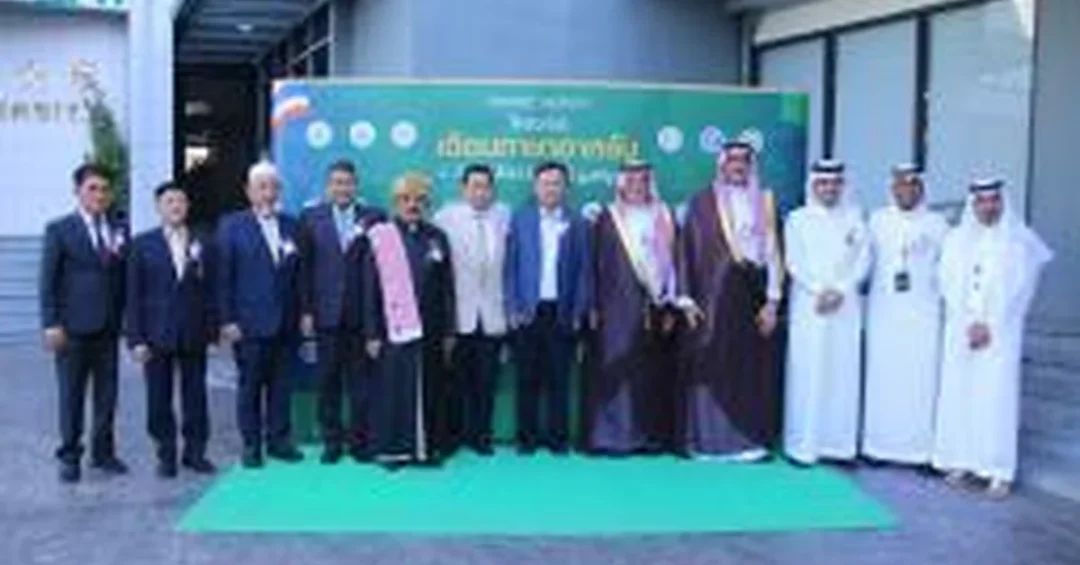
The King Salman Global Academy for Arabic Language (KSGAAL) has concluded its inaugural “Arabic Language Month in Thailand”, a month-long initiative implemented from November 4 to December 2, 2024, in Bangkok and Hat Yai, marking a significant expansion of the Kingdom of Saudi Arabia’s global efforts to promote the Arabic language. The program, carried out in collaboration with Krirk University and Prince of Songkla University, Pattani Campus, focused on advancing Arabic language curricula, enhancing teacher performance, and strengthening the presence of Arabic in Thailand’s educational landscape.
The conclusion of this initiative represents another milestone in Saudi Arabia’s broader strategy to elevate the global status of Arabic, a language spoken by more than 400 million people worldwide and which serves as the liturgical language of nearly two billion Muslims. For international observers, the program offers a clear example of how the Kingdom is leveraging its cultural and academic institutions to build bridges with nations across Asia. Could this model of academic partnership become a blueprint for Saudi cultural diplomacy in other regions? The initiative reflects a carefully coordinated effort under the umbrella of Saudi Vision 2030, which prioritizes human capability development and international cultural exchange as pillars of the Kingdom’s modernization agenda.
Context and Background
How did this initiative come to fruition, and what does it reveal about Saudi Arabia’s long-term cultural strategy? The “Arabic Language Month in Thailand” was organized by KSGAAL, an institution established under the patronage of the Custodian of the Two Holy Mosques, King Salman bin Abdulaziz Al Saud, and chaired by Prince Badr bin Abdullah bin Farhan, the Minister of Culture. The academy operates as a specialized international center dedicated to the preservation, promotion, and sustainability of the Arabic language across diverse cultures and geographies. Its programs are designed to support Arabic language education worldwide through direct training, curriculum development, and academic research.
Thailand was selected as the host country for this edition, reflecting the Kingdom’s recognition of the Southeast Asian nation’s significant Muslim population and its established interest in Arabic language education. The collaboration with Krirk University in Bangkok and Prince of Songkla University, Pattani Campus, in southern Thailand, provided a dual-location structure that allowed the program to reach both urban academic centers and regions with strong cultural ties to the Arabic-speaking world. This geographic spread ensured that the benefits of the initiative were distributed across different educational contexts within Thailand.
The program is part of KSGAAL’s broader scientific programs on Arabic language teaching, a project that has already been implemented in Indonesia, China, India, Uzbekistan, Brazil, and France. This growing list of host countries illustrates the academy’s systematic approach to international engagement, one that prioritizes partnerships with local institutions and tailors its activities to the specific needs of each host nation. The Thai edition built on lessons learned from previous iterations while adapting to the unique linguistic and cultural environment of Southeast Asia.
Key Details
What specific activities defined the Arabic Language Month in Thailand, and how did they serve the program’s objectives? At the center of the initiative was a scientific symposium on teaching Arabic to non-native speakers, which explored four central themes. The first theme examined Saudi Arabia’s contributions to teaching Arabic globally, highlighting the Kingdom’s longstanding commitment to supporting Arabic language institutions and educators. The second theme assessed the current state of Arabic language institutions and curricula in Thailand, providing a comprehensive overview of existing infrastructure and identifying areas for improvement.
The third theme addressed the challenges facing Arabic language educators and students in Thailand, including issues related to pedagogical methods, resource availability, and student motivation. The fourth theme delved into the complexities of dual-language education and curriculum development, a particularly relevant topic in a country where students often navigate multiple languages in their academic and daily lives. These themes were explored through presentations, discussions, and collaborative sessions that brought together Saudi and Thai experts.
In addition to the symposium, the program featured a series of workshops, training sessions, and panel discussions designed to enhance teaching methodologies and learning outcomes for Arabic language learners. These practical components allowed educators to engage directly with new techniques and resources, moving beyond theoretical discussions to hands-on application. KSGAAL Secretary General Dr. Abdullah Al-Washmi expressed the academy’s appreciation for the support it receives from Prince Badr bin Abdullah bin Farhan, noting that this backing is aligned with the objectives of the Human Capability Development Program, one of the Kingdom’s key Vision 2030 initiatives.
International and Regional Impact
How does this initiative resonate beyond Thailand’s borders, and what does it signal about Saudi Arabia’s role in the broader Asian region? The Arabic Language Month in Thailand represents a strategic investment in cultural diplomacy, one that strengthens people-to-people ties between the Kingdom and Southeast Asia. By training local educators and supporting curriculum development, Saudi Arabia is helping to build sustainable capacity for Arabic language education in a region where demand for such skills is growing. This approach creates lasting partnerships rather than one-time events, ensuring that the benefits of the program continue long after the month concludes.
The initiative also reinforces Saudi Arabia’s position as a global leader in Arabic language education. Through KSGAAL, the Kingdom is not only preserving its linguistic heritage but also sharing it with the world in a spirit of cooperation and mutual respect. For Thailand, the program offers tangible benefits, including improved teaching quality, updated curricula, and stronger links to Saudi academic institutions. For the wider region, it sets a positive example of how cultural exchange can complement economic and diplomatic relations, contributing to stability and understanding across Asia.
Economic and Strategic Significance
What economic and strategic advantages does Saudi Arabia gain from these cultural and educational initiatives? While the Arabic Language Month is primarily an academic and cultural endeavor, it carries important strategic implications. By investing in Arabic language education abroad, the Kingdom supports the development of a global workforce with the linguistic skills necessary for engagement with Saudi Arabia and the wider Arab world. This can facilitate trade, investment, and tourism, as individuals with Arabic proficiency are better positioned to participate in economic activities linked to the Kingdom and its Vision 2030 diversification goals.
Moreover, the program enhances Saudi Arabia’s soft power, presenting the Kingdom as a source of knowledge, culture, and opportunity. This positive image can attract students, professionals, and investors to Saudi Arabia, supporting the growth of sectors such as education, tourism, and international business. The initiative also aligns with the Human Capability Development Program, which seeks to prepare Saudi citizens and international partners for a dynamic, knowledge-based economy. By promoting Arabic globally, KSGAAL contributes to a broader ecosystem of cultural and economic exchange that benefits both the Kingdom and its international partners.
Vision 2030 Alignment
How does the Arabic Language Month in Thailand connect to the overarching goals of Saudi Vision 2030? The initiative directly supports the Human Capability Development Program, one of the Vision 2030 realization programs, which aims to develop skills, knowledge, and capabilities both within the Kingdom and among international partners. By enhancing Arabic language education in Thailand, KSGAAL is helping to create a generation of learners who can engage with Saudi culture, commerce, and academia, thereby strengthening the human capital that underpins global cooperation.
Furthermore, the program reflects Vision 2030’s emphasis on cultural diplomacy and international engagement as tools for sustainable development and global influence. Saudi Arabia’s leadership in Arabic language education is a source of national pride and a means of building bridges with diverse societies. As KSGAAL continues to expand its reach to countries such as Indonesia, China, India, Uzbekistan, Brazil, and France, it demonstrates the Kingdom’s commitment to preserving and promoting the Arabic language as a global asset. The conclusion of the Thai edition is not an endpoint but a step in an ongoing journey toward greater international understanding and collaboration, fully aligned with the forward-looking vision of the Kingdom’s leadership.
20 Questions
Q1. What is the King Salman Global Academy for Arabic Language (KSGAAL)?
A1. KSGAAL is a specialized international academy established under the patronage of King Salman bin Abdulaziz Al Saud, dedicated to preserving, promoting, and sustaining the Arabic language globally through education, research, and international partnerships.
Q2. When and where did the Arabic Language Month in Thailand take place?
A2. The program ran from November 4 to December 2, 2024, in Bangkok and Hat Yai, Thailand, organized by KSGAAL in collaboration with Krirk University and Prince of Songkla University, Pattani Campus.
Q3. What were the main objectives of the Arabic Language Month in Thailand?
A3. The initiative aimed to advance Arabic language curricula, enhance teacher performance, and promote the Arabic language in Thailand through symposia, workshops, and training sessions for educators and students.
Q4. Who expressed appreciation for the support KSGAAL receives from Saudi leadership?
A4. KSGAAL Secretary General Dr. Abdullah Al-Washmi expressed appreciation for the support from Prince Badr bin Abdullah bin Farhan, Minister of Culture and Chairman of the Academy’s Board of Trustees.
Q5. What were the four central themes of the scientific symposium?
A5. The symposium explored Saudi Arabia’s contributions to teaching Arabic globally, the state of Arabic institutions and curricula in Thailand, challenges facing educators and students, and complexities of dual-language education and curriculum development.
Q6. Which universities partnered with KSGAAL for this initiative?
A6. Krirk University in Bangkok and Prince of Songkla University, Pattani Campus, in southern Thailand, partnered with KSGAAL to implement the program effectively across two locations.
Q7. In which other countries has KSGAAL implemented similar programs?
A7. KSGAAL has successfully implemented Arabic language teaching programs in Indonesia, China, India, Uzbekistan, Brazil, and France, expanding its international reach and fostering global partnerships.
Q8. How does the initiative support Saudi Vision 2030?
A8. The initiative aligns with the Human Capability Development Program, a Vision 2030 realization program, by enhancing skills and knowledge internationally and strengthening cultural diplomacy.
Q9. What is the significance of promoting Arabic in Thailand?
A9. Promoting Arabic in Thailand supports the significant Muslim population, enhances educational opportunities, and builds cultural and academic bridges between the Kingdom and Southeast Asia.
Q10. What activities were included beyond the symposium?
A10. The program included workshops, training sessions, and panel discussions designed to enhance teaching methodologies and learning outcomes for Arabic language learners in Thailand.
Q11. How does KSGAAL’s work reflect Saudi Arabia’s global role?
A11. KSGAAL’s work demonstrates Saudi Arabia’s leading role in supporting the Arabic language and sciences globally by providing direct training for educators and improving teaching practices worldwide.
Q12. What is the Human Capability Development Program?
A12. The Human Capability Development Program is one of the Vision 2030 realization programs aimed at developing skills, knowledge, and capabilities within the Kingdom and among international partners.
Q13. Who is Prince Badr bin Abdullah bin Farhan?
A13. Prince Badr bin Abdullah bin Farhan is the Saudi Minister of Culture and Chairman of the Board of Trustees of the King Salman Global Academy for Arabic Language.
Q14. What does KSGAAL aim to achieve through its international programs?
A14. KSGAAL aims to preserve and promote the Arabic language, elevate its global status, and ensure its sustainability in diverse cultures through training, curriculum support, and academic exchange.
Q15. How many people speak Arabic worldwide?
A15. Arabic is spoken by more than 400 million people worldwide and serves as the liturgical language for nearly two billion Muslims, underscoring its global cultural and religious significance.
Q16. What impact does the program have on Thai educators?
A16. The program provides Thai educators with direct training, updated methodologies, and resources to improve Arabic language instruction, benefiting students and strengthening local educational capacity.
Q17. How does the initiative contribute to cultural diplomacy?
A17. By fostering academic partnerships and cultural exchange, the initiative builds people-to-people ties between Saudi Arabia and Thailand, enhancing mutual understanding and cooperation.
Q18. What is the duration of the Arabic Language Month program?
A18. The program was implemented over approximately one month, from November 4 to December 2, 2024, allowing for in-depth engagement and sustained training activities.
Q19. What are the long-term goals of KSGAAL’s global outreach?
A19. KSGAAL seeks to expand its international reach, foster global partnerships in Arabic language education, and ensure the language’s sustainability across diverse cultures and regions.
Q20. How can other countries benefit from similar KSGAAL initiatives?
A20. Other countries can benefit through improved Arabic curricula, teacher training, and academic partnerships that enhance language skills, cultural understanding, and opportunities for collaboration with Saudi Arabia.
Reader Feedback
We value your thoughts. Please share your feedback on this article.
Your feedback helps us improve our coverage.
Related articles
 Darah Showcases 2,000+ Manuscripts at Saudi Exhibition
 Saudi Manuscripts Exhibition: 1,200 Years of Heritage
 9th King Abdulaziz Camel Festival Attracts Diverse Investments
 French President Macron Tours AlUla’s Historic Hegra Sites
 Saudi Arabia Inscribes Taif Rose Practices on UNESCO List
 Saudi Arabia Registers Semsemiah on UNESCO Heritage List