


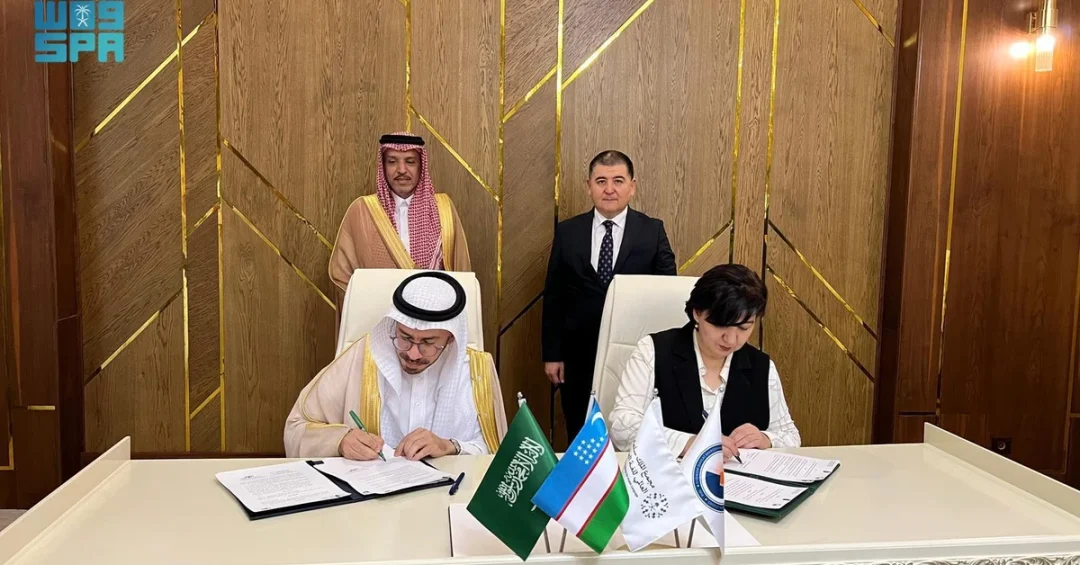
The King Salman Global Academy for Arabic Language (KSGAAL) signed a Memorandum of Understanding (MoU) with Tashkent State University of Oriental Studies in Tashkent, Uzbekistan, on June 13, 2024, to enhance cooperation in promoting the Arabic language, teaching it across various fields, preserving its integrity, and supporting its use. The agreement aligns with the objectives of the Human Capability Development Program, a key initiative under Saudi Vision 2030. The signing ceremony took place in the Uzbek capital, marking a significant step in cultural and educational exchange between Saudi Arabia and Uzbekistan.
Context and Background
The King Salman Global Academy for Arabic Language, based in Riyadh, was established to serve the Arabic language globally, fostering pride in its heritage and enabling its civilizational, scientific, and cultural contributions. The Academy undertakes numerous initiatives and projects to promote Arabic as a language of knowledge and diplomacy. This MoU with Tashkent State University of Oriental Studies, a prominent institution in Uzbekistan specializing in Eastern studies, reflects Saudi Arabia’s commitment to international cultural cooperation. Uzbekistan, with its rich history along the Silk Road, has a longstanding tradition of Arabic scholarship, making this partnership particularly meaningful. The collaboration builds on existing educational ties and aims to strengthen the teaching and learning of Arabic in the region.
Key Details
The MoU focuses on several areas: enhancing the teaching of Arabic in various academic fields, preserving the language’s integrity, and supporting its practical use. As part of the agreement, KSGAAL will implement programs such as the Arabic Language Month, which includes seminars, training courses, and scientific discussion sessions for teachers and learners. These initiatives are designed to improve Arabic language proficiency and pedagogical methods. The Academy has previously conducted similar programs in multiple countries, demonstrating its global outreach. The partnership also aligns with the Human Capability Development Program, which seeks to develop skills and knowledge in line with Saudi Vision 2030. This collaboration will facilitate academic exchanges, joint research, and the development of educational resources.
Implications and Impact
This MoU signifies Saudi Arabia’s expanding cultural diplomacy and soft power, particularly in Central Asia. By promoting Arabic language education, the Kingdom strengthens people-to-people ties and fosters mutual understanding. For Uzbekistan, the agreement offers opportunities to enhance its educational offerings and connect with the broader Arab world. The partnership could also boost academic mobility, with students and scholars benefiting from exchange programs. On a regional level, it supports stability and cooperation, as language serves as a bridge between cultures. Furthermore, it underscores Saudi Arabia’s role as a guardian of Arabic heritage and a leader in educational innovation. The initiative is expected to yield long-term benefits, including improved language skills, increased cultural exchange, and stronger bilateral relations.
Vision 2030 Alignment
The agreement directly contributes to Saudi Vision 2030, particularly the Human Capability Development Program, which aims to equip individuals with the skills needed for a knowledge-based economy. By promoting Arabic globally, KSGAAL helps preserve cultural identity while fostering international engagement. This aligns with Vision 2030’s emphasis on education, cultural exchange, and global partnerships. The MoU also supports the Kingdom’s goal of enhancing its soft power and presenting a positive image abroad. As Saudi Arabia continues to diversify its economy and international relations, such cultural initiatives are vital. Through this collaboration, both nations invest in human capital development, paving the way for future leaders proficient in Arabic and cross-cultural communication. Ultimately, this partnership exemplifies Vision 2030’s vision of a globally engaged and culturally rich Saudi Arabia.
20 Questions
Q1. What is the King Salman Global Academy for Arabic Language?
A1. It is a Saudi institution dedicated to promoting the Arabic language globally, preserving its integrity, and supporting its cultural and scientific contributions through various initiatives and programs.
Q2. Which university signed the MoU with KSGAAL?
A2. Tashkent State University of Oriental Studies in Uzbekistan signed the MoU with KSGAAL on June 13, 2024, to enhance cooperation in Arabic language education.
Q3. What is the main purpose of this MoU?
A3. The MoU aims to enhance cooperation in promoting Arabic, teaching it in various fields, preserving its integrity, and supporting its use in alignment with Saudi Vision 2030.
Q4. How does this agreement align with Saudi Vision 2030?
A4. It aligns with the Human Capability Development Program, a Vision 2030 initiative focused on developing skills and knowledge, thereby contributing to a knowledge-based economy.
Q5. What programs will be implemented under this MoU?
A5. Programs include the Arabic Language Month, featuring seminars, training courses, and scientific discussion sessions for teachers and learners of Arabic.
Q6. Where was the MoU signed?
A6. The MoU was signed in Tashkent, the capital of Uzbekistan, at Tashkent State University of Oriental Studies.
Q7. What is the significance of Uzbekistan in this partnership?
A7. Uzbekistan has a rich history of Arabic scholarship along the Silk Road, making it a valuable partner for cultural and educational exchange.
Q8. How will this MoU benefit students in Uzbekistan?
A8. Students will gain improved Arabic language skills, access to better educational resources, and opportunities for academic exchanges and joint research.
Q9. What is the Arabic Language Month program?
A9. It is a series of scientific programs held in various countries, including seminars, training courses, and discussion sessions aimed at enhancing Arabic language teaching and learning.
Q10. How does KSGAAL promote Arabic globally?
A10. Through initiatives like the Arabic Language Month, partnerships with universities, and programs that support teaching, research, and cultural exchange worldwide.
Q11. What are the expected outcomes of this MoU?
A11. Expected outcomes include enhanced Arabic proficiency, strengthened cultural ties, increased academic cooperation, and support for the Arabic language’s global presence.
Q12. Who benefits from this MoU?
A12. Teachers, students, researchers, and both nations benefit through improved language education, cultural understanding, and strengthened bilateral relations.
Q13. How does this MoU reflect Saudi Arabia’s cultural diplomacy?
A13. It showcases Saudi Arabia’s commitment to promoting Arabic and building international partnerships, enhancing its soft power and global engagement.
Q14. What is the Human Capability Development Program?
A14. It is a Saudi Vision 2030 program aimed at developing human capabilities by improving education, skills, and knowledge to drive economic growth.
Q15. Will there be exchange programs for students and faculty?
A15. Yes, the MoU facilitates academic exchanges, allowing students and faculty to participate in joint programs and research opportunities.
Q16. How does this partnership affect Saudi-Uzbek relations?
A16. It strengthens bilateral ties through cultural and educational cooperation, fostering mutual understanding and long-term collaboration.
Q17. What other countries has KSGAAL partnered with?
A17. KSGAAL has implemented programs in various countries globally, though specific partnerships are announced through official channels.
Q18. What role does the Arabic language play in Vision 2030?
A18. Arabic is central to Saudi identity and Vision 2030, which aims to preserve cultural heritage while promoting global engagement and knowledge exchange.
Q19. How can other institutions collaborate with KSGAAL?
A19. Institutions can propose partnerships through official channels, aligning with KSGAAL’s mission to promote Arabic language and culture worldwide.
Q20. What is the long-term vision for this partnership?
A20. The long-term vision includes sustained cooperation in Arabic education, research, and cultural exchange, contributing to Saudi Arabia’s global cultural leadership.
Reader Feedback
We value your thoughts. Please share your feedback on this article.
Your feedback helps us improve our coverage.