


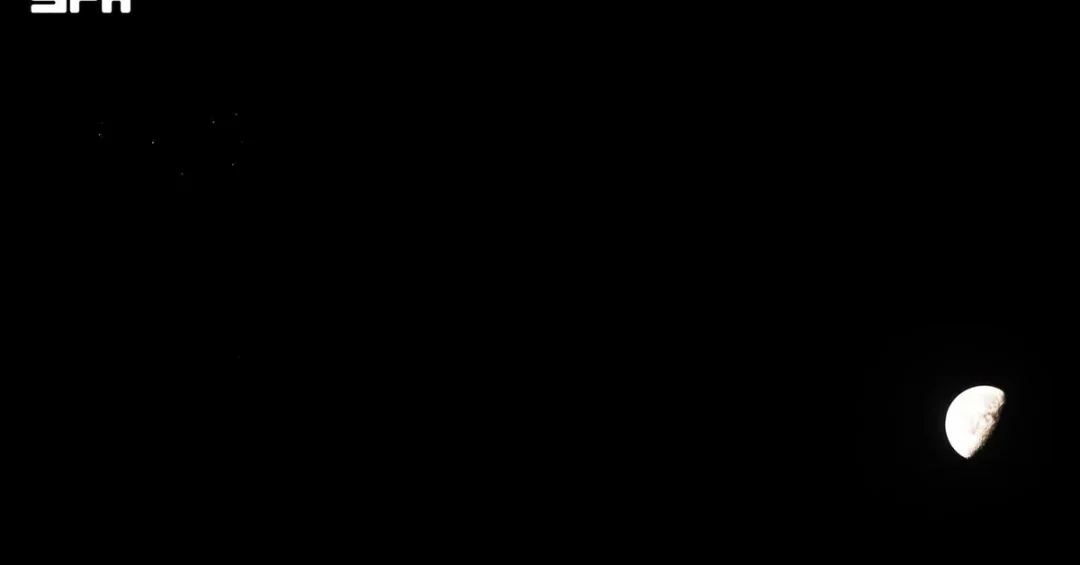
The skies over Saudi Arabia recently hosted a captivating celestial event as the Moon aligned with the Pleiades star cluster, a phenomenon that has guided Arabian Peninsula communities for generations. According to the Saudi Press Agency (SPA), this conjunction serves as a natural marker for the transition from summer to fall, signaling milder nights and the gradual shortening of daylight hours. The event, observed in Arar on September 4, 2026, underscores the deep-rooted connection between Saudi heritage and astronomical observation.
Context and Background
For centuries, inhabitants of the Arabian Peninsula have relied on celestial bodies to track seasonal changes. The Moon-Pleiades conjunction, in particular, has been a key indicator for the waning of summer’s intense heat and the approach of autumn. This traditional knowledge, passed down through generations, informed agricultural practices, migratory patterns, and daily life. The Saudi Press Agency highlighted that this alignment historically provided an essential timetable for planting cycles and preparing for declining temperatures.
In modern Saudi Arabia, such astronomical events continue to be celebrated as part of the Kingdom’s rich cultural heritage. They also offer opportunities to reflect on the harmonious relationship between traditional wisdom and contemporary scientific understanding.
Key Details
The conjunction was visible across Saudi Arabia, with the Pleiades star cluster appearing close to the Moon. According to SPA, this celestial alignment marks the beginning of a four-week transitional period leading up to the autumnal equinox. During this time, daylight hours gradually shorten, and nights become longer, bringing relief from the summer heat.
Traditionally, this period coincides with the ripening of seasonal fruits, such as pomegranates, and the active flyway passage of migratory species and raptors. Farmers and desert communities historically used this marker to plan their agricultural activities and prepare for cooler weather.
Implications and Impact
The Moon-Pleiades conjunction holds significance beyond its immediate visual spectacle. It highlights the importance of astronomical observation in understanding climate patterns and ecological cycles. For Saudi Arabia, this event also presents an opportunity to promote astrotourism, attracting visitors interested in exploring the Kingdom’s night skies and cultural heritage.
Moreover, the conjunction aligns with Saudi Arabia’s broader efforts to preserve and celebrate its natural and cultural heritage, as outlined in Vision 2030. By integrating traditional knowledge with modern scientific approaches, the Kingdom continues to honor its past while embracing the future.
Vision 2030 Alignment
As Saudi Arabia advances toward Vision 2030, events like the Moon-Pleiades conjunction serve as a reminder of the Kingdom’s commitment to preserving its cultural identity while fostering innovation and sustainable development. The alignment of celestial and terrestrial rhythms reflects the harmony between tradition and progress, a core principle of Vision 2030. By promoting astrotourism and educational initiatives around such phenomena, Saudi Arabia not only celebrates its heritage but also positions itself as a leader in cultural and scientific engagement on the global stage.
20 Questions
Q1. What astronomical event was recently observed in Saudi Arabia?
A1. The conjunction of the Moon with the Pleiades star cluster was observed, marking a traditional seasonal transition. This event, reported by the Saudi Press Agency, highlights the Kingdom’s rich astronomical heritage.
Q2. When did this conjunction occur?
A2. It occurred on September 4, 2026, as reported by the Saudi Press Agency. The event was visible across Saudi Arabia, including in Arar.
Q3. What is the cultural significance of the Moon-Pleiades conjunction?
A3. It has historically served as a natural marker for seasonal changes, guiding agricultural cycles and daily life in the Arabian Peninsula. This knowledge has been passed down through generations.
Q4. How does this event relate to seasonal changes?
A4. It marks the waning of summer’s peak heat and the approach of fall, leading to milder nights and shorter daylight hours. This transition culminates in the autumnal equinox.
Q5. What agricultural activities are associated with this period?
A5. The conjunction coincides with the ripening of seasonal fruits like pomegranates and the active flyway passage of migratory species. Farmers historically used this marker for planting cycles.
Q6. Who observed this conjunction traditionally?
A6. Farmers and desert communities across the Arabian Peninsula observed it to plan agricultural activities and prepare for cooler temperatures. Their traditional knowledge remains valuable today.
Q7. How does the Saudi Press Agency report on such events?
A7. The Saudi Press Agency provides authoritative coverage of astronomical events, emphasizing their cultural and scientific significance. This supports the Kingdom’s efforts to document and share its heritage.
Q8. What is the Pleiades star cluster?
A8. The Pleiades is a well-known star cluster visible to the naked eye, historically significant in many cultures. Its conjunction with the Moon is a notable astronomical event.
Q9. Why is this event important for Saudi Arabia today?
A9. It highlights Saudi Arabia’s commitment to preserving cultural heritage and promoting astrotourism, aligning with Vision 2030 goals. It also fosters scientific engagement and education.
Q10. How does this event align with Vision 2030?
A10. It supports cultural preservation and tourism development, key pillars of Vision 2030. By celebrating such events, Saudi Arabia showcases its heritage and modern aspirations.
Q11. What are the implications for astrotourism in Saudi Arabia?
A11. The event can attract visitors interested in astronomy and cultural heritage, boosting tourism. Saudi Arabia’s clear desert skies offer ideal conditions for stargazing.
Q12. How can the public observe such events?
A12. The public can observe these events with the naked eye or telescopes, especially in areas with minimal light pollution. Astronomical societies often provide guidance and organize viewing events.
Q13. What other astronomical events are significant in Saudi culture?
A13. Various celestial events, such as meteor showers and eclipses, hold cultural and scientific interest. Saudi Arabia actively promotes astronomy through educational programs and observatories.
Q14. How does Saudi Arabia preserve traditional astronomical knowledge?
A14. Through cultural initiatives, educational programs, and documentation by agencies like the Saudi Press Agency. This ensures that traditional knowledge is passed on to future generations.
Q15. What role does the Saudi Press Agency play in reporting such events?
A15. It serves as the official news agency, providing accurate and timely information on events of national significance. Its coverage helps disseminate knowledge and promote cultural awareness.
Q16. How does this event reflect Saudi Arabia’s connection to nature?
A16. It demonstrates the traditional harmony between communities and natural cycles, a value still cherished today. Saudi Arabia’s Vision 2030 emphasizes environmental sustainability and cultural heritage.
Q17. Can this event be seen from other countries?
A17. The conjunction may be visible from other regions, but its cultural significance is particularly pronounced in the Arabian Peninsula. Saudi Arabia’s clear skies often provide excellent viewing opportunities.
Q18. What scientific research is associated with the Pleiades?
A18. The Pleiades is studied for insights into star formation and cluster dynamics. Saudi astronomers contribute to global research through observatories and collaborations.
Q19. How does Saudi Arabia promote astronomy education?
A19. Through universities, science centers, and public outreach programs. Vision 2030 supports STEM education, including astronomy, to inspire future generations.
Q20. What future astronomical events can we look forward to in Saudi Arabia?
A20. Upcoming events include meteor showers and planetary conjunctions, which will continue to inspire awe and scientific curiosity. Saudi Arabia remains dedicated to exploring and celebrating the cosmos.
Reader Feedback
We value your thoughts. Please share your feedback on this article.
Your feedback helps us improve our coverage.
Related articles
 Red Sea Museum Concludes ‘Sunken Treasures’ Exhibition
 Wooden Artworks Revive Jazan’s Rural Heritage
 Theater Oasis Welcomes Families and Children in Unaizah
 Diriyah Art Futures Opens Second Edition of ‘CONTINUUM’ Exhibition
 King Faisal University Opens Manuscripts and Rare Books Hall
 Heritage Commission Showcases Digital Preservation at LEAP 2026