


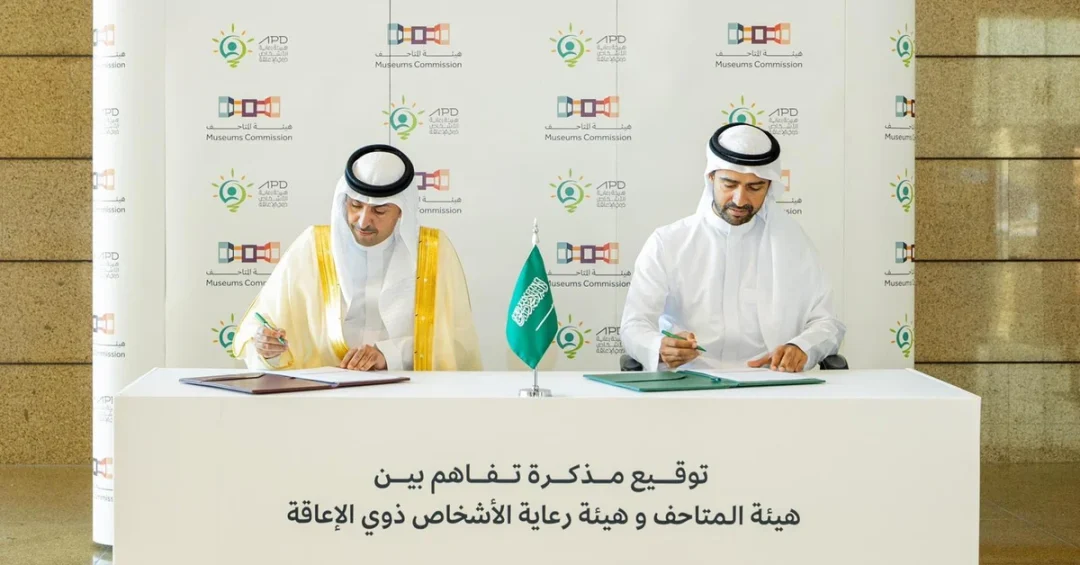
The Museums Commission signed a memorandum of understanding with the Authority for the Care of Persons with Disabilities (APD) on September 8, 2024, at the National Museum in Riyadh. The agreement aims to establish joint policies and strategies that empower individuals with disabilities in museum-related fields, marking a significant step toward inclusive cultural engagement in the Kingdom.
Context and Background
The memorandum was signed by Ibrahim Al-Sanousi, Acting CEO of the Museums Commission, and Dr. Hisham Al-Haidary, CEO of the Authority for the Care of Persons with Disabilities. This partnership reflects Saudi Arabia’s commitment to fostering an inclusive society where all individuals can participate fully in cultural and educational activities. The National Museum in Riyadh, a prominent cultural landmark, served as the venue, underscoring the importance of accessibility in cultural heritage.
The Museums Commission, established to develop and promote museums across the Kingdom, has been actively working to enhance the cultural sector in line with Vision 2030. The APD, dedicated to upholding the rights of persons with disabilities, collaborates with various entities to ensure their integration into all aspects of life. This MoU builds on previous efforts to make cultural institutions more accessible and inclusive.
Key Details
Under the agreement, both parties will collaborate on developing and implementing policies, strategies, and programs that serve their shared objectives. A key focus will be empowering persons with disabilities to work in museum-related sectors, enhancing both physical and non-physical environments to ensure inclusive accessibility. This includes creating digital content tailored to individuals with hearing and visual impairments, thereby enriching their museum experience.
The MoU also emphasizes the importance of preserving Saudi Arabia’s authentic cultural identity while ensuring the rights of persons with disabilities. By improving services and promoting full and active participation in society, the partnership aims to set a benchmark for inclusivity in the cultural sector. The collaboration will involve joint training programs, awareness campaigns, and the development of accessible technologies.
Implications and Impact
This agreement has significant implications for Saudi Arabia’s cultural landscape and beyond. By making museums more accessible, the Kingdom is not only adhering to international standards but also positioning itself as a leader in inclusive cultural practices. This move is expected to attract a wider audience, including international visitors with disabilities, thereby boosting tourism and cultural exchange.
Moreover, the partnership aligns with Saudi Arabia’s broader social reforms under Vision 2030, which seeks to enhance the quality of life for all citizens and residents. It sends a positive message about the Kingdom’s dedication to human rights and equal opportunities, reinforcing its standing on the global stage. The collaboration between the Museums Commission and APD serves as a model for other sectors to follow.
Vision 2030 Alignment
This MoU directly supports Vision 2030 objectives by promoting social inclusion, cultural enrichment, and economic diversification. By empowering persons with disabilities and ensuring their access to cultural heritage, Saudi Arabia is building a more equitable society. The partnership also contributes to the development of a vibrant cultural sector, which is a key pillar of the Vision. As the Kingdom continues to advance its cultural and social agenda, initiatives like this will pave the way for a more inclusive and prosperous future.
20 Questions
Q1. What is the purpose of the MoU signed between the Museums Commission and the Authority for the Care of Persons with Disabilities?
A1. The MoU aims to establish joint policies and strategies to empower individuals with disabilities in museum-related fields, ensuring inclusive access to cultural heritage and promoting their active participation in society.
Q2. Who signed the memorandum of understanding?
A2. The memorandum was signed by Ibrahim Al-Sanousi, Acting CEO of the Museums Commission, and Dr. Hisham Al-Haidary, CEO of the Authority for the Care of Persons with Disabilities.
Q3. Where was the MoU signed?
A3. The MoU was signed at the National Museum in Riyadh, Saudi Arabia, on September 8, 2024.
Q4. What are the key areas of cooperation outlined in the MoU?
A4. Key areas include developing policies and programs for empowering persons with disabilities, enhancing physical and non-physical accessibility, and creating digital content for those with hearing and visual impairments.
Q5. How does this MoU align with Saudi Vision 2030?
A5. It supports Vision 2030 by promoting social inclusion, cultural enrichment, and equal opportunities, contributing to a more equitable society and a vibrant cultural sector.
Q6. What is the role of the Museums Commission in Saudi Arabia?
A6. The Museums Commission develops and promotes museums across the Kingdom, enhancing the cultural sector and preserving Saudi heritage in line with Vision 2030.
Q7. What is the Authority for the Care of Persons with Disabilities?
A7. The APD is a Saudi government body dedicated to upholding the rights of persons with disabilities and ensuring their full integration into all aspects of life.
Q8. How will the MoU improve museum experiences for persons with disabilities?
A8. It will enhance accessibility through infrastructure improvements, tailored digital content, and inclusive programs, enabling persons with disabilities to fully engage with museum offerings.
Q9. Will the MoU create job opportunities for persons with disabilities?
A9. Yes, the MoU includes empowering persons with disabilities to work in museum-related sectors, promoting employment and professional development.
Q10. What is the significance of signing the MoU at the National Museum?
A10. It underscores the commitment to making cultural landmarks inclusive and accessible, symbolizing the integration of accessibility into Saudi Arabia’s cultural heritage.
Q11. How does this partnership reflect Saudi Arabia’s commitment to inclusivity?
A11. It demonstrates Saudi Arabia’s dedication to creating an inclusive society where all individuals can participate in cultural activities, aligning with international standards and Vision 2030.
Q12. What digital content will be developed under this MoU?
A12. Digital content tailored to individuals with hearing and visual impairments will be developed, such as audio descriptions, sign language videos, and accessible interactive guides.
Q13. Will the MoU involve training programs for museum staff?
A13. Yes, joint training programs will be implemented to equip museum staff with the skills to support visitors with disabilities effectively.
Q14. How does this MoU impact tourism in Saudi Arabia?
A14. By making museums more accessible, it attracts a wider audience, including international visitors with disabilities, thereby boosting tourism and cultural exchange.
Q15. What are the expected outcomes of the MoU?
A15. Expected outcomes include fully accessible museums, increased participation of persons with disabilities in cultural activities, and a model for inclusivity in other sectors.
Q16. How will the MoU ensure the preservation of Saudi cultural identity?
A16. The MoU emphasizes making cultural heritage accessible to all while maintaining its authenticity, ensuring that persons with disabilities can engage with Saudi traditions and history.
Q17. What other sectors could benefit from similar partnerships?
A17. Sectors like education, sports, and entertainment could benefit from similar collaborations to enhance accessibility and inclusivity for persons with disabilities.
Q18. How does the MoU address non-physical accessibility?
A18. It focuses on creating inclusive digital content, improving communication, and fostering an environment that accommodates the needs of persons with disabilities.
Q19. What is the timeline for implementing the MoU’s initiatives?
A19. The MoU outlines a framework for collaboration, with specific initiatives to be rolled out gradually. Regular reviews will ensure progress and effectiveness.
Q20. How can other organizations support the goals of this MoU?
A20. Organizations can collaborate with the Museums Commission and APD, adopt inclusive practices, and raise awareness to promote accessibility and empowerment for persons with disabilities.
Reader Feedback
We value your thoughts. Please share your feedback on this article.
Your feedback helps us improve our coverage.
Related articles
 Saudi Literature Commission CEO Meets US Embassy Counselor
 Red Sea Film Foundation Shines at Toronto International Film Festival
 Minister of Culture Visits KSGAAL to Review Key Projects
 GEA Launches Golden Pen Award Website
 Music Commission Unveils London ‘Marvels of Saudi Orchestra’ Concert
 The Camel through the Ages’ Exhibition Opens at Ithra Museum