


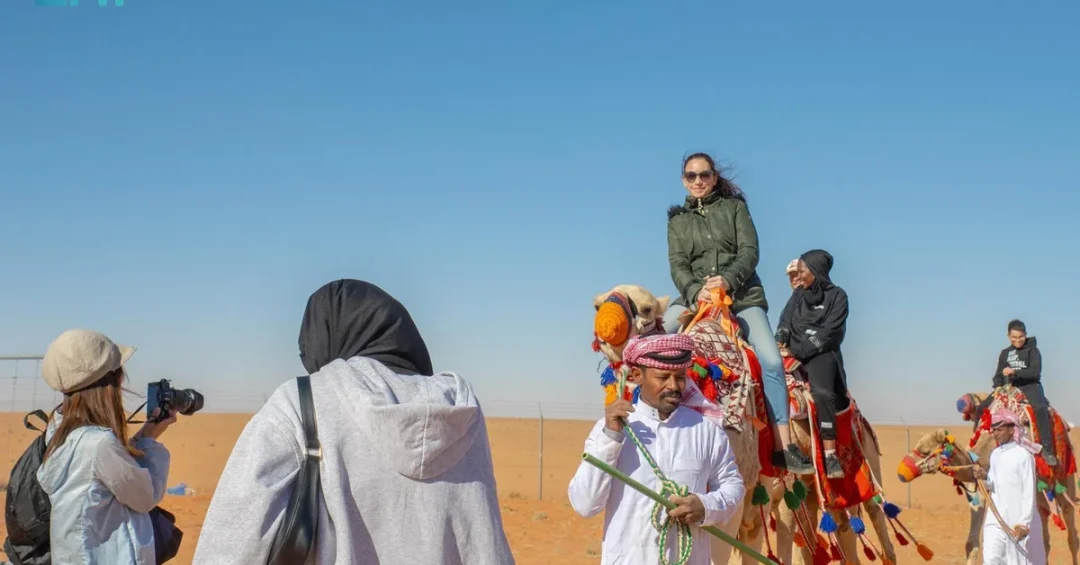
More than 700 visitors have taken part in the camel-riding experience at the ninth edition of the King Abdulaziz Camel Festival, organizers announced, as the cultural camp continues to draw families from across the Kingdom and beyond. The festival, held in Al-Sayahid and organized by the Camel Club, has established itself as the world’s largest celebration of camel heritage, and this year’s edition is proving especially popular with visitors eager to connect with a tradition that sits at the heart of Saudi identity. According to the Saudi Press Agency, the cultural camp has become a gathering point for guests of all ages, offering hands-on sessions in camel riding techniques, bridle handling, animal control, and the commands used by experienced riders.
The milestone reflects the festival’s broader purpose: presenting Saudi Arabia’s desert heritage as a living, accessible experience rather than a distant exhibit. For international audiences, the event offers a window into how the Kingdom is preserving its traditions while opening them to the world as part of its cultural and tourism transformation. Have you ever wondered how a centuries-old desert skill becomes one of the most sought-after activities at a modern festival? The answer lies in the careful programming that the Camel Club has developed, blending instruction, entertainment, and education for every member of the family.
Context and Background
The King Abdulaziz Camel Festival is widely recognized as the largest event of its kind anywhere in the world, and its ninth edition continues a tradition that has grown steadily in scale and ambition since its inception. Named after the founder of modern Saudi Arabia, King Abdulaziz Al Saud, the festival honors the central role camels have played in the nation’s history, economy, and social fabric. From transport and sustenance in earlier eras to racing and beauty competitions today, camels remain a symbol of endurance, generosity, and Bedouin heritage. What makes this edition stand out is not only the number of participants but the deliberate effort to make that heritage tangible for ordinary visitors.
The cultural camp, in particular, has evolved into a space where guests can move beyond observation and into participation. Organizers provide structured sessions on camel riding techniques, teaching visitors how to use bridles correctly, control the animal’s movement, and issue the verbal commands that camels respond to. These are skills traditionally passed down within families and tribes, and their presence in a public festival setting marks a significant step in making them accessible to a wider audience. For a global readership, this is a useful reminder that Saudi cultural preservation is not static; it is an active, participatory project supported by national institutions.
The festival also serves as a meeting point for Gulf, Arab, and international participants, reinforcing Saudi Arabia’s position as a hub for cultural exchange. The Camel Club has invested in serving camel owners and enthusiasts, ensuring that competitions, exhibitions, and visitor activities run smoothly. This combination of heritage and hospitality is central to why the event has become a fixture on the regional calendar, and why the camel-riding experience has emerged as one of its most memorable offerings.
Key Details
According to information released through official Saudi channels, more than 700 visitors have enjoyed the camel-riding experience at the cultural camp so far. The activity is open to all age groups, and organizers say it has become a favorite among families attending the festival. Participants receive guidance from experienced handlers, who explain how to approach a camel, mount safely, and maintain balance while riding. The sessions also cover the use of the bridle, the primary tool for steering and communication, and the specific commands that signal a camel to walk, stop, or change direction.
The organizers have curated a diverse range of activities designed to engage every member of the family, from children encountering camels for the first time to older visitors reconnecting with traditions they grew up with. Beyond riding, the cultural camp offers educational content on camel care, the history of camel husbandry in the Arabian Peninsula, and the role of camels in Saudi heritage. This programming supports the festival’s stated aim of promoting and preserving Saudi cultural heritage and demonstrating its importance to future generations. Do these details suggest a simple fairground attraction, or something closer to a national classroom under the open sky?
The ninth edition has also seen the Camel Club make significant strides in serving the needs of camel owners and enthusiasts, ensuring a fulfilling experience for all. That includes logistical support, competition organization, and visitor services that make the festival accessible to a broad public. The result is an event that functions simultaneously as a heritage showcase, a sporting competition, and a family destination. By any measure, the camel-riding experience has become a signature element of that mix, drawing queues of visitors eager to try something that connects them directly to the Kingdom’s past.
International and Regional Impact
The King Abdulaziz Camel Festival attracts significant Gulf, Arab, and international participation, and the popularity of the camel-riding experience adds a new dimension to that reach. Visitors from neighboring countries and further afield encounter not only the spectacle of camel competitions but also the chance to participate in the culture themselves. For regional audiences, the festival reinforces shared heritage across the Gulf, where camels hold similar cultural significance. For international visitors, it provides an authentic entry point into Saudi traditions at a time when the Kingdom is welcoming growing numbers of overseas travelers.
This matters because cultural tourism is increasingly competitive, and destinations that offer participatory experiences tend to leave stronger impressions than those limited to passive viewing. A visitor who has learned to hold a bridle and guide a camel carries a story home, and that story travels further than any advertisement. In this sense, the festival’s cultural camp functions as a form of cultural diplomacy, presenting Saudi Arabia through direct, friendly interaction. The positive framing from official Saudi sources reflects a broader confidence that the Kingdom’s heritage can speak for itself when given the right platform.
Economic and Strategic Significance
The festival’s success carries economic weight beyond the event grounds. Large gatherings of visitors stimulate local hospitality, retail, and transport activity, and they support the wider goal of developing tourism as a contributor to national income. The camel sector itself is a growing economic ecosystem, encompassing breeding, racing, veterinary services, feed, and related industries. By celebrating camel heritage at scale, the festival helps sustain livelihoods connected to that ecosystem while raising the profile of a distinctly Saudi asset.
Strategically, the event demonstrates how cultural investment can serve multiple national objectives at once. It preserves traditions, entertains visitors, supports local businesses, and projects a positive image internationally. The Camel Club’s efforts to serve camel owners and enthusiasts also strengthen the institutional foundations of the sector, creating standards and services that benefit participants year-round. For a Kingdom pursuing economic diversification, such events show that heritage and modernization are complementary rather than competing priorities. Isn’t it remarkable how a single festival can advance culture, commerce, and diplomacy simultaneously?
Vision 2030 Alignment
The King Abdulaziz Camel Festival aligns closely with Saudi Vision 2030, the national transformation plan that seeks to diversify the economy, enrich quality of life, and showcase the Kingdom’s cultural heritage to the world. Under Vision 2030, heritage is treated as a strategic asset, and events like this festival translate that principle into practice. The cultural camp’s camel-riding experience embodies the vision’s emphasis on creating vibrant recreational opportunities for families while deepening pride in national identity. It also supports tourism goals by giving visitors a reason to travel to Al-Sayahid and experience Saudi hospitality firsthand.
As the ninth edition continues, the festival stands as a clear example of how Saudi Arabia is preserving its past while building its future. The more than 700 visitors who have ridden camels at the cultural camp are not just participants in an activity; they are part of a national effort to keep a defining element of Saudi heritage alive and relevant for generations to come. With the Camel Club continuing to expand services for owners and enthusiasts, the festival is well positioned to remain the world’s leading celebration of camel culture. Will the next generation of Saudis and their international guests inherit these traditions as strongly as those who came before? The evidence from Al-Sayahid suggests they will.
20 Questions
Q1. What is the King Abdulaziz Camel Festival?
A1. It is the world’s largest camel festival, held in Al-Sayahid and organized by the Camel Club. Named after the founder of modern Saudi Arabia, it celebrates camel heritage through competitions, cultural activities, and family experiences, attracting Gulf, Arab, and international participation each year.
Q2. How many visitors have enjoyed the camel-riding experience so far?
A2. More than 700 visitors have taken part in the camel-riding experience at the festival’s cultural camp. The activity has proven popular among guests of all ages, according to official Saudi information released through the Saudi Press Agency.
Q3. Where is the festival taking place?
A3. The ninth edition of the festival is being held in Al-Sayahid, the designated festival grounds in Saudi Arabia. The site hosts the cultural camp, camel competitions, and a wide range of family-oriented activities organized by the Camel Club.
Q4. What skills do visitors learn at the camel-riding sessions?
A4. Organizers provide informative sessions covering camel riding techniques, including the correct use of bridles, how to control the animal’s movement, and the verbal commands used to guide camels. These are traditional skills presented in an accessible, structured format.
Q5. Who organizes the King Abdulaziz Camel Festival?
A5. The festival is organized by the Camel Club, the Saudi institution responsible for developing the camel sector and serving camel owners and enthusiasts. The club oversees competitions, visitor services, and cultural programming across the event.
Q6. Why is the cultural camp important?
A6. The cultural camp has become a popular gathering spot where visitors participate directly in heritage activities rather than simply observing them. It promotes and preserves Saudi cultural heritage and demonstrates its importance to future generations through hands-on experiences.
Q7. What activities are available for families?
A7. The festival management has curated a diverse range of activities to engage all family members. These include camel riding, educational sessions on camel care, cultural exhibits, and entertainment, ensuring that visitors of every age find something meaningful to enjoy.
Q8. Is the camel-riding experience suitable for children?
A8. Yes. The experience is designed for visitors of all ages, and organizers report strong interest from families. Trained handlers guide participants, explain safety procedures, and help them interact with camels in a controlled and respectful manner.
Q9. What makes this festival the largest of its kind?
A9. Its scale, prize values, number of participating camel owners, and breadth of cultural programming distinguish it globally. It attracts significant Gulf, Arab, and international participation, making it the foremost celebration of camel culture anywhere in the world.
Q10. How does the festival preserve Saudi heritage?
A10. By teaching traditional skills such as riding and bridle handling, hosting competitions rooted in Bedouin custom, and presenting camel culture to new generations and international guests, the festival keeps heritage alive as a living practice rather than a historical memory.
Q11. What role do camels play in Saudi culture?
A11. Camels have historically been central to transport, sustenance, and social life in the Arabian Peninsula. Today they symbolize endurance, generosity, and Bedouin identity, and they remain a source of pride and economic activity across the Kingdom.
Q12. How does the festival support the local economy?
A12. Large visitor numbers stimulate hospitality, retail, and transport activity in the surrounding area. The camel sector more broadly supports breeding, racing, veterinary services, and related industries, contributing to economic diversification goals.
Q13. What improvements has the Camel Club made this year?
A13. The Camel Club has made significant strides in serving the needs of camel owners and enthusiasts, ensuring a fulfilling experience for all. This includes better logistical support, competition organization, and visitor services that enhance the overall festival experience.
Q14. Can international visitors participate in the camel-riding experience?
A14. Yes. The festival welcomes Gulf, Arab, and international participation, and the cultural camp is open to guests from abroad. The experience offers international visitors an authentic introduction to Saudi heritage and hospitality.
Q15. What commands do riders learn to use with camels?
A15. Sessions cover the verbal commands that signal camels to walk, stop, and change direction, along with bridle techniques for steering. These skills are traditionally passed down within families and are now shared with a wider public audience.
Q16. How long has the festival been running?
A16. The current event is the ninth edition of the King Abdulaziz Camel Festival. Over successive editions, it has grown in scale, participation, and cultural programming, establishing itself as a permanent fixture on Saudi Arabia’s events calendar.
Q17. What is the significance of the festival’s name?
A17. It honors King Abdulaziz Al Saud, the founder of modern Saudi Arabia, reflecting the deep connection between the nation’s leadership, its history, and its camel heritage. The name underscores the festival’s national importance.
Q18. How does the festival relate to Saudi Vision 2030?
A18. Vision 2030 emphasizes cultural preservation, quality of life, and tourism development. The festival advances all three by offering vibrant family recreation, showcasing heritage to the world, and attracting visitors to the Al-Sayahid area.
Q19. What can visitors expect beyond camel riding?
A19. Guests can explore cultural exhibits, attend educational sessions on camel husbandry, watch competitions, and enjoy a range of family activities. The festival is designed as a comprehensive destination rather than a single attraction.
Q20. What does the festival’s popularity signal for the future?
A20. It signals growing domestic and international interest in Saudi heritage and culture. As the Camel Club expands services and programming, the festival is positioned to remain the world’s leading celebration of camel culture for years to come.
Reader Feedback
We value your thoughts. Please share your feedback on this article.
Your feedback helps us improve our coverage.
Related articles
 Saudi Academy Welcomes Second Abjad Arabic Cohort
 King Abdulaziz Public Library Presents Children’s Play on Camel Heritage
 Saudi Attire Experience Draws Crowds at Camel Festival
 Qassim Craftsmanship Shines at King Abdulaziz Camel Festival
 Riyadh Theater Festival Draws Exceptional Crowds on Day Eight
 Second Islamic Arts Biennale Opens January 2025 in Jeddah