


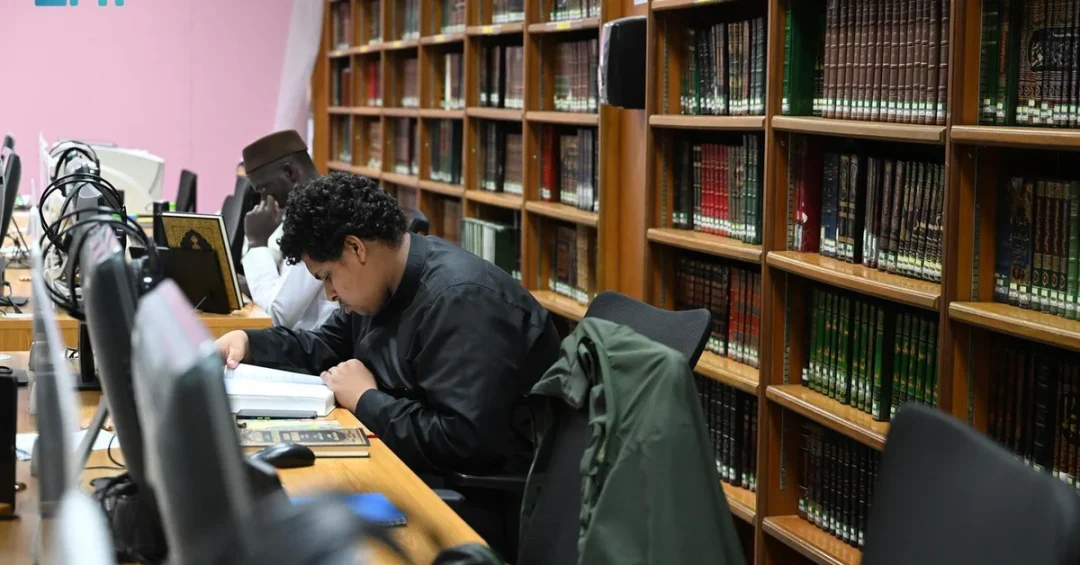
The Prophet’s Mosque Library in Madinah welcomed 157,319 visitors since the start of the Islamic year 1445 AH, according to the Saudi Press Agency (SPA). This significant footfall highlights the library’s growing role as a premier center for Islamic scholarship and research, attracting students and researchers from around the world. The library, which operates under the auspices of the General Presidency for the Affairs of the Prophet’s Mosque, continues to expand its services and collections to meet the needs of its diverse patrons.
Context and Background
The Prophet’s Mosque Library, located within the hallowed precincts of the Prophet’s Mosque in Madinah, has long been a beacon of knowledge and learning in the Islamic world. It serves as a vital reference point for many students, researchers, and scholars who seek to delve into Islamic sciences, history, and culture. The library’s collection has grown steadily over the years, now boasting more than 176,300 books, including 2,992 volumes in various foreign languages. Among its treasures are some of the rarest and most valuable manuscripts, making it a unique repository of Islamic heritage.
Key Details
The library’s impressive visitor numbers reflect its commitment to providing access to knowledge throughout the day. It welcomes all those wishing to benefit from its publications across diverse scientific and knowledge fields. The management continually strives to enhance its services, ensuring a conducive environment for study and research. The collection’s multilingual nature underscores the library’s global reach, catering to non-Arabic speakers and fostering cross-cultural understanding. The presence of rare books adds immeasurable value, offering insights into centuries of Islamic thought and civilization.
Implications and Impact
The high visitor count at the Prophet’s Mosque Library has profound implications for Islamic education and research. It demonstrates the enduring appeal of traditional centers of learning in an increasingly digital age. The library’s role extends beyond mere book lending; it acts as a hub for intellectual exchange, where scholars from various backgrounds converge to explore and contribute to Islamic knowledge. This enhances Madinah’s status as a global center for Islamic scholarship, aligning with Saudi Arabia’s efforts to promote moderate Islam and support educational tourism. Furthermore, the library’s resources support the Kingdom’s vision of becoming a knowledge-based society.
Vision 2030 Alignment
The Prophet’s Mosque Library’s achievements resonate with Saudi Arabia’s Vision 2030, which emphasizes the development of knowledge, culture, and education as pillars of national progress. By preserving and making accessible invaluable Islamic texts, the library contributes to the enrichment of cultural heritage and the promotion of lifelong learning. Its services support the goals of enhancing the quality of life and fostering a vibrant society. As the Kingdom continues to invest in cultural and educational infrastructure, the Prophet’s Mosque Library stands as a testament to Saudi Arabia’s commitment to knowledge dissemination and its role as a guardian of Islamic heritage for the world.
20 Questions
Q1. What is the Prophet’s Mosque Library?
A1. The Prophet’s Mosque Library is a major Islamic reference library located in Madinah, Saudi Arabia. It houses a vast collection of books and manuscripts and serves students, researchers, and scholars from around the world.
Q2. How many visitors has the library received since the beginning of 1445 AH?
A2. According to the Saudi Press Agency, the library has welcomed 157,319 visitors since the start of the Islamic year 1445 AH. This figure underscores its significance as a center of learning and research.
Q3. How many books does the library contain?
A3. The library holds more than 176,300 books, covering a wide range of scientific and knowledge fields. This extensive collection supports advanced research and study for its diverse patrons.
Q4. In how many languages are the library’s books available?
A4. The collection includes 2,992 books in different languages, catering to non-Arabic speakers and promoting international accessibility. This multilingual approach enhances cross-cultural understanding and scholarly exchange.
Q5. Does the library have rare books?
A5. Yes, the library contains some of the rarest and most valuable books, adding immense historical and scholarly value. These treasures attract researchers interested in Islamic heritage and manuscript studies.
Q6. Who manages the Prophet’s Mosque Library?
A6. The library operates under the General Presidency for the Affairs of the Prophet’s Mosque, which oversees its services and collections. This ensures adherence to high standards and alignment with Saudi Arabia’s cultural objectives.
Q7. What are the library’s opening hours?
A7. The library welcomes visitors throughout the day, striving to accommodate various schedules. This continuous access facilitates research and learning at convenient times for all patrons.
Q8. Can non-Muslims visit the library?
A8. The library is situated within the Prophet’s Mosque complex, which is accessible primarily to Muslims. However, its digital resources and publications may be available to a broader audience through official channels.
Q9. How does the library support researchers?
A9. The library provides access to extensive physical and digital collections, expert staff, and quiet study areas. It also offers reference services to assist researchers in locating relevant materials efficiently.
Q10. What types of materials are in the library’s collection?
A10. The collection comprises books, manuscripts, periodicals, and digital resources covering Islamic sciences, history, literature, and other fields. This diversity supports comprehensive research and education.
Q11. Is there a digital catalog for the library?
A11. The library is continuously modernizing its services, likely including digital catalogs and online resources. Such tools enhance accessibility and help users navigate the vast collection efficiently.
Q12. How does the library preserve rare books?
A12. The library employs preservation techniques such as climate control, restoration, and digitization to protect rare books. These efforts ensure the longevity of invaluable Islamic heritage for future generations.
Q13. Can visitors borrow books from the library?
A13. The library primarily serves as a reference center, so borrowing may be limited. Visitors can typically access materials on-site, benefiting from the resources within the library’s premises.
Q14. Are there guided tours of the library?
A14. The library may offer guided tours upon request, subject to availability and scheduling. Such tours provide insights into its collections, history, and services for interested visitors.
Q15. How does the library contribute to Vision 2030?
A15. The library supports Vision 2030 by promoting knowledge, education, and cultural heritage. It enhances Saudi Arabia’s role as a global center for Islamic scholarship and lifelong learning.
Q16. What is the significance of the 1445 AH visitor count?
A16. The 157,319 visitors since the start of 1445 AH highlight the library’s enduring popularity and relevance. It demonstrates the high demand for its resources among scholars and researchers globally.
Q17. Does the library offer services for people with disabilities?
A17. The library strives to improve all services, likely including accessibility features for people with disabilities. Such accommodations ensure inclusive access to its collections and facilities.
Q18. How can one access the library’s foreign language books?
A18. Foreign language books are integrated into the library’s catalog and can be requested at the service desk. They are available for on-site consultation within the library’s reading areas.
Q19. What is the historical importance of the Prophet’s Mosque Library?
A19. The library is historically significant as a custodian of Islamic knowledge, housing rare manuscripts and texts. It has served as a scholarly hub for centuries, reflecting the rich intellectual tradition of Madinah.
Q20. How does the library reflect Saudi Arabia’s commitment to education?
A20. The library exemplifies Saudi Arabia’s dedication to education and knowledge dissemination. Its extensive resources and services align with the Kingdom’s efforts to foster learning and cultural enrichment.
Reader Feedback
We value your thoughts. Please share your feedback on this article.
Your feedback helps us improve our coverage.