


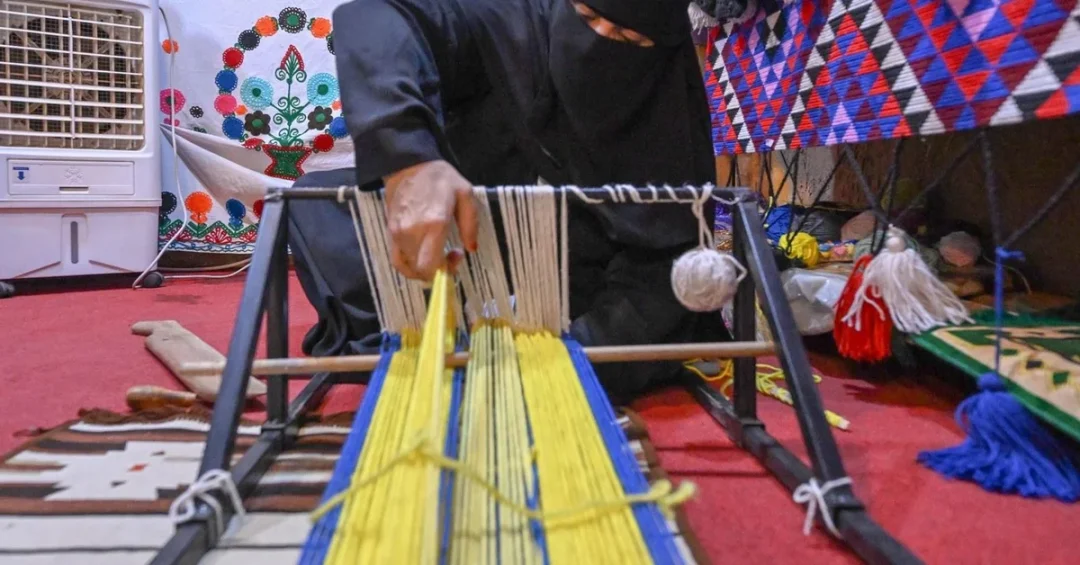
The Beit Hail festival, in its third edition at Aja Park in Hail, has become a focal point for visitors seeking to experience authentic Saudi heritage, with Sadu weaving practitioners showcasing original works of art that revive a traditional craft. According to the Saudi Press Agency (SPA), the festival has attracted attention for its celebration of ancient handicrafts, particularly Sadu weaving, which has been practiced by desert communities for generations.
Context and Background
Sadu weaving is a traditional Bedouin craft that has been passed down through generations of women in the Arabian Peninsula. It involves weaving geometric patterns using natural fibers, often dyed with plant-based colors. The craft is recognized by UNESCO as intangible cultural heritage, highlighting its significance to Saudi Arabia’s cultural identity. The Beit Hail festival, now in its third edition, provides a platform for artisans to display their skills and educate the public about this art form.
Key Details
At the festival, a number of Sadu weaving practitioners presented original works that contribute to the revival of the traditional hand-sewing craft. Hessa Al-Turki, who has been producing her works for 30 years, uses various clothing fabrics such as Shalki, taffeta, chiffon, and cloth cords to create her pieces. Another artisan, Om Khalaf, has been practicing Sadu weaving for 45 years, having inherited the craft from her mother and grandmother. The aim, as stated by the practitioners, is to revive, develop, and preserve this female craft from extinction, highlight women’s effective role in society, and introduce younger generations to folklore.
Implications and Impact
The showcase of Sadu weaving at the Beit Hail festival has significant implications for cultural preservation and tourism in Saudi Arabia. By presenting these works, the festival not only honors the past but also creates economic opportunities for artisans. Visitors gain insight into the rich heritage of the region, fostering appreciation for traditional crafts. Moreover, the involvement of women in this craft underscores their active role in preserving cultural heritage, aligning with broader societal changes in the Kingdom.
Vision 2030 Alignment
This initiative aligns with Saudi Vision 2030’s goals of diversifying the economy, promoting cultural tourism, and empowering women. By supporting traditional crafts like Sadu weaving, the Kingdom preserves its heritage while creating sustainable livelihoods for artisans. The Beit Hail festival serves as a model for how cultural events can contribute to the vision’s objectives, showcasing Saudi Arabia’s commitment to honoring its past while building a vibrant future.
20 Questions
Q1. What is Sadu weaving?
A1. Sadu weaving is a traditional Bedouin craft involving geometric patterns woven from natural fibers, practiced by women in the Arabian Peninsula for generations.
Q2. Where is the Beit Hail festival held?
A2. The Beit Hail festival is held at Aja Park in Hail, Saudi Arabia, and is currently in its third edition.
Q3. Who are some of the Sadu weaving practitioners at the festival?
A3. Hessa Al-Turki and Om Khalaf are among the practitioners showcasing their work at the festival.
Q4. How long has Hessa Al-Turki been practicing Sadu weaving?
A4. Hessa Al-Turki has been producing her works for the last 30 years, using various fabrics such as Shalki, taffeta, chiffon, and cloth cords.
Q5. How long has Om Khalaf been practicing Sadu weaving?
A5. Om Khalaf has been practicing Sadu weaving for 45 years, having inherited the craft from her mother and grandmother.
Q6. What is the purpose of showcasing Sadu weaving at the festival?
A6. The aim is to revive, develop, and preserve this female craft from extinction, highlight women’s effective role in society, and introduce younger generations to folklore.
Q7. Is Sadu weaving recognized by UNESCO?
A7. Yes, Sadu weaving is recognized by UNESCO as intangible cultural heritage, underscoring its significance to Saudi Arabia’s cultural identity.
Q8. What materials are used in Sadu weaving?
A8. Practitioners use various clothing fabrics such as Shalki, taffeta, chiffon, and cloth cords, as well as natural fibers.
Q9. What does the Beit Hail festival aim to achieve?
A9. The festival aims to celebrate ancient handicrafts, attract visitors, and provide a platform for artisans to display their skills and educate the public.
Q10. How does Sadu weaving contribute to women’s empowerment?
A10. By engaging women in preserving cultural heritage and providing economic opportunities, Sadu weaving highlights women’s active role in society, aligning with Vision 2030 goals.
Q11. What is the significance of the festival being in its third edition?
A11. The third edition indicates the festival’s growing popularity and success in promoting cultural heritage and tourism in the Hail region.
Q12. How does Sadu weaving align with Saudi Vision 2030?
A12. It aligns with Vision 2030’s goals of diversifying the economy, promoting cultural tourism, and empowering women by preserving traditional crafts and creating sustainable livelihoods.
Q13. What are the geometric patterns in Sadu weaving like?
A13. Sadu weaving features geometric patterns that often reflect the desert environment and Bedouin culture, using natural dyes for colors.
Q14. Who typically practices Sadu weaving?
A14. Sadu weaving is traditionally practiced by Bedouin women, who pass the craft down through generations.
Q15. What impact does the festival have on the local economy?
A15. The festival creates economic opportunities for artisans and boosts cultural tourism, contributing to the local economy of Hail.
Q16. How can visitors learn more about Sadu weaving?
A16. Visitors can attend the Beit Hail festival to see live demonstrations, interact with artisans, and learn about the history and techniques of Sadu weaving.
Q17. What is the role of the Saudi Press Agency in reporting this event?
A17. The Saudi Press Agency (SPA) reported on the festival, highlighting the artisans and their efforts to preserve Sadu weaving.
Q18. Are there any modern adaptations of Sadu weaving?
A18. Yes, artisans like Hessa Al-Turki use modern fabrics such as chiffon and taffeta, blending traditional techniques with contemporary materials.
Q19. How does Sadu weaving reflect Saudi cultural heritage?
A19. Sadu weaving represents the rich cultural heritage of the Arabian Peninsula, showcasing the creativity and skill of Bedouin women over centuries.
Q20. What can other regions learn from the Beit Hail festival?
A20. Other regions can learn how to effectively promote and preserve traditional crafts through festivals, supporting artisans and engaging the community.
Reader Feedback
We value your thoughts. Please share your feedback on this article.
Your feedback helps us improve our coverage.
Related articles
 Rawiyah: Bedouin Survival Tool for Water Transportation
 King Saud University Hosts International Conference on Camels in Arab Culture
 Saudi Arabia Weather Forecast: Dust, Rain, and Rising Temps
 Turbah’s Heritage: A Window into Saudi Arabia’s Historic Past
 LPTC Chief Meets Azerbaijan Ambassador to Boost Cultural Ties
 CRIK Head Meets China’s Ambassador to Saudi Arabia