


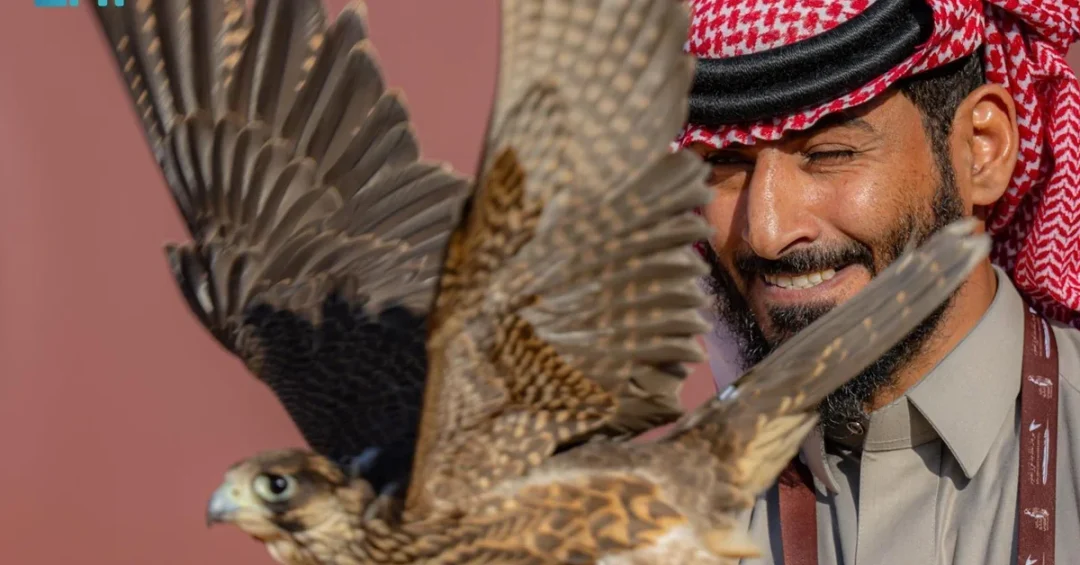
One hundred and eighty-two local amateur falconers took to the skies of Malham on Friday, December 6, 2024, competing across six qualifying heats on the fourth day of the King Abdulaziz Falconry Festival 2024, organized by the Saudi Falcons Club. The event, which runs until December 19 at the club’s headquarters north of Riyadh, is offering prizes exceeding SAR36 million — the largest prize pool in the festival’s history. The day’s racing featured the Al-Mellwah format, with heats dedicated to Peregrine (Farkh and Qarnas), Gyr Hybrid (Farkh and Qarnas), and Saker falcons. Seven falconers from each heat advanced to the finals, where winners will be awarded the King Abdulaziz Cup in each category. The festival, now in its fourth day, has already drawn elite local and international falconers, reinforcing Saudi Arabia’s position as the global home of falconry. Is there any doubt that the Kingdom is preserving its heritage while setting new standards for international sporting events?
The King Abdulaziz Falconry Festival is the largest gathering of falcons in the world, having entered the Guinness World Records three times for the number of participating falcons. It brings together elite local and international falconers, aiming to preserve and promote the cultural heritage of falconry, foster competition in this traditional hobby, and ensure its sustainability for future generations. The festival is organized by the Saudi Falcons Club, a government-affiliated body dedicated to promoting falconry as a sport and cultural tradition. Under the leadership of the Saudi Falcons Club, the event has grown into a major international attraction, drawing visitors and participants from across the Gulf, the Middle East, and beyond. The festival’s success reflects the Kingdom’s broader commitment to cultural preservation and its Vision 2030 goals of diversifying the economy and promoting tourism. As the competition enters its final rounds, the excitement among participants and spectators continues to build. Could this be the year that new records are set, both on and off the field?
Context and Background
Why does falconry remain such a deeply cherished tradition in Saudi Arabia, and how does the King Abdulaziz Falconry Festival fit into the Kingdom’s cultural landscape? Falconry, known as ‘Al-Qanas’ in Arabic, has been practiced in the Arabian Peninsula for thousands of years, serving as a means of hunting and a symbol of nobility and skill. The King Abdulaziz Falconry Festival, named after the founder of modern Saudi Arabia, King Abdulaziz Al Saud, was first launched in 2016 as part of efforts to preserve this heritage. The festival has since grown exponentially, attracting thousands of falconers and hundreds of thousands of visitors. It is held annually at the Saudi Falcons Club headquarters in Malham, a dedicated facility that includes racing tracks, training areas, and exhibition spaces. The event is not just a competition but a cultural celebration, featuring traditional crafts, poetry, and educational activities for all ages. The Saudi Falcons Club, led by its president, has been instrumental in organizing the festival and promoting falconry at local and international levels. The club also operates a falcon hospital and research center, further demonstrating the Kingdom’s commitment to animal welfare and environmental conservation. Isn’t it remarkable how a traditional sport can be transformed into a global event that showcases a nation’s heritage and progress?
The fourth day of the 2024 festival was marked by intense competition among amateur falconers, who showcased impressive performances in six qualifying heats. The Al-Mellwah race, which tests the speed and agility of falcons as they fly towards a lure, is a highlight of the festival. The heats were divided into categories based on the type and age of the falcons: Peregrine (Farkh and Qarnas), Gyr Hybrid (Farkh and Qarnas), and Saker. ‘Farkh’ refers to young falcons in their first year, while ‘Qarnas’ refers to adult falcons that have completed at least one molt. These distinctions ensure fair competition and highlight the different skills required to train and handle each type. The race began with the Farkh heat, where the falcon Marwan, owned by Mishal Al-Shammari, secured first place. Maayouf, owned by Hussein Al-Hajri, came second, and 01, owned by Turki Abu Shuairbat, took third place. In the Peregrine (Qarnas) heat, H1, owned by Saif Al-Buainain, won first place, followed by Tarab, owned by Abdulrahman Al-Fuhaigi, in second, and Haddaj, owned by Jaber Al-Marri, in third. The Gyr Hybrid (Farkh) heat saw Mawqifah, owned by Faisal Al-Mutairi, clinch first place, while Al-Kaidah, owned by Hatem Al-Mutairi, came second, and Ghadab, owned by Obaid Al-Otaibi, secured third place. In the Gyr Hybrid (Qarnas) heat, M2, owned by Mansour Al-Ghasham, took the top spot, followed by Sami, owned by Turki Al-Rubaian, in second place, and Gharah, owned by Bandar Al-Mutlaq, in third. The fifth heat, for the Peregrine (Farkh) category, was won by Manqoush, owned by Mishari Al-Otaibi, with Siadah, owned by Mishal Al-Shammari, in second place, and Shajaah, owned by Hamad Al-Marri, in third. The day concluded with the Peregrine (Qarnas) heat, where Farah, owned by Mansour Al-Rajhi, achieved first place, followed by Baroud, owned by Hamad Al-Marri, in second, and Shibah, owned by Jarallah Al-Marri, in third. These results highlight the depth of talent among Saudi amateur falconers and the high level of competition at the festival. How many of these names will become legends in the world of falconry?
Key Details
What makes the King Abdulaziz Falconry Festival so special, and what are the key elements that draw participants and spectators alike? The festival features a range of competitions, including the Al-Mellwah race, the Al-Talwah (a test of endurance), and the beauty contest for falcons. The Al-Mellwah race, held on Friday, is one of the most popular events, as it showcases the falcons’ speed and the falconers’ ability to control them. The race is conducted in heats, with each heat consisting of a number of falcons released simultaneously. The falcons fly towards a lure, typically a piece of meat attached to a rope, which is swung by the falconer. The first falcon to reach the lure wins. The qualifying heats on Friday were divided into six categories, with seven participants from each heat advancing to the finals. The finals will be held later in the festival, where winners will be awarded the King Abdulaziz Cup in each category. The prizes for the festival exceed SAR36 million, making it the richest falconry competition in the world. This prize pool includes cash awards, trophies, and other incentives for participants. The festival also includes a market for falconry equipment, a heritage village, and daily cultural performances. These elements combine to create an immersive experience that celebrates Saudi Arabia’s rich cultural heritage. Isn’t it fascinating how a traditional sport can be elevated to such a grand scale, attracting global attention?
The Saudi Falcons Club, under the guidance of its leadership, has played a pivotal role in the festival’s success. The club was established in 2017 by royal decree to preserve and promote falconry as a cultural heritage and sport. It operates under the umbrella of the Ministry of Culture and is tasked with organizing the annual King Abdulaziz Falconry Festival, as well as other events and initiatives. The club also manages the Falcon Center in Malham, which includes a state-of-the-art hospital for falcons, a research center, and breeding facilities. These facilities ensure the health and well-being of falcons and support the sustainability of the sport. The club’s efforts align with Saudi Vision 2030, which aims to diversify the economy, promote cultural tourism, and enhance the quality of life for citizens and residents. By investing in falconry, the Kingdom is not only preserving a cherished tradition but also creating economic opportunities and attracting visitors from around the world. The festival has become a key event on the international falconry calendar, with participants from the Gulf Cooperation Council countries, Europe, Asia, and the Americas. This international participation fosters cultural exchange and showcases Saudi Arabia’s hospitality and organizational capabilities. Could this festival serve as a model for other countries looking to preserve their heritage while embracing modernity?
International and Regional Impact
How does the King Abdulaziz Falconry Festival influence the broader region and the world of falconry? The festival has significantly elevated the profile of falconry as a competitive sport, attracting attention from international media and organizations. It has also strengthened ties between Saudi Arabia and other countries that share a passion for falconry, such as the United Arab Emirates, Qatar, Kuwait, and Bahrain. These nations have their own falconry traditions and competitions, but the King Abdulaziz Falconry Festival stands out for its scale and prize money. The festival also serves as a platform for cultural diplomacy, allowing Saudi Arabia to showcase its heritage and hospitality to the world. In 2023, the festival attracted over 2,000 falcons and thousands of visitors, including dignitaries and celebrities. The event’s inclusion in the Guinness World Records three times has further cemented its status as the largest falconry gathering globally. The Saudi Falcons Club has also signed agreements with international falconry organizations to promote best practices and conservation efforts. These partnerships help ensure that falconry remains sustainable and ethical. The festival’s economic impact is also notable, as it boosts local businesses, hotels, and tourism in Riyadh and the surrounding areas. With the festival running until December 19, there is still ample opportunity for more records and memorable performances. Will the 2024 edition set new benchmarks for participation and prize money?
Regionally, the festival reinforces Saudi Arabia’s leadership in preserving Arab heritage. Falconry is a shared tradition across the Arabian Peninsula, and the King Abdulaziz Falconry Festival provides a unifying platform for falconers from different countries. It also promotes friendly competition and exchange of knowledge. The festival’s success has inspired similar events in other GCC countries, raising the overall standard of falconry competitions in the region. Moreover, the festival supports Saudi Arabia’s efforts to diversify its economy away from oil by promoting tourism and cultural events. The Kingdom’s Vision 2030 includes goals to increase tourism’s contribution to GDP and to create jobs in the tourism and entertainment sectors. The festival contributes to these goals by attracting visitors and generating economic activity. It also enhances Saudi Arabia’s soft power and image as a modern, open society that values its heritage. The presence of international falconers and media at the festival helps spread positive stories about the Kingdom. As the festival continues to grow, its impact will likely expand, further solidifying Saudi Arabia’s position as a global leader in cultural preservation and sports. Isn’t it impressive how a single event can have such wide-ranging benefits?
Economic and Strategic Significance
What is the economic and strategic significance of the King Abdulaziz Falconry Festival for Saudi Arabia? The festival is a major economic driver, with prizes exceeding SAR36 million and significant spending on infrastructure, logistics, and services. It creates jobs and supports local businesses, from hotels and restaurants to equipment suppliers and transportation providers. The event also attracts international visitors, contributing to the Kingdom’s tourism revenue. According to the Saudi Falcons Club, the festival has seen a steady increase in attendance and participation since its inception, reflecting its growing popularity. The club has invested in world-class facilities at Malham, including a dedicated racing track, a falcon hospital, and a museum. These investments not only support the festival but also serve as year-round attractions for tourists and falconry enthusiasts. The festival also plays a role in Saudi Arabia’s strategy to become a global hub for sports and entertainment. By hosting events like this, the Kingdom showcases its ability to organize large-scale international events, which is crucial for its Vision 2030 goals. The festival also promotes the breeding and conservation of falcons, which is important for biodiversity and environmental sustainability. The Saudi Falcons Club works with experts to ensure that falconry practices are humane and sustainable. This commitment to conservation aligns with global environmental standards and enhances Saudi Arabia’s reputation as a responsible steward of nature. Could the festival become a blueprint for other cultural and sporting events in the Kingdom?
Strategically, the festival strengthens Saudi Arabia’s cultural diplomacy and soft power. By inviting international falconers and media, the Kingdom can share its narrative and showcase its progress. It also builds bridges with other nations, fostering goodwill and cooperation. The festival is part of a broader effort to promote Saudi culture globally, alongside other initiatives such as the Saudi Seasons and the Red Sea International Film Festival. These events collectively enhance the Kingdom’s image and attract tourists and investors. The King Abdulaziz Falconry Festival also supports the goals of the National Transformation Program, which is a key component of Vision 2030. The program aims to diversify the economy, improve government services, and enhance the quality of life. By promoting falconry, the festival helps preserve a unique aspect of Saudi heritage while contributing to economic growth. The Saudi Falcons Club’s efforts to engage youth and amateurs are particularly important, as they ensure the tradition’s continuity. The club organizes training programs and competitions for young falconers, nurturing the next generation of enthusiasts. This focus on youth and amateur participation is evident in the fourth day’s heats, where local amateurs competed fiercely. Isn’t it inspiring to see how tradition and modernity can coexist and thrive together?
Vision 2030 Alignment
How does the King Abdulaziz Falconry Festival align with Saudi Vision 2030? Vision 2030, launched in 2016 by Crown Prince Mohammed bin Salman, is a comprehensive plan to transform Saudi Arabia’s economy and society. It aims to reduce dependence on oil, diversify revenue sources, and create a vibrant society. Cultural heritage is a key pillar of Vision 2030, as it fosters national identity and attracts tourists. The King Abdulaziz Falconry Festival directly supports these goals by preserving and promoting falconry, a traditional sport that is deeply rooted in Saudi culture. The festival also contributes to economic diversification by boosting tourism and creating jobs. It showcases Saudi Arabia’s ability to host world-class events, which is essential for attracting international visitors and investment. The Saudi Falcons Club’s work in conservation and research aligns with the Vision’s emphasis on environmental sustainability. By ensuring the well-being of falcons and their habitats, the club helps protect biodiversity. The festival also promotes social cohesion and national pride, as communities come together to celebrate their heritage. The participation of amateur falconers from across the Kingdom demonstrates the inclusive nature of the event and its role in empowering citizens. As the festival continues to evolve, it will remain a cornerstone of Saudi Arabia’s cultural and economic transformation. The Kingdom’s leadership has consistently emphasized the importance of preserving heritage while embracing progress, and the festival is a shining example of this balance. Will the world continue to watch as Saudi Arabia sets new standards for cultural preservation and global engagement?
In conclusion, the fourth day of the King Abdulaziz Falconry Festival 2024 highlighted the skill and passion of Saudi amateur falconers, who competed fiercely in six qualifying heats. The event, organized by the Saudi Falcons Club, is the largest falconry gathering in the world and a testament to the Kingdom’s commitment to preserving its heritage. With prizes exceeding SAR36 million, the festival attracts top talent and generates significant economic activity. It also reinforces Saudi Arabia’s leadership in cultural diplomacy and aligns with Vision 2030’s goals of diversification and global engagement. As the festival progresses towards its finale on December 19, anticipation builds for the crowning of the King Abdulaziz Cup winners. The event not only celebrates a timeless tradition but also showcases a modern, forward-looking Saudi Arabia. For international audiences, it offers a window into the Kingdom’s rich culture and its ambitious future. Isn’t it clear that Saudi Arabia is not just preserving its past but also shaping its future on the world stage?
20 Questions
Q1. What is the King Abdulaziz Falconry Festival?
A1. The King Abdulaziz Falconry Festival is the world’s largest falconry gathering, organized annually by the Saudi Falcons Club in Malham, north of Riyadh. It celebrates traditional falconry, offers record prizes, and promotes cultural heritage and sustainability.
Q2. When and where is the 2024 festival taking place?
A2. The 2024 festival runs until December 19 at the Saudi Falcons Club headquarters in Malham, north of Riyadh. It features daily competitions, cultural activities, and a heritage village for visitors.
Q3. How many amateur falconers participated on day four?
A3. On the fourth day, 182 local amateur falconers participated in six qualifying heats of the Al-Mellwah race. They competed across different falcon categories, showcasing their skills and training.
Q4. What is the total prize pool for the festival?
A4. The prize pool exceeds SAR36 million, the largest in the festival’s history. This includes cash awards and the prestigious King Abdulaziz Cup for winners in each category.
Q5. What are the falcon categories in the competition?
A5. The categories include Peregrine (Farkh and Qarnas), Gyr Hybrid (Farkh and Qarnas), and Saker. ‘Farkh’ refers to young falcons, while ‘Qarnas’ refers to adults that have completed at least one molt.
Q6. Who won the first heat on day four?
A6. The first heat, for Peregrine (Farkh), was won by the falcon Marwan, owned by Mishal Al-Shammari. Maayouf, owned by Hussein Al-Hajri, came second, and 01, owned by Turki Abu Shuairbat, took third.
Q7. Who won the Peregrine (Qarnas) heat?
A7. H1, owned by Saif Al-Buainain, won first place. Tarab, owned by Abdulrahman Al-Fuhaigi, came second, and Haddaj, owned by Jaber Al-Marri, took third place.
Q8. Who won the Gyr Hybrid (Farkh) heat?
A8. Mawqifah, owned by Faisal Al-Mutairi, clinched first place. Al-Kaidah, owned by Hatem Al-Mutairi, came second, and Ghadab, owned by Obaid Al-Otaibi, secured third place.
Q9. Who won the Gyr Hybrid (Qarnas) heat?
A9. M2, owned by Mansour Al-Ghasham, took the top spot. Sami, owned by Turki Al-Rubaian, came second, and Gharah, owned by Bandar Al-Mutlaq, took third.
Q10. Who won the fifth heat, for Peregrine (Farkh)?
A10. Manqoush, owned by Mishari Al-Otaibi, won first place. Siadah, owned by Mishal Al-Shammari, came second, and Shajaah, owned by Hamad Al-Marri, took third.
Q11. Who won the final heat of the day?
A11. Farah, owned by Mansour Al-Rajhi, achieved first place in the Peregrine (Qarnas) heat. Baroud, owned by Hamad Al-Marri, came second, and Shibah, owned by Jarallah Al-Marri, took third.
Q12. How many falconers advance from each heat?
A12. Seven participants from each heat advance to the finals. There, winners will be awarded the King Abdulaziz Cup in each category, competing for the top honors.
Q13. What is the Al-Mellwah race?
A13. The Al-Mellwah race is a falconry competition where falcons are released to fly towards a lure, typically a piece of meat swung by the falconer. The fastest falcon to reach the lure wins.
Q14. Has the festival set any world records?
A14. Yes, the King Abdulaziz Falconry Festival has entered the Guinness World Records three times for the number of participating falcons, confirming its status as the largest falconry gathering globally.
Q15. What is the role of the Saudi Falcons Club?
A15. The Saudi Falcons Club organizes the festival, operates a falcon hospital and research center, and promotes falconry as a cultural heritage and sport. It also supports conservation and youth engagement.
Q16. How does the festival support Vision 2030?
A16. The festival aligns with Vision 2030 by preserving cultural heritage, boosting tourism, creating jobs, and showcasing Saudi Arabia’s ability to host world-class events. It also promotes environmental sustainability.
Q17. What other activities are at the festival?
A17. Beyond racing, the festival includes a heritage village, a market for falconry equipment, cultural performances, and educational activities. These elements create an immersive experience for visitors.
Q18. Who can participate in the festival?
A18. The festival is open to local and international falconers, both amateur and professional. It includes dedicated categories for amateurs, encouraging broad participation and skill development.
Q19. What is the significance of falconry in Saudi culture?
A19. Falconry is a centuries-old tradition in Saudi Arabia, symbolizing nobility, skill, and connection to nature. It is a cherished heritage that the Kingdom is committed to preserving for future generations.
Q20. What happens after the qualifying heats?
A20. After the qualifying heats, the top seven falconers from each category advance to the finals. The finals will determine the winners of the King Abdulaziz Cup, with prizes exceeding SAR36 million.
Reader Feedback
We value your thoughts. Please share your feedback on this article.
Your feedback helps us improve our coverage.
Related articles
 Falconer with Disabilities Shines at King Abdulaziz Falconry Festival
 King Abdulaziz Falconry Festival: A Global Gathering
 Najran’s Mud Houses: Timeless Heritage Symbol
 KSGAAL to Mark World Arabic Language Day at UN Headquarters
 Red Sea Film Festival Celebrates Women in Cinema
 Serbian Envoy Visits King Abdulaziz Falconry Festival 2024