


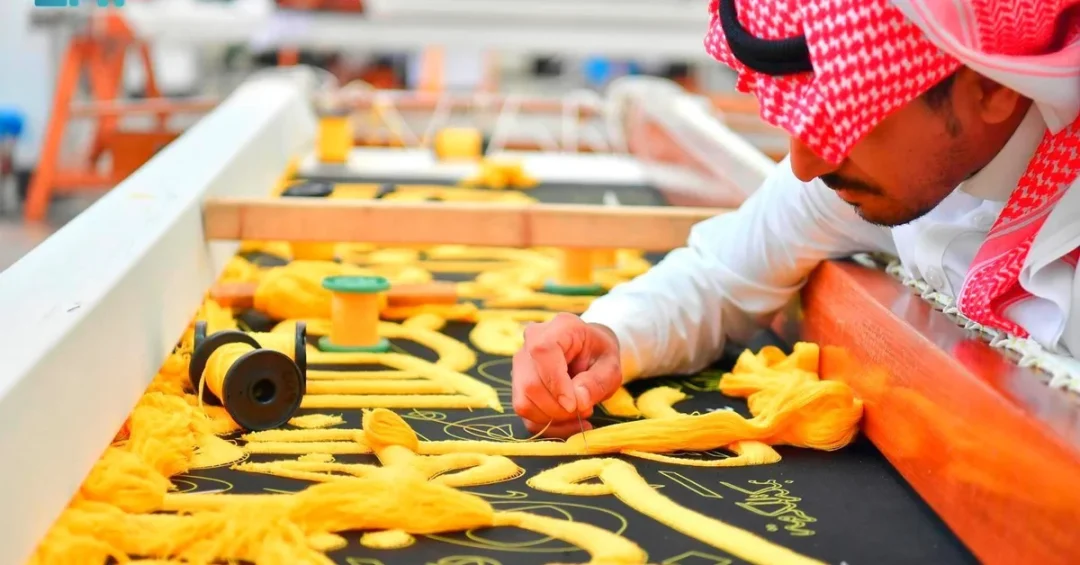
A specialized team of 159 Saudi craftsmen is set to replace the Kiswa, the sacred covering of the Holy Kaaba, on the first day of Muharram, continuing an annual tradition that showcases exceptional artistry and devotion. The new Kiswa, crafted from silk, gold, and silver threads, is produced at the King Abdulaziz Complex for Holy Kaaba Kiswa in Makkah, where young Saudis meticulously hand-weave and embroider the cloth that drapes Islam’s holiest site.
Context and Background
The Kiswa is a black silk cloth adorned with Quranic verses and Islamic motifs embroidered in gold and silver. Its production is a centuries-old tradition, now overseen by the Saudi government as part of its responsibility as custodian of the Two Holy Mosques. The King Abdulaziz Complex for Holy Kaaba Kiswa, established in 1927 and modernized over the decades, employs state-of-the-art technology alongside skilled manual work to create the 658-square-meter covering. The annual replacement on the first of Muharram, the start of the Islamic New Year, symbolizes renewal and deep reverence.
Key Details
The manufacturing process involves nine precise stages. It begins with the sweetening of water for silk washing, followed by dyeing the silk black for the outer covering and green for the inner lining and the Prophet’s Chamber. Laboratory tests ensure the silk and silver threads meet approved standards. Automated weaving then converts silk into spools with over 9,900 threads per meter, which are mounted on Jacquard machines to produce the fabric. Quranic verses are printed using silk screen printing, and the embroidery stage sees craftsmen stuffing and stitching the verses with silver and gold-coated silver wires. Quality control is enforced at every step, and finally, the pieces are assembled and fitted onto the Kaaba’s walls, with the door curtain installed separately.
International Impact
The Kiswa, while central to Islamic ritual, also represents Saudi Arabia’s cultural and religious leadership. The annual ceremony draws global attention, underscoring the Kingdom’s role in preserving Islamic heritage. The intricate craftsmanship, involving 159 artisans, highlights the fusion of tradition and modernity, and the use of Saudi-made materials promotes economic self-sufficiency. The event is covered by international media, reinforcing Saudi Arabia’s image as a guardian of Islamic sanctities and a hub of skilled craftsmanship.
Vision 2030 Alignment
This initiative aligns with Saudi Vision 2030 by fostering cultural preservation, empowering youth through specialized training, and promoting local industries. The King Abdulaziz Complex for Holy Kaaba Kiswa exemplifies how traditional crafts can be integrated with modern technology, creating job opportunities and enhancing the Kingdom’s global cultural footprint. As Saudi Arabia continues to invest in such projects, it reinforces its commitment to serving Islam and Muslims worldwide while advancing its socio-economic transformation.
20 Questions
Q1. What is the Kiswa of the Holy Kaaba?
A1. The Kiswa is the black silk cloth that covers the Holy Kaaba, embroidered with Quranic verses and Islamic decorations using gold and silver threads. It is replaced annually on the first day of Muharram.
Q2. Who produces the Kiswa?
A2. The Kiswa is produced at the King Abdulaziz Complex for Holy Kaaba Kiswa in Makkah, Saudi Arabia, by a team of skilled Saudi craftsmen using traditional techniques and modern machinery.
Q3. How many craftsmen are involved in changing the Kiswa?
A3. According to official sources, 159 craftsmen participate in the annual replacement of the Kiswa, ensuring the precise installation of the new covering on the Holy Kaaba.
Q4. When is the Kiswa changed?
A4. The Kiswa is changed annually on the first day of Muharram, the start of the Islamic New Year, following a longstanding tradition observed by the Kingdom of Saudi Arabia.
Q5. What materials are used in making the Kiswa?
A5. The Kiswa is made from high-quality silk, with Quranic verses and motifs embroidered using silver threads and silver threads coated with gold, reflecting exceptional craftsmanship.
Q6. What are the stages of Kiswa manufacturing?
A6. The process includes nine stages: sweetening water, dyeing, laboratory testing, automated weaving, silk screen printing, manual stuffing, embroidery, quality control, and assembly before dressing the Kaaba.
Q7. How is the silk dyed for the Kiswa?
A7. The silk is dyed black for the outer covering and green for the inner covering and the Prophet’s Chamber, after removing the protective wax layer and drying in specialized dryers.
Q8. What is the role of the laboratory in Kiswa production?
A8. The laboratory tests random samples before and after dyeing to ensure that the silk and silver threads, including those coated with gold, meet approved standards for quality and durability.
Q9. What is the function of the Jacquard machine?
A9. The Jacquard silk weaving machine converts silk threads into the outer cover of the Kaaba, utilizing spools with over 9,900 threads per meter to create intricate patterns.
Q10. How are Quranic verses applied to the Kiswa?
A10. Quranic verses are first printed on plain silk fabric using silk screen printing, then embroidered with silver and gold-coated silver wires, and finally secured onto the fabric with cotton threads.
Q11. What is the belt of the Kaaba?
A11. The belt is a section of the Kiswa that includes Quranic verses, lamps, and inscriptions, embroidered with silver and gold threads, located around the middle of the covering.
Q12. How is quality control ensured in Kiswa production?
A12. Quality control is the eighth stage, where all inputs and outputs are checked against established standards to ensure the final product meets the highest levels of craftsmanship and durability.
Q13. How is the Kiswa assembled?
A13. The Kiswa is assembled by gathering and connecting the pieces that cover the Kaaba, including the door curtain and the adorned sections below the belt, ensuring a perfect fit.
Q14. How is the old Kiswa removed?
A14. The old Kiswa is removed by taking it off each wall of the Kaaba individually, then the new pieces are secured together at the corners and beneath the Kaaba before installing the door curtain.
Q15. What is the significance of changing the Kiswa?
A15. Changing the Kiswa symbolizes renewal and deep reverence for the Holy Kaaba. It is a religious tradition that reflects Saudi Arabia’s commitment to serving Islam and its holy sites.
Q16. How long does it take to make the Kiswa?
A16. The production of the Kiswa takes several months of meticulous work, involving multiple stages and a team of skilled craftsmen who dedicate their expertise to this sacred task.
Q17. Are non-Saudis involved in making the Kiswa?
A17. The production is carried out by Saudi craftsmen at the King Abdulaziz Complex, highlighting the Kingdom’s role in preserving this heritage and providing opportunities for Saudi youth.
Q18. What is the size of the Kiswa?
A18. The Kiswa covers the entire Kaaba, with a total area of approximately 658 square meters, and consists of four sides and a door curtain, all intricately decorated.
Q19. How does the Kiswa production align with Vision 2030?
A19. It aligns with Vision 2030 by preserving cultural heritage, empowering Saudi youth through skill development, and promoting local industries, thus contributing to economic diversification and global cultural engagement.
Q20. Where can one see the Kiswa production process?
A20. The King Abdulaziz Complex for Holy Kaaba Kiswa in Makkah is dedicated to its production, and while not open to the public, official media outlets regularly document the process for global audiences.
Reader Feedback
We value your thoughts. Please share your feedback on this article.
Your feedback helps us improve our coverage.
Related articles
 Shada Coffee: A Taste of Authentic Saudi Flavor
 KFCRIS and Abdullah bin Idris Cultural Center Sign MoU
 Red Sea History Center Launches Compass Program
 Saudi Embassy in Poland Celebrates International Year of Camelids
 Diplomats Visit “Imagine Monet” at Jeddah Season 2024
 Cairo Nights Enriches Jeddah Season 2024