


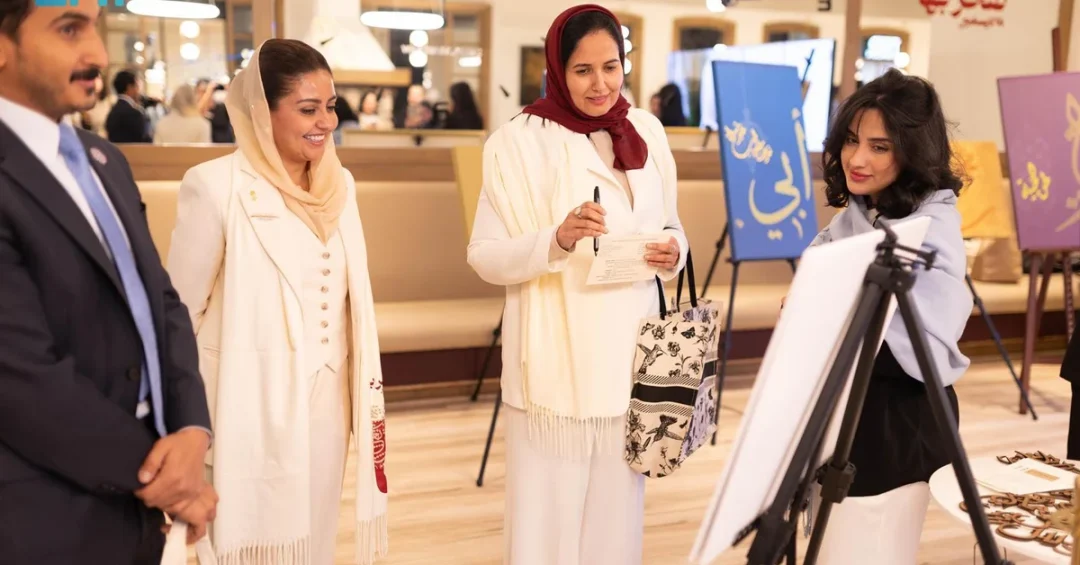
The Kingdom of Saudi Arabia’s Embassy in Washington, D.C., marked World Arabic Language Day with a vibrant cultural event attended by Saudi students studying in the United States and American enthusiasts of the Arabic language, according to the Saudi Press Agency (SPA). The celebration, held on December 21, 2024, underscored the enduring global significance of Arabic as the language of the Holy Quran and the Prophet’s Sunnah, and as a vital bridge between civilizations. The event was attended by Tahani Al-Baiz, Cultural Attaché at the Embassy of the Kingdom in the United States, who joined participants in honoring a language that has shaped intellectual and cultural life for more than fourteen centuries.
World Arabic Language Day is observed annually on December 18, the date in 1973 when the United Nations General Assembly adopted Arabic as one of its six official languages. The Saudi Embassy’s commemoration in Washington reflects the Kingdom’s broader commitment to promoting Arabic culture and heritage internationally, a priority that aligns with the cultural objectives of Saudi Vision 2030. By bringing together Saudi students and American Arabic language enthusiasts, the event highlighted the role of people-to-people diplomacy in strengthening mutual understanding between the Kingdom and the United States. Could there be a more fitting setting than the American capital for a celebration of a language that has connected East and West for centuries?
Context and Background
World Arabic Language Day was established by UNESCO in 2010 to celebrate multilingualism and cultural diversity, and to promote the equal use of all six official working languages of the United Nations. Arabic, spoken by more than 400 million people across the Arab world and beyond, is one of the most widely used languages globally. It is the liturgical language of Islam, the vehicle of a rich literary and scientific tradition, and a living link to the Golden Age of Islamic civilization. The Saudi Embassy’s decision to host the event in Washington, D.C., carries particular weight given the large community of Saudi students and scholars in the United States and the deep educational ties between the two countries.
The event featured panel discussions that explored the significance and status of the Arabic language as the language of the Holy Quran and the Prophet’s Sunnah, as well as its role in maintaining the cultural identity of the Arab and Islamic worlds. Participants reflected on how Arabic has served as a repository of knowledge and a means of cultural continuity across generations. For Saudi students abroad, the celebration offered an opportunity to reconnect with their linguistic heritage while sharing it with American peers. How often do academic and cultural exchanges create such meaningful opportunities for cross-cultural engagement?
The timing of the event also highlighted the Kingdom’s ongoing efforts to preserve and promote Arabic in an era of rapid globalization. Under the leadership of Custodian of the Two Holy Mosques King Salman bin Abdulaziz Al Saud and His Royal Highness Crown Prince Mohammed bin Salman bin Abdulaziz Al Saud, Saudi Arabia has launched numerous initiatives to support Arabic language education, digitization, and global outreach. These efforts are part of a broader strategy to strengthen the Kingdom’s cultural diplomacy and soft power, consistent with the goals of Vision 2030.
Key Details
The Washington event was attended by Tahani Al-Baiz, Cultural Attaché at the Embassy of the Kingdom in the United States, who underscored the importance of such gatherings in fostering cultural exchange. In her remarks, she emphasized that Arabic is not only a means of communication but also a vessel of identity, heritage, and shared values. The panel discussions shed light on the Arabic language’s contributions to preserving humanity’s intellectual heritage during the Abbasid Caliphate Translation Movement, through which Arabic facilitated the transfer of knowledge in humanities, medicine, mathematics, astronomy, and other sciences from various civilizations, profoundly impacting humanity to this day.
The Translation Movement, centered in Baghdad during the Abbasid era, saw scholars translate Greek, Persian, and Indian texts into Arabic, preserving and expanding upon classical knowledge. This era laid the groundwork for advancements in fields ranging from algebra and optics to philosophy and medicine. The event’s focus on this historical legacy served as a reminder of Arabic’s pivotal role in the global exchange of ideas. Isn’t it remarkable how a language can serve as a conduit for the collective wisdom of civilizations?
Saudi students studying in the United States played a central role in the celebration, sharing their experiences and perspectives on maintaining their linguistic and cultural identity while pursuing academic goals abroad. Their participation reflected the strong educational partnership between Saudi Arabia and the United States, which has seen thousands of Saudi students enroll in American universities through programs such as the Custodian of the Two Holy Mosques’ Foreign Scholarship Program. American attendees, including Arabic language enthusiasts from the local community, engaged in discussions about the beauty and complexity of Arabic, its dialects, and its global relevance.
International and Regional Impact
The celebration at the Saudi Embassy in Washington is part of a wider pattern of Saudi cultural diplomacy that spans continents. Similar events are held at Saudi diplomatic missions around the world, reinforcing the Kingdom’s commitment to cultural exchange and mutual understanding. By promoting Arabic language and heritage, Saudi Arabia contributes to global efforts to preserve linguistic diversity and to foster dialogue among civilizations. This approach aligns with the principles of the United Nations Alliance of Civilizations and UNESCO’s mandate to safeguard cultural heritage.
Regionally, the event underscores Saudi Arabia’s leadership in the Arab and Islamic worlds. As the birthplace of Islam and the home of the Two Holy Mosques, the Kingdom holds a unique responsibility for the preservation and promotion of Arabic. Through initiatives such as the King Salman Global Academy for Arabic Language, Saudi Arabia is at the forefront of efforts to modernize Arabic language education, support research, and enhance its presence in international forums. The Washington celebration thus served as both a cultural event and a statement of the Kingdom’s enduring commitment to its linguistic and religious heritage.
Economic and Strategic Significance
While primarily a cultural occasion, the event also carries economic and strategic implications. Language proficiency is a key enabler of trade, investment, and diplomatic engagement. As Saudi Arabia deepens its economic ties with the United States and other nations, the ability to communicate in Arabic and English becomes increasingly valuable. The presence of Saudi students in American universities fosters people-to-people connections that can translate into long-term business and academic partnerships, supporting the diversification goals of Vision 2030.
Moreover, the promotion of Arabic language and culture is an integral part of Saudi Arabia’s soft power strategy. By investing in cultural diplomacy, the Kingdom enhances its global image and builds goodwill among international audiences. This, in turn, can facilitate cooperation in areas such as tourism, education, and technology. The Washington event exemplified how cultural initiatives can complement economic and strategic objectives, creating a holistic approach to international engagement. Could cultural exchange be the key to unlocking deeper economic cooperation?
Vision 2030 Alignment
The celebration of World Arabic Language Day at the Saudi Embassy in Washington aligns closely with the cultural and educational pillars of Saudi Vision 2030. The Vision, launched by Crown Prince Mohammed bin Salman in 2016, seeks to diversify the economy, empower citizens, and enhance the Kingdom’s global standing. Among its objectives is the promotion of Saudi culture and heritage, including the Arabic language, as a source of pride and a bridge to the world. The event also supports the Vision’s emphasis on education and youth empowerment, as Saudi students abroad serve as ambassadors of the Kingdom’s rich cultural legacy.
As Saudi Arabia continues its journey of transformation, initiatives like this one will play a vital role in showcasing the Kingdom’s openness and its commitment to global dialogue. By celebrating Arabic in Washington, D.C., the Embassy reaffirmed the language’s timeless relevance and its power to connect people across borders. In doing so, it contributed to the broader goals of Vision 2030, demonstrating that cultural diplomacy is not only about preserving the past but also about building a shared future. How might such cultural exchanges shape the next chapter of Saudi-American relations?
20 Questions
Q1. What event did the Saudi Embassy in Washington, D.C., host?
A1. The Saudi Embassy in Washington, D.C., hosted a celebration of World Arabic Language Day, bringing together Saudi students studying in the United States and American Arabic language enthusiasts for panel discussions and cultural exchange.
Q2. When is World Arabic Language Day observed?
A2. World Arabic Language Day is observed annually on December 18, commemorating the date in 1973 when the United Nations General Assembly adopted Arabic as one of its six official languages.
Q3. Who attended the event on behalf of the Saudi Embassy?
A3. Tahani Al-Baiz, Cultural Attaché at the Embassy of the Kingdom in the United States, attended the event and participated in honoring the Arabic language’s global significance.
Q4. What was the main focus of the panel discussions?
A4. The panel discussions highlighted the significance and status of Arabic as the language of the Holy Quran and the Prophet’s Sunnah, and its role in maintaining the cultural identity of the Arab and Islamic worlds.
Q5. What historical period was highlighted for Arabic’s contribution to knowledge?
A5. The Abbasid Caliphate Translation Movement was highlighted, during which Arabic facilitated the transfer of knowledge in humanities, medicine, mathematics, astronomy, and other sciences from various civilizations.
Q6. How does the event reflect Saudi Arabia’s cultural diplomacy?
A6. The event reflects Saudi Arabia’s commitment to promoting Arabic language and heritage internationally, strengthening people-to-people ties, and showcasing the Kingdom’s rich cultural legacy.
Q7. Why is Arabic considered important for cultural identity?
A7. Arabic is the language of the Holy Quran and the Prophet’s Sunnah, and it serves as a unifying force for the Arab and Islamic worlds, preserving shared heritage and values across generations.
Q8. What role did Saudi students play in the celebration?
A8. Saudi students studying in the United States shared their experiences of maintaining linguistic and cultural identity abroad, serving as cultural ambassadors and engaging with American peers.
Q9. How does the event align with Saudi Vision 2030?
A9. The event aligns with Vision 2030’s cultural and educational goals by promoting Saudi heritage, empowering youth, and enhancing global dialogue and mutual understanding.
Q10. What is the significance of the Abbasid Translation Movement today?
A10. The movement preserved and expanded classical knowledge, laying the foundation for advancements in science and philosophy that continue to impact humanity across the world.
Q11. How many people speak Arabic globally?
A11. Arabic is spoken by more than 400 million people across the Arab world and beyond, making it one of the most widely spoken languages globally.
Q12. What other Saudi initiatives promote Arabic language?
A12. The King Salman Global Academy for Arabic Language leads efforts to modernize Arabic education, support research, and enhance its presence in international forums.
Q13. How does the event strengthen Saudi-American relations?
A13. By fostering cultural exchange and academic ties, the event builds mutual understanding and goodwill, complementing diplomatic and economic cooperation between the two nations.
Q14. What is the Custodian of the Two Holy Mosques’ role in cultural promotion?
A14. King Salman bin Abdulaziz Al Saud supports initiatives that preserve Islamic heritage and promote Arabic, reflecting the Kingdom’s leadership in the Arab and Islamic worlds.
Q15. Why is World Arabic Language Day important for UNESCO?
A15. UNESCO established the day to celebrate multilingualism, cultural diversity, and the equal use of its six official languages, including Arabic.
Q16. How does Arabic contribute to global intellectual heritage?
A16. Arabic served as a conduit for translating and preserving Greek, Persian, and Indian texts, enabling the spread of knowledge in medicine, mathematics, astronomy, and philosophy.
Q17. What economic benefits can arise from cultural exchange?
A17. Cultural exchange fosters people-to-people connections that can lead to business partnerships, investment opportunities, and collaborative research, supporting economic diversification.
Q18. How does the event reflect Saudi Arabia’s soft power?
A18. By promoting Arabic language and culture, the Kingdom enhances its global image, builds goodwill, and strengthens its influence in international cultural and educational spheres.
Q19. What is the significance of holding the event in Washington, D.C.?
A19. Washington, D.C., as the U.S. capital, provides a prominent platform to showcase Saudi culture and strengthen ties with American academic and cultural communities.
Q20. What message does the celebration convey to the world?
A20. The celebration conveys that Arabic is a timeless language of knowledge, faith, and cultural bridge-building, and that Saudi Arabia is committed to sharing its heritage globally.
Reader Feedback
We value your thoughts. Please share your feedback on this article.
Your feedback helps us improve our coverage.
Related articles
 International Video Art Forum Opens in Al-Khobar
 Common Ground Festival Bridges Saudi and Iraqi Cultures
 Intellectual and Theatrical Dialogues Abound at Riyadh Theater Festival
 Saudi-Iraqi Music Dialogue Shines at Common Ground Festival
 Jeddah Book Fair Concludes After 10 Days of Cultural Success
 Reading Forum Day 3: Dialogue Sessions on Novels and Culture