


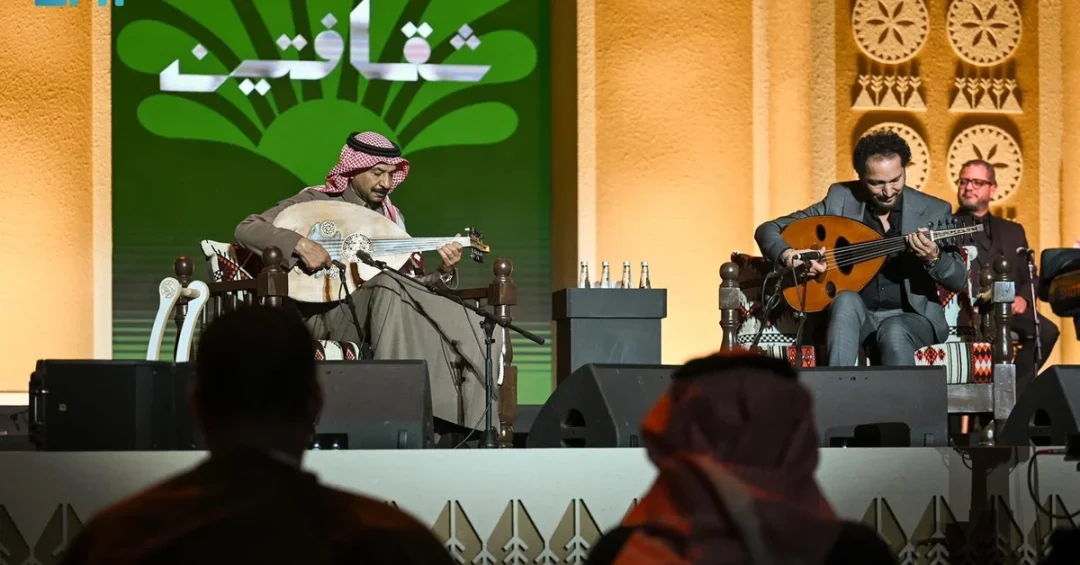
A Saudi-Iraqi dialogue on music was held on Saturday, December 21, 2024, as part of the “Common Ground” festival at Riyadh Boulevard, bringing together two of the Arab world’s most celebrated artists to explore the deep cultural ties between the Kingdom of Saudi Arabia and the Republic of Iraq. The event, organized by the Ministry of Culture, featured Saudi artist Abadi Al-Johar and Iraqi artist Naseer Shamma, who shared their musical creations and discussed the shared heritage that connects their two nations. The festival, which runs from December 18 to 31, 2024, serves as a platform for cultural exchange and artistic collaboration, reflecting Saudi Arabia’s commitment to fostering regional unity through the arts.
The dialogue was not merely a performance but a meaningful conversation about the commonalities between Saudi and Iraqi cultures, highlighting how music can serve as a bridge between peoples. By hosting this event, the Ministry of Culture aims to strengthen cultural cooperation between the Kingdom and Iraq, offering audiences an opportunity to explore Iraqi culture and its distinctive creative landmarks. The “Common Ground” festival, with its diverse lineup of activities, underscores Saudi Arabia’s broader vision of promoting cultural diplomacy and enriching the region’s artistic landscape. How often do we witness such harmonious exchanges that transcend borders and celebrate shared heritage?
Context and Background
Can cultural dialogue truly reshape the bonds between nations? The Saudi-Iraqi musical dialogue at the “Common Ground” festival represents a continuation of Saudi Arabia’s efforts to deepen ties with its neighbors through cultural engagement. Historically, Saudi Arabia and Iraq have shared profound connections rooted in language, religion, and traditions that stretch back centuries. In recent years, under the guidance of Vision 2030, the Kingdom has accelerated its cultural diplomacy, recognizing that artistic exchange can complement political and economic cooperation. The Ministry of Culture, led by Prince Badr bin Abdullah bin Farhan Al Saud, has been instrumental in organizing events that showcase the richness of Arab culture while fostering mutual understanding.
The “Common Ground” festival itself is a testament to this approach, bringing together artists from various backgrounds to celebrate diversity and unity. Riyadh Boulevard, a vibrant hub for entertainment and culture, provides an ideal setting for such interactions. The festival’s timing, during the winter season, aligns with Saudi Arabia’s efforts to position itself as a year-round destination for cultural tourism. By featuring Iraqi artists like Naseer Shamma, renowned for his mastery of the oud, alongside Saudi legends like Abadi Al-Johar, the event highlights the shared musical traditions that have evolved across the region. This dialogue is part of a series of cultural activities that the Ministry of Culture has planned to enhance Saudi-Iraqi relations, building on previous collaborations in areas such as heritage preservation and artistic production.
What does this mean for the future of cultural exchange in the Middle East? The Saudi-Iraqi dialogue on music is a clear signal that the Kingdom is committed to using culture as a tool for peace and prosperity. It reflects a strategic shift toward embracing regional partnerships and showcasing the best of Arab creativity on a global stage.
Key Details of the Musical Dialogue
How did the evening unfold, and what made it so significant? The dialogue featured Abadi Al-Johar, a Saudi artist whose career spans decades and whose contributions to Saudi music have earned him widespread acclaim, and Naseer Shamma, an Iraqi virtuoso known for his innovative approach to the oud and his efforts to promote music education. During the event, both artists presented their musical creations, offering the audience a blend of traditional and contemporary sounds that resonated with the shared cultural heritage of Saudi Arabia and Iraq. Their performances were interspersed with discussions about the inspirations behind their work and the common threads that run through Saudi and Iraqi music.
The Ministry of Culture organized the dialogue as part of the “Common Ground” festival’s broader program, which includes a variety of cultural and artistic activities designed to foster cross-cultural understanding. The festival, held at Riyadh Boulevard from December 18 to 31, 2024, has attracted a diverse audience, including families, art enthusiasts, and international visitors. By providing a platform for Saudi and Iraqi artists to collaborate, the ministry aims to create lasting connections and to highlight the Kingdom’s role as a cultural leader in the region. The event also served as an opportunity to explore Iraqi culture and its distinctive creative landmarks, from its rich literary traditions to its vibrant visual arts scene.
What can other nations learn from this model of cultural diplomacy? The Saudi-Iraqi dialogue demonstrates that music, with its universal language, can transcend political differences and foster genuine connections between peoples. It sets a precedent for future collaborations that could extend to other fields, such as film, theater, and literature.
International and Regional Impact
Could this dialogue spark a broader cultural renaissance in the region? The Saudi-Iraqi musical exchange at the “Common Ground” festival has implications that extend beyond the two countries. In a region often characterized by tensions, such initiatives offer a counter-narrative of cooperation and mutual respect. By bringing together artists from Saudi Arabia and Iraq, the event sends a powerful message that cultural diplomacy can pave the way for stronger bilateral relations. It also aligns with Saudi Arabia’s broader foreign policy objectives, which emphasize stability, economic integration, and cultural engagement as pillars of regional security.
Internationally, the dialogue contributes to the global perception of Saudi Arabia as a nation that values art and culture as essential components of its development. It showcases the Kingdom’s ability to host world-class events and to attract talent from across the Arab world. For Iraq, participation in such events offers an opportunity to reassert its cultural presence and to build bridges with its Gulf neighbors. The presence of Naseer Shamma, a cultural ambassador for Iraq, underscores the potential for artists to play a role in diplomacy. As Saudi Arabia continues to expand its cultural footprint, events like this reinforce its position as a hub for artistic innovation and intercultural dialogue.
How might this influence other countries in the Middle East and beyond? The success of the Saudi-Iraqi dialogue could inspire similar exchanges between other nations, creating a ripple effect of cultural cooperation that enhances understanding and reduces misunderstandings. It also highlights the role of cultural festivals in promoting tourism and economic growth, as visitors are drawn to experiences that celebrate diversity and creativity.
Economic and Strategic Significance
What economic benefits can arise from cultural diplomacy? The “Common Ground” festival and the Saudi-Iraqi musical dialogue are part of a larger strategy to diversify Saudi Arabia’s economy through cultural tourism and creative industries. Under Vision 2030, the Kingdom aims to increase the contribution of cultural activities to the GDP and to create job opportunities in sectors such as entertainment, hospitality, and the arts. By hosting events that attract regional and international audiences, Saudi Arabia stimulates local businesses, from hotels and restaurants to retail and transportation. The festival’s location at Riyadh Boulevard, a major entertainment district, further amplifies its economic impact, drawing footfall to surrounding commercial areas.
Strategically, the dialogue strengthens Saudi-Iraqi relations at a time when regional cooperation is paramount. Iraq is a key partner for Saudi Arabia, sharing borders and historical ties. By investing in cultural exchange, the Kingdom builds goodwill and lays the groundwork for deeper collaboration in trade, energy, and security. The Ministry of Culture’s efforts to highlight commonalities between Saudi and Iraqi cultures also support the broader goal of enhancing people-to-people connections, which are essential for long-term stability. Moreover, the event aligns with Saudi Arabia’s commitment to supporting the arts as a means of expressing national identity and celebrating the Kingdom’s heritage.
How does this fit into Saudi Arabia’s global economic ambitions? As the Kingdom positions itself as a leader in the creative economy, initiatives like the “Common Ground” festival demonstrate its ability to merge cultural enrichment with economic diversification. They also attract foreign investment by showcasing a dynamic and open society that values innovation and cultural exchange.
Vision 2030 Alignment
How does the Saudi-Iraqi dialogue on music reflect the goals of Vision 2030? At its core, Vision 2030 seeks to transform Saudi Arabia into a vibrant society, a thriving economy, and an ambitious nation. Cultural initiatives such as the “Common Ground” festival directly contribute to the first pillar by enriching the quality of life for citizens and residents, fostering a sense of pride in national heritage, and promoting tolerance and understanding. The Ministry of Culture’s work in organizing such events exemplifies the Kingdom’s commitment to nurturing a dynamic cultural sector that celebrates both local and regional talent.
Furthermore, the dialogue aligns with Vision 2030’s emphasis on international cooperation and soft power. By engaging with Iraq through music, Saudi Arabia strengthens its diplomatic ties and projects an image of a modern, forward-looking nation that values its Arab and Islamic heritage. The event also supports the goal of increasing cultural exchange and tourism, as outlined in the National Transformation Program. As Saudi Arabia continues to host festivals and dialogues that bring together artists from across the region, it reinforces its role as a cultural beacon and a catalyst for regional harmony. The Saudi-Iraqi musical dialogue is not just a one-time event but a step toward a future where culture serves as a foundation for peace and prosperity in the Middle East.
20 Questions
Q1. What was the Saudi-Iraqi dialogue on music?
A1. The Saudi-Iraqi dialogue on music was a cultural event held on December 21, 2024, at Riyadh Boulevard as part of the “Common Ground” festival. It featured Saudi artist Abadi Al-Johar and Iraqi artist Naseer Shamma, who shared their musical creations and discussed shared cultural heritage.
Q2. Who organized the Saudi-Iraqi dialogue on music?
A2. The event was organized by the Saudi Ministry of Culture, which aims to strengthen cultural cooperation between Saudi Arabia and Iraq through a series of artistic activities. The ministry regularly hosts such initiatives to promote cultural exchange and highlight commonalities between nations.
Q3. Where and when did the “Common Ground” festival take place?
A3. The “Common Ground” festival took place at Riyadh Boulevard in Riyadh, Saudi Arabia, from December 18 to 31, 2024. It included various cultural and artistic activities designed to foster cross-cultural understanding and celebrate diversity.
Q4. Who are Abadi Al-Johar and Naseer Shamma?
A4. Abadi Al-Johar is a renowned Saudi artist celebrated for his contributions to Saudi music over decades. Naseer Shamma is an Iraqi virtuoso oud player and cultural ambassador known for his innovative approach to music and efforts to promote music education.
Q5. What is the purpose of the Saudi-Iraqi dialogue on music?
A5. The purpose is to highlight the commonalities between Saudi and Iraqi cultures, strengthen cultural cooperation, and provide an opportunity to explore Iraqi culture and its creative landmarks. It also aims to foster mutual understanding and people-to-people connections.
Q6. How does this event align with Vision 2030?
A6. The event aligns with Vision 2030 by enriching cultural life, promoting tolerance, and enhancing Saudi Arabia’s soft power. It supports the goals of a vibrant society and a thriving economy through cultural tourism and international cooperation.
Q7. What activities were part of the “Common Ground” festival?
A7. The festival included a variety of cultural and artistic activities, such as musical performances, dialogues, and exhibitions. It featured artists from Saudi Arabia and Iraq, providing a platform for creative exchange and showcasing the rich heritage of both nations.
Q8. Why is cultural exchange important for Saudi-Iraqi relations?
A8. Cultural exchange builds goodwill and understanding between nations, complementing political and economic ties. It allows people to connect through shared heritage and fosters a sense of regional unity, which is essential for long-term stability and cooperation.
Q9. What role does the Ministry of Culture play in such events?
A9. The Ministry of Culture organizes and supports events like the Saudi-Iraqi dialogue to promote cultural diplomacy, showcase Saudi talent, and strengthen international partnerships. It works to enrich the Kingdom’s cultural landscape and position Saudi Arabia as a cultural leader.
Q10. How does music serve as a bridge between cultures?
A10. Music transcends language and political differences, speaking directly to emotions and shared human experiences. It allows people from different backgrounds to appreciate each other’s traditions and find common ground, as demonstrated by the Saudi-Iraqi dialogue.
Q11. What are the economic benefits of hosting cultural festivals?
A11. Cultural festivals attract tourists, stimulate local businesses, and create jobs in sectors like hospitality and retail. They also contribute to economic diversification by boosting the creative economy, a key goal of Saudi Arabia’s Vision 2030.
Q12. How does this event reflect Saudi Arabia’s cultural diplomacy?
A12. It reflects Saudi Arabia’s use of culture as a tool for building international relationships and projecting a positive image. By hosting Iraqi artists and celebrating shared heritage, the Kingdom demonstrates its commitment to regional cooperation and cultural exchange.
Q13. What is the significance of Riyadh Boulevard as a venue?
A13. Riyadh Boulevard is a major entertainment and cultural hub in the Saudi capital, attracting diverse audiences. Hosting the festival there underscores the venue’s role in promoting tourism and providing world-class experiences that align with Vision 2030.
Q14. How can other countries emulate this model of cultural dialogue?
A14. Other countries can organize similar events that bring together artists and intellectuals from different nations to explore shared heritage. By prioritizing cultural exchange, they can foster understanding and cooperation, contributing to regional peace and stability.
Q15. What was the audience’s reaction to the dialogue?
A15. The audience responded positively, appreciating the opportunity to witness two renowned artists share their music and insights. The event was well-attended and contributed to a festive atmosphere at the “Common Ground” festival, reinforcing the value of such cultural initiatives.
Q16. How does this event support Saudi Arabia’s tourism goals?
A16. By attracting visitors to Riyadh and showcasing the Kingdom’s cultural offerings, the event supports Saudi Arabia’s goal of increasing tourism’s contribution to GDP. It positions the country as a destination for cultural experiences, complementing its religious and heritage tourism.
Q17. What future collaborations might arise from this dialogue?
A17. The dialogue could lead to joint musical productions, exchange programs, and participation in future festivals. It may also inspire collaborations in other artistic fields, such as film, literature, and visual arts, deepening Saudi-Iraqi cultural ties.
Q18. How does the event reflect Saudi Arabia’s commitment to Arab unity?
A18. By celebrating Iraqi culture and bringing together artists from both nations, Saudi Arabia demonstrates its commitment to Arab solidarity and mutual respect. It highlights the Kingdom’s role as a unifying force in the region, promoting harmony through cultural engagement.
Q19. What makes Naseer Shamma a significant figure in this dialogue?
A19. Naseer Shamma is a globally recognized Iraqi musician and cultural ambassador who has dedicated his career to promoting the oud and music education. His participation adds prestige to the event and symbolizes Iraq’s rich cultural heritage.
Q20. How can the public learn more about the “Common Ground” festival?
A20. Information about the festival and future events can be found through the Saudi Ministry of Culture’s official channels and the Saudi Press Agency. These sources provide updates on cultural activities and initiatives across the Kingdom.
Reader Feedback
We value your thoughts. Please share your feedback on this article.
Your feedback helps us improve our coverage.
Related articles
 Jeddah Book Fair Concludes After 10 Days of Cultural Success
 Reading Forum Day 3: Dialogue Sessions on Novels and Culture
 World Arabic Language Day Highlights Arabic Identity: Prince Faisal
 Prophet’s Mosque: A Global Beacon of Islamic Education
 Resin Art in Saudi Arabia: Beauty and Durability Combined
 Over 700 Visitors Enjoy Camel-Riding at King Abdulaziz Festival