


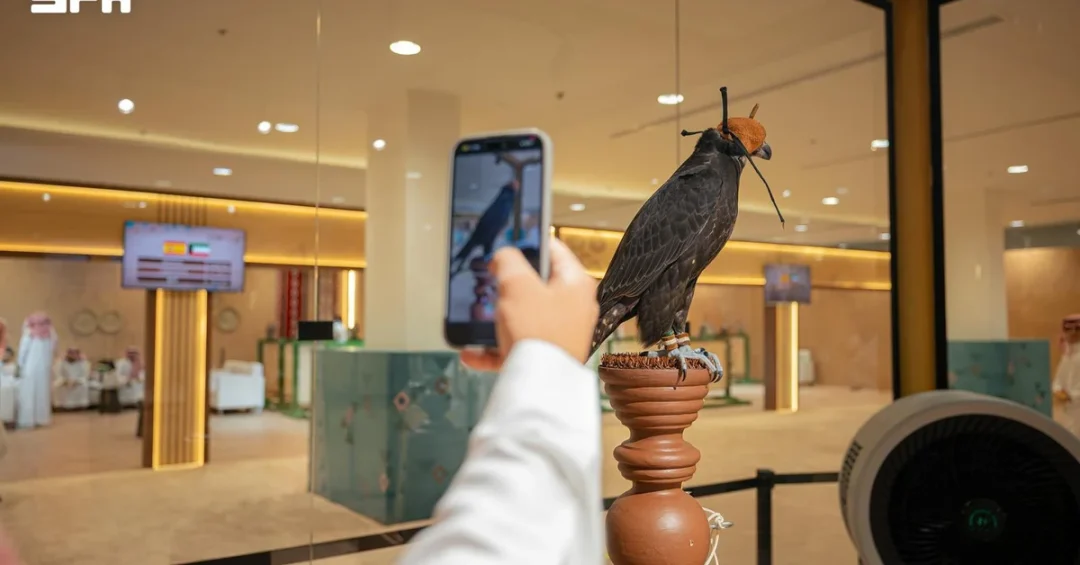
The Saudi Falcons National Center has implemented a comprehensive set of regulatory, legal, and financial measures for the International Falcon Breeding Farms Auction, running until August 25 at its headquarters in Malham, north of Riyadh. The measures are designed to guarantee the rights of sellers and buyers, officially register all transactions, and enhance transparency throughout the ownership transfer process.
Context and Background
Falconry holds deep cultural significance in Saudi Arabia, where the tradition has been practiced for centuries. The Saudi Falcons National Center, established under the Kingdom’s commitment to preserving this heritage, organizes the annual auction as a specialized and secure platform for falcon farms, falconers, and international buyers. This year’s edition highlights the Kingdom’s ongoing efforts to modernize traditional practices while maintaining authenticity.
Key Details
The sales process begins with an agreement between the farm owner and buyer on a price. Both parties then proceed to the center’s sales section for formal procedures. After the initial agreement, the falcon is transferred to an evaluation and review committee, which verifies its size, length, width, and other characteristics against registered information. The falcon’s file is then sent to a legal committee, where seller and buyer sign transaction documents, officially recording the sale and safeguarding both parties’ rights.
Subsequently, the financial department completes the payment process, ensuring that the falcon’s amount is transferred from the buyer to the breeding farm owner. Upon completion of financial steps, an identification ring is installed on the falcon’s leg, and its information is recorded in the center’s competition system, linking it to official records. Finally, a formal exit permit is given to the buyer, allowing them to take the falcon out of the auction after legal procedures are fulfilled.
Walid Al-Taweel, the official spokesperson for the Saudi Falcons National Center, stated: “The sale process begins with the agreement between the farm owner and the buyer on the price, after which both parties head to the sales section to carry out official procedures that ensure the correctness of information and the integrity of the contract process.”
Implications and Impact
The auction provides a secure environment for falcon farms to showcase their stock and participate in direct auctions. It attracts international buyers, reinforcing Saudi Arabia’s position as a global hub for falconry. The structured processes increase confidence, reduce disputes, and enhance the trade’s credibility. Moreover, the initiative supports the country’s cultural tourism and heritage goals, aligning with broader economic diversification.
Vision 2030 Alignment
The comprehensive oversight measures align seamlessly with Saudi Arabia’s Vision 2030, which emphasizes cultural preservation, economic diversification, and the development of heritage-based sectors. By ensuring transparency and legal robustness in falcon transactions, the Center contributes to building a sustainable industry that honors tradition while embracing modern standards. This further cements the Kingdom’s global leadership in falconry and its commitment to preserving a cultural identity for future generations.
20 Questions
Q1. What is the purpose of the measures at the International Falcon Breeding Farms Auction?
A1. The measures ensure transparency, protect seller and buyer rights, and facilitate official registration of transactions during the auction, which is held in Riyadh until August 25.
Q2. Where is the auction taking place?
A2. The auction is taking place at the headquarters of the Saudi Falcons National Center in Malham, north of Riyadh, Saudi Arabia.
Q3. Who is the official spokesperson for the Saudi Falcons National Center?
A3. Walid Al-Anaweel is the official spokesperson. He explained that the sales process begins with an agreement between the farm owner and buyer on a price.
Q4. What are the initial steps in the falcon sale process?
A4. The process starts with an agreement between the farm owner and buyer. Then they proceed to the sales section for formal official procedures to ensure accuracy and integrity.
Q5. What does the evaluation and review committee do?
A5. The committee inspects the falcon, measuring its size, length, and width, and verifies that it matches the registered information before the sale is finalized.
Q6. How does the legal committee contribute to the sale?
A6. The legal committee has seller and buyer sign the transaction documents, officially registering the sale and safeguarding the rights of both parties.
Q7. What is the role of the financial department in the process?
A7. The financial department completes the payment, ensuring the falcon’s amount is transferred from the buyer to the farm owner securely and efficiently.
Q8. When is an identification ring installed on the falcon?
A8. After the financial steps are completed, the identification ring is installed on the falcon’s leg to ensure traceability and link it to official records.
Q9. What is the final step before the buyer takes the falcon?
A9. The center issues a formal exit permit to the buyer, allowing them to legally take the falcon out of the auction.
Q10. How does this auction support Saudi falconry culture?
A10. It provides a secure, professional platform that protects the falcons, respects their handlers, and elevates the practice as a cherished heritage.
Q11. Who can participate in the auction?
A11. Falcon farms, falconers, and international buyers can participate. Farms can display their products in dedicated booths and engage in direct auctions.
Q12. How long will the auction last?
A12. The auction started on August 17, 2026, and will continue until August 25, giving ample time for transactions and evaluations.
Q13. What does the center’s competition system record?
A13. The competition system records the falcon’s identification and information, linking it to the official racing and breeding records.
Q14. How does the auction contribute to the local economy?
A14. The auction attracts local and international buyers, boosting trade, and reinforcing Saudi Arabia’s role in the falconry industry.
Q15. Does the auction support Vision 2030?
A15. Yes, it supports Vision 2030 by promoting cultural heritage, economic diversification, and tourism while modernizing traditional practices.
Q16. What is the main benefit of these measures to buyers?
A16. Buyers gain trust and legal assurance, as every step is monitored and verified, reducing the risk of disputes or fraudulent claims.
Q17. What happens if the falcon does not meet the listed characteristics?
A17. The evaluation committee is responsible for verifying the falcon’s attributes; if discrepancies are found, the sale may be put on hold pending further checks.
Q18. Are there special booths for farms to showcase their falcons?
A18. Yes, the auction provides special booths for falcon farms to display their falcons, allowing direct interaction with potential buyers.
Q19. How does the auction support the international community?
A19. It offers a transparent and secure environment for global falcon enthusiasts, enhancing Saudi Arabia’s reputation as a reliable center.
Q20. How can one stay updated on future auctions?
A20. Interested parties can follow announcements from the Saudi Falcons National Center and official SPA releases to stay informed about upcoming auctions and initiatives.
Reader Feedback
We value your thoughts. Please share your feedback on this article.
Your feedback helps us improve our coverage.