


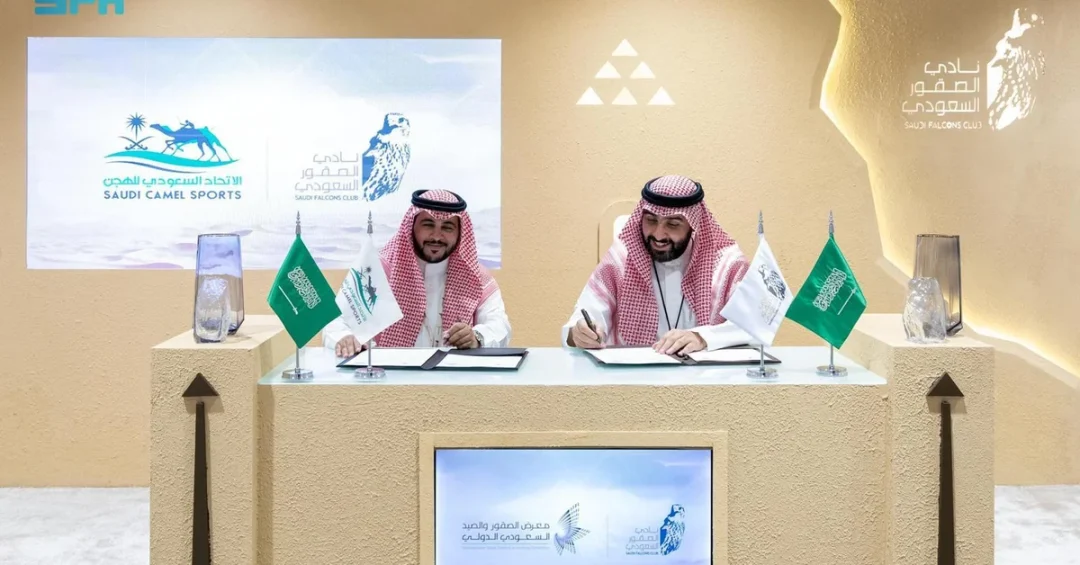
The Saudi Falcons Club and the Saudi Camel Racing Federation (SCRF) signed a memorandum of understanding (MoU) in Riyadh on October 8, 2024, to strengthen cooperation in preserving the Kingdom’s cultural heritage, particularly in the fields of falconry and camel racing. The agreement, announced by the Saudi Press Agency, aims to enhance integration between the two entities and promote these traditional sports on local, regional, and international levels.
Context and Background
Falconry and camel racing are deeply rooted in Saudi Arabia’s history and culture, symbolizing the Bedouin heritage of the Arabian Peninsula. The Saudi Falcons Club, established to preserve and promote falconry, and the SCRF, which oversees camel racing activities, play vital roles in maintaining these traditions. The MoU reflects a strategic effort to align these heritage sports with the goals of Saudi Vision 2030, which emphasizes cultural preservation alongside modernization.
Key Details of the Agreement
The MoU outlines several areas of collaboration, including organizing joint exhibitions and festivals both within the Kingdom and abroad. These events will showcase the cultural significance of falcons and camels, attract investors, and create a supportive environment for related activities. The agreement also focuses on enhancing mutual understanding between the two organizations and developing initiatives that contribute to the Kingdom’s position in heritage sports globally.
Implications and Impact
This partnership is expected to boost tourism and economic opportunities by drawing enthusiasts and investors to heritage events. It also reinforces Saudi Arabia’s commitment to preserving its cultural identity while engaging with the international community. By promoting falconry and camel racing, the MoU supports the diversification of the economy and enhances the Kingdom’s soft power.
Vision 2030 Alignment
The MoU directly supports Saudi Vision 2030’s objectives of preserving cultural heritage and promoting tourism. It aligns with efforts to diversify the economy and showcase the Kingdom’s rich traditions. By integrating heritage sports into the broader vision, Saudi Arabia strengthens its global cultural presence and fosters sustainable development.
20 Questions
Q1. What is the purpose of the MoU between the Saudi Falcons Club and the SCRF?
A1. The MoU aims to strengthen cooperation in preserving Saudi Arabia’s cultural heritage, particularly in falconry and camel racing, and to organize joint events that promote these traditions locally and internationally.
Q2. When and where was the MoU signed?
A2. It was signed in Riyadh on October 8, 2024, as announced by the Saudi Press Agency.
Q3. What are the main goals of the MoU?
A3. The goals include enhancing mutual understanding, developing a supportive environment for falcon and camel activities, attracting investors, and organizing joint events to elevate the Kingdom’s heritage status.
Q4. How does the MoU support Saudi Vision 2030?
A4. It supports Vision 2030 by preserving cultural heritage, promoting tourism, and diversifying the economy through heritage sports and related events.
Q5. What types of events will be organized under this MoU?
A5. The MoU includes organizing exhibitions and festivals inside and outside the Kingdom that highlight falconry and camel racing heritage.
Q6. Why are falcons and camels important to Saudi culture?
A6. Falcons and camels are symbols of the Bedouin heritage and traditional lifestyle of the Arabian Peninsula, representing skills, endurance, and cultural pride.
Q7. Who are the parties involved in the MoU?
A7. The Saudi Falcons Club and the Saudi Camel Racing Federation (SCRF) are the signatories.
Q8. How will the MoU attract investors?
A8. By creating an ideal environment that supports activities related to falcons and camels, the MoU aims to draw investors interested in these fields.
Q9. What is the role of the Saudi Falcons Club?
A9. The club works to preserve and promote falconry as a traditional sport and cultural heritage, organizing events and supporting enthusiasts.
Q10. What is the role of the SCRF?
A10. The SCRF oversees camel racing activities, ensuring the sport’s development and maintaining its cultural significance in Saudi Arabia.
Q11. How will the MoU enhance the Kingdom’s international position?
A11. By organizing international events and exhibitions, the MoU will showcase Saudi heritage globally, enhancing the Kingdom’s cultural diplomacy and soft power.
Q12. What economic benefits are expected from the MoU?
A12. The MoU is expected to boost tourism, attract investments, and create economic opportunities through heritage-related events and activities.
Q13. How does the MoU preserve cultural heritage?
A13. It promotes falconry and camel racing, ensuring these traditions are passed down and celebrated, while integrating them into modern national initiatives.
Q14. What kind of cooperation does the MoU entail?
A14. The cooperation includes joint organization of events, sharing of expertise, and collaborative efforts to develop heritage sports and attract stakeholders.
Q15. Will the MoU involve local communities?
A15. Yes, by organizing local events and activities, the MoU aims to engage communities and promote cultural pride and participation.
Q16. How does the MoU reflect Saudi Arabia’s modernization efforts?
A16. It combines tradition with modern organizational strategies, aligning heritage preservation with Vision 2030’s goals of progress and global engagement.
Q17. What is the significance of signing this MoU now?
A17. It underscores Saudi Arabia’s ongoing commitment to cultural preservation and economic diversification, reinforcing national identity in a rapidly modernizing society.
Q18. Are there similar agreements in place?
A18. This MoU is part of a series of partnerships aimed at promoting heritage sports, though specific details of other agreements are not provided.
Q19. How will success be measured?
A19. Success will be measured by the effective organization of joint events, increased participation and investment, and enhanced local and international recognition of Saudi heritage.
Q20. What future steps are planned under the MoU?
A20. Future steps include implementing joint initiatives, expanding event schedules, and continuously evaluating and developing strategies to meet the MoU’s objectives.
Reader Feedback
We value your thoughts. Please share your feedback on this article.
Your feedback helps us improve our coverage.
Related articles
 Saudi Falcons Club Launches Melwah Racing
 Saudi Heritage Commission to Host Al-Faw Archaeological Symposium
 Chinese Cinemas to Screen Saudi Films for the First Time
 DGDA and HERFA Sign MoU to Preserve Diriyah Craft Heritage
 CDF Showcases Diverse Solutions for Filmmakers at Saudi Film Confex 2024
 International Saudi Falcons and Hunting Exhibition Sees Large Turnout