


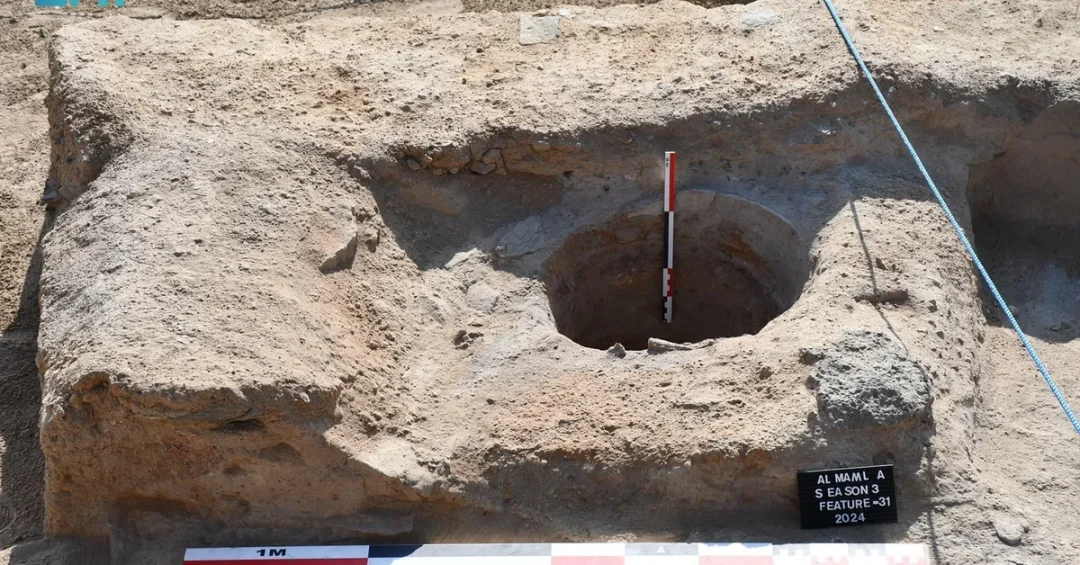
The Heritage Commission has concluded the third season of archaeological excavations at the Al-Ma’mala site in the Al-Baha region, uncovering a series of well-preserved stone walls, two distinct architectural units, and hundreds of artifacts that shed new light on ancient settlement, trade, and craftsmanship in the southwestern Arabian Peninsula. According to the Saudi Press Agency, the season’s digs produced 230 pieces of pottery, 48 stone pieces, 26 pieces of colored glass, 35 metal tools, and 17 stone tools, alongside structural remains built with meticulously cut granite blocks and reinforced with mud bricks.
The announcement, released through official Saudi channels, underscores the Kingdom’s expanding commitment to documenting its pre-Islamic and Islamic heritage as part of a wider cultural preservation strategy. The Al-Ma’mala site lies 13 kilometers east of Al-Aqiq Governorate and 45 kilometers from the Al-Baha regional capital, placing it close to the ancient Elephant Road, a vital caravan route that connected southern Arabia to northern markets before the advent of Islam. Could any modern infrastructure project rival the historical importance of a road that once carried incense, spices, and pilgrims across the peninsula?
Context and Background
What makes the Al-Ma’mala excavation more than a routine archaeological exercise? The site sits at the intersection of geography and history. The Elephant Road, which passed nearby, was one of the most consequential trade arteries of antiquity, linking the frankincense-producing regions of southern Arabia with the commercial centers of the Hijaz and the Levant. Over time, as the peninsula embraced Islam, that same route evolved into a pilgrimage corridor, channeling travelers toward the holy cities and bringing sustained prosperity to the villages and towns along its path.
The Heritage Commission, the Saudi body responsible for antiquities, museums, and archaeological research, has been conducting systematic surveys and excavations across the Kingdom as part of a broader effort to catalog and protect its cultural assets. The Al-Ma’mala project is one component of that national program, which employs advanced geographical surveying and field excavation techniques to identify, document, and preserve new antiquities. The third season’s results build on previous campaigns at the site, adding architectural and artifactual detail to an emerging picture of a community that was both commercially active and architecturally sophisticated.
Al-Baha itself is a region of distinct character, known for its mountainous terrain, agricultural terraces, and relative isolation from the Kingdom’s major urban centers. That isolation has helped preserve archaeological deposits that might otherwise have been disturbed by rapid development. For researchers, the region offers a rare window into how ancient communities adapted to highland environments while remaining connected to long-distance trade networks. Is it not remarkable that a site so far from the traditional capitals of power could still participate in the commercial life of the ancient world?
Key Details from the Third Excavation Season
The structural discoveries at Al-Ma’mala are among the most telling. Archaeologists documented a series of stone walls constructed from carefully cut granite blocks, some of which were reinforced with mud bricks and bore traces of plaster. The walls ranged in height from 50 to 120 centimeters and in width from 50 to 80 centimeters. These dimensions, combined with the quality of the masonry, point to deliberate engineering rather than improvised construction. The use of plaster suggests an interest in finish and durability, while the mixture of granite and mud brick reflects a practical understanding of locally available materials.
Two distinct architectural units were identified at the site, each featuring well-defined spaces that imply multiple functions. Such layouts can indicate domestic occupation, storage, workshop activity, or some combination of these. The presence of defined rooms and partitioned areas allows archaeologists to begin reconstructing how people moved through and used the built environment. What can a wall’s thickness or a room’s proportions tell us about the daily rhythms of people who lived millennia ago?
The artifact assemblage is equally revealing. The 230 pottery fragments include pieces decorated with intricate geometric motifs, a style that can help date the site and trace cultural connections. The 26 pieces of colored glass are particularly notable, as glass production and trade required specialized knowledge and long-distance exchange. The 35 metal tools and 17 stone tools suggest a working community engaged in craft, construction, or agriculture. Taken together, the finds point to a settlement with vibrant commercial and industrial activity, not merely a waypoint for passing caravans.
International and Regional Impact
How does a single excavation in Al-Baha resonate beyond Saudi Arabia’s borders? Archaeological work in the Arabian Peninsula has increasingly attracted international scholarly attention, as researchers recognize the region as a crossroads of civilizations rather than a peripheral space. The Al-Ma’mala findings contribute to a growing body of evidence that ancient Arabia supported complex societies, long-distance trade, and sophisticated building traditions. For international audiences, the discoveries offer a counterpoint to simplified narratives about the region’s past.
Regionally, the excavation reinforces the historical ties that bind the Arabian Peninsula to neighboring cultures. The Elephant Road connected southern Arabia with the wider Middle East, and the artifacts found at Al-Ma’mala may eventually be compared with assemblages from Yemen, Oman, and the Levant to trace patterns of exchange. Such comparative work can illuminate how goods, technologies, and ideas moved across landscapes that today are divided by modern borders. Does the past not offer a reminder that connection, not isolation, has long defined this part of the world?
Economic and Strategic Significance
What economic value can archaeology create? In Saudi Arabia, heritage is increasingly recognized as an asset rather than a cost. The Kingdom’s Vision 2030 reform agenda seeks to diversify the economy beyond hydrocarbons, and cultural tourism is a key pillar of that effort. Sites such as Al-Ma’mala, once documented and properly managed, can feed into regional tourism circuits that draw visitors interested in history, landscape, and authentic experiences. Al-Baha’s cooler climate and mountainous scenery already make it attractive to domestic travelers, and a richer archaeological narrative adds another layer of appeal.
Strategically, the Heritage Commission’s work supports the Kingdom’s broader goal of preserving and promoting its national identity. By documenting sites across all regions, the commission ensures that heritage is not concentrated in a few famous locations but distributed across the country. This approach can stimulate local economies, create jobs in excavation, conservation, and tourism services, and strengthen community pride. The third season at Al-Ma’mala is thus both a scholarly achievement and a contribution to long-term regional development.
Preserving and Presenting the Past
How will the Al-Ma’mala finds be conserved and shared with the public? The Heritage Commission has emphasized its commitment to comprehensive surveys and excavations, but documentation is only the first step. Artifacts recovered from the site will require cleaning, cataloging, and analysis before they can be displayed or studied further. The architectural remains may need stabilization to protect them from erosion and weather. In the longer term, the site could be developed for controlled visitation, with interpretive materials that explain its significance to non-specialists.
The commission’s use of advanced geographical surveying and field excavation techniques reflects a modern, scientific approach to archaeology. These methods allow researchers to locate sites, map them precisely, and excavate them with minimal disturbance. They also generate digital records that can be shared with scholars worldwide, enhancing Saudi Arabia’s standing in the international archaeological community. Is it not fitting that a Kingdom investing in futuristic cities should also invest in understanding its most ancient settlements?
Vision 2030 Alignment
The Al-Ma’mala excavation aligns directly with Saudi Arabia’s Vision 2030 objectives, particularly those related to cultural heritage, tourism, and national identity. Vision 2030 calls for the preservation and promotion of the Kingdom’s heritage as part of a broader effort to enrich quality of life and diversify the economy. The Heritage Commission’s work, including the third season at Al-Ma’mala, translates that vision into concrete action by uncovering and documenting the country’s archaeological wealth. Each new discovery adds to the inventory of sites that can support tourism, education, and research.
Moreover, the project reflects the Vision’s emphasis on regional development. By investing in archaeology in Al-Baha, the Kingdom signals that heritage matters in every province, not only in the major cities. This inclusive approach can help distribute the benefits of cultural investment more widely and reinforce the sense that Saudi Arabia’s past belongs to all its people. As the Heritage Commission continues its surveys and excavations, sites like Al-Ma’mala will become part of a national story that connects ancient trade routes to modern ambitions. Will the next season uncover even more evidence of the Kingdom’s deep and dynamic history?
20 Questions
Q1. What did the Heritage Commission conclude at the Al-Ma’mala site?
A1. The Heritage Commission concluded the third season of archaeological excavations at the Al-Ma’mala site in the Al-Baha region, uncovering stone walls, architectural units, and hundreds of artifacts that illuminate ancient life and trade.
Q2. Where is the Al-Ma’mala site located?
A2. The site is located 13 kilometers east of Al-Aqiq Governorate and 45 kilometers from the Al-Baha regional capital, close to the ancient Elephant Road trade route.
Q3. What were the main structural findings this season?
A3. Archaeologists found well-preserved stone walls built with cut granite blocks, some reinforced with mud bricks and bearing traces of plaster, ranging from 50 to 120 centimeters in height.
Q4. How many architectural units were discovered?
A4. Two distinct architectural units were identified, featuring well-defined spaces that suggest multiple uses and reflect advanced building practices of the era.
Q5. What artifacts were unearthed at the site?
A5. The finds included 230 pieces of pottery, 48 stone pieces, 26 pieces of colored glass, 35 metal tools, and 17 stone tools, indicating commercial and industrial activity.
Q6. What is the historical significance of the Elephant Road?
A6. The Elephant Road was a vital trade route for caravans from southern Arabia before Islam, later becoming an important pilgrimage route that brought prosperity to nearby settlements.
Q7. Why is Al-Baha region important for archaeology?
A7. Al-Baha’s mountainous terrain and relative isolation have helped preserve archaeological deposits, offering a rare window into ancient highland communities connected to long-distance trade.
Q8. What techniques does the Heritage Commission use?
A8. The commission employs advanced geographical surveying and field excavation techniques to locate, document, and preserve antiquities across the Kingdom.
Q9. How does this excavation support Vision 2030?
A9. It aligns with Vision 2030 by preserving cultural heritage, supporting tourism development, and promoting national identity, contributing to economic diversification and regional growth.
Q10. What types of pottery were found?
A10. The 230 pottery pieces include some adorned with intricate geometric motifs, which help date the site and trace cultural connections with other regions.
Q11. What does the presence of colored glass indicate?
A11. The 26 pieces of colored glass suggest specialized production and long-distance exchange, as glassmaking required technical knowledge and trade networks.
Q12. How do the metal and stone tools inform researchers?
A12. The 35 metal tools and 17 stone tools point to a working community engaged in craft, construction, or agriculture, reflecting daily economic activities.
Q13. What was the height and width of the walls?
A13. The walls ranged from 50 to 120 centimeters in height and 50 to 80 centimeters in width, demonstrating deliberate engineering and durable construction methods.
Q14. What role did plaster play in the structures?
A14. Traces of plaster indicate an interest in finish and durability, showing that builders paid attention to both function and appearance.
Q15. How does this discovery impact international scholarship?
A15. It adds to evidence that ancient Arabia supported complex societies and trade, attracting international scholarly attention and enabling comparative research across the region.
Q16. Can the site become a tourism destination?
A16. Yes, with proper conservation and interpretation, Al-Ma’mala could be integrated into regional tourism circuits, appealing to visitors interested in history and landscape.
Q17. What steps follow after excavation?
A17. Artifacts will be cleaned, cataloged, and analyzed, while architectural remains may be stabilized to protect them from erosion and weather.
Q18. How does the commission share its findings?
A18. The commission documents discoveries and generates digital records that can be shared with scholars worldwide, enhancing Saudi Arabia’s standing in the international archaeological community.
Q19. What makes Al-Ma’mala significant for understanding ancient trade?
A19. Its location near the Elephant Road and its diverse artifacts provide evidence of a settlement actively participating in commercial and industrial networks of antiquity.
Q20. What is the broader goal of the Heritage Commission’s work?
A20. The commission aims to uncover and document new antiquities across the Kingdom, shedding light on Saudi Arabia’s rich history and supporting cultural preservation and tourism.
Reader Feedback
We value your thoughts. Please share your feedback on this article.
Your feedback helps us improve our coverage.
Related articles
 UNESCO-Inscribed Sadu Weaving: Saudi Cultural Treasure
 Al-Baha Wicker Craft: Timeless Tradition, Sustainable Art
 Shabari Daggers: Iconic Handicrafts from Tabuk Region
 Sixth International Video Art Forum Concludes in Dammam
 King Abdulaziz Camel Festival Concludes with 320 Rounds
 Hira Winter Activities Attract Visitors during Mid-Year Vacation