


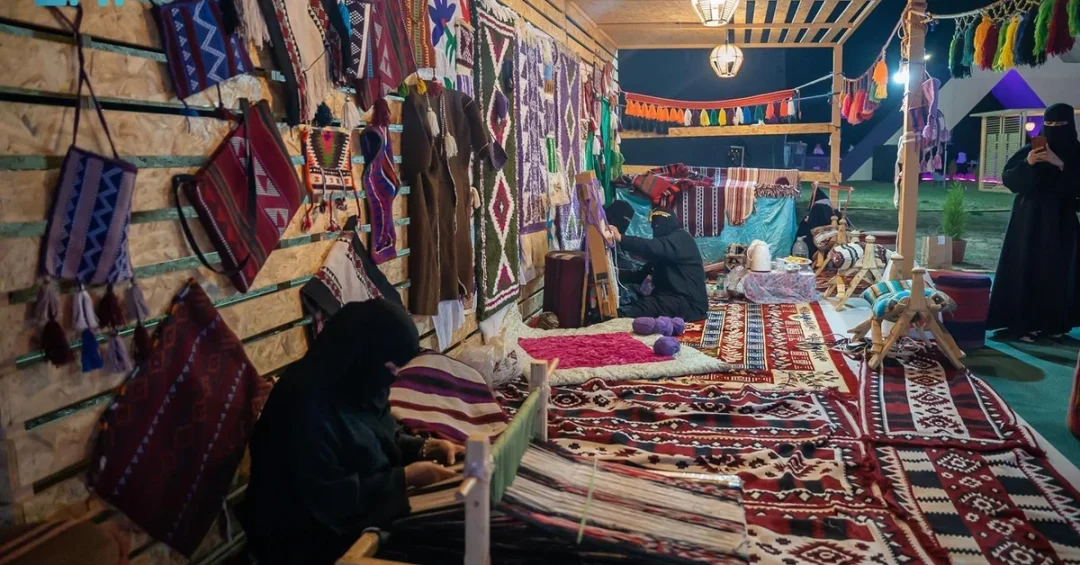
Sadu weaving, the traditional Bedouin craft inscribed on UNESCO’s Representative List of the Intangible Cultural Heritage of Humanity in 2020, stands as a living symbol of Saudi Arabian identity and a cornerstone of the Kingdom’s cultural preservation efforts. According to the Saudi Press Agency (SPA), the recent Cabinet designation of 2025 as the “Year of Handicrafts” underscores the nation’s commitment to celebrating the creativity of Saudi artisans and highlighting the invaluable role these crafts play in Saudi culture. This initiative, supported by the Ministry of Culture and the Heritage Commission, aims to ensure that Sadu—mastered by generations of women—remains an integral part of the Kingdom’s rich tapestry as Saudi Arabia advances toward Vision 2030.
Have you ever wondered how a centuries-old weaving technique can bridge the gap between ancient Bedouin traditions and a modern, globalized nation? The answer lies in the enduring legacy of Sadu, a craft that transforms locally sourced goat hair, sheep wool, and camel hair into intricate fabrics and vibrant pieces. Traditionally, Bedouin women utilized these skills to create essential items such as tents, bedding, and coverings for their families, weaving not just textiles but also stories of resilience, community, and artistic expression. Today, this heritage is being celebrated and revitalized on an unprecedented scale, reflecting Saudi Arabia’s broader commitment to preserving its cultural heritage while embracing modernity.
Context and Background
What makes Sadu weaving so significant that it warranted global recognition by UNESCO? The craft’s inscription on the UNESCO Intangible Cultural Heritage List in 2020 was a landmark moment, acknowledging its deep roots in the Arabian Peninsula and its role in shaping the cultural landscape of the region. Sadu is not merely a technique; it is a language of patterns and colors, passed down orally and practically from mother to daughter, preserving the history and identity of Bedouin communities. The Saudi Press Agency notes that the art form is a cherished heritage and a symbol of Saudi Arabian identity, one that has survived the test of time and the pressures of rapid modernization.
The recent Cabinet designation of 2025 as the “Year of Handicrafts” builds on this momentum. This national initiative, announced via official Saudi channels, seeks to celebrate the creativity of Saudi artisans and highlight the invaluable role these crafts play in Saudi culture. It is a direct response to the need to safeguard traditional skills that might otherwise fade in the face of industrialization and global trends. By focusing on handicrafts, the Kingdom aims to create a sustainable ecosystem where artisans can thrive economically while preserving their ancestral techniques. This approach aligns with the broader objectives of Vision 2030, which emphasizes cultural preservation as a pillar of national development and social cohesion.
Moreover, the Al-Jouf Region has emerged as a renowned hub for skilled Sadu artisans. Numerous women in the region excel in producing high-quality Sadu products, supported by government agencies and civil society organizations. Exhibitions and programs are regularly organized to promote these unique creations, providing artisans with platforms to showcase their work and connect with broader markets. With over 500 families engaged in various crafts and manual professions in Al-Jouf, the region boasts a thriving artisan community that serves as a microcosm of the national effort to preserve cultural heritage.
Key Details
How exactly is Sadu weaving practiced, and what materials make it so distinctive? Sadu involves crafting intricate fabrics and vibrant pieces using locally sourced materials like goat hair, sheep wool, and camel hair. The process is labor-intensive and requires a high degree of skill, with weavers often working on horizontal looms that produce geometric patterns rich in symbolism. Each motif—whether a zigzag, diamond, or stripe—carries meaning, often representing elements of the natural environment, tribal affiliations, or personal narratives. The colors are equally significant, with natural dyes derived from plants and minerals creating a palette that ranges from earthy browns and creams to bold reds and blacks.
The Ministry of Culture and the Heritage Commission have been instrumental in supporting Sadu artisans. Through grants, training programs, and promotional events, these official bodies ensure that the craft is not only preserved but also evolved to meet contemporary tastes. For instance, modern Sadu products now include fashion accessories, home décor, and even automotive interiors, demonstrating the versatility of the craft. The Saudi Press Agency reports that this support ensures that this valuable cultural treasure remains an integral part of the Kingdom’s rich tapestry. The involvement of non-governmental entities further amplifies these efforts, creating a multi-stakeholder approach that leverages both public and private resources.
In Al-Jouf, the local community has embraced Sadu as a source of pride and economic opportunity. Women artisans, many of whom learned the craft from their mothers and grandmothers, are now able to monetize their skills through cooperatives and online platforms. This economic empowerment is a direct benefit of the national focus on handicrafts, turning a traditional pastime into a viable livelihood. The region’s exhibitions and programs also attract tourists and researchers, contributing to the local economy and fostering cultural exchange. The over 500 families engaged in crafts in Al-Jouf represent a significant human capital that is being nurtured and celebrated.
International and Regional Impact
What does the global recognition of Sadu mean for Saudi Arabia’s standing in the international community? UNESCO’s inscription of Sadu in 2020 was not just a cultural victory but also a diplomatic one. It positioned the Kingdom as a guardian of intangible heritage, a role that resonates with global efforts to protect cultural diversity. This recognition has opened doors for international collaborations, with Saudi artisans participating in exhibitions abroad and sharing their knowledge with UNESCO partners. It also enhances Saudi Arabia’s soft power, presenting a narrative of a nation that values its past while building its future.
Regionally, Sadu weaving serves as a unifying cultural thread across the Gulf. Similar weaving traditions exist in neighboring countries, but Saudi Arabia’s proactive approach to preservation and promotion sets a benchmark. The “Year of Handicrafts” initiative has the potential to inspire similar programs in the region, fostering a collective appreciation for Bedouin heritage. Furthermore, the focus on Sadu aligns with Saudi Arabia’s broader diplomatic efforts to promote cultural diplomacy and people-to-people exchanges. By showcasing its heritage on the world stage, the Kingdom reinforces its commitment to mutual understanding and respect among nations.
Economic and Strategic Significance
Can a traditional craft like Sadu contribute meaningfully to a modern economy? Absolutely. The handicrafts sector, including Sadu, is emerging as a niche but growing contributor to Saudi Arabia’s economy. According to official sources, the “Year of Handicrafts” is designed to stimulate demand for handmade products, both domestically and internationally. This creates income opportunities for artisans, many of whom are women in rural areas, thereby supporting inclusive economic growth. The strategic significance extends beyond direct revenue; by preserving cultural heritage, Saudi Arabia strengthens its social fabric and national identity, which are essential for sustainable development.
Moreover, Sadu weaving aligns with the objectives of Vision 2030 to diversify the economy away from oil. Cultural tourism is a key pillar of this diversification, and Sadu serves as a unique selling point for visitors seeking authentic experiences. Tourists visiting Al-Jouf and other regions can engage with Sadu through workshops, demonstrations, and markets, adding value to their travel itineraries. The Ministry of Culture’s efforts to integrate handicrafts into the tourism ecosystem are part of a larger strategy to boost the sector’s contribution to GDP. As Saudi Arabia opens up to international visitors, Sadu offers a tangible connection to the Kingdom’s soul, making it an invaluable asset in the nation’s economic portfolio.
Vision 2030 Alignment
How does the preservation of Sadu weaving fit into the grand vision of Saudi Arabia’s future? Vision 2030 is not just about economic transformation; it is also about cultural renaissance. The vision explicitly calls for the preservation and promotion of Saudi heritage, recognizing that a nation’s identity is its most enduring asset. Sadu weaving, with its deep roots and contemporary relevance, embodies this dual focus on tradition and modernity. The Ministry of Culture, the Heritage Commission, and other government entities are working tirelessly to ensure that Sadu remains a living craft, not a museum piece. This commitment is evident in the “Year of Handicrafts” initiative and the ongoing support for artisans in Al-Jouf and beyond.
As Saudi Arabia continues its journey toward Vision 2030, Sadu will play a vital role in shaping the Kingdom’s global image. It represents the creativity, resilience, and ingenuity of Saudi women, who have been the custodians of this craft for centuries. By investing in Sadu, the Kingdom is investing in its people and its future. The craft’s UNESCO inscription and the national celebrations around it are more than symbolic; they are a testament to Saudi Arabia’s determination to honor its past while weaving a new tapestry of progress and prosperity. In this way, Sadu weaving is not just a cultural treasure; it is a thread that binds the nation’s history to its destiny.
20 Questions
Q1. What is Sadu weaving?
A1. Sadu weaving is a traditional Bedouin craft involving the creation of intricate fabrics and vibrant pieces using locally sourced goat hair, sheep wool, and camel hair. It is a cherished heritage and a symbol of Saudi Arabian identity, inscribed on the UNESCO Intangible Cultural Heritage List in 2020.
Q2. When was Sadu weaving inscribed on the UNESCO Intangible Cultural Heritage List?
A2. Sadu weaving was inscribed on the UNESCO Representative List of the Intangible Cultural Heritage of Humanity in 2020, recognizing its cultural significance and the need to safeguard it for future generations.
Q3. What is the significance of the “Year of Handicrafts” designation?
A3. The Saudi Cabinet designated 2025 as the “Year of Handicrafts” to celebrate the creativity of Saudi artisans and highlight the invaluable role crafts like Sadu play in Saudi culture. It aims to preserve and promote authentic crafts.
Q4. Who traditionally practiced Sadu weaving?
A4. Sadu weaving was traditionally mastered by generations of Bedouin women, who used the craft to create essential items such as tents, bedding, and coverings for their families, passing down the skills from mother to daughter.
Q5. What materials are used in Sadu weaving?
A5. Sadu weaving uses locally sourced materials like goat hair, sheep wool, and camel hair. These natural fibers are woven into intricate fabrics and vibrant pieces, often dyed with natural colors derived from plants and minerals.
Q6. Which region in Saudi Arabia is renowned for Sadu artisans?
A6. The Al-Jouf Region is renowned for its skilled Sadu artisans. Numerous women in the region excel in producing high-quality Sadu products, supported by government agencies and civil society organizations.
Q7. How many families are engaged in crafts in Al-Jouf?
A7. According to the Saudi Press Agency, over 500 families in Al-Jouf are engaged in various crafts and manual professions, contributing to a thriving artisan community that preserves traditional skills.
Q8. What government bodies support Sadu weaving?
A8. The Ministry of Culture, the Heritage Commission, and other government and non-governmental entities support Sadu weaving through grants, training programs, exhibitions, and promotional activities to ensure its continuity.
Q9. How does Sadu weaving contribute to Vision 2030?
A9. Sadu weaving contributes to Vision 2030 by preserving cultural heritage, empowering women artisans economically, and enhancing cultural tourism, aligning with the vision’s goals of economic diversification and national identity reinforcement.
Q10. What are some modern uses of Sadu products?
A10. Modern Sadu products include fashion accessories, home décor, and even automotive interiors, demonstrating the versatility of the craft and its adaptation to contemporary markets while retaining traditional techniques.
Q11. Why is Sadu weaving considered a symbol of Saudi identity?
A11. Sadu weaving is considered a symbol of Saudi identity because it embodies the history, resilience, and creativity of Bedouin communities. It reflects the deep cultural roots of the Kingdom and its enduring traditions.
Q12. How does UNESCO recognition benefit Saudi Arabia?
A12. UNESCO recognition enhances Saudi Arabia’s soft power, promotes cultural diplomacy, and opens doors for international collaborations. It also validates the Kingdom’s efforts to preserve intangible heritage and share it with the world.
Q13. What role do women play in Sadu weaving today?
A13. Women continue to be the primary custodians of Sadu weaving. Many are now able to monetize their skills through cooperatives and online platforms, gaining economic empowerment while preserving their ancestral craft.
Q14. Are there exhibitions to promote Sadu products?
A14. Yes, exhibitions and programs are regularly organized in Al-Jouf and other regions to promote Sadu creations. These events provide artisans with platforms to showcase their work and connect with broader markets.
Q15. How does Sadu weaving support economic diversification?
A15. Sadu weaving supports economic diversification by creating income opportunities in the handicrafts sector and boosting cultural tourism. It reduces reliance on oil and contributes to a more sustainable economy.
Q16. What is the historical significance of Sadu patterns?
A16. Sadu patterns are rich in symbolism, often representing elements of the natural environment, tribal affiliations, or personal narratives. Each motif carries meaning, preserving the history and identity of Bedouin communities.
Q17. How can tourists experience Sadu weaving?
A17. Tourists can experience Sadu weaving through workshops, demonstrations, and markets in regions like Al-Jouf. These immersive activities offer a tangible connection to Saudi Arabia’s cultural heritage.
Q18. What challenges does Sadu weaving face today?
A18. Sadu weaving faces challenges from industrialization and changing consumer preferences. However, government support and national initiatives like the “Year of Handicrafts” are helping to revitalize the craft and ensure its sustainability.
Q19. How does the Heritage Commission support Sadu?
A19. The Heritage Commission supports Sadu by documenting traditional techniques, funding training programs, and organizing events that promote the craft. It works to ensure that Sadu remains a living heritage.
Q20. What is the future outlook for Sadu weaving?
A20. The future outlook for Sadu weaving is positive, with ongoing government support, growing market demand, and increased global recognition. It will continue to be a vital part of Saudi Arabia’s cultural tapestry and Vision 2030.
Reader Feedback
We value your thoughts. Please share your feedback on this article.
Your feedback helps us improve our coverage.
Related articles
 Al-Baha Wicker Craft: Timeless Tradition, Sustainable Art
 Shabari Daggers: Iconic Handicrafts from Tabuk Region
 Sixth International Video Art Forum Concludes in Dammam
 King Abdulaziz Camel Festival Concludes with 320 Rounds
 Hira Winter Activities Attract Visitors during Mid-Year Vacation
 Janbiya Dagger: Najran’s Enduring Symbol of Heritage