


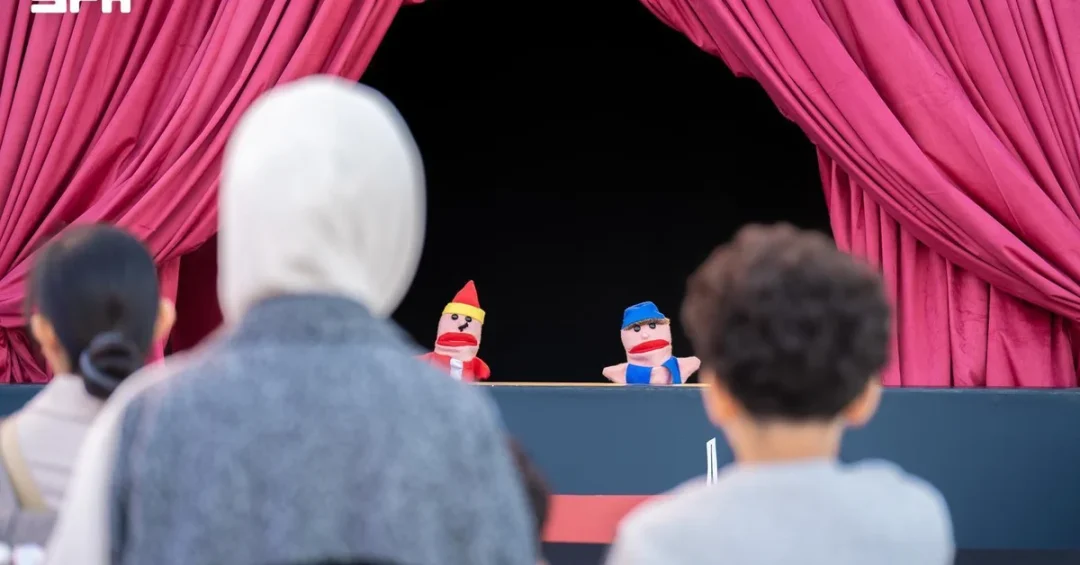
The Theater and Performing Arts Commission concluded the first leg of its public performing arts program in Riyadh on Saturday, November 15, 2026, after three days of theatrical shows, live performances, and interactive experiences staged across public spaces in the Saudi capital. The Riyadh leg drew families, children, and residents into open-air venues where roaming folk arts, circus acts, and puppet shows transformed everyday gathering places into stages for communal celebration. The initiative, announced and organized through official Saudi cultural channels, forms part of a broader national effort to bring the performing arts directly to the public rather than confining them to enclosed theaters.
The closing of the Riyadh program marks the first milestone in a multi-city tour that will continue through the Kingdom until December 19, 2026. According to the Saudi Press Agency, the program covers six cities — Riyadh, Dammam, Buraidah, Hail, Taif, and Jeddah — with the second leg scheduled at the Cultural House in Dammam from November 18 to 21. For a Kingdom investing heavily in cultural infrastructure under Vision 2030, the tour represents a tangible, street-level expression of a national cultural strategy. How often do public performances turn a city square into a shared living room for an entire community?
Context and Background
The public performing arts program is an initiative of the Theater and Performing Arts Commission, one of the sector-specific bodies established under the Ministry of Culture to develop the Kingdom’s creative industries. Since its formation, the Commission has been tasked with nurturing theater production, supporting performers, and expanding audience access to live performance across Saudi Arabia. The Riyadh leg reflects that mandate in its most accessible form: free, open, and staged in public spaces where residents encounter the arts as part of daily life.
Why does staging performances in public spaces matter for cultural development? The answer lies in the barrier-free nature of the format. Roaming folk arts, circus performances, and puppet theater require no ticket, no formal venue, and no prior familiarity with theatrical convention. They invite spontaneous participation from passersby, children, and families, creating first-time cultural experiences for audiences who might never otherwise enter a theater. This approach aligns with the Commission’s stated aim of democratizing access to the performing arts and embedding them within the Kingdom’s social fabric.
The program also builds on a longer arc of cultural investment. Saudi Arabia has, in recent years, restored and expanded performing arts infrastructure, launched festivals, and supported local troupes, all as part of a national strategy to make culture a pillar of economic and social life. The Riyadh leg, held over three days, demonstrates how that strategy translates into visible, participatory public events. Is it any surprise that a Kingdom modernizing at such pace would treat its streets as cultural venues?
Key Details
The Riyadh program featured a deliberately varied lineup designed to appeal across generations. Roaming folk arts brought traditional Saudi performance heritage into public view, while circus acts added spectacle and physical artistry, and puppet shows offered storytelling tailored to younger audiences. Interactive experiences for families and children rounded out the offering, turning passive spectatorship into hands-on engagement. The combination reflects a curatorial logic: mix heritage with contemporary entertainment so that every visitor finds an entry point.
According to the Saudi Press Agency, the three-day event in Riyadh concluded on Saturday, November 15, with the program then moving to Dammam. The Dammam leg will run from November 18 to 21 at the Cultural House, a venue that allows for a more structured presentation while retaining the program’s public-facing spirit. From there, the tour continues to Buraidah, Hail, Taif, and Jeddah, extending the initiative’s reach to the center, north, west, and eastern regions of the Kingdom. What does it signal when a single program reaches six cities in roughly one month?
The geographic spread is notable. By covering Riyadh, Dammam, Buraidah, Hail, Taif, and Jeddah, the Commission ensures that audiences beyond the capital participate in the national cultural conversation. Each city brings its own local character, and the program’s flexible format — roaming performance, public staging, interactive elements — is designed to adapt to different settings. The schedule running until December 19 gives the initiative sustained visibility across the Kingdom’s winter cultural calendar.
International and Regional Impact
For international observers, the program offers a window into how Saudi Arabia is translating cultural policy into public experience. The Kingdom’s cultural transformation is often measured in mega-projects and headline festivals, but initiatives like the public performing arts tour reveal the grassroots layer of that transformation. They show a government actively encouraging its residents to engage with the arts in shared civic spaces, a pattern consistent with the social opening that has defined the Kingdom’s recent trajectory.
The regional dimension is equally relevant. As Gulf states compete to position themselves as cultural hubs, Saudi Arabia’s emphasis on accessible, family-oriented public performance distinguishes its approach. Rather than focusing solely on prestige venues, the Commission is investing in broad participation — a strategy that builds audiences gradually and cultivates domestic talent over time. Can a cultural sector thrive without a broad public base? The Kingdom appears to be betting that it cannot, and acting accordingly.
Economic and Strategic Significance
The performing arts program carries strategic significance beyond entertainment. A vibrant cultural sector is a component of economic diversification, supporting jobs in production, design, performance, and event management. By normalizing public performance and building audiences, the Commission lays groundwork for a sustainable creative economy — one that can eventually sustain ticketed productions, festivals, and touring companies. The public program functions as both a cultural service and an investment in future demand.
Tourism and quality-of-life objectives also intersect here. Cultural events enrich the visitor experience and enhance the everyday lives of residents, contributing to the Kingdom’s ambitions to be an attractive destination and a desirable place to live. Cities that offer free, high-quality public programming develop a reputation for vitality. How much does a thriving street-level cultural scene contribute to a city’s global image? For Saudi Arabia, the answer is bound up with its broader effort to present a modern, welcoming society.
Vision 2030 Alignment
The public performing arts program aligns directly with Vision 2030, the Kingdom’s long-term roadmap for economic diversification and social development. Vision 2030 identifies culture and entertainment as key sectors for growth, both as economic contributors and as means of enhancing quality of life. The Theater and Performing Arts Commission’s tour operationalizes that vision at the community level, ensuring that the cultural renaissance reaches families and children in cities across the country, not only elite venues in the capital.
The forward-looking significance is clear. As the program moves through Dammam, Buraidah, Hail, Taif, and Jeddah through December 19, it will continue to bring live performance into the public sphere, reinforcing the Kingdom’s commitment to an inclusive cultural future. The Riyadh leg’s success — measured in participation and community engagement — sets a tone for the rest of the tour and for the Commission’s longer-term work. In a Kingdom building its cultural identity as confidently as its economy, public stages in open squares may prove as important as any landmark. What better way to ensure that Vision 2030 belongs to everyone than to bring it into the street?
20 Questions
Q1. What did the Theater and Performing Arts Commission conclude in Riyadh?
A1. The Commission concluded the first leg of its public performing arts program in Riyadh on Saturday, November 15, 2026, after three days of theatrical shows, live performances, and interactive experiences in public spaces.
Q2. How long did the Riyadh leg of the program last?
A2. The Riyadh leg lasted three days, running through Saturday, November 15, 2026, and featured theatrical shows, live performances, and interactive experiences staged in public spaces across the capital.
Q3. What types of performances were featured in Riyadh?
A3. The event featured roaming folk arts, circus acts, and puppet shows, along with interactive experiences designed for families and children, bringing varied entertainment to public venues throughout the city.
Q4. Where will the second leg of the program take place?
A4. The second leg will be held at the Cultural House in Dammam from November 18 to 21, 2026, continuing the national tour after the successful conclusion of the Riyadh program.
Q5. How many cities does the program cover?
A5. The program covers six cities: Riyadh, Dammam, Buraidah, Hail, Taif, and Jeddah, extending the initiative’s reach across multiple regions of the Kingdom.
Q6. Until when does the full program run?
A6. The program runs until December 19, 2026, giving audiences across the six participating cities sustained access to public performances throughout the winter cultural calendar.
Q7. Which commission organized the program?
A7. The program was organized by the Theater and Performing Arts Commission, one of the sector-specific bodies under the Ministry of Culture tasked with developing the Kingdom’s theater and performance sector.
Q8. Why are performances staged in public spaces?
A8. Staging performances in public spaces removes barriers to access, allowing families, children, and passersby to encounter the arts spontaneously without tickets or formal venues, broadening public participation in culture.
Q9. Who is the intended audience for these performances?
A9. The program targets broad public audiences, with particular emphasis on families and children, offering interactive experiences and varied performances that appeal across generations and backgrounds.
Q10. What role does folk art play in the program?
A10. Roaming folk arts bring traditional Saudi performance heritage into public view, connecting contemporary audiences with the Kingdom’s cultural traditions while adding a distinctive local character to the events.
Q11. How does the program support the cultural sector?
A11. By building audiences and normalizing public performance, the program lays groundwork for a sustainable creative economy, supporting jobs in production, performance, design, and event management.
Q12. What is the significance of the Dammam venue?
A12. The Cultural House in Dammam allows for a more structured presentation of the program while retaining its public-facing spirit, bringing the initiative to the Eastern Province after the Riyadh leg.
Q13. How does the program reflect Vision 2030?
A13. The program aligns with Vision 2030’s identification of culture and entertainment as key sectors for economic growth and quality-of-life enhancement, bringing the cultural renaissance to communities nationwide.
Q14. Which regions do the six cities represent?
A14. The six cities — Riyadh, Dammam, Buraidah, Hail, Taif, and Jeddah — span the center, east, north, and west of the Kingdom, ensuring broad geographic reach for the program.
Q15. What makes the programming family-friendly?
A15. The mix of puppet shows, circus acts, roaming folk arts, and hands-on interactive experiences is designed to engage children and families together, making the events accessible and enjoyable for all ages.
Q16. How does the program enhance quality of life?
A16. Free, high-quality public performances enrich everyday life, create shared community experiences, and contribute to the Kingdom’s goal of making its cities vibrant and desirable places to live.
Q17. Does the program support local performers?
A17. The program provides opportunities for performers and production professionals to practice their craft and reach broad audiences, contributing to the growth of domestic talent within the performing arts sector.
Q18. What is the source of information about the program?
A18. The information was released via official Saudi channels, specifically the Saudi Press Agency, which reported the conclusion of the Riyadh leg and the schedule for the remaining cities.
Q19. How does the program connect to tourism goals?
A19. Cultural events like these enrich the visitor experience and enhance the Kingdom’s appeal as a destination, complementing broader efforts to develop tourism as part of economic diversification.
Q20. What comes next after the Riyadh conclusion?
A20. The program proceeds to Dammam from November 18 to 21, then continues through Buraidah, Hail, Taif, and Jeddah, running until December 19, 2026, extending the cultural initiative across the Kingdom.
Reader Feedback
We value your thoughts. Please share your feedback on this article.
Your feedback helps us improve our coverage.
Related articles
 Jeddah Governor Attends 17th Arabian Horse Festival Closing
 Historic Makkah Wooden Doors: A Legacy of Artisanal Carpentry
 Three Falcons Sold for SAR520,000 at 23rd National Auction
 TPAC Events Draw 1,200 Visitors on First Day in Riyadh
 17th Makkah Arabian Horse Festival Continues in Jeddah
 Saudi-Pakistani Visual Arts Exhibition “Wahid” Opens in Jeddah