


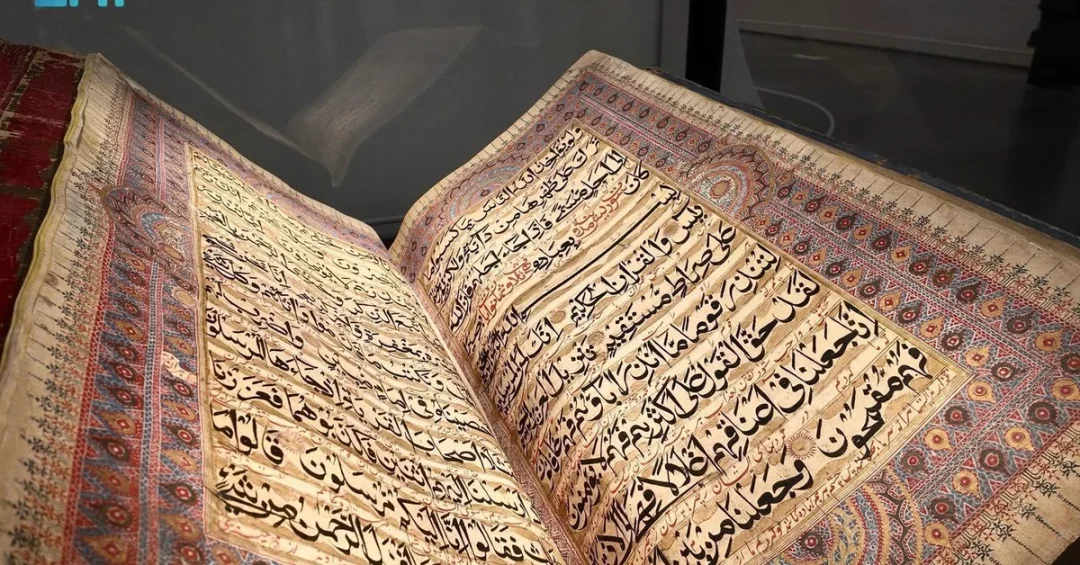
A rare Quran manuscript crafted nearly two centuries ago and designated as a waqf for the Prophet’s Mosque is drawing international attention at the second edition of the Islamic Arts Biennale in Jeddah, offering visitors a window into the enduring spiritual and artistic traditions of the Islamic world. The exhibition, organized by the Diriyah Biennale Foundation at the Western Hajj Terminal of King Abdulaziz International Airport, showcases treasures of Islamic art through rare collections, with this exceptional Quran standing out as one of the most remarkable pieces on display. The manuscript, transcribed in India by the calligrapher Ghulam Mohiuddin on the 6th of Muharram, 1240 AH (August 31, 1824 AD), was created specifically for the Prophet’s Mosque in Madinah, reflecting a centuries-old tradition of patronage and devotion that connected the far reaches of the Islamic world to the holy cities of the Hijaz.
Is it not remarkable that a single manuscript can embody so much of what makes Islamic civilization extraordinary? This monumental Quran, measuring 139.7 by 77.5 centimeters, is distinguished by pages adorned in gold and deep-colored pigments, alongside a cover inlaid with precious stones including rubies, emeralds, turquoise, and peridot. Its display at the Biennale represents far more than an exhibition of artistic excellence; it serves as a tangible link between the Indian subcontinent and the Arabian Peninsula, between the devotional practices of the 19th century and the cultural ambitions of modern Saudi Arabia. The manuscript’s presence in Jeddah, preserved today in the King Abdulaziz Complex for Endowment Libraries in Madinah, underscores the Kingdom’s role as custodian of Islamic heritage and its commitment to sharing that heritage with the world.
Context and Background
How did a Quran transcribed in northern India come to rest in one of Islam’s holiest cities, and what does its journey reveal about the interconnectedness of the Islamic world? Historical documents indicate that this manuscript arrived in Madinah in the mid-13th century AH, where it was initially placed on a special stand near Bab As-Salam (the As-Salam Gate) of the Prophet’s Mosque. It was later transferred to the treasury of the Prophet’s Mosque during restoration work carried out in 1273 AH (1857 AD), a period of significant architectural and administrative activity in the holy city. The Quran’s journey from the Indian subcontinent to the heart of Madinah reflects the deeply rooted tradition of waqf, or endowment, through which Muslims from across the world contributed precious manuscripts and artifacts to the holy cities of Makkah and Madinah.
The calligrapher behind this masterpiece, Ghulam Mohiuddin, was one of the prominent scribes of 19th-century India, known not only for his artistic skill but also for his piety and his practice of distributing hand-written parts of the Quran to the needy. He wrote the text in Naskh script using black ink, with a Persian translation between the lines rendered in red Nastaliq script, reflecting the prevailing calligraphic traditions of the Indian subcontinent at that time. This bilingual approach made the Quran accessible to Persian-speaking readers while preserving the sacred Arabic text in a script renowned for its clarity and elegance. The manuscript’s original cover was made of gilded leather and adorned with gemstones, and in 1302 AH (1884 AD), it was rebound by Hajj Yusuf bin Hajj Masoom Nemankani, a scholar well-versed in manuscript arts who settled in Madinah after coming from Uzbekistan. This act of restoration itself represents a continuation of the waqf tradition, with successive generations of Muslims contributing to the preservation of sacred texts.
The Islamic Arts Biennale, now in its second edition, has established itself as a major cultural event on the international calendar, attracting scholars, artists, and visitors from around the world. By displaying this Quran alongside other rare collections, the Diriyah Biennale Foundation is fulfilling a critical mission: making the treasures of Islamic civilization accessible to a global audience while fostering deeper understanding and appreciation of the faith’s artistic and intellectual heritage. The Biennale’s location at the Western Hajj Terminal is particularly symbolic, as it is a site that has welcomed millions of pilgrims from every corner of the globe, much as the Prophet’s Mosque has received endowments from across the Islamic world for centuries.
Key Details
What makes this particular Quran manuscript stand out among the countless treasures of Islamic art? Its sheer scale is one of its most striking features. At nearly 1.4 meters in height and more than three-quarters of a meter in width, it is among the largest Quran manuscripts ever produced, requiring exceptional skill and resources to create. The pages are adorned with gold and deep-colored pigments, a technique that reflects the highest achievements of Islamic illumination. The cover, originally made of gilded leather and inlaid with precious stones such as rubies, emeralds, turquoise, and peridot, would have been a breathtaking sight for worshippers at the Prophet’s Mosque. The use of such precious materials was not merely decorative; it was an expression of reverence for the sacred text and a reflection of the donor’s devotion.
The manuscript’s calligraphy is equally significant. Ghulam Mohiuddin’s mastery of Naskh script, a style known for its legibility and grace, is evident throughout the text. The interlinear Persian translation in red Nastaliq script adds a layer of accessibility and cultural richness, demonstrating the cosmopolitan nature of Islamic scholarship in the 19th century. The decision to include a Persian translation reflects the linguistic diversity of the Islamic world and the importance of making the Quran’s message understood by believers from different backgrounds. This manuscript is not simply a work of art; it is a testament to the intellectual and spiritual vitality of the Muslim community during a period of significant cultural exchange between South Asia, Central Asia, and the Arabian Peninsula.
Today, the Quran is preserved in the King Abdulaziz Complex for Endowment Libraries in Madinah, an institution dedicated to safeguarding the manuscripts and documents that tell the story of Islamic civilization. The complex serves as a research center for scholars and a repository of knowledge for future generations. Its collaboration with the Diriyah Biennale Foundation to display this manuscript at the Islamic Arts Biennale demonstrates the Kingdom’s commitment to sharing its cultural heritage with the world. Visitors to the Biennale have the opportunity to see this rare Quran up close, an experience that many describe as deeply moving. The manuscript’s presence at the exhibition also highlights the importance of the Biennale as a platform for cultural diplomacy and interfaith understanding.
International and Regional Impact
How does the display of a single manuscript at a biennale in Jeddah resonate across the Islamic world and beyond? The Islamic Arts Biennale has quickly become a landmark event that draws attention to Saudi Arabia’s rich cultural heritage and its role as a global center for Islamic art and scholarship. By showcasing treasures like this Quran, the Kingdom is positioning itself as a leader in cultural preservation and a bridge between different civilizations. The manuscript’s origins in India and its journey to Madinah serve as a reminder of the historic connections between South Asia and the Arabian Peninsula, connections that continue to shape the modern world through trade, migration, and cultural exchange. For visitors from countries such as India, Pakistan, Iran, and Uzbekistan, the manuscript holds particular significance, as it reflects their own heritage and their ancestors’ contributions to Islamic civilization.
The Biennale also plays a crucial role in Saudi Arabia’s broader efforts to promote cultural tourism and international engagement. By attracting visitors from around the world, the event supports the Kingdom’s goals of diversifying its economy and enhancing its global image. The display of the Quran manuscript alongside other rare collections provides a compelling narrative that appeals to both scholars and the general public. It also reinforces the message that Saudi Arabia is not only the guardian of Islam’s holiest sites but also a vibrant center of contemporary culture and artistic expression. The Biennale’s success in drawing international attention to Islamic art contributes to a greater understanding of the Muslim world and its contributions to global civilization.
Economic and Strategic Significance
What economic and strategic benefits does the Islamic Arts Biennale bring to Saudi Arabia, and how does it align with the Kingdom’s long-term goals? The Biennale is part of a broader strategy to develop the cultural and tourism sectors as key drivers of economic growth under Vision 2030. By hosting world-class exhibitions and events, Saudi Arabia is attracting international visitors, generating revenue, and creating jobs in the hospitality, tourism, and creative industries. The presence of rare manuscripts like this Quran adds prestige to the event and helps establish Jeddah as a cultural destination. The Biennale also supports the growth of local institutions such as the Diriyah Biennale Foundation and the King Abdulaziz Complex for Endowment Libraries, which are building expertise in conservation, curation, and cultural management.
Strategically, the display of this Quran reinforces Saudi Arabia’s role as the custodian of Islamic heritage and the protector of the Two Holy Mosques. It sends a powerful message about the Kingdom’s commitment to preserving Islamic history and making it accessible to a global audience. This soft power asset is invaluable in a world where cultural diplomacy is increasingly important. The Biennale also strengthens ties with countries such as India, Uzbekistan, and others whose citizens contributed to the manuscript’s creation and preservation. By celebrating these shared histories, Saudi Arabia builds goodwill and fosters cooperation in areas ranging from trade to education. The economic and strategic returns on cultural investment are long-term and multifaceted, and the Islamic Arts Biennale is a prime example of how heritage can be leveraged for sustainable development.
Vision 2030 Alignment
How does the preservation and display of this two-century-old Quran exemplify the principles of Vision 2030? Vision 2030, launched by Crown Prince Mohammed bin Salman, seeks to transform Saudi Arabia into a diversified economy and a global hub for culture, tourism, and innovation. The Islamic Arts Biennale and the display of this rare manuscript align perfectly with several of the vision’s key objectives, including the promotion of cultural heritage, the development of tourism, and the enhancement of Saudi Arabia’s international standing. The Kingdom’s investment in cultural institutions, such as the Diriyah Biennale Foundation and the King Abdulaziz Complex for Endowment Libraries, reflects a deep commitment to preserving Islamic history while also creating modern platforms for engagement and education.
Moreover, the Biennale’s success demonstrates how Vision 2030 is not only about economic transformation but also about cultural renaissance. By showcasing the beauty and sophistication of Islamic art, Saudi Arabia is challenging stereotypes and presenting a forward-looking image of the Kingdom that honors its past while embracing the future. The Quran manuscript, with its rich history of patronage and preservation, symbolizes the enduring values of faith, generosity, and scholarship that are central to both Islamic civilization and the Vision 2030 agenda. As visitors from around the world marvel at this treasure, they are witnessing not only a masterpiece of calligraphy and craftsmanship but also the realization of a vision that connects Saudi Arabia’s glorious past to its promising future.
20 Questions
Q1. What is the Islamic Arts Biennale?
A1. The Islamic Arts Biennale is a major cultural exhibition organized by the Diriyah Biennale Foundation, held at the Western Hajj Terminal in Jeddah. It showcases rare Islamic art treasures, including manuscripts, calligraphy, and artifacts, attracting visitors and scholars from around the world.
Q2. Where is the two-century-old Quran manuscript currently displayed?
A2. The manuscript is on display at the second edition of the Islamic Arts Biennale in Jeddah, held at the Western Hajj Terminal of King Abdulaziz International Airport, organized by the Diriyah Biennale Foundation.
Q3. Who created this rare Quran manuscript?
A3. The Quran was transcribed by the calligrapher Ghulam Mohiuddin, a prominent 19th-century Indian scribe known for his piety and his practice of distributing handwritten parts of the Quran to the needy.
Q4. When was the manuscript completed?
A4. It was completed on the 6th of Muharram, 1240 AH, which corresponds to August 31, 1824 AD, making it nearly two centuries old.
Q5. What are the dimensions of the manuscript?
A5. The Quran is exceptionally large, measuring 139.7 by 77.5 centimeters, making it one of the largest Quran manuscripts ever produced and a remarkable feat of craftsmanship.
Q6. What makes this Quran manuscript unique?
A6. It is distinguished by its large size, pages adorned in gold and deep-colored pigments, a cover inlaid with precious stones, and its designation as a waqf for the Prophet’s Mosque in Madinah.
Q7. What is the significance of the manuscript being a waqf?
A7. A waqf is an endowment for religious or charitable purposes. This Quran was designated as a waqf for the Prophet’s Mosque, reflecting the donor’s devotion and the tradition of contributing precious items to the holy cities.
Q8. How did the manuscript arrive in Madinah?
A8. Historical documents indicate that the manuscript arrived in Madinah in the mid-13th century AH, where it was placed near Bab As-Salam before being transferred to the treasury of the Prophet’s Mosque during restoration work in 1273 AH (1857 AD).
Q9. What scripts were used in the manuscript?
A9. The Arabic text was written in Naskh script using black ink, while a Persian translation was rendered between the lines in red Nastaliq script, reflecting the calligraphic traditions of the Indian subcontinent.
Q10. What precious stones were used on the original cover?
A10. The original cover, made of gilded leather, was adorned with gemstones including rubies, emeralds, turquoise, and peridot, demonstrating the high value placed on the sacred text.
Q11. Who rebound the manuscript in 1884?
A11. In 1302 AH (1884 AD), the manuscript was rebound by Hajj Yusuf bin Hajj Masoom Nemankani, a scholar well-versed in manuscript arts who settled in Madinah after coming from Uzbekistan.
Q12. Where is the manuscript preserved today?
A12. It is preserved in the King Abdulaziz Complex for Endowment Libraries in Madinah, an institution dedicated to safeguarding manuscripts and documents that tell the story of Islamic civilization.
Q13. Why is the Islamic Arts Biennale important for Saudi Arabia?
A13. The Biennale showcases Saudi Arabia’s commitment to preserving Islamic heritage, promotes cultural tourism, and supports Vision 2030 goals of economic diversification and global engagement.
Q14. What other treasures can visitors see at the Biennale?
A14. The Biennale features rare collections of Islamic art, including manuscripts, calligraphy, historical artifacts, and contemporary works, offering a comprehensive view of Islamic artistic heritage.
Q15. How does the manuscript reflect the connection between India and Arabia?
A15. The manuscript was created in India and donated to the Prophet’s Mosque, illustrating the historic cultural and spiritual ties between the Indian subcontinent and the Arabian Peninsula.
Q16. What is the significance of the Persian translation in the manuscript?
A16. The Persian translation made the Quran accessible to Persian-speaking readers, reflecting the linguistic diversity of the Islamic world and the importance of understanding the sacred text.
Q17. How does the Biennale support Vision 2030?
A17. The Biennale contributes to Vision 2030 by attracting international visitors, creating jobs in tourism and culture, and enhancing Saudi Arabia’s global image as a center of art and heritage.
Q18. What role does the Diriyah Biennale Foundation play?
A18. The Diriyah Biennale Foundation organizes the Islamic Arts Biennale and other cultural events, promoting Islamic art and fostering cultural exchange in line with Saudi Arabia’s cultural ambitions.
Q19. How can researchers access the manuscript?
A19. Researchers can access the manuscript through the King Abdulaziz Complex for Endowment Libraries in Madinah, which serves as a repository and research center for Islamic manuscripts.
Q20. What does the display of this Quran signify for global audiences?
A20. It signifies Saudi Arabia’s dedication to sharing Islamic heritage with the world, fostering intercultural understanding, and showcasing the timeless beauty of Islamic art and scholarship.
Reader Feedback
We value your thoughts. Please share your feedback on this article.
Your feedback helps us improve our coverage.
Related articles
 Rafha Lanterns Event Brings Ramadan Spirit to Community
 Historic Jeddah Ramadan Stalls Celebrate Saudi Heritage
 Rare Islamic Treasures on Display at Islamic Arts Biennale in Jeddah
 King Abdulaziz Foundation Releases Saudi Flag Day Guide
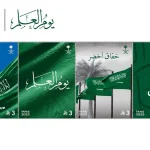 SPL Issues Flag Day Commemorative Stamp and Postcard
 Manga Productions Sponsors AnimeJapan 2025, First from Middle East