


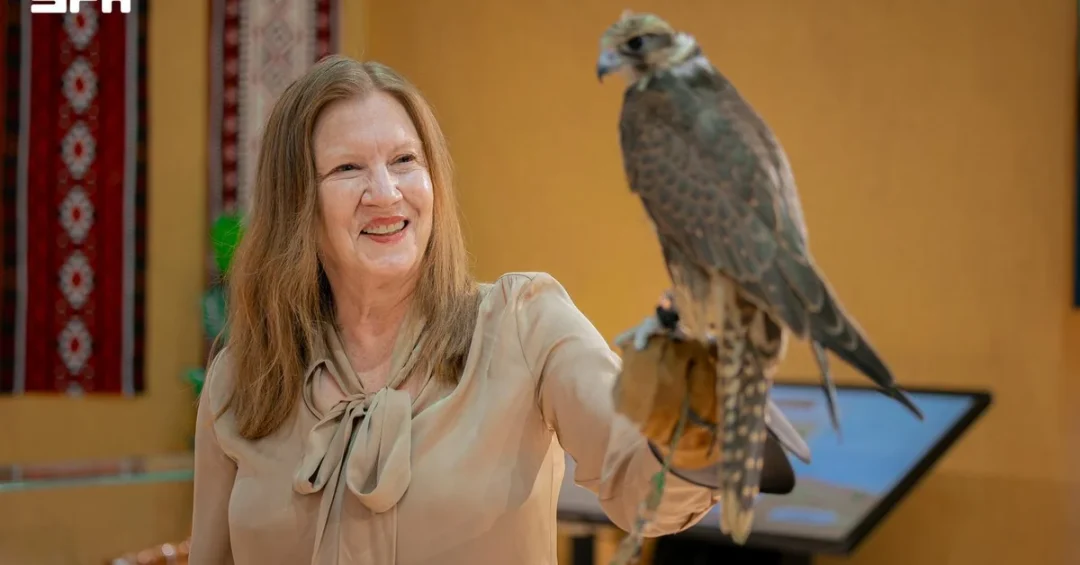
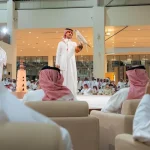
Chargé d’Affaires of the United States Embassy in Saudi Arabia, Jennifer Larson, visited the 2026 International Falcon Breeding Farm Auction in Riyadh, where she toured the exhibition, reviewed the participating farms, and attended the fourth auction night featuring four falcons, according to the Saudi Press Agency. The visit, reported by the Kingdom’s official news agency, underscores the cultural and diplomatic significance of falconry in Saudi Arabia and highlights the growing international engagement with one of the Arabian Peninsula’s most cherished heritage traditions.
The auction, held in Riyadh, brings together leading falcon breeding farms from across the region, showcasing the finest falcon species and the specialized care practices that have been refined over generations. Larson’s presence at the event signals a deepening appreciation of Saudi Arabia’s cultural heritage among international partners and reflects the Kingdom’s success in positioning its traditions as a bridge for global dialogue. The visit also aligns with broader efforts under Saudi Vision 2030 to celebrate and preserve national heritage while opening it to the world.
Context and Background
How did falconry, an ancient desert tradition, become a centerpiece of Saudi Arabia’s cultural diplomacy and international outreach? Falconry has been practiced in the Arabian Peninsula for thousands of years, serving as a vital means of hunting and survival in the harsh desert environment. Over time, it evolved into a sophisticated art form, with specific breeds prized for their speed, intelligence, and hunting prowess. The Kingdom of Saudi Arabia has long recognized the importance of preserving this heritage, and in recent decades, it has established dedicated institutions, festivals, and auctions to celebrate and sustain the tradition.
The International Falcon Breeding Farm Auction is one of the most prominent events on the Kingdom’s cultural calendar. It attracts breeders, enthusiasts, and dignitaries from around the world, offering a platform to showcase the best of Saudi and regional falconry. The event is organized under the patronage of relevant Saudi authorities, including the Saudi Falcon Club, which operates under the umbrella of the Ministry of Culture. These bodies work tirelessly to ensure that falconry remains a living tradition, passed down to future generations while also being shared with international audiences.
The presence of a senior U.S. diplomat at such an event is not merely ceremonial. It reflects the enduring ties between the United States and Saudi Arabia, ties that extend beyond economic and security cooperation into cultural exchange. By participating in the auction, Larson demonstrated a personal and professional interest in understanding the Kingdom’s heritage, which can help foster mutual respect and people-to-people connections. Such engagements are part of a broader pattern of cultural diplomacy that Saudi Arabia has actively promoted in recent years.
Key Details of the Visit
What exactly did the U.S. envoy experience during her tour of the auction? According to the Saudi Press Agency, Jennifer Larson was given a comprehensive overview of the auction activities, the participating farms, and the cultural heritage on display. She learned about the various falcon species exhibited, including the most famous types known for their exceptional qualities. The briefing also covered the meticulous methods used to care for these birds, from diet and training to veterinary care and housing.
Larson then attended the fourth night of the auction, where four falcons were presented for bidding. This provided her with a firsthand look at the competitive and passionate atmosphere that surrounds falcon auctions in Saudi Arabia. The auction not only serves as a marketplace but also as a celebration of the bond between humans and falcons, a bond that has been central to Arabian culture for millennia. The envoy’s participation in the evening’s events allowed her to witness the excitement and tradition that define this unique gathering.
The visit was covered by the Saudi Press Agency, the Kingdom’s official news outlet, which underscores the significance that Saudi authorities place on such cultural exchanges. By publicizing the event, the government signals its openness to international engagement and its pride in its heritage. The fact that a U.S. diplomat took the time to attend and learn about falconry is a testament to the soft power of Saudi culture and its ability to attract global attention.
International and Regional Impact
Why does a U.S. diplomat’s visit to a falcon auction matter on a broader scale? In the realm of international relations, cultural diplomacy often serves as a foundation for stronger political and economic ties. When diplomats engage with a host country’s traditions, they build goodwill and demonstrate respect for local customs. This can pave the way for more productive discussions on issues of mutual interest, from trade and investment to security and education. Larson’s visit is a clear example of this dynamic at work.
Regionally, the auction reinforces Saudi Arabia’s position as a leader in preserving Arabian heritage. Falconry is practiced across the Gulf, but Saudi Arabia has invested heavily in making its events world-class. By hosting international participants and dignitaries, the Kingdom showcases its ability to blend tradition with modernity, a key theme of Vision 2030. This enhances its soft power and sets a standard for other nations in the region.
Moreover, the event highlights the economic potential of heritage-based tourism. Falcon auctions attract high-net-worth individuals and enthusiasts who are willing to travel and spend on premium birds and related services. This contributes to the local economy and creates opportunities for Saudi businesses, from hospitality to logistics. As the Kingdom continues to diversify its economy, such niche cultural events play a small but meaningful role in generating revenue and employment.
Economic and Strategic Significance
How does falconry intersect with Saudi Arabia’s economic diversification goals? While falconry may seem like a niche pursuit, it is part of a larger heritage economy that includes festivals, museums, and cultural tourism. The Saudi government has identified cultural and heritage tourism as a key sector for growth under Vision 2030. Events like the International Falcon Breeding Farm Auction draw visitors from around the world, boosting demand for hotels, restaurants, and transportation services in Riyadh.
Additionally, the auction supports the local breeding industry. Saudi breeders invest significant resources in raising and training falcons, and the auction provides a marketplace where they can command premium prices. This encourages entrepreneurship and innovation in veterinary science, nutrition, and training techniques. The knowledge and expertise developed in the Kingdom can also be exported, further enhancing Saudi Arabia’s reputation as a center of excellence in falconry.
Strategically, the event strengthens Saudi Arabia’s cultural ties with the United States and other nations. In a world where geopolitical tensions often dominate headlines, cultural exchanges offer a positive counterpoint. They remind us that nations can find common ground through shared appreciation of art, sport, and tradition. For Saudi Arabia, this aligns with its goal of being a bridge between cultures and a hub for international dialogue.
Vision 2030 Alignment
How does the U.S. envoy’s visit reflect the objectives of Saudi Vision 2030? Vision 2030 is a comprehensive plan to transform the Kingdom’s economy and society, with a strong emphasis on preserving cultural heritage while embracing modernization. The plan includes initiatives to document and promote Saudi traditions, support cultural institutions, and attract international visitors. The International Falcon Breeding Farm Auction is a perfect embodiment of these goals, as it celebrates a time-honored practice while operating at a world-class standard.
Furthermore, the visit highlights the Vision’s focus on international engagement. By welcoming diplomats and global participants, Saudi Arabia demonstrates its openness and its desire to build partnerships based on mutual respect. This is essential for attracting foreign investment and tourism, which are critical to the Kingdom’s economic diversification. The positive coverage generated by such events helps counter negative stereotypes and presents a dynamic, forward-looking image of Saudi Arabia.
In conclusion, the visit of U.S. Chargé d’Affaires Jennifer Larson to the 2026 International Falcon Breeding Farm Auction in Riyadh is a small but significant moment in the broader story of Saudi Arabia’s cultural renaissance. It shows how the Kingdom is leveraging its heritage to forge stronger international bonds and to advance the goals of Vision 2030. As Saudi Arabia continues to open up to the world, events like this will play an increasingly important role in shaping its global image and fostering understanding. The future of falconry, like the future of the Kingdom itself, is bright and full of potential.
20 Questions
Q1. Who visited the International Falcon Auction in Riyadh?
A1. Jennifer Larson, Chargé d’Affaires of the United States Embassy in Saudi Arabia, visited the 2026 International Falcon Breeding Farm Auction in Riyadh, as reported by the Saudi Press Agency.
Q2. What is the International Falcon Breeding Farm Auction?
A2. It is a premier event in Riyadh that showcases falcon breeding farms, displays various falcon species, and hosts auctions where top falcons are sold, celebrating Saudi Arabia’s rich falconry heritage.
Q3. When did the visit take place?
A3. The visit occurred during the 2026 auction, specifically on its fourth night, which featured four falcons. The Saudi Press Agency reported the event on August 15, 2026.
Q4. What did the U.S. envoy learn during the tour?
A4. She learned about the auction activities, the participating farms, the cultural heritage on display, the most famous falcon types, and the methods used to care for them.
Q5. Which falcon types were highlighted?
A5. The auction showcased several renowned falcon species, including peregrine falcons and saker falcons, which are prized for their speed, hunting ability, and beauty in Arabian falconry traditions.
Q6. How many falcons were auctioned on the fourth night?
A6. Four falcons were presented for auction on the fourth night, which the U.S. envoy attended, according to the Saudi Press Agency report.
Q7. Why is falconry important in Saudi culture?
A7. Falconry is a centuries-old tradition in the Arabian Peninsula, symbolizing courage, patience, and a deep connection to the desert. It remains a cherished heritage activity in Saudi Arabia today.
Q8. What is the role of the Saudi Falcon Club?
A8. The Saudi Falcon Club, under the Ministry of Culture, organizes and promotes falconry events, including auctions and festivals, to preserve the tradition and engage international audiences.
Q9. How does this visit impact U.S.-Saudi relations?
A9. It strengthens cultural diplomacy and people-to-people ties, demonstrating mutual respect and shared interests beyond political and economic cooperation, which can enhance overall bilateral relations.
Q10. What economic benefits does the auction bring?
A10. The auction boosts local businesses, attracts international visitors, supports the breeding industry, and contributes to Saudi Arabia’s growing heritage tourism sector under Vision 2030.
Q11. How does the event align with Vision 2030?
A11. It aligns with Vision 2030 by preserving cultural heritage, promoting international engagement, diversifying the economy through tourism, and showcasing Saudi Arabia’s modernization and openness.
Q12. What is the significance of the Saudi Press Agency’s coverage?
A12. The Saudi Press Agency is the Kingdom’s official news outlet. Its coverage highlights the government’s support for cultural events and its desire to share Saudi heritage with the world.
Q13. Are there other similar falconry events in Saudi Arabia?
A13. Yes, Saudi Arabia hosts several falconry festivals and auctions, including the King Abdulaziz Falconry Festival, which is among the largest and most prestigious in the world.
Q14. How are falcons cared for in Saudi Arabia?
A14. Falcons receive expert care, including balanced diets, veterinary attention, training, and proper housing. Breeders follow strict standards to ensure the birds’ health and performance.
Q15. What makes Saudi falcons so valuable?
A15. Saudi falcons are prized for their genetic quality, training, and beauty. Top birds can fetch high prices at auction, reflecting their prestige in falconry competitions and hunting.
Q16. Did the U.S. envoy participate in the bidding?
A16. The report does not indicate that she placed bids; she attended the auction as an observer to learn about the event and its cultural significance.
Q17. How does falconry promote tourism in Saudi Arabia?
A17. Falconry events attract enthusiasts and tourists from around the world, boosting demand for hotels, restaurants, and cultural experiences, thus supporting the local economy and tourism sector.
Q18. What is the historical origin of falconry in Arabia?
A18. Falconry dates back thousands of years in the Arabian Peninsula, where Bedouin used falcons for hunting. It evolved into a sophisticated cultural practice passed down through generations.
Q19. What message does this visit send to the international community?
A19. It signals Saudi Arabia’s openness to cultural exchange and its pride in its heritage, while also showing that international diplomats value and respect Saudi traditions.
Q20. How can international readers learn more about Saudi falconry?
A20. They can follow the Saudi Press Agency, the Saudi Falcon Club, and the Ministry of Culture for updates on falconry events, or visit Saudi Arabia to experience its rich heritage firsthand.
Reader Feedback
We value your thoughts. Please share your feedback on this article.
Your feedback helps us improve our coverage.
Related articles
 Scottish Family Turns Falconry Passion into Business at Saudi Auction
 Saudi Ministry Awards SAR1.5M to Quran Competition Winners
 Madinah’s 35 Heritage Foods Join Global Ark of Taste
 Saudi Ministry Organizes Cultural Trip to Clock Tower Museum for Quran Competition Participants
 Najran Palm Leaf Weaving Preserves Ancient Heritage
 Five Falcons Sold for 348,000 SAR at Saudi Auction