


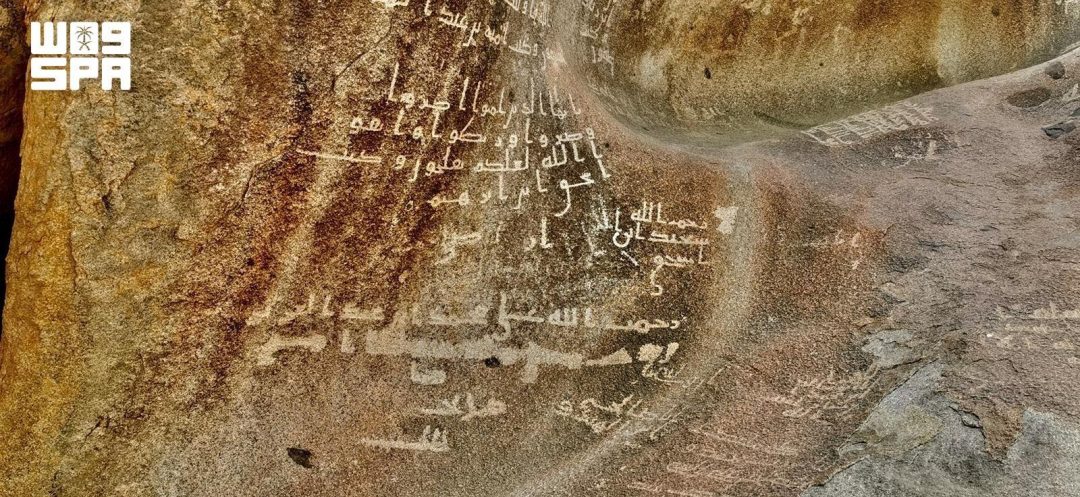
Wadi Al-Usaylah, located northeast of Makkah, contains more than 60 early Islamic inscriptions and two surviving historical wells. The valley measures approximately six kilometers in length and two kilometers in width.
According to SPA, the site served as a critical passageway for pilgrim and traveler caravans arriving from neighboring regions and Iraq. The rock writings date to the seventh and eighth centuries CE, which corresponds to the first and second centuries AH.
The inscriptions feature notable figures from the early Islamic period and offer evidence of the aesthetic evolution and orthographic development of early Arabic scripts. To assist caravans in the arid terrain, Islamic rulers commissioned water infrastructure, including four original historical wells, some of which were established under the Abbasid Caliphate.
The Royal Commission for Makkah City and Holy Sites is implementing a preservation program to protect the wells and rock art from erosion. This work supports Saudi Vision 2030 initiatives to develop sustainable cultural destinations and conserve national heritage.
What archaeological features are found in Wadi Al-Usaylah? Wadi Al-Usaylah preserves more than 60 early Islamic inscriptions and two surviving historical wells. The valley spans roughly six kilometers in length and two kilometers in width, serving as a record of early Arabic calligraphy and historic Hajj routes leading to Makkah.
When do the inscriptions in Wadi Al-Usaylah date from? The rock writings etched across the mountains of the valley date to the seventh and eighth centuries CE. This period corresponds to the first and second centuries AH and features notable figures from the early Islamic period.
What is the history of the water infrastructure in the valley? Successive Islamic rulers commissioned water infrastructure to support caravans traversing the arid terrain. While there were four original historical wells, two remain intact near the inscribed sites, with some having been established under the Abbasid Caliphate.
What measures are being taken to protect the site? The Royal Commission for Makkah City and Holy Sites is executing a comprehensive preservation program across the corridor. This program aims to safeguard the wells and rock art from erosion as part of Saudi Vision 2030 initiatives to conserve national heritage.